The last Sunday of October, and the only thing I wanted was a kitchen that smelled like fall and a dough I didn’t have to wrestle with. The rain had been tapping against the window for two hours, and the pile of pumpkins on the porch—the ones I bought with grand plans of carving—were starting to look like sad orange rocks. I wasn’t in the mood for a project that required muscle or patience. I wanted something that felt like a hug, not a workout. That’s when this no-knead pumpkin sourdough with cinnamon swirl happened.
I’d been feeding my starter for weeks, but it was one of those phases where it felt more like a chore than a joy. You know the ones. So I decided to let the dough do the work for a change. No kneading, no fancy shaping, just a slow, lazy rise and a swirl of brown sugar and cinnamon that would make the whole house smell like a bakery. Honestly, I wasn’t sure it would work. Pumpkin is heavy. Sourdough is finicky. But that first slice, still warm, with butter melting into the cinnamon swirl—I knew I’d stumbled onto something worth keeping.
This bread isn’t fancy. It’s not the kind of thing you’d serve at a dinner party to impress anyone. But it’s the kind of bread you make for yourself on a rainy Sunday when you need something to slow down for. It’s forgiving, it’s cozy, and it tastes like the best part of autumn.
Why You’ll Love This Recipe
I’ve tested this recipe about six times now. The first loaf was a little dense. The second had a cinnamon swirl that sank to the bottom. But by the third, I’d figured out the rhythm—and now I’m pretty sure this is the easiest way to enjoy homemade sourdough without the stress.
- No Kneading Required : This dough does all the work on its own. A few stirs, a long rest, and you’re done. Perfect for busy mornings or lazy afternoons.
- Simple Pantry Ingredients : Pumpkin puree, flour, butter, cinnamon, and your sourdough starter. Nothing weird or hard to find. You probably have most of it already.
- Perfect for Fall Baking : This bread fills your kitchen with the warmest, coziest aroma. It’s basically autumn in loaf form.
- Great for Beginners : If you’re new to sourdough, this is a forgiving recipe. The pumpkin adds moisture and sweetness, so even if your starter isn’t super active, you’ll still get a lovely loaf.
- Unbelievably Soft and Flavorful : The pumpkin keeps the crumb tender, and the cinnamon swirl adds just the right amount of sweetness. It’s the kind of bread you eat plain, toasted, or slathered with butter.
This isn’t just another pumpkin bread recipe. It’s the one that makes you close your eyes after the first bite. It’s comfort food reimagined—healthier, slower, but with the same soul-soothing satisfaction. Perfect for impressing yourself without any stress.
What Ingredients You Will Need
This recipe uses simple, wholesome ingredients to deliver a soft, flavorful loaf with a beautiful cinnamon ribbon running through it. Most of these are pantry staples, especially if you keep a sourdough starter going.
- Active sourdough starter (100g) — Make sure it’s bubbly and fed. A hungry starter won’t give you the rise you want. I feed mine about 4-6 hours before mixing the dough.
- Pumpkin puree (200g) — Not pumpkin pie filling! Just plain canned or homemade pumpkin puree. I prefer Libby’s for consistent texture, but any brand works. If using homemade, make sure to drain off excess water.
- All-purpose flour (400g) — About 3 ¼ cups. You can use bread flour for a chewier texture, but all-purpose keeps it soft and tender.
- Water (100ml) — Lukewarm, about 100°F. The pumpkin adds moisture, so you don’t need as much water as a standard sourdough.
- Butter (50g), melted — Adds richness and helps the cinnamon swirl stick. Use unsalted so you can control the salt level.
- Brown sugar (60g) — For the cinnamon swirl. Dark brown sugar gives a deeper flavor, but light works too.
- Ground cinnamon (2 tbsp) — Be generous here. This is the star of the swirl.
- Salt (6g) — About 1 teaspoon. Don’t skip it—it balances the sweetness and enhances the pumpkin flavor.
- Granulated sugar (25g) — Optional. Adds a tiny bit of extra sweetness to the dough. I use it because I like a hint of sweetness in the bread itself.
For the topping (optional but recommended):
- 1 tablespoon butter, melted — Brushed on top after baking for a soft, shiny crust.
- A sprinkle of cinnamon sugar — For that bakery-style finish.
If you’re looking for a dairy-free option, swap the butter with coconut oil or vegan butter. The texture will be slightly different but still delicious. And if you don’t have a sourdough starter yet, you can try this with a yeast-based version, but the tangy flavor won’t be the same. Trust me, it’s worth keeping a starter alive for this loaf.
Equipment Needed
You don’t need much for this recipe. That’s the beauty of no-knead bread. Here’s what I use:
- Large mixing bowl — Any bowl works, but I prefer a wide one for easy stirring.
- Dutch oven or heavy lidded pot — This creates steam for a crispy crust. If you don’t have one, a loaf pan works too, but the crust will be softer.
- Parchment paper — For easy transfer and cleanup. Trust me, you don’t want to scrape caramelized cinnamon sugar off your pot.
- Bench scraper or spatula — For folding the dough and shaping it.
- Plastic wrap or a damp towel — To cover the dough during its long rise.
- Cooling rack — So the bottom doesn’t get soggy.
If you don’t have a Dutch oven, you can bake this in a regular loaf pan. Just preheat it in the oven and add a small pan of water on the bottom rack to create steam. I’ve done it both ways, and honestly, the loaf pan version is a little easier for slicing sandwiches later.
Preparation Method
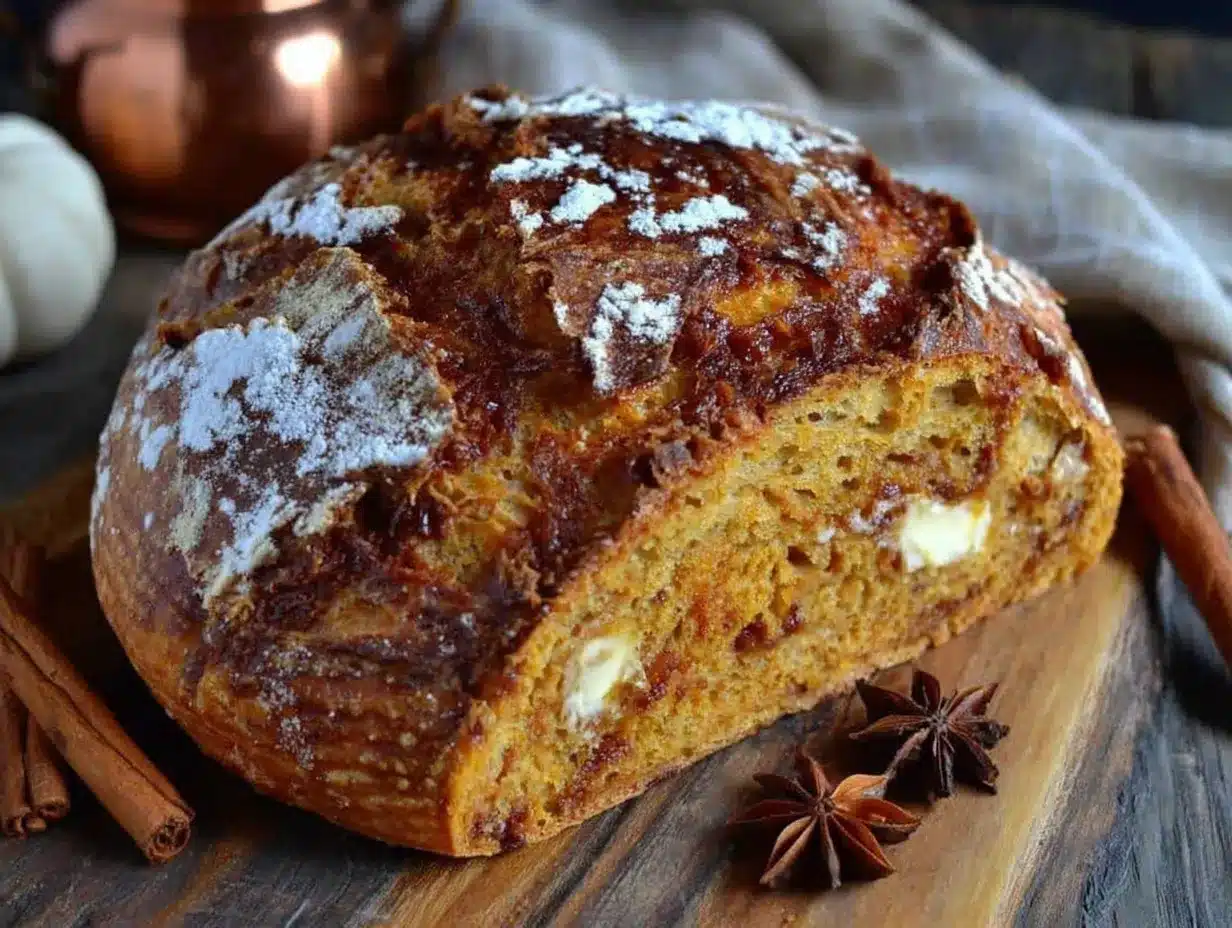
This dough moves slow, and that’s exactly what you want. Plan for a total rise time of about 12-18 hours, but most of that is hands-off.
- Mix the dough. In a large bowl, combine the active sourdough starter, pumpkin puree, and lukewarm water. Stir until the starter dissolves into the pumpkin. Add the flour, salt, and granulated sugar (if using). Mix with a spatula or your hands until a shaggy dough forms. It will look messy and sticky—that’s normal. Cover the bowl with plastic wrap and let it rest for 30 minutes.
- First rise (bulk fermentation). After the rest, perform a series of stretch and folds. Wet your hand slightly, grab one side of the dough, stretch it up, and fold it over the center. Repeat on all four sides. This strengthens the dough without kneading. Do this every 30 minutes for the first 2 hours. Then, cover the bowl and let it rise at room temperature for another 8-12 hours, or until the dough is puffy and has visible bubbles on top. If your kitchen is cold, it might take the full 12 hours. Patience is key here.
- Make the cinnamon swirl. While the dough rises, mix the brown sugar and cinnamon in a small bowl. Set aside. Don’t add the butter yet—you’ll do that right before shaping.
- Shape the dough. Lightly flour your work surface. Turn the dough out gently—don’t deflate it too much. Pat it into a rough rectangle, about 8×10 inches. Drizzle the melted butter over the surface, then sprinkle the cinnamon-sugar mixture evenly, leaving a 1-inch border around the edges. Roll the dough up tightly, like a jelly roll, starting from the short end. Pinch the seam to seal. Place the loaf seam-side down in a parchment-lined bowl or on a floured surface for its final rise.
- Second rise. Cover the shaped loaf with a towel and let it rise for another 2-4 hours, until it looks puffy and has almost doubled in size. You can also refrigerate it overnight for a deeper flavor. Just take it out 1 hour before baking to come to room temperature.
- Preheat and bake. Place your Dutch oven (with its lid) in the oven and preheat to 450°F for 30 minutes. Carefully transfer the parchment with the dough into the hot pot. Score the top with a sharp knife or lame—just a simple slash across the middle. Cover and bake for 30 minutes. Remove the lid and bake for another 15-20 minutes, until the crust is deep golden brown and the internal temperature reaches 200°F.
- Cool. Transfer the loaf to a cooling rack. Brush the top with melted butter and sprinkle with cinnamon sugar if you like. Let it cool for at least 1 hour before slicing. I know it’s hard to wait, but cutting into hot bread makes it gummy inside.
Cooking Tips & Techniques
I’ve made this loaf at least a dozen times now, and I’ve learned a few things the hard way. Here are the tips that make the biggest difference:
Don’t rush the first rise. This dough needs time. If your kitchen is cold, find a warm spot—near the oven or on top of the fridge. A slow rise develops better flavor and a more open crumb. I once tried to speed it up by adding more starter, and the bread turned out flat and sour.
Keep the cinnamon swirl from sinking. The trick is to spread the butter and cinnamon mixture evenly and roll the dough tightly. If the swirl is too loose, it will sink to the bottom during baking. Also, don’t overfill—less is more here. A thin, even layer stays put.
Watch the color. Pumpkin sourdough browns faster than regular bread because of the sugar. If the top is getting too dark before the inside is done, tent it loosely with foil for the last 10 minutes of baking.
Use a thermometer. This is the best way to know your bread is done. Insert an instant-read thermometer into the center—it should read 200°F-205°F. I’ve pulled underbaked loaves that looked perfect on the outside, and they were a gummy mess inside.
Let it cool completely. I know, I said it already. But I’m saying it again because I ruined my first loaf by slicing it after 30 minutes. The steam needs to redistribute. Give it a full hour.
Variations & Adaptations
One of the best things about this recipe is how flexible it is. Here are a few ways to make it your own:
- Add nuts or seeds. Sprinkle ½ cup of chopped pecans or walnuts over the cinnamon swirl before rolling. The crunch is amazing. I tried it with pepitas once, and it was unexpectedly good.
- Make it vegan. Swap the butter with coconut oil or vegan butter. The texture will be slightly less tender, but it still works beautifully.
- Go gluten-free. Use a gluten-free all-purpose flour blend that contains xanthan gum. The dough will be stickier, and the rise will be shorter, but it’s doable. I’ve had mixed results, so I recommend using a blend you trust.
- Try a different spice. Swap half the cinnamon with pumpkin pie spice, cardamom, or even a pinch of nutmeg. I made a version with cardamom and orange zest, and it was incredible—like a Swedish cinnamon bun in bread form.
- Make it savory. Skip the cinnamon swirl entirely and add ½ cup of shredded cheddar cheese and 1 tablespoon of fresh rosemary to the dough. Bake as directed. It’s perfect for serving alongside a bowl of soup or a creamy green chile chicken enchilada casserole.
Serving & Storage Suggestions
This bread is best served warm, but it’s also fantastic toasted the next day. Here’s how I like to enjoy it:
- Serving temperature: Warm or at room temperature. If you’re serving it fresh, let it cool for at least an hour first. Slice thick, toast lightly, and spread with salted butter. It’s also amazing with a drizzle of honey or a dollop of cream cheese.
- What to pair it with: This bread is perfect for breakfast with a cup of coffee or chai tea. For a cozy fall dinner, serve it alongside a bowl of roasted tomato soup or a simple grilled peach and arugula salad. It also makes an incredible base for French toast—just slice it thick and soak it in an eggy custard overnight.
- Storage: Wrap the cooled loaf tightly in plastic wrap or beeswax wrap and store at room temperature for up to 3 days. Do not refrigerate—it will dry out the bread. For longer storage, slice the loaf and freeze the slices in a zip-top bag for up to 3 months. Toast directly from frozen.
- Reheating: Pop a slice in the toaster or warm it in a 300°F oven for 5-7 minutes. The crust will crisp up beautifully.
The flavors actually deepen after the first day. The pumpkin and cinnamon meld together, and the sourdough tang becomes more pronounced. If you can resist eating it all on day one, day two is even better.
Nutritional Information & Benefits
Here’s an approximate breakdown per slice (based on 12 slices):
| Nutrient | Amount per slice |
|---|---|
| Calories | 185 |
| Total Fat | 5g |
| Saturated Fat | 3g |
| Carbohydrates | 32g |
| Fiber | 2g |
| Sugar | 8g |
| Protein | 4g |
| Sodium | 210mg |
Pumpkin is packed with vitamin A, fiber, and antioxidants. It’s also low in calories, so you get moisture and flavor without a lot of fat. The sourdough fermentation process makes the bread easier to digest by breaking down some of the gluten and phytic acid. Plus, the cinnamon adds anti-inflammatory benefits. This bread isn’t health food, but it’s a whole lot better for you than a store-bought muffin or pastry.
Dietary considerations: This recipe contains gluten and dairy. For a dairy-free version, use coconut oil. For a gluten-free version, use a quality gluten-free flour blend. It’s not vegan as written, but the vegan swap works well.
Frequently Asked Questions
Can I use a store-bought sourdough starter?
Yes, absolutely. If you don’t have a homemade starter, you can buy dehydrated or active starter online. Just rehydrate or feed it according to the package instructions before using. The flavor won’t be quite as complex as a well-aged starter, but it will still work.
Why is my dough so sticky?
Pumpkin puree adds a lot of moisture. If your dough feels overly sticky, resist the urge to add more flour. The stretch and folds will help develop the gluten and make it easier to handle. If it’s truly unworkable after the first rise, dust your hands and work surface with a little flour.
Can I skip the cinnamon swirl?
Of course. You’ll end up with a plain pumpkin sourdough loaf, which is still delicious. Just omit the brown sugar, cinnamon, and butter, and bake as directed. It’s great for sandwiches or toast with savory toppings. Try it with a smear of goat cheese and a drizzle of honey for a simple snack.
How do I know if my starter is active enough?
A healthy starter should double in size within 4-6 hours of feeding. It should look bubbly and smell slightly tangy, not sour or vinegary. If your starter isn’t very active, your bread will still rise, but it will be denser. Don’t worry—it will still taste good. I’ve made this with a sluggish starter before, and it was fine, just not as airy.
Can I make this in a bread machine?
I don’t recommend it. The long, slow rise is what gives this bread its flavor and texture. A bread machine will rush the process. If you want to use a machine, look for a standard pumpkin bread recipe instead. This one really benefits from the hands-off, no-knead method.
Conclusion
This no-knead pumpkin sourdough with cinnamon swirl has become my go-to fall bake. It’s the kind of recipe that doesn’t ask for much but gives back so much—a warm kitchen, a beautiful loaf, and the simple satisfaction of making something with your own hands. The tangy sourdough, the sweet cinnamon ribbon, the soft, tender crumb—it all comes together in a way that feels both rustic and special.
I hope you give it a try, even if you’re new to sourdough. This recipe is forgiving enough for beginners and rewarding enough for experienced bakers. Customize it with your favorite spices, add some nuts, or keep it simple. However you make it, I think you’ll love it.
If you do make it, I’d love to hear how it turned out. Leave a comment below, tag me in your photos, or share your own twist on the recipe. Happy baking, friends—and don’t forget the butter.
Pin This Recipe!
Best Easy No-Knead Pumpkin Sourdough with Cinnamon Swirl
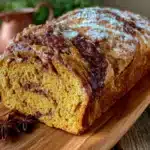
A forgiving, no-knead sourdough bread with pumpkin puree and a sweet cinnamon swirl. Perfect for fall baking, this recipe delivers a soft, tender crumb and a warm, cozy aroma with minimal effort.
- Prep Time: 20 minutes
- Cook Time: 45 minutes
- Total Time: 13-19 hours (including rising time)
- Yield: 12 servings 1x
- Category: Bread
- Cuisine: American
Ingredients
- 100g active sourdough starter (about 1/2 cup)
- 200g pumpkin puree (about 3/4 cup, not pumpkin pie filling)
- 100ml lukewarm water (about 1/2 cup)
- 400g all-purpose flour (about 3 1/4 cups)
- 6g salt (about 1 teaspoon)
- 25g granulated sugar (about 2 tablespoons, optional)
- 50g unsalted butter, melted (about 3 1/2 tablespoons)
- 60g brown sugar (about 1/4 cup, for cinnamon swirl)
- 2 tablespoons ground cinnamon (for cinnamon swirl)
- 1 tablespoon butter, melted (for topping, optional)
- Cinnamon sugar (for topping, optional)
Instructions
- Mix the dough: In a large bowl, combine the active sourdough starter, pumpkin puree, and lukewarm water. Stir until the starter dissolves. Add the flour, salt, and granulated sugar (if using). Mix with a spatula or your hands until a shaggy, sticky dough forms. Cover with plastic wrap and let rest for 30 minutes.
- First rise (bulk fermentation): After the rest, perform stretch and folds: wet your hand, grab one side of the dough, stretch it up, and fold it over the center. Repeat on all four sides. Do this every 30 minutes for the first 2 hours. Then cover and let rise at room temperature for 8-12 hours, until puffy with visible bubbles.
- Make the cinnamon swirl: In a small bowl, mix the brown sugar and cinnamon. Set aside.
- Shape the dough: Lightly flour your work surface. Gently turn out the dough and pat it into a rough 8×10-inch rectangle. Drizzle the melted butter over the surface, then sprinkle the cinnamon-sugar mixture evenly, leaving a 1-inch border. Roll the dough tightly from the short end, like a jelly roll. Pinch the seam to seal.
- Second rise: Place the loaf seam-side down in a parchment-lined bowl or on a floured surface. Cover with a towel and let rise for 2-4 hours, until puffy and nearly doubled. Alternatively, refrigerate overnight and bring to room temperature 1 hour before baking.
- Preheat and bake: Place a Dutch oven (with lid) in the oven and preheat to 450°F for 30 minutes. Carefully transfer the parchment with the dough into the hot pot. Score the top with a sharp knife. Cover and bake for 30 minutes. Remove the lid and bake for another 15-20 minutes, until deep golden brown and internal temperature reaches 200°F.
- Cool: Transfer the loaf to a cooling rack. Brush with melted butter and sprinkle with cinnamon sugar if desired. Let cool for at least 1 hour before slicing.
Notes
Don’t rush the first rise; a slow rise develops better flavor. To keep the cinnamon swirl from sinking, spread the butter and cinnamon mixture evenly and roll tightly. Pumpkin sourdough browns faster than regular bread; tent with foil if needed. Use a thermometer to ensure doneness (200°F-205°F). Let cool completely before slicing to avoid a gummy texture.
Nutrition
- Serving Size: 1 slice
- Calories: 185
- Sugar: 8
- Sodium: 210
- Fat: 5
- Saturated Fat: 3
- Carbohydrates: 32
- Fiber: 2
- Protein: 4
Keywords: no-knead bread, pumpkin sourdough, cinnamon swirl, fall baking, sourdough bread, pumpkin bread, easy sourdough