I did not trust miso in soup. For years, it felt like one of those ingredients that sounded fancy but always left me a little disappointed — too salty, or too thin, or just… not enough. Every bowl I tried at restaurants tasted fine, but I never craved it. Then a friend made me a bowl of spicy miso ramen on a cold Tuesday night, and I stood at her kitchen counter eating it straight from the pot, burnt tongue and all. Something clicked. The miso wasn’t shy here. It was bold, almost aggressive, balanced by a swirl of chili oil and a soft-boiled egg that broke open like a promise. That bowl ruined takeout ramen for me. I spent the next two weeks testing batches in my own kitchen, chasing that same combination of heat, umami, and that deeply satisfying broth that wraps around you like a heavy blanket. This is the version I landed on — the one that finally made me understand what miso can actually do.
Why You’ll Love This Recipe
This isn’t just another ramen recipe you scroll past and forget. This is the bowl you’ll actually make on a weeknight when you need something warm and grounding, fast. I’ve tested this more times than I care to admit, tweaking the broth ratio and the egg timing until everything lined up perfectly. Here is why this one works:
- Quick & Easy : From start to finish, this bowl comes together in about 30 minutes. No all-day simmering. No obscure ingredients.
- Simple Ingredients : You probably already have garlic, ginger, soy sauce, and eggs in your kitchen right now. Miso paste and ramen noodles are easy to find at any grocery store.
- Perfect for Cozy Nights : This is the bowl you make when the weather turns cold, or when you just need something that feels like a hug in a bowl.
- Crowd-Pleaser : I have served this to spice lovers and spice skeptics alike. Everyone finishes the bowl. The egg is the star that wins them over every time.
- Unbelievably Delicious : The broth is rich, spicy, and deeply savory. The egg adds that silky, golden richness that makes each spoonful better than the last.
What makes this recipe different is the balance. Most spicy ramen bowls just dump in heat and call it done. Here, the miso paste brings a fermented depth that tames the spice, while a touch of butter (yes, butter) rounds everything out into something silky and luxurious. It is comfort food that feels special without requiring a culinary degree. You close your eyes after the first bite. I promise.
What Ingredients You Will Need
This recipe uses simple, everyday ingredients that come together to create something far greater than the sum of their parts. Most of these are pantry staples, and the few fresh items are easy to prep while your broth simmers.
- Miso paste (white or red) – White miso is milder and slightly sweet; red miso is deeper and saltier. I prefer a mix of both for complexity. Look for it in the refrigerated section of your grocery store.
- Chili garlic sauce or sambal oelek – This brings the heat. Start with 1 tablespoon and adjust from there. I use Huy Fong brand for consistent flavor.
- Fresh garlic (4 cloves, minced) – Don’t use the jarred stuff here. Fresh garlic makes a noticeable difference in the broth.
- Fresh ginger (1-inch piece, grated) – Grate it on a microplane for the best texture. It melts right into the broth.
- Soy sauce (2 tablespoons) – Use low-sodium if you prefer to control the salt level yourself.
- Sesame oil (1 tablespoon) – Toasted sesame oil adds that nutty, aromatic finish.
- Chicken or vegetable broth (4 cups) – A good quality broth makes a difference. I like Swanson or Better Than Bouillon paste mixed with water.
- Unsalted butter (1 tablespoon) – This is my secret ingredient. It adds richness and smooths out the spice.
- Ramen noodles (2 packs) – Fresh or dried ramen noodles work. Discard the seasoning packets or save them for another use.
- Large eggs (2) – For the soft-boiled eggs. Fresh eggs are easier to peel after boiling.
- Green onions (3, sliced) – For garnish and a fresh crunch.
- Sesame seeds (1 tablespoon, optional) – Toasted white or black sesame seeds add a nice finishing touch.
- Nori sheets (optional) – Tear them into pieces and float them on top for that classic ramen look.
For substitutions, you can swap the butter for a tablespoon of coconut oil if you want a dairy-free version. If you don’t have chili garlic sauce, use sriracha or red pepper flakes adjusted to taste. The miso paste itself is not easily substituted, but you can use chickpea miso for a soy-free option.
Equipment Needed
You don’t need much fancy gear for this recipe, which is part of its charm. Here is what you will need:
- Medium soup pot or Dutch oven – A 4-quart pot works perfectly. I use my enameled cast iron Dutch oven because it holds heat evenly.
- Small saucepan – For boiling the eggs. Any small pot will do.
- Slotted spoon – For transferring the eggs to the ice bath.
- Bowl of ice water – This stops the eggs from cooking and makes peeling easier.
- Fine-mesh strainer – Optional, but useful if you want a super smooth broth.
- Microplane or fine grater – For grating the ginger and garlic. A regular grater works too, just use the smallest holes.
- Measuring spoons – For accuracy, especially with the miso and chili sauce.
- Chef’s knife and cutting board – For slicing green onions and prepping garlic.
If you don’t have a Dutch oven, a regular stainless steel pot works just fine. Just keep an eye on the heat so the miso doesn’t scorch on the bottom. And honestly, I have made this in a nonstick skillet in a pinch — it works, you just have to stir more often.
Preparation Method
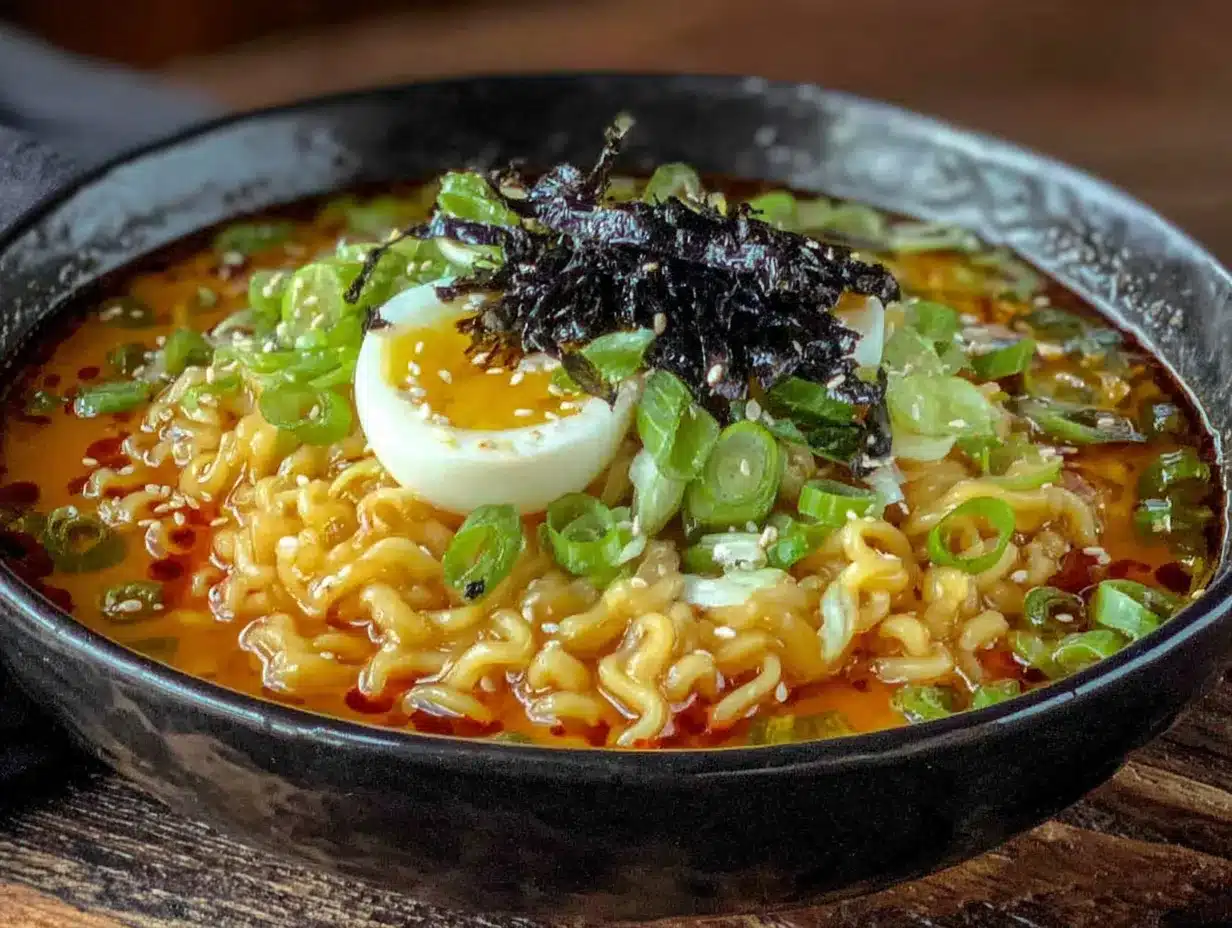
- Start the eggs first. Bring a small saucepan of water to a rolling boil. Gently lower the eggs into the water using a slotted spoon. Set a timer for exactly 6 minutes and 30 seconds. While the eggs boil, prepare a bowl of ice water. When the timer goes off, transfer the eggs immediately to the ice bath. Let them sit for at least 5 minutes. This gives you that perfect jammy yolk — not too runny, not too firm.
- While the eggs cool, start the broth. Heat the sesame oil in your soup pot over medium heat. Add the minced garlic and grated ginger. Stir constantly for about 30 seconds until fragrant — don’t let the garlic brown or it will turn bitter.
- Add the chili garlic sauce and butter. Stir everything together until the butter melts completely. This takes about 1 minute. The smell at this point is incredible — spicy, aromatic, and warm.
- Pour in the broth. Add the chicken or vegetable broth and soy sauce. Bring the mixture to a gentle simmer, then reduce the heat to low. Let it bubble softly for 5 minutes to let the flavors meld.
- Temper the miso paste. This step is important. Scoop out about half a cup of the hot broth into a small bowl. Whisk in the miso paste until it is completely smooth with no lumps. Then pour the miso mixture back into the pot. This prevents the miso from clumping and keeps your broth silky. Stir well and taste. Adjust the salt or spice level here if needed.
- Cook the noodles. While the broth simmers, cook the ramen noodles according to package directions. Usually this means boiling them for 3-4 minutes. Drain them well and divide them between two large bowls. Do not overcook the noodles — they will continue to soften in the hot broth.
- Peel the eggs. Gently tap the cooled eggs on the counter and peel under cold running water. The cold water helps separate the shell from the egg white. Slice each egg in half lengthwise with a sharp knife. The yolk should be soft and slightly glossy.
- Assemble the bowls. Ladle the hot miso broth over the noodles. Place two egg halves in each bowl. Top with sliced green onions, sesame seeds, and torn nori sheets if using. Serve immediately while everything is hot.
The total active cooking time is about 25 minutes. The eggs take the most attention, but once they are in the ice bath, you can focus entirely on the broth. Your kitchen will smell like a ramen shop by the time you sit down to eat.
Cooking Tips & Techniques
I learned most of these the hard way — by making mistakes and eating mediocre bowls until I figured it out. Here are the things I wish someone had told me sooner:
Don’t boil the miso. Miso is a fermented paste, and high heat kills its complex flavor. Always add it at the end, off the heat or at a very low simmer. That first time I boiled it, the broth tasted flat and one-dimensional. Never again.
Use room temperature eggs for boiling. Cold eggs straight from the fridge crack more easily and cook less evenly. Let them sit on the counter for 10 minutes before boiling. If you forget, just run them under warm water for 30 seconds before dropping them in.
Peel eggs under running water. This is the trick that changed my soft-boiled egg game. The water gets under the membrane and helps the shell slide off cleanly. You lose less white and end up with prettier eggs.
Taste as you go. Miso paste varies wildly in saltiness between brands. What works for one might be too salty for another. Start with 2 tablespoons, taste, and add more if needed. You can always add salt, but you can’t take it out.
Multitask wisely. While the eggs boil, prep your garlic and ginger. While the broth simmers, slice your green onions. The actual hands-on time is short, but the timing matters. I once forgot to start the noodles until the broth was done, and my noodles sat in the colander getting sticky.
Stir the broth before ladling. Miso settles at the bottom of the pot. Give it a good stir right before you pour it into the bowls so everyone gets an even distribution of flavor.
Variations & Adaptations
This recipe is forgiving, and I have tried more variations than I care to count. Here are my favorites:
Vegetarian Version : Use vegetable broth instead of chicken broth. Add a handful of sliced shiitake mushrooms to the broth while it simmers for extra umami. The mushrooms soak up the spicy broth and become little flavor bombs.
Extra Spicy : If you like serious heat, add a teaspoon of gochujang (Korean chili paste) along with the chili garlic sauce. It adds a deeper, slightly sweet heat that builds slowly. I made this version for a friend who claimed no soup could be too spicy for her. She finished the bowl in silence and asked for the recipe.
Protein Add-Ins : Slices of leftover rotisserie chicken or crispy tofu work beautifully here. I sometimes add a handful of shredded cooked chicken right into the broth before serving. It soaks up all that spicy miso flavor.
Gluten-Free Adaptation : Use rice noodles or gluten-free ramen noodles. Make sure your soy sauce is tamari or coconut aminos. Miso paste is naturally gluten-free in most cases, but check the label to be safe.
Seasonal Twist : In summer, I add a handful of fresh corn kernels and a squeeze of lime juice right before serving. In winter, I toss in some wilted spinach or bok choy. The broth handles additions well without losing its character.
I personally love the version with shredded rotisserie chicken and a handful of baby spinach stirred in at the last minute. It turns the bowl into a complete meal that keeps me full for hours.
Serving & Storage Suggestions
Serve this ramen immediately while the broth is steaming hot and the egg yolk is still soft and jammy. The contrast between the hot broth and the cool, creamy yolk is the whole point. I like to set the bowls out with extra chili sauce on the side for anyone who wants more heat.
For sides, a simple cucumber salad with rice vinegar and sesame seeds pairs perfectly. The cool crunch balances the rich, spicy broth. If you want something more substantial, try serving these crispy zucchini fritters with easy lemon herb dip on the side — the fritters are light enough to not weigh down the meal, and the dip adds a bright, tangy contrast.
Storage : Store the broth and noodles separately. The broth keeps well in the refrigerator for up to 4 days in an airtight container. The noodles should be stored separately or they will turn mushy. Soft-boiled eggs are best eaten fresh, but you can store peeled eggs in a container of cold water in the fridge for up to 2 days.
Reheating : Reheat the broth gently on the stovetop over medium-low heat. Do not boil it. While the broth reheats, quickly blanch the leftover noodles in hot water for 20 seconds to revive them. Assemble the bowls fresh. The eggs can be reheated by placing them in warm water for 1 minute, but honestly, they are also delicious cold or at room temperature.
The flavors actually deepen after a day in the fridge. The miso and chili meld together into something even more complex. I sometimes make the broth a day ahead on purpose, just for that deeper flavor.
Nutritional Information & Benefits
Here is an approximate breakdown per serving (one bowl with one egg, based on the recipe as written):
- Calories: ~420
- Protein: 18g
- Fat: 22g
- Carbohydrates: 38g
- Fiber: 3g
- Sugar: 4g
- Sodium: 980mg (varies based on miso and soy sauce brands)
Miso paste is a fermented food, which means it contains probiotics that support gut health. Ginger and garlic are both known for their anti-inflammatory properties. The soft-boiled egg provides high-quality protein and healthy fats that keep you full and satisfied. This bowl is naturally dairy-free if you skip the butter or use a substitute, and it can easily be made gluten-free with the right noodle and soy sauce swaps.
If you are watching your sodium, use low-sodium broth and low-sodium soy sauce, and taste the broth before adding any extra salt. The miso itself carries a lot of salt, so you likely won’t miss it.
Conclusion
This spicy miso ramen bowl is the kind of recipe that becomes a regular in your rotation not because it is fancy, but because it works. It is fast enough for a weeknight, comforting enough for a rainy Sunday, and impressive enough to serve to friends who think homemade ramen is complicated. The soft-boiled egg is the crown jewel, but honestly, the broth is what keeps me coming back. It is spicy, savory, and just a little bit buttery — everything a cozy bowl should be.
I would love to hear how this turns out for you. Did you add extra chili? Swap in a different protein? Forget the butter and still love it? Drop a comment below and let me know. And if you are in the mood for another cozy bowl, try this creamy hatch chili corn chowder with bacon — it has that same warming, soul-soothing energy, just in a different form.
Go make yourself a bowl. You deserve something warm tonight.
Frequently Asked Questions
Can I use white miso instead of red miso?
Yes, absolutely. White miso is milder and slightly sweeter, which will give you a more delicate broth. Red miso is deeper and saltier. I actually like using a mix of both — about 1 tablespoon each — for the best of both worlds.
How do I get the perfect soft-boiled egg every time?
The trick is timing and an ice bath. Boil the eggs for exactly 6 minutes and 30 seconds, then immediately transfer them to ice water. This stops the cooking process and gives you that jammy, slightly runny yolk. If you prefer a firmer yolk, go for 7 minutes.
Can I make this recipe vegan?
Yes, with a few swaps. Use vegetable broth instead of chicken broth, replace the butter with coconut oil or a vegan butter substitute, and skip the egg or replace it with silken tofu or a vegan egg alternative. The miso itself is typically vegan.
How spicy is this ramen?
It has a noticeable kick, but it is not overwhelming. The miso and butter balance the heat nicely. If you are sensitive to spice, start with 1 teaspoon of chili garlic sauce instead of 1 tablespoon. You can always add more at the table.
Can I freeze the broth?
Yes, the broth freezes well for up to 3 months. Store it in an airtight container or freezer bag. Thaw it overnight in the refrigerator and reheat gently on the stovetop. Do not freeze the noodles or the eggs — they do not thaw well and will lose their texture.
Pin This Recipe!
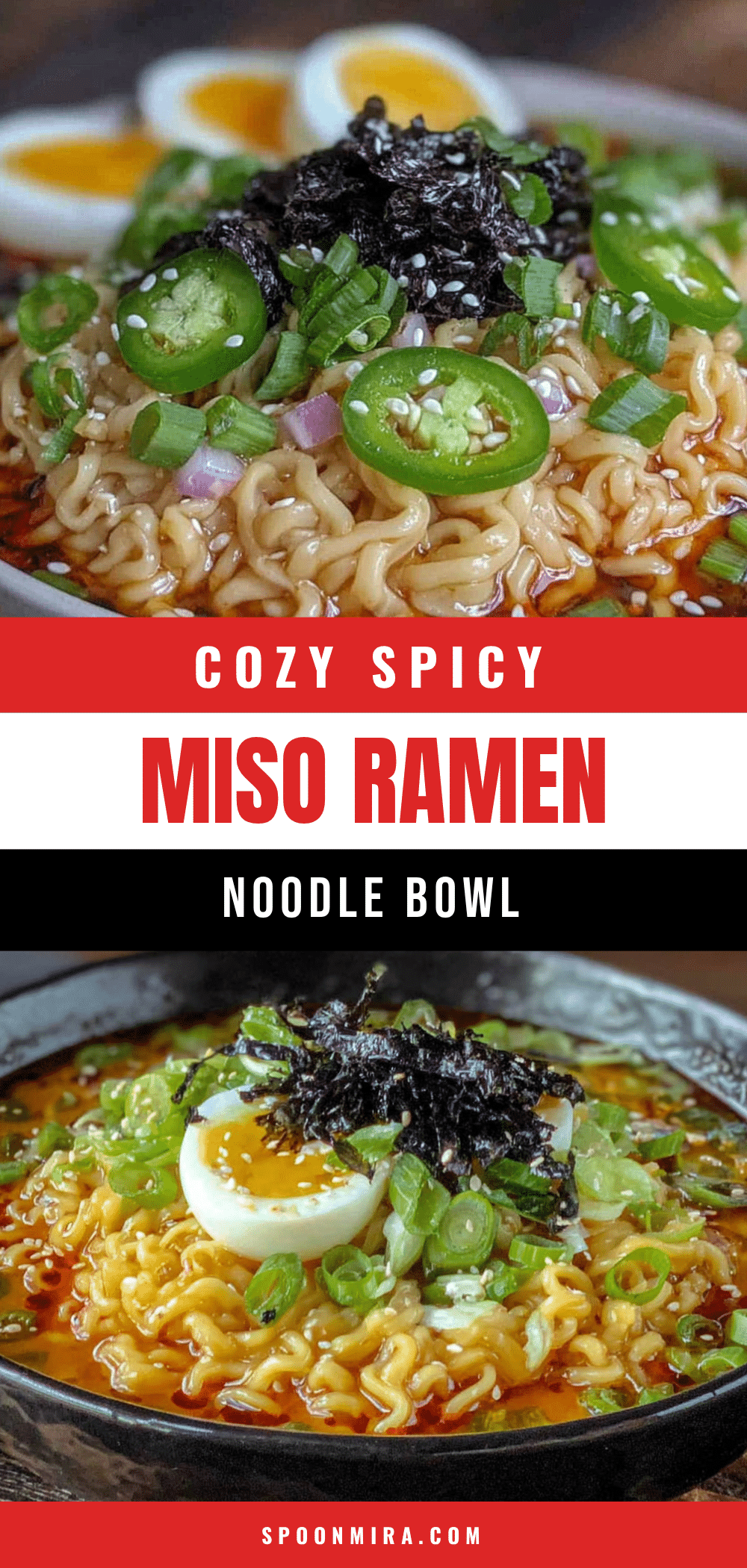
Cozy Spicy Miso Ramen Bowl with Perfect Soft-Boiled Egg
This spicy miso ramen bowl is fast, comforting, and packed with bold umami flavor. A perfect soft-boiled egg and a silky, buttery broth make it a weeknight favorite that feels like a hug in a bowl.
- Prep Time: 10 minutes
- Cook Time: 20 minutes
- Total Time: 30 minutes
- Yield: 2 servings 1x
- Category: Main Course
- Cuisine: Japanese
Ingredients
- 2 tablespoons miso paste (white or red, or a mix)
- 1 tablespoon chili garlic sauce or sambal oelek
- 4 cloves fresh garlic, minced
- 1-inch piece fresh ginger, grated
- 2 tablespoons soy sauce (low-sodium if desired)
- 1 tablespoon toasted sesame oil
- 4 cups chicken or vegetable broth
- 1 tablespoon unsalted butter
- 2 packs ramen noodles (discard seasoning packets)
- 2 large eggs (room temperature)
- 3 green onions, sliced
- 1 tablespoon sesame seeds (optional, toasted)
- Nori sheets (optional, torn into pieces)
Instructions
- Bring a small saucepan of water to a rolling boil. Gently lower the eggs into the water using a slotted spoon. Set a timer for exactly 6 minutes and 30 seconds. While the eggs boil, prepare a bowl of ice water. When the timer goes off, transfer the eggs immediately to the ice bath. Let them sit for at least 5 minutes.
- While the eggs cool, heat the sesame oil in a medium soup pot or Dutch oven over medium heat. Add the minced garlic and grated ginger. Stir constantly for about 30 seconds until fragrant, being careful not to let the garlic brown.
- Add the chili garlic sauce and butter. Stir until the butter melts completely, about 1 minute.
- Pour in the broth and soy sauce. Bring to a gentle simmer, then reduce heat to low. Let it bubble softly for 5 minutes to meld the flavors.
- Scoop out about 1/2 cup of the hot broth into a small bowl. Whisk in the miso paste until completely smooth. Pour the miso mixture back into the pot and stir well. Taste and adjust salt or spice if needed.
- Cook the ramen noodles according to package directions (usually 3-4 minutes). Drain well and divide between two large bowls.
- Gently tap the cooled eggs on the counter and peel under cold running water. Slice each egg in half lengthwise with a sharp knife.
- Ladle the hot miso broth over the noodles. Place two egg halves in each bowl. Top with sliced green onions, sesame seeds, and torn nori sheets if using. Serve immediately.
Notes
Do not boil the miso; add it at the end off the heat or at a very low simmer to preserve its flavor. Use room temperature eggs for easier peeling and even cooking. Peel eggs under running water to help the shell slide off cleanly. Taste the broth as you go, as miso paste saltiness varies by brand. Stir the broth well before ladling, as miso settles at the bottom.
Nutrition
- Serving Size: 1 bowl with 1 egg
- Calories: 420
- Sugar: 4
- Sodium: 980
- Fat: 22
- Saturated Fat: 8
- Carbohydrates: 38
- Fiber: 3
- Protein: 18
Keywords: spicy miso ramen, soft-boiled egg, ramen bowl, miso soup, quick ramen, comfort food, weeknight dinner