The first real frost of December had painted the kitchen windows opaque, and I was standing in front of a seven-pound standing rib roast that had cost more than my weekly grocery budget. My grandmother’s old meat thermometer—the one with the faded numbers and a bent tip—was sitting on the counter like a relic from another century. I had no business cooking something this expensive. Every food blog I’d read made it sound like brain surgery with a side of anxiety. But there it was, unwrapped on a cutting board, marbled like a piece of art, and I had exactly one shot to get it right.
That night taught me something no recipe card ever could. A prime rib roast doesn’t need perfection. It needs patience, a good crust, and someone willing to stand by the oven door at 11 p.m. just to watch the thermometer climb. The garlic herb butter I slathered on it—honestly, that was the part I was most nervous about. What if the herbs burned? What if the butter just slid off like a bad idea? But the butter clung to the meat like it belonged there, and the smell that filled the kitchen was the kind of thing you remember years later.
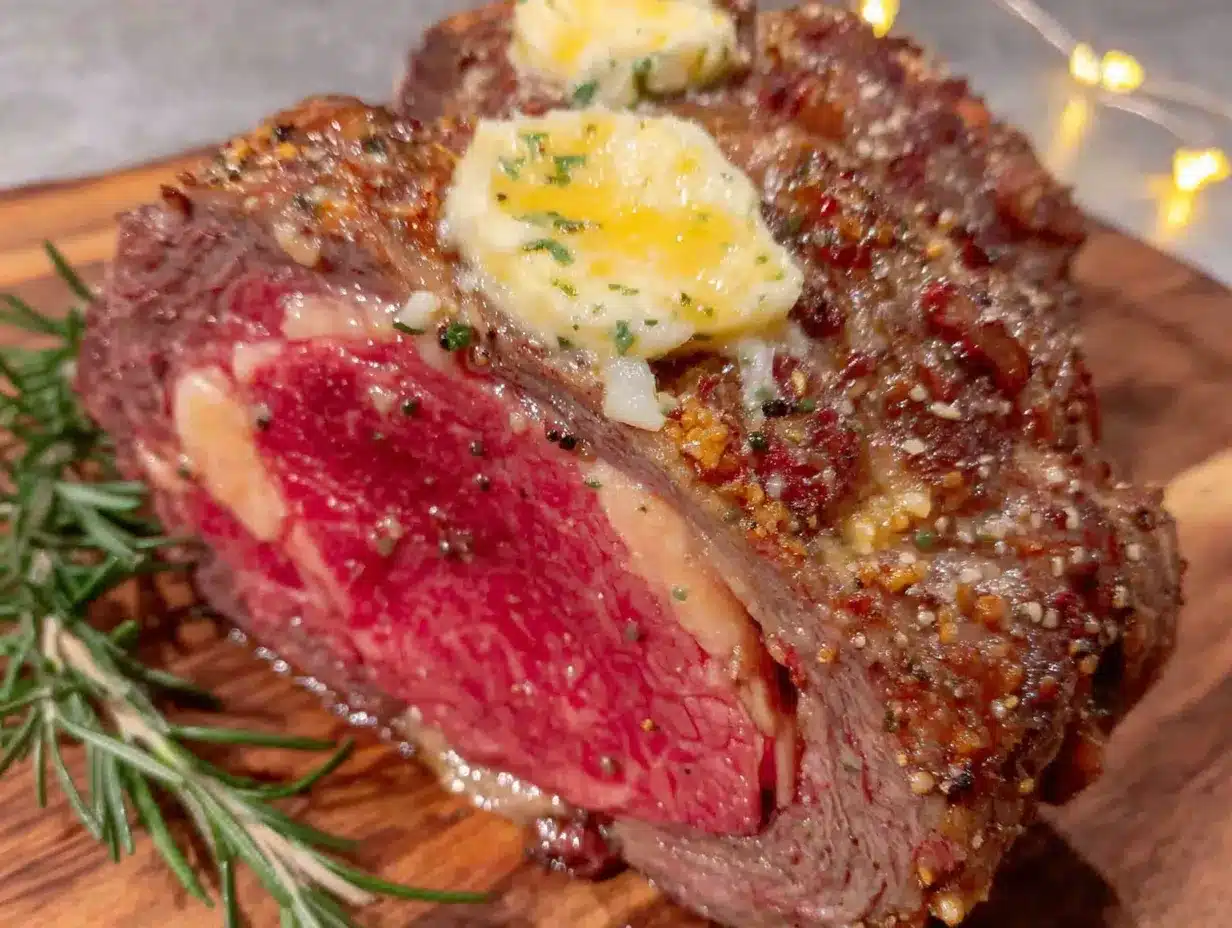
When I finally pulled that roast out of the oven, the crust was a deep mahogany, the inside a perfect rosy pink. My grandmother’s thermometer read 130°F, and I just stood there, holding the pan, not saying a word. That moment—quiet, steam rising, the weight of a good roast in my hands—is why I keep coming back to this recipe. It’s not about impressing anyone. It’s about knowing you did something right, even when you were scared to try.
Why You’ll Love This Recipe
This isn’t just another prime rib recipe you’ll scroll past. I’ve tested this method at least a dozen times—through trial, error, and one particularly sad Christmas dinner where the meat came out medium-well and my aunt wouldn’t let me forget it. Every tweak I made was born from a real mistake, and this version is the one that finally worked. Every. Single. Time.
- Foolproof Temperature Control: No guessing games. The reverse-sear method I use here gives you an edge-to-edge perfect pink with a crust that actually crunches when you bite into it.
- Simple, High-Impact Ingredients: You don’t need a specialty butcher or imported butter. Garlic, fresh herbs, and a good roast are all it takes. I’ve even used salted butter in a pinch—it still works.
- Perfect for Special Occasions: Christmas dinner, New Year’s Eve, a milestone birthday—this roast shows up like a star and doesn’t need a side dish to steal the show. Pair it with a side like caramelized maple roasted butternut squash and brussels sprouts for a holiday plate that feels intentional.
- Crowd-Pleaser Confidence: I’ve served this to picky eaters, steak snobs, and people who “don’t really like beef.” The leftovers never made it to the next day.
- Unbelievably Juicy: The garlic herb butter does double duty—it flavors the crust and bastes the meat as it renders. Every slice stays moist, even the end pieces.
What makes this recipe different from the dozens you’ve seen? It’s the technique. Most recipes tell you to blast the oven at 500°F and hope for the best. I start low and slow, then finish with a high-heat sear. It sounds backwards, but trust me—it’s the difference between a roast that looks impressive and one that tastes unforgettable.
This is the kind of recipe that makes you close your eyes after the first bite. It’s comfort food reimagined—faster than you’d expect, simpler than it looks, but with the same soul-soothing satisfaction that only a perfectly cooked roast can deliver. Perfect for impressing guests without stress, or turning a simple Sunday dinner into something your family will talk about for weeks.
What Ingredients You Will Need
This recipe uses simple, high-quality ingredients to deliver bold flavor and a perfect crust without any fuss. Most of these are pantry staples, and the ones that aren’t are easy to find at any grocery store.
- Bone-in Prime Rib Roast (4-6 pounds) – I prefer a bone-in roast for maximum flavor and moisture. The bones act as a natural heat shield, keeping the meat juicier. Look for a roast with good marbling—those white flecks of fat running through the meat are what make it tender.
- Unsalted Butter (1/2 cup, softened) – Unsalted gives you control over the salt level. Let it sit at room temperature for about 30 minutes before mixing. If you only have salted butter, reduce the added salt by half.
- Fresh Garlic (6 cloves, minced) – Please don’t use pre-minced garlic from a jar. Fresh garlic makes a huge difference in the butter. I like to smash the cloves with the side of my knife before mincing—it releases more of the oils.
- Fresh Rosemary (2 tablespoons, finely chopped) – Use the leaves only, not the woody stems. I’ve tried dried rosemary in a pinch, and it just doesn’t give the same aromatic punch. Fresh is non-negotiable here.
- Fresh Thyme (1 tablespoon, leaves stripped) – Thyme is more subtle than rosemary but adds a layer of earthy flavor that rounds out the butter. Run your fingers down the stem to strip the leaves quickly.
- Kosher Salt (1 tablespoon) – I use Diamond Crystal kosher salt. It’s less dense than table salt, so it’s harder to over-salt. If you’re using table salt, cut the amount in half.
- Freshly Ground Black Pepper (2 teaspoons) – Pre-ground pepper won’t cut it here. The coarse, fresh grind sticks to the butter and creates a better crust.
- Olive Oil (1 tablespoon) – Just enough to help the seasoning stick and add a little extra browning. Use a good-quality extra virgin olive oil if you have it.
- Beef Broth (1 cup, for the pan) – This isn’t for the roast itself—it’s for the drippings. The broth deglazes the pan and forms the base for a simple au jus. Low-sodium broth is best so you can control the salt.
Ingredient Selection Tips: When buying your prime rib, look for a roast that’s bright red with even marbling. Avoid any that look brown or have dry edges. I’ve had great luck with roasts from Costco and local butcher shops—the quality is consistently good. If you’re on a budget, a Choice-grade roast works fine, just make sure it has good fat distribution.
Substitution Guidance: If you’re out of fresh herbs, you can use 1 teaspoon each of dried rosemary and dried thyme. The flavor won’t be as bright, but it’ll still be good. For a dairy-free option, substitute the butter with a high-quality vegan butter stick—just make sure it’s the kind that’s meant for baking, not the spreadable tub kind.
Equipment Needed
You don’t need a professional kitchen to make this roast, but having the right tools makes the process smoother and less stressful.
- Roasting Pan with a Rack – A rack lifts the roast off the bottom of the pan, allowing air to circulate and the fat to render evenly. If you don’t have a rack, you can use a few thick carrot or celery stalks as a makeshift rack—it works surprisingly well.
- Instant-Read Meat Thermometer – This is the most important tool you’ll use. I’ve tried the leave-in probe thermometers, and they’re convenient, but I always double-check with an instant-read. My favorite is the Thermapen—it’s pricey but worth every penny for accuracy.
- Chef’s Knife – A sharp 8-inch chef’s knife makes trimming and slicing effortless. Dull knives are dangerous, so take 30 seconds to hone yours before you start.
- Kitchen Twine – You’ll need this to tie the roast between the bones. It helps the roast cook evenly and keeps the shape nice for carving. Any cotton kitchen twine will do.
- Basting Brush (optional) – I use a silicone brush to apply the garlic herb butter. You can also use your hands—just make sure they’re clean and the butter is soft enough to spread.
- Aluminum Foil – For tenting the roast while it rests. Don’t skip this step—resting is where the magic happens.
- Cutting Board with a Groove – The groove catches the juices, which you can pour back over the sliced meat. A wooden board is ideal, but plastic works too.
Budget-Friendly Alternatives: If you don’t own a roasting rack, a wire cooling rack set inside a baking sheet works perfectly. And if you don’t have an instant-read thermometer, you can use a standard oven-safe probe thermometer—just be careful not to open the oven too often to check it.
Preparation Method
Take the prime rib roast out of the refrigerator 2 hours before you plan to cook it. This is not optional—a cold roast will not cook evenly. Let it sit on the counter, still wrapped, until it comes to room temperature. Pat the roast completely dry with paper towels. Moisture is the enemy of a good crust.
In a small bowl, combine the softened butter, minced garlic, chopped rosemary, and thyme leaves. Mix until everything is evenly distributed. The butter should be spreadable but not melted. If it’s too firm, let it sit out for another 10 minutes.
Place the roast on a cutting board with the bones facing down. Using kitchen twine, tie the roast snugly between each bone. This helps the meat cook evenly and keeps the shape uniform. Don’t skip this—I’ve skipped it before, and the roast ended up looking like a lopsided football.
Season the roast generously with kosher salt and black pepper on all sides, including the ends. Don’t be shy—a lot of the seasoning will fall off during cooking. Use your hands to press the seasoning into the meat. Then, spread the garlic herb butter evenly over the entire surface of the roast. Use a basting brush or your hands to coat it completely. The butter will look like a thick paste—that’s exactly what you want.
Preheat your oven to 275°F (135°C). Place the roast on a rack inside a roasting pan, bone-side down. Insert an oven-safe probe thermometer into the thickest part of the meat, making sure it doesn’t touch the bone. Roast for approximately 25-30 minutes per pound, or until the internal temperature reaches 120-125°F (49-52°C) for medium-rare. For a 5-pound roast, this usually takes about 2 to 2.5 hours. Start checking the temperature at the 2-hour mark.
Once the roast reaches your target temperature, remove it from the oven and tent it loosely with aluminum foil. Let it rest for 30 minutes. During this time, the internal temperature will rise another 5-10°F (this is called carryover cooking). Do not skip the rest—if you cut into it too early, all the juices will run out onto the cutting board instead of staying in the meat.
While the roast rests, increase the oven temperature to 500°F (260°C). Once the oven is screaming hot, remove the foil from the roast and return it to the oven. Roast for 8-12 minutes, watching closely, until the crust is deep brown and bubbling. The butter and herbs will sizzle and create a beautiful, crackling crust. Keep an eye on it—it can go from perfect to burnt in seconds.
Remove the roast from the oven and let it rest for another 10 minutes before carving. This second rest allows the juices to redistribute after the high-heat blast. Transfer the roast to a cutting board, cut the twine, and slice between the bones to separate them. Then, slice the meat against the grain into 1/2-inch thick slices. Pour any accumulated juices from the cutting board over the slices before serving.
Troubleshooting Tip: If your crust isn’t browning after 8 minutes at 500°F, your oven might run cool. Give it another 3-4 minutes, but watch it like a hawk. If the butter starts smoking, pull it out immediately—it’s done.
Cooking Tips & Techniques
I’ve made this recipe at least a dozen times, and I’ve learned something new every single time. Here are the tips that saved me from disaster more than once.
The Reverse Sear is Non-Negotiable – I know it sounds backwards, but roasting low and slow first, then blasting at high heat, is the only way to get an even pink from edge to edge. If you start at 500°F, the outside will be overdone by the time the center reaches medium-rare. I learned this the hard way during a Christmas dinner that shall not be named.
Don’t Open the Oven – Every time you open the oven door, you lose heat and extend the cooking time. Trust your thermometer and resist the urge to peek. I set a timer for 90 minutes and only check when it goes off.
Let the Roast Breathe – That 2-hour rest on the counter isn’t just for convenience. It prevents the thermal shock that causes uneven cooking. A cold roast will be raw in the center and overdone on the edges. Give it time.
Slice Against the Grain – This is the number one mistake I see home cooks make. Find the direction of the muscle fibers and slice perpendicular to them. This shortens the fibers and makes each bite tender instead of chewy.
Use the Drippings – After you remove the roast, pour the pan drippings into a small saucepan. Add the beef broth and whisk over medium heat until simmering. That’s your au jus—simple, rich, and way better than anything from a packet.
My Biggest Failure – Once, I forgot to tie the roast before cooking. The meat spread out, cooked unevenly, and the presentation was a mess. The flavor was still good, but it looked like something a caveman would serve. Tie your roast. Learn from my shame.
Variations & Adaptations
This recipe is forgiving enough to adapt to different tastes and dietary needs. Here are a few ways I’ve tweaked it over the years.
- Herb Swap – Not a fan of rosemary? Use oregano or sage instead. I once made this with fresh tarragon and a little lemon zest—it was bright and unexpected, perfect for a spring dinner.
- Spicy Garlic Butter – Add 1 teaspoon of red pepper flakes or a minced chipotle pepper in adobo sauce to the butter. The heat cuts through the richness and adds a smoky kick. My husband loves this version.
- Dairy-Free Adaptation – Replace the butter with 1/2 cup of olive oil mixed with the same herbs and garlic. Brush it on just like you would the butter. The crust won’t be quite as crunchy, but the flavor is still fantastic.
- Smoked Prime Rib – If you have a smoker, try this at 225°F for 3-4 hours using hickory or oak wood. Follow the same reverse-sear method, then finish with a high-heat blast in the oven or on a grill. It’s a game-changer for summer cookouts.
- Individual Steaks – Don’t have a whole roast? Use this same garlic herb butter and reverse-sear method on thick-cut ribeye steaks. Cook at 275°F until they reach 120°F, then sear in a cast-iron skillet for 60 seconds per side.
Personal Variation: I once added a tablespoon of Dijon mustard to the butter before spreading it on the roast. The mustard added a subtle tang that paired beautifully with the herbs. It’s now my go-to version when I’m feeling fancy.
Serving & Storage Suggestions
Serve the prime rib roast immediately after the final rest, sliced and arranged on a warm platter. Pour the pan juices or au jus over the top or serve it on the side in a small gravy boat. The meat should be served at room temperature—not hot, not cold. This is when the texture is at its peak.
What to Serve With It: This roast pairs beautifully with creamy mashed potatoes, roasted root vegetables, or a simple arugula salad with lemon vinaigrette. For a holiday spread, I love serving it alongside cozy apple cider braised pork shoulder for a surf-and-turf twist. A bold red wine like Cabernet Sauvignon or a peppery Syrah is the perfect drink pairing.
Storage Instructions: Store leftover prime rib in an airtight container in the refrigerator for up to 4 days. Wrap the slices tightly in plastic wrap or aluminum foil to prevent them from drying out. For longer storage, freeze the slices in a freezer-safe bag for up to 3 months. Thaw overnight in the refrigerator before reheating.
Reheating Tips: The best way to reheat prime rib without drying it out is to place the slices in a baking dish with a splash of beef broth, cover with foil, and warm in a 300°F oven for 10-15 minutes. For a quick fix, you can microwave individual slices on 50% power for 30-second intervals—just don’t expect the same texture as fresh.
Flavor Development Note: Leftover prime rib actually gets better after a day in the fridge. The flavors meld together, and the meat becomes even more tender. I’ve been known to make this roast just for the leftovers—cold prime rib sandwiches with horseradish cream are a thing of beauty.
Nutritional Information & Benefits
Prime rib is a rich, indulgent cut of beef, but it does offer some nutritional benefits when enjoyed in moderation. A 4-ounce serving of cooked prime rib (about the size of a deck of cards) contains approximately 275-300 calories, 22 grams of protein, and 20 grams of fat, depending on the marbling. It’s a good source of iron, zinc, and B vitamins, particularly B12, which supports energy metabolism and nerve function.
Health Benefits of Key Ingredients: Garlic is known for its anti-inflammatory properties and immune-boosting compounds. Rosemary and thyme are rich in antioxidants, which help combat oxidative stress. The beef itself provides high-quality complete protein, essential for muscle repair and maintenance.
Dietary Considerations: This recipe is naturally gluten-free, low-carb, and keto-friendly. It contains dairy from the butter, but can be made dairy-free with the olive oil substitution mentioned above. The main allergen is dairy, so be mindful if serving to guests with lactose intolerance.
Personal Wellness Perspective: I don’t eat prime rib every week, but when I do, I make it count. This is a special-occasion meal, and I believe in enjoying it fully—without guilt. The key is balance. Pair it with a big, colorful salad or roasted vegetables, and you’ve got a meal that feels both indulgent and nourishing.
Conclusion
This perfect prime rib roast with garlic herb butter is more than just a recipe—it’s a confidence builder. It’s the dish that makes you feel like a real cook, even if you’re still learning. The reverse-sear method takes the guesswork out of roasting, and the garlic herb butter adds a layer of flavor that feels special without being complicated.
I love this recipe because it’s honest. It doesn’t promise perfection in 30 minutes or pretend that a good roast doesn’t require a little patience. But that patience pays off in every single slice—tender, juicy, and exactly the shade of pink you wanted. Whether you’re cooking for a holiday crowd or just treating yourself to something extraordinary, this roast delivers.
Now I want to hear from you. Did you try this recipe? Did you tweak the herbs or add your own twist? Drop a comment below and let me know how it turned out. And if you’re looking for another show-stopping main dish, don’t miss our brown sugar bourbon glazed ham for your next celebration. Happy cooking, friend—you’ve got this.
Frequently Asked Questions
How long should I cook a prime rib roast per pound?
At 275°F, plan for about 25-30 minutes per pound for medium-rare. A 5-pound roast typically takes 2 to 2.5 hours. Always use a meat thermometer to confirm doneness, not just time.
Can I use a boneless prime rib roast for this recipe?
Yes, but boneless roasts cook slightly faster because there’s no bone to slow down heat transfer. Start checking the temperature 15-20 minutes earlier than the bone-in version. The flavor is still excellent, though the bone adds extra moisture and richness.
What if I don’t have fresh herbs for the garlic butter?
You can substitute 1 teaspoon each of dried rosemary and dried thyme. The flavor won’t be as vibrant, but it’ll still taste good. Avoid using dried herbs that are more than a year old—they lose their potency.
How do I prevent the garlic from burning during the high-heat sear?
Make sure the garlic is minced very finely and mixed thoroughly into the butter. Larger pieces of garlic can burn at 500°F. If you’re worried, you can strain the butter before spreading it, but I find that finely minced garlic rarely burns if the butter is evenly applied.
Can I prepare the garlic herb butter in advance?
Absolutely. You can make the butter up to 3 days ahead and store it in the refrigerator. Let it come to room temperature for about 20 minutes before spreading so it’s soft enough to work with. You can also freeze the butter for up to 3 months—just thaw it overnight in the fridge.
Pin This Recipe!
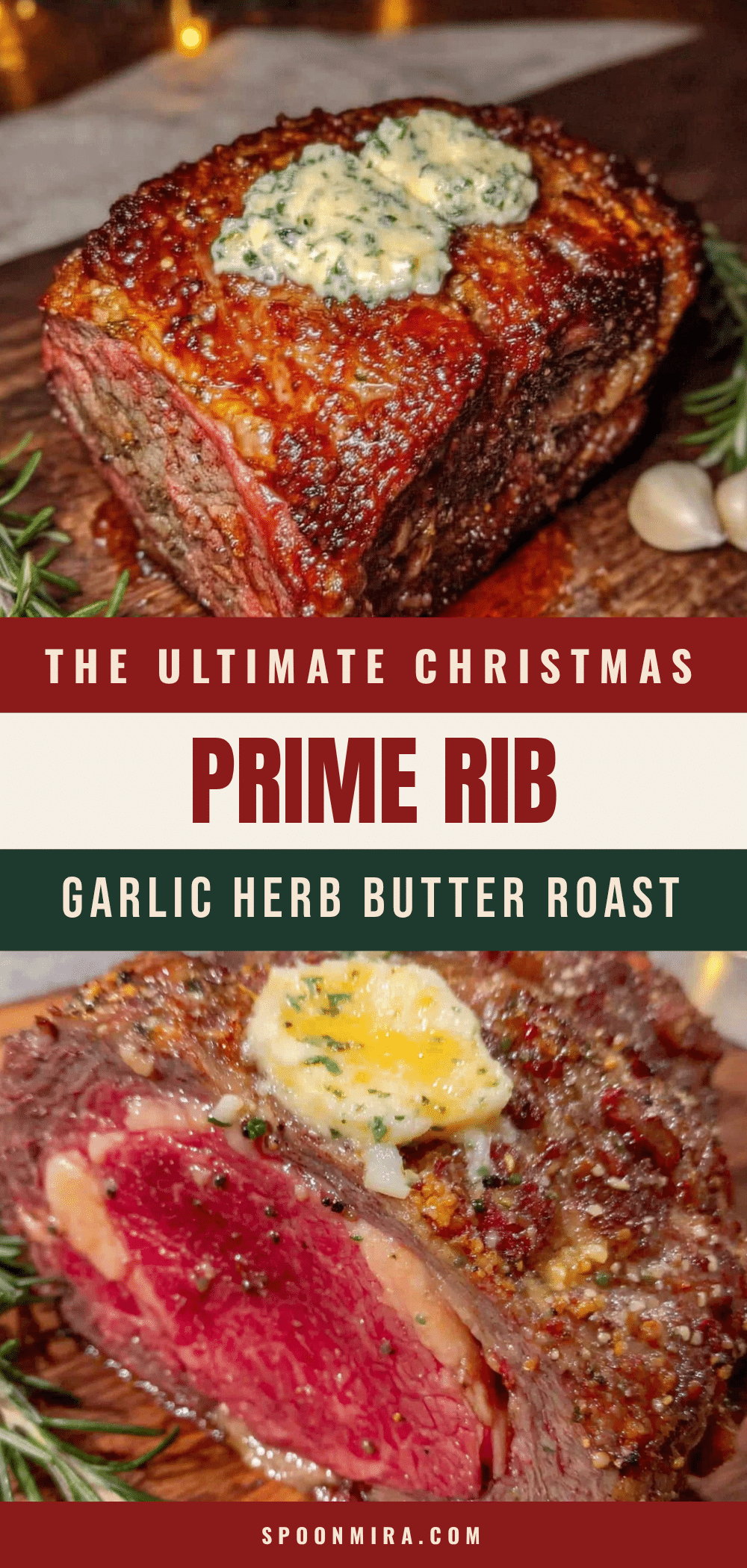
Perfect Prime Rib Roast with Garlic Herb Butter – Best Easy Recipe
This foolproof prime rib roast uses a reverse-sear method for edge-to-edge perfect pink meat with a crunchy, herb-crusted exterior. The garlic herb butter adds rich flavor while keeping every slice unbelievably juicy, making it the ultimate show-stopping centerpiece for special occasions.
- Prep Time: 20 minutes
- Cook Time: 2 hours 30 minutes
- Total Time: 3 hours 20 minutes
- Yield: 8 servings
- Category: Main Course
- Cuisine: American
Ingredients
- Bone-in Prime Rib Roast (4-6 pounds)
- Unsalted Butter (1/2 cup, softened)
- Fresh Garlic (6 cloves, minced)
- Fresh Rosemary (2 tablespoons, finely chopped)
- Fresh Thyme (1 tablespoon, leaves stripped)
- Kosher Salt (1 tablespoon)
- Freshly Ground Black Pepper (2 teaspoons)
- Olive Oil (1 tablespoon)
- Beef Broth (1 cup, for the pan)
Instructions
- Take the prime rib roast out of the refrigerator 2 hours before cooking to bring it to room temperature. Pat the roast completely dry with paper towels.
- In a small bowl, combine the softened butter, minced garlic, chopped rosemary, and thyme leaves. Mix until evenly distributed.
- Place the roast on a cutting board with the bones facing down. Using kitchen twine, tie the roast snugly between each bone.
- Season the roast generously with kosher salt and black pepper on all sides, including the ends. Press the seasoning into the meat. Spread the garlic herb butter evenly over the entire surface of the roast.
- Preheat the oven to 275°F (135°C). Place the roast on a rack inside a roasting pan, bone-side down. Insert an oven-safe probe thermometer into the thickest part of the meat, avoiding the bone.
- Roast for approximately 25-30 minutes per pound, or until the internal temperature reaches 120-125°F (49-52°C) for medium-rare. For a 5-pound roast, this usually takes about 2 to 2.5 hours.
- Once the roast reaches your target temperature, remove it from the oven and tent it loosely with aluminum foil. Let it rest for 30 minutes.
- While the roast rests, increase the oven temperature to 500°F (260°C). Remove the foil from the roast and return it to the oven. Roast for 8-12 minutes, watching closely, until the crust is deep brown and bubbling.
- Remove the roast from the oven and let it rest for another 10 minutes before carving.
- Transfer the roast to a cutting board, cut the twine, and slice between the bones to separate them. Slice the meat against the grain into 1/2-inch thick slices. Pour any accumulated juices over the slices before serving.
Notes
Let the roast rest at room temperature for 2 hours before cooking for even doneness. The reverse-sear method (low then high heat) ensures a perfect pink center and crispy crust. Do not skip the resting periods—they are crucial for juicy meat. For a dairy-free version, substitute butter with olive oil.
Nutrition
- Serving Size: 4 ounces
- Calories: 287
- Sodium: 480
- Fat: 20
- Saturated Fat: 9
- Carbohydrates: 1
- Protein: 22
Keywords: prime rib, prime rib roast, garlic herb butter, reverse sear, Christmas dinner, holiday roast, beef roast, special occasion