I was maybe ten, sitting on a wobbly stool, watching her pull a loaf pan from the oven. The kitchen smelled like brown sugar and Worcestershire, a kind of sweet-savory perfume that clung to the curtains for days. She didn’t call it a recipe. She just called it “Tuesday night.” And honestly? That was the magic of it. There was no fuss, no fancy equipment — just a big bowl, her hands, and that sticky, caramelized glaze she brushed on in the last ten minutes of baking. I remember sneaking a finger swipe of the hot glaze off the spoon and burning my tongue. Worth it, though.
Years later, after she passed, I found her recipe card tucked inside an old cookbook. The paper was stained and crinkled, the handwriting barely legible. But the ingredient list was simple — ground beef, breadcrumbs, an egg, some ketchup. And then, in the margins, she had written in pencil: “Don’t skip the glaze. It’s what makes it special.” That note stuck with me. So I started tweaking, testing, and burning a few loaves along the way until I landed on this version. This is my best classic meatloaf with brown sugar glaze — the one that finally tastes like hers, but better. Because I learned a few things she never wrote down.
This isn’t just another meatloaf recipe. It’s the one you’ll come back to on a busy weeknight, the one that makes leftovers disappear before lunch the next day. It’s comfort food that doesn’t need a special occasion — just a hungry family and an hour of your time.
Why You’ll Love This Recipe
Let’s be real — meatloaf can go wrong in so many ways. Dry, bland, crumbly, or just sad. But this version? It’s anything but. Here’s why it works:
- Quick & Easy : Comes together in about 15 minutes of active prep. The oven does the rest. Perfect for those “what’s for dinner?” panic moments.
- Simple Ingredients : Ground beef, breadcrumbs, an egg, ketchup, brown sugar, and a few pantry staples. No weird specialty items that cost a fortune.
- Perfect for Family Dinners : It’s the kind of meal that pleases picky kids and foodie adults alike. Serve it with mashed potatoes and roasted green beans, and you’ve got a classic.
- Crowd-Pleaser : I’ve brought this to potlucks and holiday gatherings, and it always gets devoured. People ask for the recipe every single time.
- Unbelievably Delicious : The brown sugar glaze caramelizes into this sticky, tangy-sweet crust that locks in moisture. The inside stays tender and juicy — not dry and crumbly like some sad meatloaves I’ve had.
What makes this recipe different from the rest? It’s the balance. The glaze isn’t just a topping — it’s brushed on twice during baking, creating layers of flavor. And the meat mixture includes a secret trick: a panade (a paste of breadcrumbs and milk) that keeps the loaf incredibly moist. Plus, I add a splash of Worcestershire and a pinch of smoked paprika for depth. It’s not just another meatloaf — it’s your new go-to.
Honestly, the first time I made this for my own family, my husband took one bite and said, “This is the best meatloaf I’ve ever had.” And he’s not easy to impress. That’s when I knew I’d cracked the code.
What Ingredients You Will Need
This recipe uses simple, wholesome ingredients that come together to create something truly special. Most of these are probably already in your kitchen, which is the beauty of it. Let’s break down each one and why it matters.
- Ground beef (80/20 lean-to-fat ratio) : This is key. You want enough fat to keep the meatloaf juicy, but not so much that it’s greasy. 80/20 is the sweet spot. I usually go with ground chuck from a trusted local butcher, but any good-quality beef works. If you use leaner meat like 90/10, you’ll need to add a bit more moisture (maybe an extra tablespoon of milk or ketchup).
- Breadcrumbs (plain or panko) : These act as a binder and help hold the loaf together. I prefer panko for a lighter texture, but plain breadcrumbs work fine too. If you’re gluten-free, use gluten-free breadcrumbs or crushed oats.
- Milk (whole or 2%) : This is mixed with the breadcrumbs to create a panade — a paste that locks in moisture. Whole milk gives the richest result, but 2% works. Don’t use skim; it’s too watery.
- One large egg : The egg binds everything together. If you’re out of eggs, you can use a flax egg (1 tablespoon flaxseed meal + 3 tablespoons water, let sit for 5 minutes).
- Ketchup : This adds tang and sweetness to the meat mixture and is also the base for the glaze. I use Heinz — it’s consistent and not too sweet. For the glaze, you’ll need extra ketchup mixed with brown sugar.
- Brown sugar (light or dark) : The star of the glaze. Dark brown sugar gives a deeper, more molasses-y flavor, while light brown sugar is milder. I’ve used both, and honestly, dark brown sugar is my favorite for that rich caramelized finish.
- Worcestershire sauce : This is the umami bomb. It adds depth and savory notes that make the meatloaf taste like it’s been simmering for hours. Don’t skip it — it’s a game-changer.
- Smoked paprika : A little goes a long way. It adds a subtle smokiness that pairs beautifully with the sweet glaze. Regular paprika works too, but smoked is better.
- Garlic powder and onion powder : These are my go-to for even flavor distribution. Fresh minced garlic can burn during the long bake, so powdered is safer and more consistent.
- Salt and black pepper : Season generously. Meatloaf can be bland if you’re shy with salt. I use about 1 teaspoon of salt and ½ teaspoon of pepper for 2 pounds of meat.
- Fresh parsley (optional, for garnish) : Adds a pop of color and freshness. Not necessary, but it makes the dish look prettier on the table.
Equipment Needed
You don’t need a lot of fancy tools for this recipe — that’s part of its charm. But having the right stuff makes the process smoother. Here’s what I use:
- Large mixing bowl : You need enough room to get your hands in there and mix everything without making a mess. I use a big ceramic bowl, but any large bowl works.
- Loaf pan (9×5-inch) : This is the classic shape. If you don’t have one, you can shape the meatloaf free-form on a baking sheet lined with parchment paper. I’ve done both, and the loaf pan gives a nicer, more uniform shape.
- Parchment paper or aluminum foil : Lining the pan makes cleanup a breeze. Trust me, you don’t want to scrub caramelized glaze off a pan.
- Small bowl for the glaze : To mix the ketchup and brown sugar. A small whisk or fork works fine.
- Pastry brush : For brushing the glaze onto the meatloaf. If you don’t have one, use the back of a spoon — it’s a little messier but works.
- Meat thermometer : This is non-negotiable for me. It’s the only way to guarantee your meatloaf is cooked perfectly without drying out. I use an instant-read digital thermometer.
- Cooling rack : Placing the loaf pan on a cooling rack after baking helps air circulate and prevents the bottom from getting soggy. Not essential, but helpful.
If you’re on a budget, don’t stress. A loaf pan from a thrift store costs a couple of bucks, and a basic meat thermometer is under $10. I’ve made this recipe with just a bowl and a pan, and it turned out great.
Preparation Method
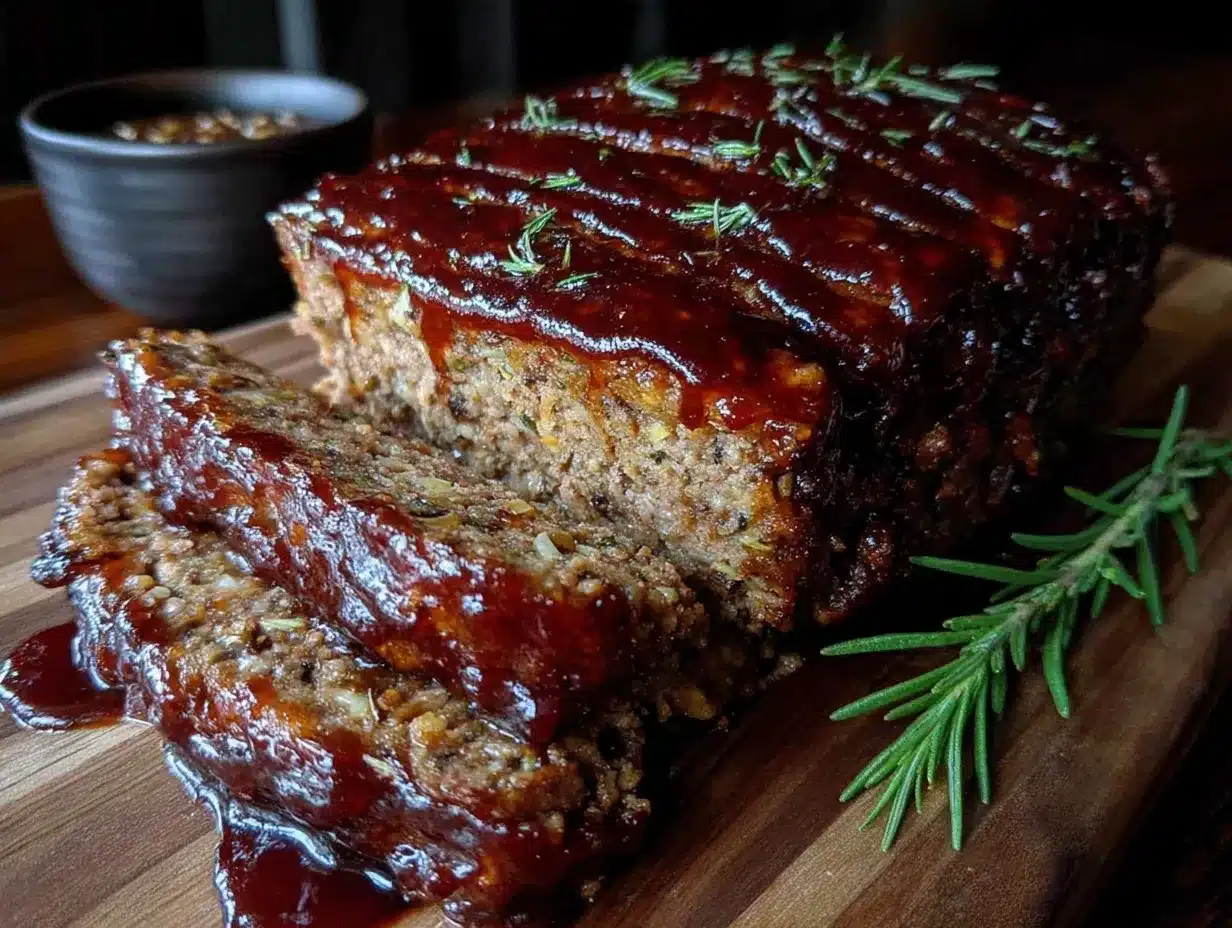
Alright, let’s get cooking. I’ll walk you through every step so you can nail this on your first try. The total time is about 1 hour and 15 minutes, but most of that is hands-off baking.
- Preheat your oven to 350°F (175°C). Line a 9×5-inch loaf pan with parchment paper, leaving some overhang on the sides — this makes lifting the meatloaf out super easy later. If you don’t have parchment, lightly grease the pan with oil or butter.
- Make the panade. In a small bowl, combine ½ cup of breadcrumbs with ¼ cup of milk. Stir until the breadcrumbs are fully soaked. Let it sit for 5 minutes. This creates a paste that keeps the meatloaf tender and moist. I learned this trick from a chef friend, and it’s a total game-changer.
- Mix the glaze. In another small bowl, whisk together ½ cup of ketchup, ⅓ cup of packed brown sugar, and 1 tablespoon of Worcestershire sauce. Set aside. This will be brushed on later.
- Combine the meat mixture. In a large mixing bowl, add 2 pounds of ground beef (80/20), the panade, 1 large egg (lightly beaten), 1 teaspoon of garlic powder, 1 teaspoon of onion powder, 1 teaspoon of smoked paprika, 1 teaspoon of salt, and ½ teaspoon of black pepper. Don’t forget the Worcestershire sauce — add 1 tablespoon to the meat mixture too.
- Mix gently. Use your hands to combine everything. And I mean gently — don’t overmix or squeeze the meat. Overworking it makes the meatloaf tough. Just fold and press until everything is evenly distributed. It should look homogenous but not mushy.
- Shape and place in the pan. Transfer the meat mixture to the lined loaf pan. Press it in evenly, making sure there are no air pockets. Smooth the top with your hands or a spatula.
- First bake (without glaze). Place the pan in the preheated oven and bake for 40 minutes. During this time, the meatloaf will start to firm up and release some juices. Don’t panic — that’s normal.
- Brush with glaze — first coat. After 40 minutes, carefully remove the pan from the oven. Using a pastry brush, spread about half of the glaze evenly over the top and sides of the meatloaf. Return it to the oven.
- Second bake (with glaze). Bake for another 15 minutes. The glaze will start to caramelize and get sticky.
- Brush with glaze — second coat. Remove the pan again and brush on the remaining glaze. This second coat is what gives you that beautiful, thick, glossy crust. Bake for a final 10 minutes.
- Check for doneness. Insert an instant-read meat thermometer into the center of the meatloaf. It should read 160°F (71°C). If it’s not there yet, bake for another 5-10 minutes and check again.
- Rest before slicing. This is crucial. Let the meatloaf rest in the pan for 10 minutes. Then lift it out using the parchment overhang and transfer to a cutting board. Let it rest another 5 minutes. Resting allows the juices to redistribute, so your slices stay neat and moist instead of falling apart.
- Slice and serve. Use a sharp knife to cut thick slices — about 1 inch each. Spoon any extra glaze from the pan over the slices. Garnish with fresh parsley if you’re feeling fancy.
Cooking Tips & Techniques
I’ve made this recipe at least two dozen times, and I’ve learned a few things the hard way. Here are my best tips to save you from the same mistakes.
Don’t skip the panade. I know it sounds like an extra step, but it’s the secret to a moist meatloaf. Without it, the breadcrumbs just absorb moisture from the meat and leave you with a dry loaf. The panade locks in moisture like a sponge. Trust me on this one.
Use a light hand when mixing. I once overmixed a meatloaf because I was in a hurry, and it came out dense and tough — like a hamburger patty that went wrong. Mix just until everything comes together. Stop when you can’t see streaks of egg or breadcrumbs anymore.
Let the meatloaf rest. I know you’re hungry, but cutting into it right away is a disaster. The juices will run out, the slices will crumble, and you’ll be left with a sad pile of meat. Let it rest for a full 15 minutes. Use that time to make a quick salad or warm up some sides.
Line your pan. I cannot stress this enough. The glaze gets super sticky and caramelized, and scrubbing a loaf pan is the worst. Parchment paper with overhang makes cleanup a breeze. You just lift the whole loaf out and toss the paper.
Check the temperature, not the time. Ovens vary wildly. My old oven ran hot, and I used to burn the glaze. Now I always use a meat thermometer. 160°F is the magic number. Anything above 165°F and you’re heading into dry territory.
Double the glaze if you love it. Some people want extra glaze for dipping. If that’s you, make 1½ times the glaze recipe. Brush on the same way, and serve the extra on the side.
Variations & Adaptations
One of the best things about meatloaf is how flexible it is. Here are some ways to make it your own.
Turkey meatloaf version: Swap the ground beef for ground turkey (93/7 lean-to-fat). Turkey is leaner, so add an extra tablespoon of olive oil or an extra egg yolk to keep it moist. The cooking time stays about the same, but check the temperature earlier — turkey can dry out fast.
Gluten-free option: Use gluten-free breadcrumbs or crushed gluten-free crackers (like Rice Chex or Schär brand). The panade works the same way. Just make sure your Worcestershire sauce is gluten-free (Lea & Perrins is, but check labels).
Spicy kick: Add 1-2 teaspoons of sriracha or a pinch of cayenne pepper to the glaze. Or mix in ½ teaspoon of red pepper flakes into the meat mixture. It gives a nice warmth without overwhelming the sweetness.
Cheese-stuffed meatloaf: This is my favorite indulgence. After shaping the meat mixture in the pan, press a line of shredded cheddar or mozzarella down the center. Fold the meat over to enclose it, then bake as usual. The cheese melts into gooey pockets — so good.
Mini meatloaves: For faster cooking or portion control, divide the mixture into 4-6 mini loaves. Place them on a baking sheet lined with parchment. Reduce baking time to about 25-30 minutes total, brushing with glaze after 15 minutes. Perfect for meal prep or lunchboxes.
Serving & Storage Suggestions
This meatloaf is a star on its own, but it loves company. Here’s how to serve it and keep it fresh.
Serving temperature and presentation: Serve warm, right after resting. Slice thickly and fan the slices out on a platter. Spoon any extra glaze from the pan over the top. A sprinkle of fresh parsley or chopped chives adds color. I like to serve it with classic sides — creamy mashed potatoes, roasted green beans, or a simple side salad. For a heartier meal, try it with one-pan garlic butter chicken and rice vibes, but swap the chicken for this meatloaf. It’s comfort food heaven.
Storage instructions: Leftovers keep beautifully. Let the meatloaf cool completely, then wrap it tightly in plastic wrap or aluminum foil. Store in the refrigerator for up to 4 days. You can also slice it first and store individual portions for easy lunches.
Freezer instructions: This meatloaf freezes like a dream. Wrap the whole loaf (or individual slices) in plastic wrap, then in foil, and place in a freezer-safe bag. Freeze for up to 3 months. To reheat, thaw overnight in the fridge, then warm slices in a 350°F oven for 10-15 minutes, or in the microwave for 1-2 minutes per slice.
Reheating tips: The oven is best for maintaining texture. Place slices on a baking sheet, cover loosely with foil, and warm at 350°F for 10 minutes. The microwave is faster but can make the edges a bit chewy. If you’re in a rush, microwave on 50% power for 1-2 minutes.
How flavors develop: Honestly, leftovers are even better the next day. The flavors meld together overnight, and the glaze gets even stickier and more caramelized. I’ve been known to make this specifically for next-day meatloaf sandwiches — sliced thick on sourdough with a smear of mayo and a pile of arugula. Divine.
Nutritional Information & Benefits
Here’s a rough estimate per serving (based on 8 servings per loaf):
- Calories: 380-420
- Protein: 28g
- Fat: 22g (8g saturated)
- Carbohydrates: 18g (12g sugar)
- Fiber: 1g
- Sodium: 680mg
These numbers will vary depending on the exact ingredients you use. But overall, this is a balanced meal with a good amount of protein and healthy fats from the beef. The brown sugar and ketchup add some sugar, but it’s not excessive for a comfort food classic.
Health benefits of key ingredients: Ground beef is rich in iron, zinc, and B vitamins — great for energy and immune function. The egg adds high-quality protein and choline, which supports brain health. Smoked paprika contains antioxidants like capsaicin, which has anti-inflammatory properties. And the garlic and onion powders add flavor without extra sodium.
Dietary considerations: This recipe is naturally gluten-free if you use gluten-free breadcrumbs. It’s also nut-free and soy-free (check your Worcestershire sauce). For a lower-carb version, replace the breadcrumbs with almond flour or crushed pork rinds. For a dairy-free option, use unsweetened almond milk in the panade and skip the cheese variation.
Potential allergens: Contains gluten (breadcrumbs), dairy (milk), and eggs. Adjust as needed.
Conclusion
This best classic meatloaf with brown sugar glaze is more than just a recipe — it’s a little piece of comfort that I hope becomes a staple in your kitchen. It’s forgiving enough for a beginner, yet impressive enough for a Sunday dinner. The sticky-sweet glaze, the tender interior, the way it makes your whole house smell like home — that’s the kind of cooking that matters.
I’ve tweaked this recipe over years of trial and error, and I’m finally happy to share it with you. It’s the one I turn to when I need a guaranteed win. And honestly? It never lets me down.
So go ahead — give it a try. Make it your own. Add extra glaze, sneak in some cheese, or keep it classic. And when you do, come back and let me know how it turned out. I’d love to hear about your version in the comments. Don’t forget to share a photo if you snap one — I’m always inspired by your creations.
Happy cooking, friends. You’ve got this.
Frequently Asked Questions
Can I make this meatloaf ahead of time?
Absolutely. You can assemble the meatloaf in the pan, cover it, and refrigerate it for up to 24 hours before baking. Just add about 10 minutes to the baking time since you’re starting from cold. The glaze should be added fresh, not pre-applied.
Why is my meatloaf falling apart?
This usually happens for two reasons: either you didn’t use a binder (the panade and egg), or you didn’t let it rest long enough before slicing. Make sure you’re using the breadcrumbs and milk mixture, and let the cooked loaf rest for at least 15 minutes. If it’s still crumbly, add an extra egg next time.
Can I use ground pork or a mix of meats?
Yes! A mix of ground beef and ground pork (about 50/50) adds even more richness and flavor. You can also use ground veal or lamb. Just keep the total weight at 2 pounds, and adjust the seasoning slightly if needed.
How do I prevent the glaze from burning?
The glaze can burn if you apply it too early or bake at too high a temperature. Stick to 350°F, and only add the glaze during the last 25 minutes of baking. If you notice the edges getting too dark, tent the loaf loosely with foil for the final 10 minutes.
What can I serve with meatloaf besides mashed potatoes?
So many options! Try it with creamy cucumber dill salad for a fresh, crunchy contrast. Or go for one-bowl ground beef and sweet potato skillet for a one-pan meal. Roasted vegetables, a simple green salad, or even buttered egg noodles all work beautifully.
Pin This Recipe!
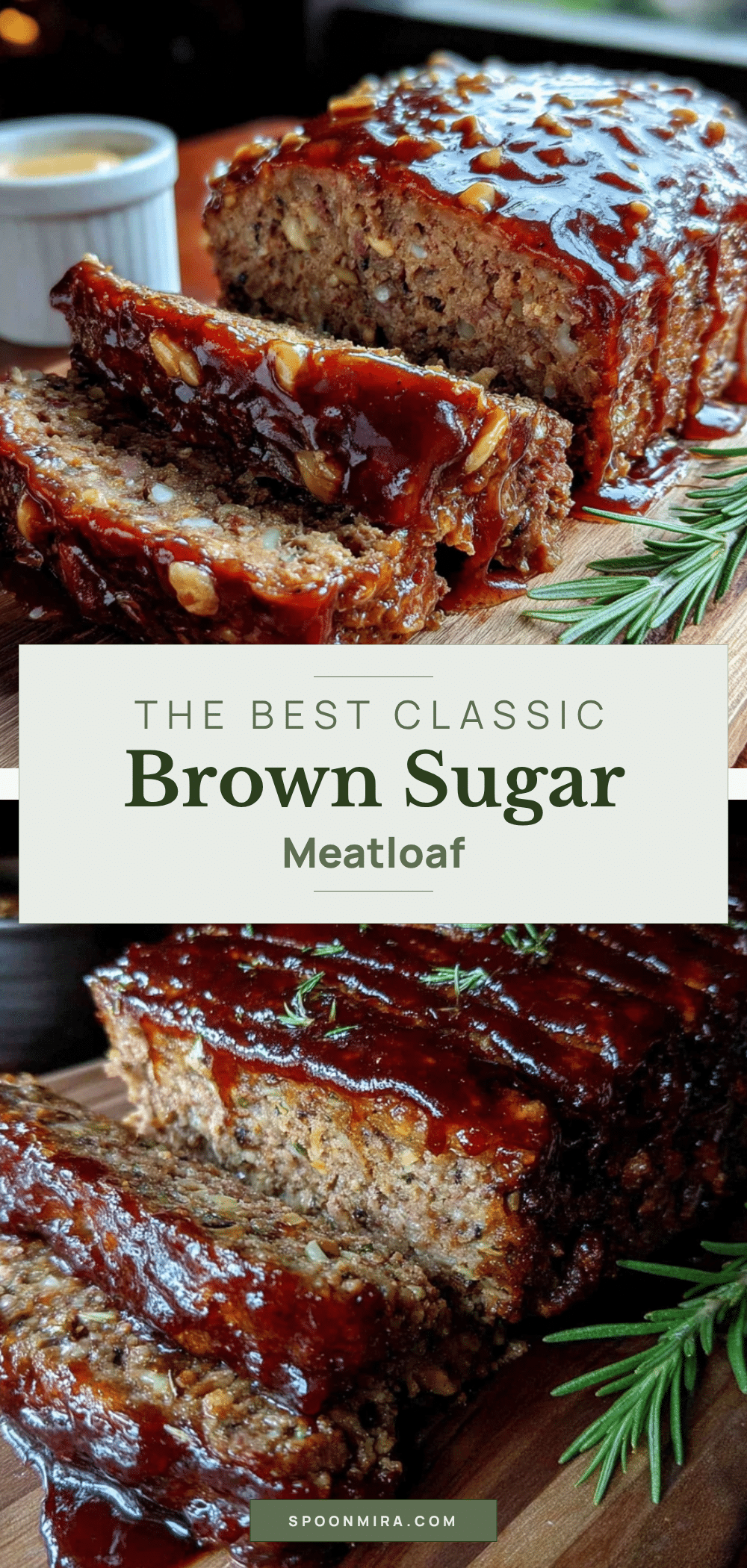
Best Classic Meatloaf Recipe with Brown Sugar Glaze
This classic meatloaf features a tender, juicy interior and a sticky-sweet brown sugar glaze that caramelizes into a beautiful crust. It’s comfort food at its finest, perfect for busy weeknights or family dinners.
- Prep Time: 15 minutes
- Cook Time: 1 hour 5 minutes
- Total Time: 1 hour 20 minutes
- Yield: 8 servings 1x
- Category: Main Course
- Cuisine: American
Ingredients
- 2 pounds ground beef (80/20 lean-to-fat ratio)
- ½ cup breadcrumbs (plain or panko)
- ¼ cup milk (whole or 2%)
- 1 large egg
- ½ cup ketchup
- ⅓ cup packed brown sugar (light or dark)
- 1 tablespoon Worcestershire sauce
- 1 teaspoon garlic powder
- 1 teaspoon onion powder
- 1 teaspoon smoked paprika
- 1 teaspoon salt
- ½ teaspoon black pepper
- Fresh parsley (optional, for garnish)
Instructions
- Preheat your oven to 350°F (175°C). Line a 9×5-inch loaf pan with parchment paper, leaving some overhang on the sides. If you don’t have parchment, lightly grease the pan with oil or butter.
- Make the panade: In a small bowl, combine ½ cup of breadcrumbs with ¼ cup of milk. Stir until the breadcrumbs are fully soaked. Let it sit for 5 minutes.
- Mix the glaze: In another small bowl, whisk together ½ cup of ketchup, ⅓ cup of packed brown sugar, and 1 tablespoon of Worcestershire sauce. Set aside.
- Combine the meat mixture: In a large mixing bowl, add 2 pounds of ground beef (80/20), the panade, 1 large egg (lightly beaten), 1 teaspoon of garlic powder, 1 teaspoon of onion powder, 1 teaspoon of smoked paprika, 1 teaspoon of salt, ½ teaspoon of black pepper, and 1 tablespoon of Worcestershire sauce.
- Mix gently using your hands. Do not overmix or squeeze the meat. Fold and press until everything is evenly distributed.
- Shape and place in the pan: Transfer the meat mixture to the lined loaf pan. Press it in evenly, making sure there are no air pockets. Smooth the top with your hands or a spatula.
- First bake (without glaze): Place the pan in the preheated oven and bake for 40 minutes.
- Brush with glaze – first coat: After 40 minutes, carefully remove the pan from the oven. Using a pastry brush, spread about half of the glaze evenly over the top and sides of the meatloaf. Return it to the oven.
- Second bake (with glaze): Bake for another 15 minutes.
- Brush with glaze – second coat: Remove the pan again and brush on the remaining glaze. Bake for a final 10 minutes.
- Check for doneness: Insert an instant-read meat thermometer into the center of the meatloaf. It should read 160°F (71°C). If not, bake for another 5-10 minutes and check again.
- Rest before slicing: Let the meatloaf rest in the pan for 10 minutes. Then lift it out using the parchment overhang and transfer to a cutting board. Let it rest another 5 minutes.
- Slice and serve: Use a sharp knife to cut thick slices – about 1 inch each. Spoon any extra glaze from the pan over the slices. Garnish with fresh parsley if desired.
Notes
Don’t skip the panade – it keeps the meatloaf moist. Use a light hand when mixing to avoid a dense texture. Let the meatloaf rest for 15 minutes before slicing to allow juices to redistribute. Line the pan with parchment for easy cleanup. For extra glaze, make 1½ times the glaze recipe.
Nutrition
- Serving Size: 1 slice (1 inch thic
- Calories: 400
- Sugar: 12
- Sodium: 680
- Fat: 22
- Saturated Fat: 8
- Carbohydrates: 18
- Fiber: 1
- Protein: 28
Keywords: meatloaf, classic meatloaf, brown sugar glaze, comfort food, ground beef, easy dinner, family meal