Marta wasn’t trying to impress me. I’d stopped by her apartment to pick up a book I’d lent her, and the smell of cinnamon and caramelized apples hit me before I even sat down. She was standing at her tiny stove in sweatpants, flipping something in a cast iron skillet like it was absolutely nothing—like she wasn’t creating the exact kind of magic that makes you want to move in with someone, just for the breakfasts.
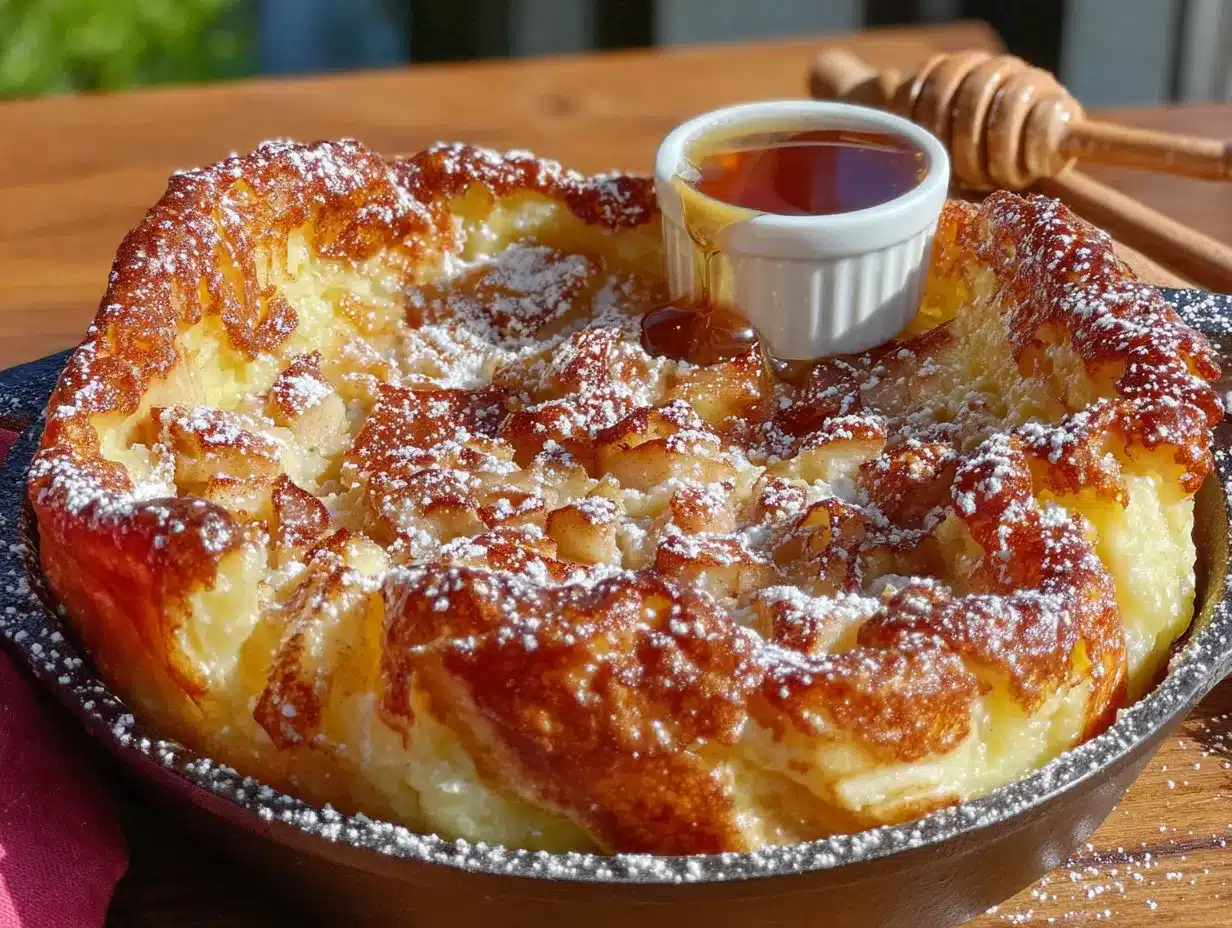
“It’s just a German pancake,” she said when I asked, shrugging. “My Oma used to make them.” She poured the batter over the sizzling apples, slid the whole pan into the oven, and went back to scrolling on her phone. Ten minutes later, she pulled out this puffy, golden thing that looked like it belonged on a magazine cover. She cut it in half, handed me a fork, and said, “Don’t burn your mouth.”
I mean, I did burn my mouth. And I didn’t care. That first bite—the edges were all crispy and caramelized, the middle was soft and almost custardy, and the apples were this sweet-tart jammy situation happening in every forkful. I asked her for the recipe three times before I finally left, and she texted it to me later that night with a note: “It’s just eggs, flour, apples. Don’t overthink it.”
But here’s the thing—I did overthink it. The first time I tried making it at home, I used the wrong pan and the pancake stuck so badly I had to eat it with a spoon out of the sink. The second time, I forgot the sugar. By the third attempt, I finally understood what Marta meant. This recipe isn’t about perfection. It’s about that cozy feeling you get when something warm and sweet lands in front of you, and you know it was made with love—even if it’s a little lopsided.
Maybe you’ve been there, standing in your kitchen on a chilly morning, craving something that feels like a hug. This German Apple Pancake for Two is exactly that. It’s simple enough for a random Tuesday and special enough for a lazy Sunday. And honestly? It might just become your new favorite way to eat apples.
Why You’ll Love This Recipe
Let me tell you why this little pancake has earned a permanent spot in my weekend rotation. I’ve tested it at least a dozen times now—burned a few, undercooked a couple, and finally nailed the version that makes me close my eyes after the first bite every single time.
- Quick & Easy: From start to table in under 30 minutes. No complicated techniques, no stand mixer required. Just a bowl, a whisk, and a hot oven.
- Simple Ingredients: You probably have everything already—eggs, flour, milk, butter, apples, and a little cinnamon. No fancy grocery store trips needed.
- Perfect for Two: This recipe is intentionally scaled for two servings. No leftovers to deal with (unless you want to fight over the last bite).
- Crowd-Pleaser: My neighbor’s kids devoured it. My mom asked for the recipe. Even my picky friend who “doesn’t like cooked fruit” finished her half.
- Unbelievably Delicious: The contrast between the crispy, caramelized edges and the soft, custardy center is next-level comfort food. It’s like a cross between a crepe, a Dutch baby, and apple pie—without all the work.
What makes this version different from the dozens of German pancake recipes out there? It’s the technique. Most recipes tell you to pour the batter over the apples and bake it all together. But I learned from Marta’s Oma’s method—you caramelize the apples in butter first, then add the batter. That extra step creates this incredible butterscotch-like flavor in the apples and gives the bottom of the pancake a beautiful golden crust. Trust me, it’s worth the extra five minutes.
This isn’t just a recipe—it’s the kind of breakfast that makes you slow down. The kind where you sit with your coffee and watch the pancake puff up in the oven. The kind that reminds you why cooking for someone (even if that someone is just you) feels so good. It’s comfort food, reimagined for a quiet morning at home.
What Ingredients You Will Need
This recipe uses simple, wholesome ingredients that come together to create something truly special. No weird specialty items, no hard-to-find spices. Just pantry staples that transform into magic when you treat them right.
- Apples (2 medium): You want a firm, slightly tart apple that holds its shape during cooking. I personally love Honeycrisp or Granny Smith for this. Honeycrisp gives you that sweet-tart balance, while Granny Smith stays nice and firm and cuts through the richness of the butter and eggs. If you only have Fuji or Gala, those work too—just know they’ll break down a bit more and get almost jammy, which is honestly delicious in its own way. Peel them, core them, and slice them into thin wedges—about 1/4 inch thick.
- Unsalted Butter (3 tablespoons): Divided use. You’ll use 2 tablespoons for caramelizing the apples and 1 tablespoon for the pan. I always use unsalted butter so I can control the salt level. If you only have salted butter, just skip the extra pinch of salt in the batter.
- Granulated Sugar (3 tablespoons, divided): Two tablespoons go into the apples to help them caramelize, and one tablespoon goes into the batter for a touch of sweetness. You could use brown sugar for the apples if you want a deeper, molasses-like flavor—I’ve done that on cold mornings when I wanted something extra cozy.
- Large Eggs (2): Room temperature is key here. Cold eggs won’t emulsify into the batter as smoothly, and you’ll end up with a lumpy mess. If you forgot to take them out of the fridge, just place them in a bowl of warm water for 5 minutes before you start.
- Whole Milk (1/2 cup / 120 ml): Whole milk gives the pancake that rich, custardy texture. I’ve tested this with 2% milk and it works fine, but the texture is noticeably less luxurious. Avoid skim milk—it makes the pancake a bit rubbery. For a dairy-free version, oat milk is your best bet; it has enough body to mimic whole milk.
- All-Purpose Flour (1/2 cup / 60 grams): Spoon and level your flour—don’t scoop directly from the bag or you’ll pack in too much and end up with a dense pancake. I use Gold Medal or King Arthur Flour, both reliable brands. If you need a gluten-free option, a 1:1 gluten-free baking flour blend works beautifully here.
- Ground Cinnamon (1/2 teaspoon): This goes into the apples while they cook. The smell alone is worth the price of admission. I use McCormick or simply a local spice shop blend—just make sure your cinnamon isn’t years old and dusty.
- Vanilla Extract (1/2 teaspoon): A little goes a long way. Pure vanilla extract is ideal, but imitation vanilla works in a pinch. Add it to the batter for that warm, aromatic background note.
- Salt (1/4 teaspoon): Don’t skip this! Salt balances the sweetness and makes the flavors pop. I use fine sea salt for baking.
- Powdered Sugar (for dusting): Optional but highly recommended. That snowy dusting makes it look like you tried really hard, even though you didn’t.
Substitution Notes: If you’re out of whole milk, mix 1/4 cup heavy cream with 1/4 cup water for a similar fat content. No apples? Pears work beautifully in this recipe—just use firm Bosc or Anjou pears. You can also try sliced peaches in the summer, though you’ll want to drain them well first.
Equipment Needed
You don’t need a fancy kitchen to make this pancake, but having the right tools makes the process smoother. Here’s what you’ll need:
- 10-inch Oven-Safe Skillet: This is non-negotiable. You need a skillet that can go from stovetop to oven. Cast iron is ideal—it holds heat beautifully and gives you those crispy edges. I use a 10-inch Lodge cast iron skillet, and it’s perfect for this recipe. If you don’t have cast iron, a stainless steel or non-stick oven-safe skillet works too. Just make sure the handle is metal, not plastic.
- Mixing Bowl (medium): Any bowl will do. I use a glass mixing bowl because I can see when the batter is smooth.
- Whisk: A wire whisk is best for getting the batter smooth without overmixing. If you don’t have one, you can use a fork, but it’ll take a bit more elbow grease.
- Measuring Cups and Spoons: For accuracy. I’ve learned the hard way that eyeballing ingredients in baking leads to sad pancakes.
- Chef’s Knife and Cutting Board: For peeling and slicing the apples. A sharp knife makes the job infinitely easier.
- Spatula (optional): For serving. A thin metal spatula works best for lifting the pancake out of the skillet.
Budget-Friendly Tip: Don’t have a cast iron skillet? Check thrift stores—I found my favorite one for $8. You can also use a 9-inch pie plate if you don’t mind a slightly thicker pancake; just reduce the baking time by a couple of minutes.
Preparation Method
Alright, let’s make this pancake. I’ve broken it down into clear steps so you can follow along without any hiccups. Take your time, and remember—even if it doesn’t look perfect, it’s going to taste amazing.
- Preheat your oven to 425°F (220°C). Place your skillet inside the oven while it preheats. Yes, you read that right—the skillet needs to get hot before you add the batter. This is the secret to that dramatic puff and those crispy edges. Set a timer for 10 minutes once the oven reaches temperature.
- Prepare the apples. While the oven is preheating, peel and core your apples. Slice them into thin wedges—about 1/4 inch thick. Don’t make them too thick or they won’t soften enough during the short baking time. Too thin and they’ll turn to mush. Aim for uniform slices so they cook evenly.
- Make the batter. In your medium mixing bowl, whisk together the 2 eggs until they’re light and frothy—about 30 seconds. Add the 1/2 cup milk, 1/2 cup flour, 1 tablespoon sugar, 1/2 teaspoon vanilla extract, and 1/4 teaspoon salt. Whisk until the batter is smooth with no lumps. It should be thin, like heavy cream. Don’t overmix—a few tiny lumps are fine. Overmixing develops the gluten and makes the pancake tough.
- Caramelize the apples. Carefully remove the hot skillet from the oven (use oven mitts, the handle is blazing hot!) and place it on the stovetop over medium heat. Add 2 tablespoons of butter and swirl until melted. Add the sliced apples, 2 tablespoons of sugar, and 1/2 teaspoon cinnamon. Stir to coat the apples. Cook for 3-4 minutes, stirring occasionally, until the apples are softened and the sugar is bubbling and starting to turn golden. You should smell that incredible cinnamon-butter aroma filling your kitchen.
- Add the remaining butter. Drop the remaining 1 tablespoon of butter into the skillet with the apples and let it melt. This extra butter ensures the pancake won’t stick and adds richness to the bottom crust.
- Pour in the batter. Spread the apples into an even layer in the skillet. Pour the batter evenly over the apples. Don’t stir—just let it settle. The batter should sizzle slightly when it hits the hot pan. That’s a good sign.
- Bake immediately. Carefully transfer the skillet back to the oven. Bake for 15-18 minutes, until the pancake is puffed up, golden brown around the edges, and the center is set but still slightly jiggly. Don’t open the oven door during the first 12 minutes or the pancake might deflate.
- Serve right away. Remove the skillet from the oven (again, careful with that handle!). The pancake will start to deflate almost immediately—that’s normal. Dust generously with powdered sugar. Cut into wedges and serve warm. I like to add a drizzle of maple syrup or a dollop of Greek yogurt on the side.
Sensory Cues: When the apples are ready, they should be soft enough that a fork slides through easily but still hold their shape. The pancake is done when the edges are deeply golden and pulling away from the skillet slightly. The center should look puffed and feel firm to a gentle touch, like a soft pillow.
Troubleshooting: If your pancake didn’t puff up, your oven might not have been hot enough, or you opened the door too early. Next time, make sure the skillet is fully preheated and resist the urge to peek. If the bottom burns before the top is set, your oven runs hot—try reducing the temperature to 400°F next time.
Cooking Tips & Techniques
After making this recipe more times than I care to admit, I’ve picked up a few tricks that make a real difference. Here’s what I wish someone had told me the first time.
Don’t skip preheating the skillet. I know it seems fussy, but this step is crucial. A hot skillet creates instant steam when the batter hits it, which gives you that dramatic puff and those crispy, buttery edges. The first time I made this, I was impatient and just buttered a cold pan—the pancake came out flat and sad. Learn from my mistakes.
Room temperature ingredients matter. Cold eggs and cold milk will make the batter lumpy and prevent it from emulsifying properly. I’ve tested this side by side, and the difference is noticeable. Room temperature ingredients create a smoother, more uniform batter that bakes up lighter and more tender. Set your eggs and milk out 20 minutes before you start, or use the warm water trick for the eggs.
Watch your apple slices. Too thick and they’ll be crunchy in the middle of your soft pancake. Too thin and they’ll disintegrate. Aim for uniform 1/4-inch slices. I use a mandoline slicer when I’m feeling fancy, but a sharp knife and steady hand work just fine.
Don’t overmix the batter. This is the most common mistake I see. Overmixing develops the gluten in the flour, which makes the pancake tough and chewy instead of tender and custardy. Whisk just until the flour disappears—a few tiny lumps are perfectly fine. They’ll cook out in the oven.
Serve immediately. This pancake is at its absolute best fresh from the oven. It’ll start deflating within minutes as it cools. That’s just what German pancakes do—they’re dramatic like that. If you need to hold it for a few minutes, keep it in the warm oven with the door cracked open.
Multitasking tip: While the apples are caramelizing, whisk together your batter. By the time the apples are ready, your batter is ready too. This shaves off a few minutes and keeps things moving smoothly.
Variations & Adaptations
One of the best things about this recipe is how flexible it is. I’ve played around with different flavors and dietary needs, and here are my favorite variations.
Gluten-Free Version: Swap the all-purpose flour with a 1:1 gluten-free baking blend. I’ve used Bob’s Red Mill and King Arthur Flour’s gluten-free blends with great results. The texture is slightly more delicate, but the flavor is spot on. Add an extra tablespoon of milk to thin the batter slightly, as gluten-free flours tend to absorb more liquid.
Dairy-Free Version: Use vegan butter (I like Miyoko’s or Earth Balance) and oat milk or almond milk. The texture won’t be quite as rich, but it’s still delicious. Make sure your vegan butter is unsalted so you can control the salt level.
Seasonal Fruit Swaps: In the fall, try pears instead of apples—they caramelize beautifully and have a more delicate flavor. In winter, use sliced firm pears or even a handful of cranberries (add an extra tablespoon of sugar to balance the tartness). Spring calls for fresh strawberries or rhubarb. Summer is perfect for peaches or nectarines. Just remember to adjust the sugar based on the sweetness of your fruit.
Spice It Up: Add a pinch of nutmeg or cardamom along with the cinnamon for a warmer, more complex flavor. I sometimes add a tiny pinch of ginger for a little kick. For a chai-inspired version, try a blend of cinnamon, cardamom, ginger, and cloves.
Savory Twist: Yes, you can make this savory! Omit the sugar and cinnamon from the apples. Instead, cook the apples with a little thyme and black pepper. Add a handful of grated Gruyere or sharp cheddar to the batter. Serve with a side of bacon or arugula salad. It’s unexpectedly amazing.
Personal Variation: My absolute favorite variation is adding a handful of toasted pecans or walnuts to the apples during the last minute of cooking. The nuts get all toasty and buttery, and the crunch is perfect against the soft pancake. I also like to drizzle a little maple syrup over the top before serving—it soaks into the pancake and makes every bite even more decadent.
Serving & Storage Suggestions
This pancake is best enjoyed fresh and warm, but let’s talk about how to serve it and what to do with any leftovers (if you’re lucky enough to have any).
Serving Temperature: Serve the pancake straight from the oven while it’s still puffed and golden. It will deflate as it cools, but that’s part of its charm. I like to bring the whole skillet to the table—it makes for a beautiful presentation and keeps the pancake warm longer.
Presentation Ideas: Dust generously with powdered sugar right before serving. Add a few fresh apple slices or a sprig of mint for color. A drizzle of maple syrup or honey is always welcome. For a more indulgent breakfast, serve with a dollop of whipped cream or a scoop of vanilla ice cream (yes, for breakfast—don’t judge).
Complementary Dishes: This pancake pairs beautifully with a side of crispy bacon or breakfast sausage. The salty, savory flavors balance the sweet, fruity pancake perfectly. A simple green salad with a lemon vinaigrette is a surprisingly good match if you’re serving it for brunch. For drinks, a hot cup of coffee, chai latte, or spiced apple cider completes the cozy vibe.
Storage Instructions: If you have leftovers, let the pancake cool completely in the skillet. Cover tightly with foil or plastic wrap and refrigerate for up to 2 days. The texture won’t be quite the same as fresh, but it’s still tasty.
Reheating Methods: The best way to reheat is in a 350°F oven for 5-7 minutes. This helps restore some of the crispiness. You can also reheat individual slices in a toaster oven or in a skillet over medium heat for 2-3 minutes per side. Avoid the microwave—it makes the pancake soggy and rubbery.
Flavor Development: Honestly, the flavors actually meld together nicely overnight. The apple and cinnamon flavors deepen, and the pancake becomes more tender. It’s not as dramatic as fresh from the oven, but it’s still a lovely breakfast treat.
Nutritional Information & Benefits
Let’s be real—this is a treat. But it’s made with real, whole ingredients, and that counts for something. Here’s a rough breakdown per serving (half the pancake):
| Nutrient | Amount Per Serving |
|---|---|
| Calories | ~380 |
| Protein | 10g |
| Fat | 20g |
| Carbohydrates | 42g |
| Fiber | 3g |
| Sugar | 24g |
Pin This Recipe!
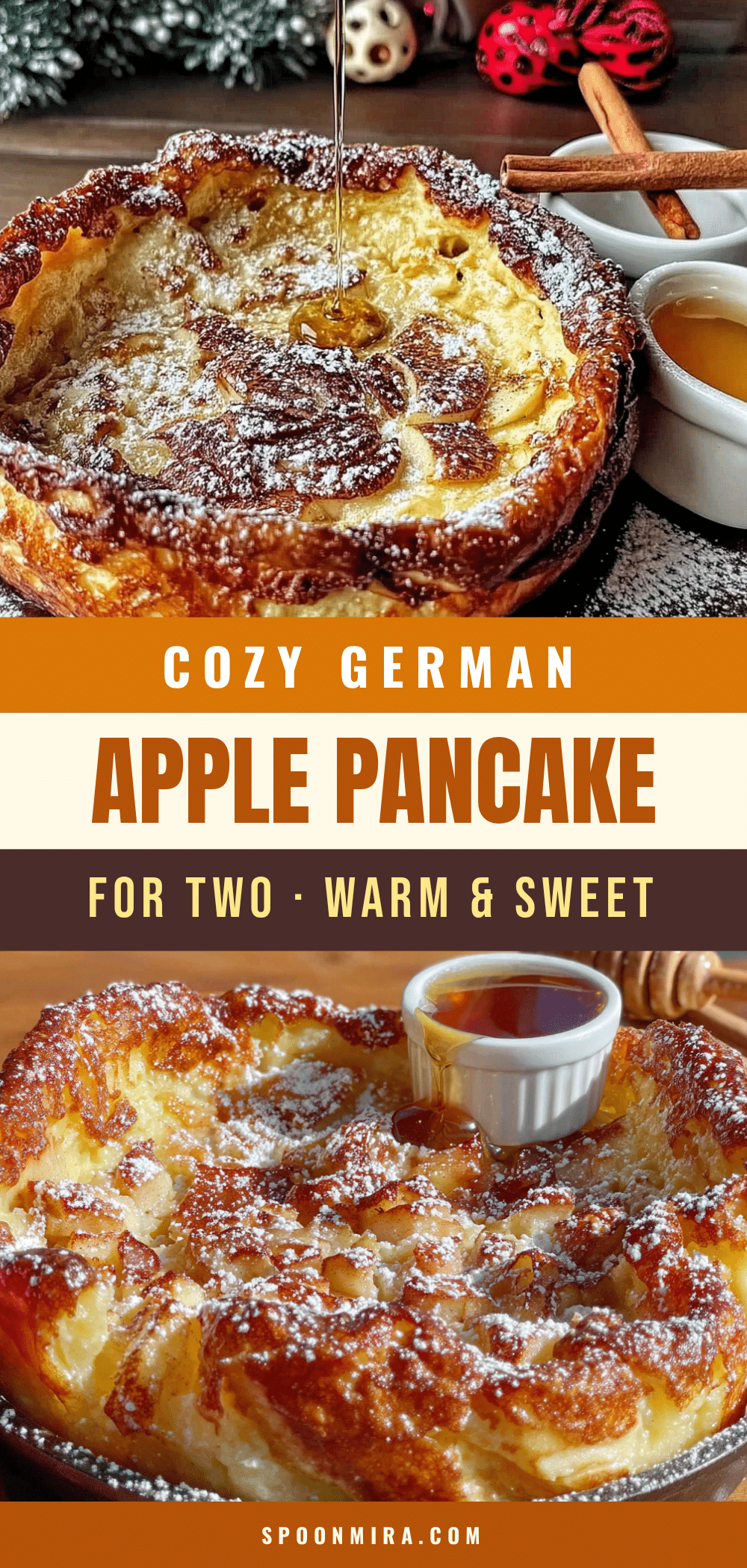
Cozy German Apple Pancake for Two: Easy, Perfect Fall Recipe
A simple, quick German pancake with caramelized apples, crispy edges, and a soft custardy center—perfect for a cozy breakfast for two.
- Prep Time: 10 minutes
- Cook Time: 18 minutes
- Total Time: 28 minutes
- Yield: 2 servings 1x
- Category: Breakfast
- Cuisine: German
Ingredients
- 2 medium apples (Honeycrisp or Granny Smith), peeled, cored, and sliced into 1/4-inch wedges
- 3 tablespoons unsalted butter, divided
- 3 tablespoons granulated sugar, divided
- 2 large eggs, room temperature
- 1/2 cup whole milk (120 ml)
- 1/2 cup all-purpose flour (60 grams), spooned and leveled
- 1/2 teaspoon ground cinnamon
- 1/2 teaspoon vanilla extract
- 1/4 teaspoon fine sea salt
- Powdered sugar for dusting (optional)
Instructions
- Preheat your oven to 425°F (220°C). Place a 10-inch oven-safe skillet (preferably cast iron) in the oven while it preheats. Let it heat for 10 minutes after reaching temperature.
- While the oven preheats, peel and core the apples. Slice them into thin wedges about 1/4 inch thick.
- In a medium mixing bowl, whisk the eggs until light and frothy, about 30 seconds. Add the milk, flour, 1 tablespoon sugar, vanilla extract, and salt. Whisk until smooth with no lumps. The batter should be thin, like heavy cream. Do not overmix.
- Carefully remove the hot skillet from the oven using oven mitts. Place it on the stovetop over medium heat. Add 2 tablespoons of butter and swirl until melted. Add the sliced apples, remaining 2 tablespoons sugar, and cinnamon. Stir to coat. Cook for 3-4 minutes, stirring occasionally, until the apples are softened and the sugar is bubbling and starting to turn golden.
- Add the remaining 1 tablespoon of butter to the skillet and let it melt.
- Spread the apples into an even layer in the skillet. Pour the batter evenly over the apples. Do not stir. The batter should sizzle slightly.
- Carefully transfer the skillet back to the oven. Bake for 15-18 minutes, until the pancake is puffed up, golden brown around the edges, and the center is set but still slightly jiggly. Do not open the oven door during the first 12 minutes.
- Remove the skillet from the oven. Dust generously with powdered sugar. Cut into wedges and serve warm. Optionally, drizzle with maple syrup or add a dollop of Greek yogurt.
Notes
For best results, use room temperature eggs and milk. Preheat the skillet in the oven to ensure a dramatic puff and crispy edges. Do not overmix the batter. Serve immediately as the pancake will deflate as it cools. For a gluten-free version, use a 1:1 gluten-free baking flour blend. For dairy-free, use vegan butter and oat milk.
Nutrition
- Serving Size: Half of the pancake
- Calories: 380
- Sugar: 24
- Sodium: 320
- Fat: 20
- Saturated Fat: 12
- Carbohydrates: 42
- Fiber: 3
- Protein: 10
Keywords: German pancake, apple pancake, breakfast for two, fall recipe, easy pancake, cast iron pancake