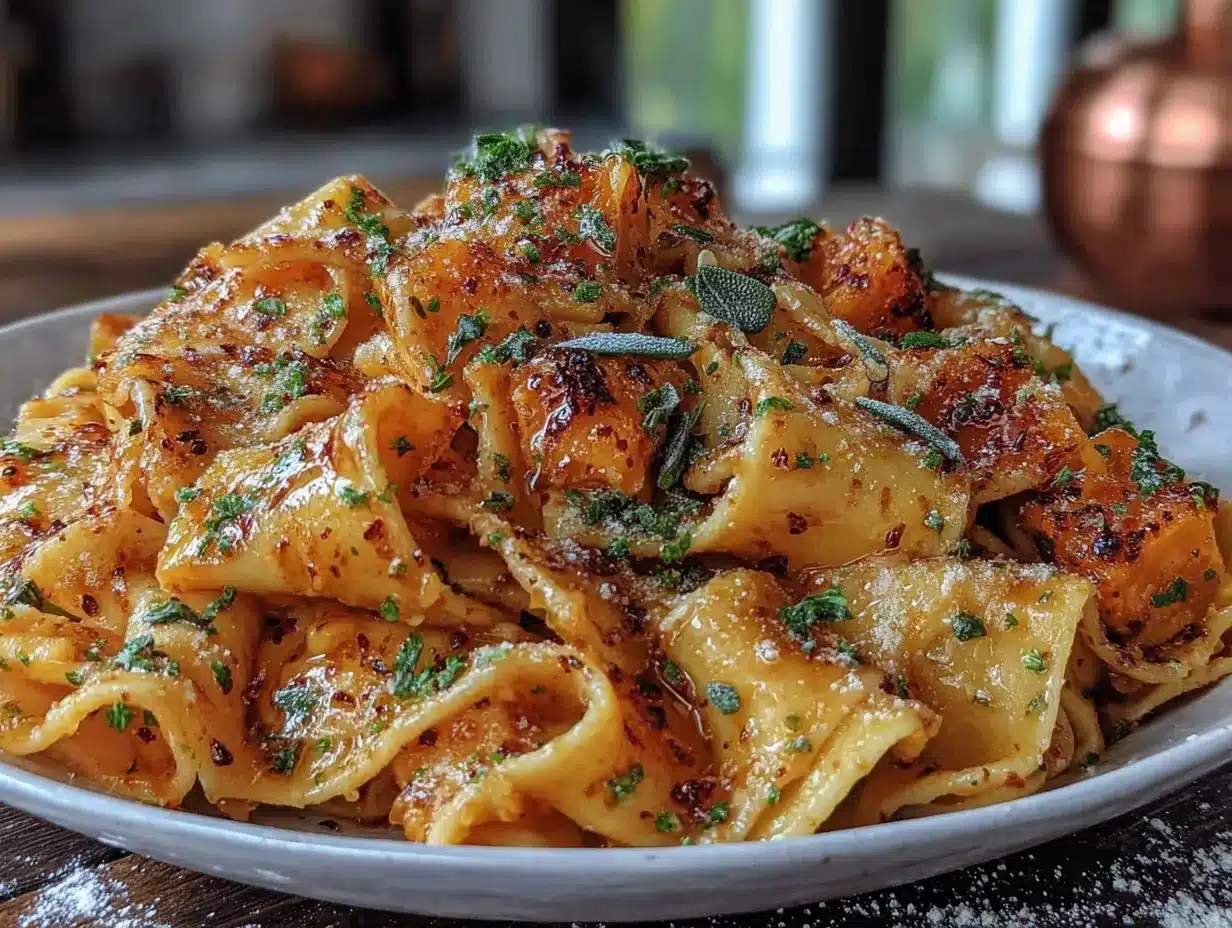
This was supposed to be a simple roasted butternut squash soup. I had the squash cubed, the onions diced, and the stock simmering on the stove. But then my neighbor rang the doorbell holding a bundle of fresh sage from her garden, and I got distracted. I grabbed the wrong pot—a skillet instead of a stockpot—and tossed the squash in with some butter I was browning on a whim. The butter started smelling like toasted hazelnuts, the sage leaves began to crisp, and I realized I had already poured the stock down the drain in a moment of absent-minded panic. What came out of that skillet was nothing like the plan—and better. Honestly, I just stood there with a fork, eating squash straight from the pan, wondering if I had accidentally stumbled onto something that should have existed all along.
The pasta part came later, when I was trying to stretch the dish into a full meal for a dinner party I was hosting that weekend. I boiled some pappardelle, tossed it with that brown butter squash mixture, and added a handful of Parmesan. The first bite made me laugh out loud—it was that good. I mean, the soup would have been fine, but this? This was the kind of dish that makes people close their eyes and forget their manners. Maybe you’ve been there, staring at a half-failed recipe and wondering if you should just order pizza. Let me tell you, those moments are where the magic hides.
I’ve made this brown butter squash pasta for every gathering since that chaotic Tuesday. It’s cozy enough for a quiet weeknight but showy enough to steal the spotlight at a dinner party. The sweet squash, the nutty brown butter, the crispy sage—it all comes together in one skillet, and it looks like you spent hours when really, it was just a happy accident that refused to be ignored.
Why You’ll Love This Recipe
Let’s be real for a second—I’ve tested this brown butter squash pasta more times than I can count, and it has never let me down. That’s not something I say lightly. I’ve burned the butter, undercooked the pasta, and even dropped the whole skillet on the floor once (don’t ask). But every time I get it right, which is most times now, it’s the dish that disappears first at any gathering.
- Quick & Easy: Comes together in under 30 minutes, perfect for those nights when guests are on their way and you’re still in your apron.
- Simple Ingredients: No fancy grocery trips needed—squash, butter, sage, pasta, and Parmesan are all you need. You likely already have everything in your kitchen.
- Perfect for Dinner Parties: Great for impressing friends and family without breaking a sweat. It looks like you fussed, but you didn’t.
- Crowd-Pleaser: Always gets rave reviews from vegetarians and meat-lovers alike. I’ve seen people go back for thirds.
- Unbelievably Delicious: The texture and flavor combo is next-level comfort food. The brown butter adds a nutty richness that makes everything taste more expensive than it is.
What makes this recipe different from the rest is the technique. Most squash pasta recipes roast the squash separately or boil it into mush. Here, you cook it right in the brown butter, letting it caramelize and soften at the same time. The result is a dish that feels both rustic and refined—like something you’d pay twenty bucks for at a fancy restaurant, but made in your own kitchen with a glass of wine in hand.
This recipe isn’t just good—it is the kind that makes you close your eyes after the first bite. It’s comfort food reimagined, faster, but with the same soul-soothing satisfaction. Perfect for impressing guests without stress, or turning a simple meal into something memorable.
What Ingredients You Will Need
This brown butter squash pasta uses simple, wholesome ingredients to deliver bold flavor and satisfying texture without the fuss. Most of these are pantry staples, but a few seasonal stars make all the difference.
For the Pasta
- 12 ounces (340g) pappardelle pasta – I prefer De Cecco for its texture, but any wide noodle works. Fettuccine or tagliatelle are great substitutes.
- 1 medium butternut squash (about 2 pounds or 900g) – Peeled, seeded, and cut into ½-inch cubes. Look for one that feels heavy for its size—that means it’s fresh and moist.
- 4 tablespoons (56g) unsalted butter – Use good quality butter here; it’s the star of the show. I recommend Kerrygold for its rich flavor.
- 8-10 fresh sage leaves – Fresh is non-negotiable for that crispy texture. Dried sage will burn and turn bitter.
- ½ cup (50g) grated Parmesan cheese – Plus more for serving. Grate it yourself from a block—the pre-shredded stuff has anti-caking agents that prevent melting.
- 2 cloves garlic, thinly sliced – Adds a subtle savory note that balances the sweetness.
- ½ teaspoon salt – Plus more for pasta water.
- ¼ teaspoon black pepper – Freshly ground is best.
- ¼ teaspoon red pepper flakes (optional) – For a tiny kick of heat that cuts through the richness.
- ¼ cup (60ml) reserved pasta water – This is liquid gold for creating a silky sauce.
For Garnish
- Extra Parmesan – For that final flourish.
- Fresh sage leaves – Crisped in the brown butter, they make a stunning topping.
- Toasted walnuts or pine nuts (optional) – Adds crunch and extra nuttiness. I love tossing these in for texture contrast.
Ingredient Tips: If you can’t find butternut squash, use acorn squash or even sweet potatoes—they work beautifully. For a dairy-free version, swap butter with vegan butter and use nutritional yeast instead of Parmesan. I’ve tested this with gluten-free pasta too, and it holds up well; just be careful not to overcook it.
Equipment Needed
You don’t need a professional kitchen to pull off this brown butter squash pasta. Here’s what I use every time:
- Large skillet or sauté pan – A 12-inch skillet with high sides is ideal. I use my trusty stainless steel pan because it gives me better control over browning than non-stick.
- Large pot – For boiling pasta. At least 6 quarts so the noodles have room to move.
- Chef’s knife – A sharp one makes cutting squash so much easier. Dull knives are dangerous with hard squash—trust me, I’ve learned the hard way.
- Vegetable peeler – For peeling the squash quickly.
- Wooden spoon or spatula – For stirring the butter and squash.
- Tongs – For tossing the pasta with the sauce. Much easier than a spoon.
- Microplane or box grater – For grating fresh Parmesan. A microplane gives you that fluffy texture that melts instantly.
Budget-friendly tip: If you don’t have a large skillet, use a Dutch oven instead. It works just as well and you can serve directly from it—less cleanup!
Preparation Method
Let me walk you through this step by step. I’ve made this brown butter squash pasta so many times that I could do it in my sleep, but I still follow these steps every time. They just work.
- Bring a large pot of salted water to a boil. Add about 1 tablespoon of salt per 4 quarts of water. It should taste like the sea—that’s your only chance to season the pasta from the inside out.
- While the water heats, prepare the squash. Peel the butternut squash with a vegetable peeler, cut off the top and bottom, then slice it in half lengthwise. Scoop out the seeds with a spoon. Cut into ½-inch cubes. This takes about 5 minutes, and honestly, it’s the most time-consuming part of the whole recipe. Take your time—uniform cubes mean even cooking.
- Start the brown butter. Place the large skillet over medium heat and add the butter. Let it melt completely, then swirl the pan occasionally. After about 3-4 minutes, the butter will start to foam and turn golden. Watch closely—it goes from perfect to burnt in seconds. You’re looking for a deep amber color and a nutty aroma that fills your kitchen. When you see brown specks forming at the bottom, you’re there.
- Add the sage leaves. Toss them into the brown butter carefully—they might splatter a bit. They’ll crisp up in about 30 seconds. Use tongs to transfer them to a paper towel-lined plate. They’ll get even crispier as they cool.
- Cook the squash. Add the cubed squash to the same skillet with the brown butter. Spread it in an even layer and let it cook undisturbed for 3-4 minutes. You want a nice golden crust on one side. Then stir and cook for another 5-7 minutes, until the squash is tender and caramelized. Add the sliced garlic and red pepper flakes (if using) in the last minute, stirring constantly so the garlic doesn’t burn.
- Cook the pasta. By now, your water should be boiling. Add the pappardelle and cook according to package directions until al dente—usually 8-10 minutes. Reserve 1 cup of pasta water before draining. Don’t forget this step! That starchy water is what makes the sauce silky.
- Combine everything. Add the drained pasta directly to the skillet with the squash. Pour in about ¼ cup of reserved pasta water and toss everything together with tongs. The heat from the pasta will help create a light sauce. Add the grated Parmesan and toss again. If it seems dry, add more pasta water a tablespoon at a time until it looks glossy and coats every noodle.
- Season and serve. Taste and adjust salt and pepper. You might need more—Parmesan is salty, but squash loves salt. Serve immediately, topped with the crispy sage leaves and extra Parmesan. If you’re using walnuts or pine nuts, sprinkle them on top for crunch.
My personal tip: Don’t rinse the pasta after draining. That starch is your best friend for creating a sauce that clings to every strand. I learned this after years of wondering why my pasta dishes were watery and bland.
Cooking Tips & Techniques
I’ve made every mistake in the book with this brown butter squash pasta, so you don’t have to. Here’s what I’ve learned the hard way:
Brown butter is a moving target. The first time I tried this, I walked away to answer a text and came back to black butter that smelled like burnt popcorn. Never leave brown butter unattended. It goes from perfect to ruined in about 15 seconds. Swirl the pan constantly and trust your nose—when it smells nutty and toasty, pull it off the heat immediately.
Squash size matters. I once cut the cubes too large, thinking they’d cook down. They didn’t. You want ½-inch cubes, no bigger. Smaller pieces caramelize faster and coat the pasta better. If your cubes are uneven, some will be mushy while others are still crunchy. Take the extra minute to cut them uniformly.
Reserve more pasta water than you think you need. I always save a full cup, even though I usually only use ¼ to ½ cup. Different brands of pasta release starch differently, and sometimes you need more liquid to get that silky consistency. Better to have extra than to be scrambling for more hot water.
The skillet should be hot when you add the pasta. If the pan has cooled down, the sauce won’t emulsify properly. Work quickly—toss the pasta in while the skillet is still hot from cooking the squash. The residual heat helps the Parmesan melt into a creamy sauce without clumping.
Timing is everything for a dinner party. Here’s my strategy: I prep the squash and grate the cheese before guests arrive. When they’re having their first glass of wine, I start the brown butter and cook the squash. Then I boil the pasta right before serving. The whole thing takes about 15 minutes from pot to plate, so I can actually hang out with my guests instead of hiding in the kitchen.
Variations & Adaptations
One of the best things about this brown butter squash pasta is how flexible it is. I’ve tried several variations, and they all have their own charm.
Vegan version: Swap the butter with vegan butter or coconut oil, and use nutritional yeast instead of Parmesan. I tested this for a friend who’s vegan, and honestly, it was still delicious. The nutritional yeast adds a cheesy, umami flavor that works surprisingly well with the sweet squash.
Protein-packed version: Add crispy bacon or pancetta for a salty crunch. Cook the bacon first, remove it from the pan, then use the rendered fat instead of butter for the brown butter. Crumble the bacon on top at the end. I did this for a dinner party once, and the meat-eaters went wild.
Seasonal swap: In fall, use butternut squash. In summer, try zucchini or yellow squash—they cook faster and have a lighter flavor. In winter, roasted pumpkin or sweet potatoes work beautifully. I’ve even used frozen butternut squash in a pinch; just thaw and pat dry before cooking so they caramelize instead of steam.
Spicy twist: Double the red pepper flakes or add a pinch of cayenne. The heat cuts through the richness beautifully. I made this for a friend who loves spice, and she said it was the best pasta she’d ever had.
Herb swap: If you can’t find fresh sage, use fresh thyme or rosemary. They crisp up differently—rosemary gets crunchy, thyme stays a bit softer—but both add lovely flavor. Just don’t use dried herbs; they’ll burn and taste bitter.
Serving & Storage Suggestions
This brown butter squash pasta is best served immediately, right from the skillet. The sauce is at its silkiest, the sage is perfectly crispy, and the pasta is still al dente. I like to bring the whole skillet to the table—it makes for a gorgeous presentation and keeps everything warm.
For dinner parties: Serve with a simple arugula salad dressed with lemon and olive oil. The peppery greens balance the richness of the pasta. A glass of Sauvignon Blanc or a light Chardonnay pairs beautifully. If you’re feeling extra, add some crusty bread for sopping up any leftover brown butter sauce.
Storage: If you have leftovers (rare in my house, but it happens), store them in an airtight container in the refrigerator for up to 3 days. The pasta will absorb some of the sauce, so it won’t be quite as glossy, but the flavor deepens overnight—almost like it gets cozier.
Reheating: The best way to reheat is in a skillet over medium-low heat with a splash of water or broth. Stir gently until warmed through. Microwaving works in a pinch, but it can make the pasta mushy. Add a little extra Parmesan to revive the creaminess.
Freezing: I don’t recommend freezing this dish. The pasta gets mushy, and the sauce separates. But you can freeze the cooked squash in brown butter for up to 3 months—just thaw and toss with fresh pasta when you’re ready.
Nutritional Information & Benefits
This brown butter squash pasta is comfort food that happens to have some redeeming qualities. Here’s a rough estimate per serving (based on 4 servings):
- Calories: ~480
- Protein: 14g
- Carbohydrates: 62g
- Fat: 20g
- Fiber: 6g
- Sugar: 8g
Health benefits: Butternut squash is packed with vitamin A (great for your eyes and immune system), vitamin C, and fiber. The sage has anti-inflammatory properties, and the Parmesan adds calcium and protein. Brown butter is butter, yes, but a little goes a long way in terms of flavor—you’re using less than you think.
Dietary considerations: This recipe is vegetarian. For gluten-free, use gluten-free pasta. For dairy-free, use vegan butter and nutritional yeast. It’s naturally nut-free unless you add the walnut garnish.
I’m not a nutritionist, but I believe in balance. This dish is indulgent enough to feel like a treat, but it’s made with real, whole ingredients that nourish you. That’s my kind of compromise.
Conclusion
This brown butter squash pasta started as a mistake, but it’s become my go-to for dinner parties, cozy weeknights, and any time I want to impress without stress. It’s the dish that makes people ask for the recipe before they’ve even finished their plate. Honestly, that never gets old.
I hope you make this your own—add more sage, swap the squash, throw in some bacon if that’s your thing. The beauty of this recipe is that it’s forgiving. It came from a happy accident, so it welcomes your own happy accidents.
If you make this cozy brown butter squash pasta, I’d love to hear about it. Drop a comment below, share your photos, or tell me what variation you tried. And if you’re hosting a dinner party soon, this is your secret weapon. Trust me—your guests will be asking for the recipe before they leave.
Happy cooking, friends. Let’s make something delicious.
Frequently Asked Questions
Can I use pre-cut butternut squash from the store?
Absolutely. Pre-cut squash saves time, but make sure the cubes are about ½-inch in size. If they’re larger, chop them down a bit. Also, pat them dry with a paper towel—pre-cut squash can be wet, and you want them to caramelize, not steam.
What if I don’t have fresh sage?
Fresh sage is ideal for that crispy texture, but you can use fresh thyme or rosemary instead. If you only have dried sage, add it to the brown butter at the same time as the squash, not earlier, because it burns quickly. The flavor won’t be quite the same, but it’ll still be delicious.
Can I make this ahead of time for a dinner party?
You can prep everything ahead—cube the squash, grate the cheese, and measure the butter. But I recommend cooking the pasta and assembling the dish right before serving. The sauce is at its best fresh. If you really need to make it ahead, undercook the pasta slightly and add extra pasta water when reheating.
What pasta shape works best if I don’t have pappardelle?
Any wide noodle works—fettuccine, tagliatelle, or even linguine. The key is a shape that can hold onto the sauce. I’ve even used rigatoni in a pinch, and it was great. Avoid very thin pasta like angel hair; it gets lost in the squash.
How do I know when the brown butter is ready?
Watch for the butter to turn a deep amber color and smell nutty and toasty. You’ll see brown specks forming at the bottom of the pan. It takes about 3-4 minutes over medium heat. Swirl the pan constantly and pull it off the heat as soon as you smell that nutty aroma—it goes from perfect to burnt very quickly.
Pin This Recipe!
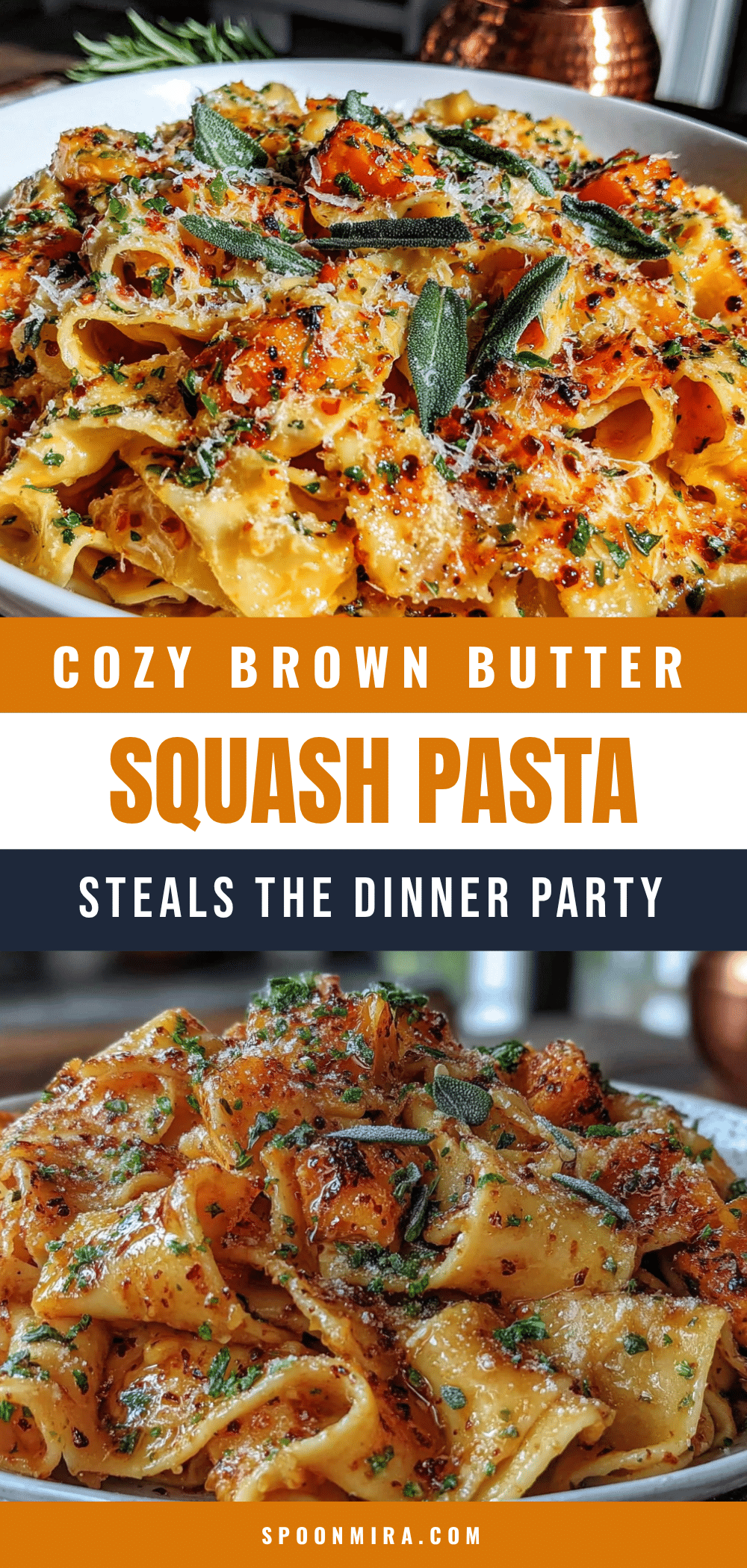
Cozy Brown Butter Squash Pasta That Steals the Dinner Party
A happy accident turned into a show-stopping pasta dish featuring caramelized butternut squash, nutty brown butter, and crispy sage. Ready in under 30 minutes, it’s cozy enough for a weeknight and impressive enough for a dinner party.
- Prep Time: 10 minutes
- Cook Time: 20 minutes
- Total Time: 30 minutes
- Yield: 4 servings 1x
- Category: Main Course
- Cuisine: Italian
Ingredients
- 12 ounces (340g) pappardelle pasta
- 1 medium butternut squash (about 2 pounds or 900g), peeled, seeded, and cut into ½-inch cubes
- 4 tablespoons (56g) unsalted butter
- 8–10 fresh sage leaves
- ½ cup (50g) grated Parmesan cheese, plus more for serving
- 2 cloves garlic, thinly sliced
- ½ teaspoon salt, plus more for pasta water
- ¼ teaspoon black pepper, freshly ground
- ¼ teaspoon red pepper flakes (optional)
- ¼ cup (60ml) reserved pasta water
- Toasted walnuts or pine nuts (optional, for garnish)
Instructions
- Bring a large pot of salted water to a boil. Add about 1 tablespoon of salt per 4 quarts of water.
- While the water heats, prepare the squash: peel with a vegetable peeler, cut off the top and bottom, slice in half lengthwise, scoop out seeds, and cut into ½-inch cubes.
- Place a large skillet over medium heat and add the butter. Let it melt completely, then swirl occasionally. After 3-4 minutes, the butter will foam and turn golden. Watch for a deep amber color and nutty aroma, with brown specks forming at the bottom.
- Add the sage leaves to the brown butter carefully; they will crisp in about 30 seconds. Use tongs to transfer them to a paper towel-lined plate.
- Add the cubed squash to the same skillet with the brown butter. Spread in an even layer and cook undisturbed for 3-4 minutes to get a golden crust. Then stir and cook for another 5-7 minutes until tender and caramelized. Add sliced garlic and red pepper flakes (if using) in the last minute, stirring constantly.
- Cook the pappardelle according to package directions until al dente (usually 8-10 minutes). Reserve 1 cup of pasta water before draining.
- Add the drained pasta directly to the skillet with the squash. Pour in about ¼ cup of reserved pasta water and toss with tongs. Add the grated Parmesan and toss again. If dry, add more pasta water a tablespoon at a time until glossy.
- Season with salt and pepper to taste. Serve immediately, topped with crispy sage leaves, extra Parmesan, and optional toasted walnuts or pine nuts.
Notes
Don’t rinse the pasta after draining; the starch helps create a silky sauce. Reserve more pasta water than you think you need. Brown butter goes from perfect to burnt quickly—never leave it unattended. For best results, cut squash into uniform ½-inch cubes. The dish is best served immediately.
Nutrition
- Serving Size: 1 serving
- Calories: 480
- Sugar: 8
- Sodium: 480
- Fat: 20
- Saturated Fat: 10
- Carbohydrates: 62
- Fiber: 6
- Protein: 14
Keywords: brown butter, squash pasta, butternut squash, sage, dinner party, vegetarian, quick pasta, fall recipe