My neighborhood potluck was in three hours and I’d completely forgotten. Everyone else would be bringing their signature dishes—Karen’s famous seven-layer dip that takes all day, Mark’s slow-cooked brisket that he starts marinating the night before. I had half a butternut squash sitting in my crisper drawer, a box of pasta I’d bought on sale, and a vague sense of panic. I mean, I couldn’t show up empty-handed. That would be social suicide in our building.
So I did what any reasonable person would do—I started throwing things together. I roasted the squash in a hurry (maybe a little too hot, but we’re not telling anyone), boiled the pasta, and started grabbing whatever looked good from the fridge. A handful of dried cranberries. Some pecans I’d been hoarding for a salad. A block of feta that was about to hit its expiration date. Honestly, I was just hoping it would be edible. You know that feeling when you’re cooking under pressure and you’re pretty sure you’re about to serve your neighbors a culinary disaster?
The dressing came together by accident. A splash of maple syrup I’d been using for pancakes, some Dijon mustard that was hanging out in the fridge door, apple cider vinegar because it sounded right. I whisked it all together, tossed it with the warm pasta, and prayed. Let me tell you—when I walked into that potluck with my sad little bowl, I was ready to hide in the corner. But then something unexpected happened. People started going back for seconds. Then thirds. My neighbor Dave, who never eats salad, asked for the recipe. The bowl was empty before the brisket even got touched. I stood there, completely shocked, while everyone asked what I’d done to that squash.
That’s how this cozy fall pasta salad was born—out of pure desperation and a fridge full of almost-expired ingredients. And honestly? It’s the one I keep coming back to every autumn. There’s something about the way the sweet roasted squash plays with the tangy feta and the crunchy pecans that just feels like a hug in a bowl. Maybe you’ve had one of those cooking moments where everything just works. This is that recipe. It’s the one that made me realize sometimes the best dishes come from panic, not planning.
Why You’ll Love This Recipe
I’ve tested this recipe more times than I care to admit, and let me tell you—it never disappoints. As someone who’s spent years in the kitchen developing recipes, I can confidently say this one hits all the right notes. It’s the kind of dish that makes you look like a culinary genius with minimal effort.
- Quick & Easy : Comes together in under 45 minutes, perfect for busy weeknights or last-minute potluck emergencies. The hands-on time is maybe 20 minutes—the oven does most of the work.
- Simple Ingredients : No fancy grocery trips needed. You likely already have pasta, olive oil, and maple syrup in your kitchen. The squash, cranberries, and pecans are all fall staples that won’t break the bank.
- Perfect for Fall Gatherings : This salad screams autumn. It’s great for Thanksgiving potlucks, Friendsgiving dinners, cozy Sunday suppers, or even meal prep for the week ahead. It travels beautifully and tastes even better the next day.
- Crowd-Pleaser : I’ve served this to kids, picky eaters, and self-proclaimed salad haters. Everyone loves it. The combination of sweet, salty, tangy, and crunchy hits every craving.
- Unbelievably Delicious : The texture and flavor combo is next-level comfort food. The creamy feta, the tender squash, the chewy cranberries, the crunchy pecans—all tied together with that maple-Dijon dressing. It’s magic.
What makes this recipe different from the rest? It’s the balance. I’ve perfected the ratio of sweet to savory, the cooking time for the squash (crispy edges, tender centers), and the dressing that clings to every piece of pasta without being too heavy. This isn’t just another pasta salad—it’s your new fall obsession.
This recipe isn’t just good—it’s the kind that makes you close your eyes after the first bite. It’s comfort food reimagined: warm, cozy, and packed with seasonal flavor. Perfect for impressing guests without stress, or turning a simple weeknight dinner into something memorable.
What Ingredients You Will Need
This recipe uses simple, wholesome ingredients to deliver bold flavor and satisfying texture without the fuss. Most of these are pantry staples or easy fall finds at any grocery store.
For the Salad
- Butternut squash , 1 medium (about 3 cups cubed) — look for one that feels heavy for its size with firm, unblemished skin. I prefer to buy pre-cubed squash from the store when I’m in a hurry, but cutting your own is cheaper.
- Short pasta , 12 ounces (340g) — I recommend rotini, farfalle, or penne. The ridges and curves catch the dressing beautifully. My personal favorite is rotini for that reason.
- Dried cranberries , 1/2 cup (75g) — adds that sweet-tart pop. Look for unsweetened if you want to control the sugar, but regular works fine too.
- Pecans , 1/2 cup (60g), roughly chopped — toast them for extra flavor. I’ve used walnuts in a pinch and they work great, but pecans have that buttery fall vibe.
- Feta cheese , 4 ounces (115g), crumbled — use block feta packed in brine for best texture. The pre-crumbled stuff is drier and doesn’t melt as nicely into the warm pasta.
- Red onion , 1/4 cup (40g), thinly sliced — adds a sharp bite that balances the sweetness. Soak the slices in cold water for 10 minutes if you want a milder flavor.
- Fresh sage , 2 tablespoons, chopped (optional but amazing) — sage and squash are a classic fall pairing. I grow sage in my garden and throw it in everything this time of year.
- Baby spinach or arugula , 2 cups (60g) — adds freshness and color. Arugula gives a peppery kick that I love, but spinach is milder for pickier eaters.
For the Maple-Dijon Dressing
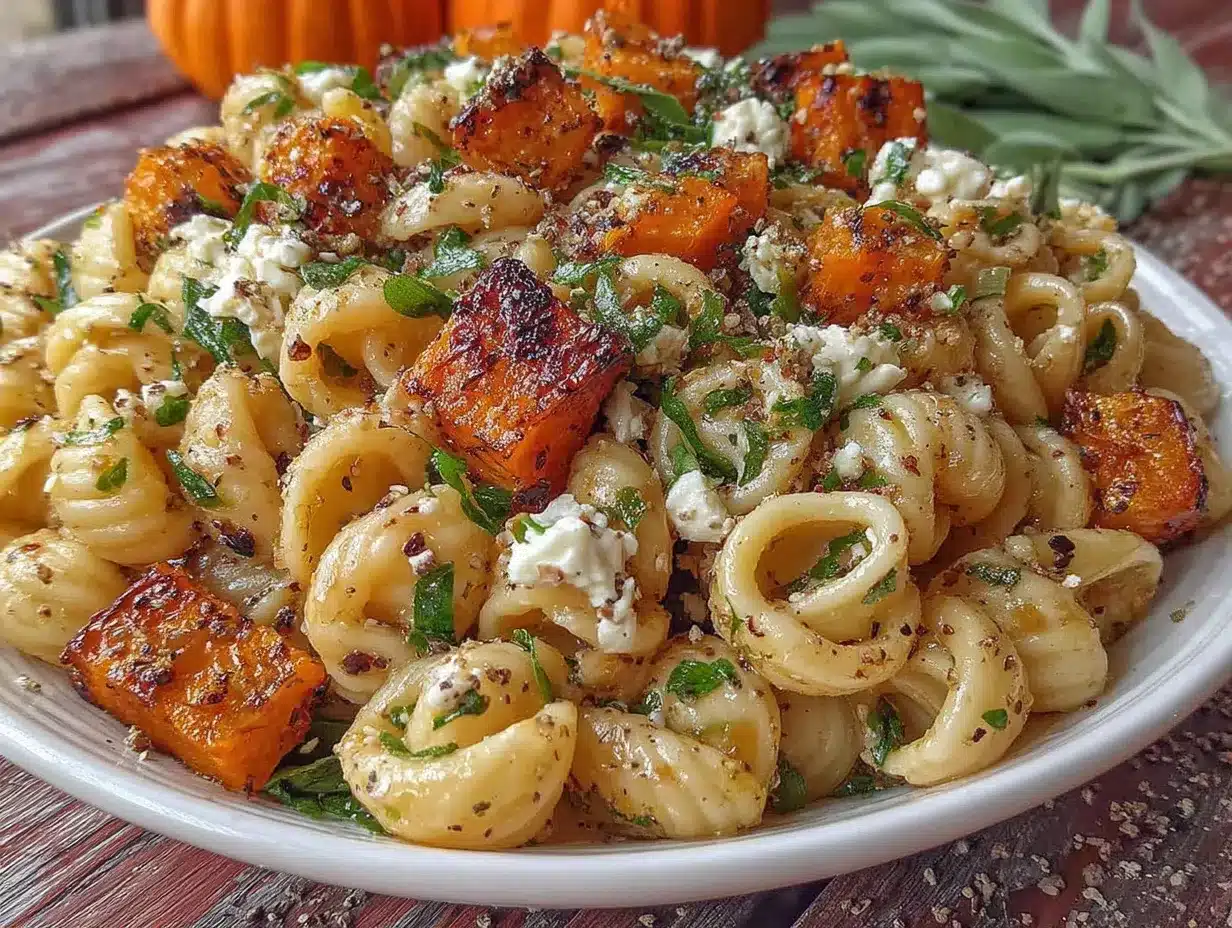
- Olive oil , 1/3 cup (80ml) — use good extra virgin for best flavor. I like California Olive Ranch for everyday cooking.
- Maple syrup , 3 tablespoons (45ml) — real maple syrup, not pancake syrup. The difference is huge. Grade A dark amber has the strongest flavor.
- Apple cider vinegar , 2 tablespoons (30ml) — adds brightness. White wine vinegar works in a pinch, but apple cider is more fall-appropriate.
- Dijon mustard , 1 tablespoon (15ml) — helps emulsify the dressing and adds tang. Grey Poupon is my go-to brand.
- Garlic , 1 clove, minced — fresh is non-negotiable here. The jarred stuff won’t give you the same punch.
- Salt and black pepper , to taste — I use kosher salt and freshly ground pepper for best flavor.
- Cinnamon , 1/4 teaspoon (optional) — adds warmth that complements the squash. Trust me on this one.
Equipment Needed
You don’t need a fancy kitchen to pull this off. Here’s what you’ll need:
- Large baking sheet — for roasting the squash. I use a half-sheet pan (18×13 inches). If you don’t have one, any rimmed baking sheet works. Just make sure the squash pieces have space between them so they roast instead of steam.
- Large pot — for boiling pasta. A 6-quart pot is ideal. I’ve used smaller pots and regretted it when the water boiled over. Don’t be like me.
- Colander — for draining pasta. Nothing fancy needed.
- Large mixing bowl — for combining everything. I use my grandmother’s old ceramic bowl, but any large bowl works.
- Small bowl or jar — for whisking the dressing. A mason jar works great—just shake it up.
- Chef’s knife and cutting board — for prepping the squash and onion. A sharp knife makes all the difference. I learned that the hard way after nearly losing a finger to a dull blade.
- Measuring cups and spoons — for accuracy. I’m usually a “by feel” cooker, but this dressing needs balance.
- Parchment paper (optional) — for easy cleanup. I’m lazy about scrubbing pans, so this is a lifesaver.
If you don’t have a baking sheet, you can use a cast-iron skillet for roasting the squash. It actually gives the edges a nice caramelization. Just don’t overcrowd it.
Preparation Method
Let’s get cooking. Here’s how to make this cozy fall pasta salad step by step.
- Preheat your oven to 400°F (200°C). Line a baking sheet with parchment paper if you’re using it. I always forget this step and end up scrubbing burnt squash off the pan. Learn from my mistakes.
- Prep the butternut squash. If you’re starting with a whole squash, cut off both ends, peel it with a vegetable peeler, slice it in half lengthwise, scoop out the seeds, and cube it into 1/2-inch pieces. If you’re using pre-cubed squash (no judgment here), just spread it on the baking sheet. You want pieces that are roughly the same size so they cook evenly. This takes about 10 minutes if you’re fast with a knife.
- Toss the squash with oil and seasonings. In a bowl, combine the cubed squash with 2 tablespoons olive oil, 1/2 teaspoon salt, 1/4 teaspoon black pepper, and the cinnamon if using. Toss until every piece is coated. Spread them in a single layer on the baking sheet. Don’t crowd them—they need room to breathe. If they’re piled on top of each other, they’ll steam instead of getting those lovely caramelized edges.
- Roast the squash for 25-30 minutes. Flip the pieces halfway through with a spatula. They’re done when they’re tender when pierced with a fork and have golden-brown edges. The smell in your kitchen right now is going to be incredible. Set them aside to cool slightly while you work on the pasta.
- Cook the pasta. Fill your large pot with water, add a generous tablespoon of salt (it should taste like the sea), and bring it to a rolling boil. Add the pasta and cook according to package directions until al dente. For rotini, that’s usually about 8-10 minutes. Stir occasionally to prevent sticking. I always set a timer because I’ve definitely overcooked pasta while daydreaming about fall leaves.
- Drain the pasta and don’t rinse it. This is important—rinsing removes the starch that helps the dressing cling to the pasta. Just drain it well and let it cool for a few minutes. You want it warm when you add the dressing so it absorbs the flavors better.
- Toast the pecans. While the pasta is cooking, heat a small skillet over medium heat. Add the chopped pecans and toast them for 2-3 minutes, stirring frequently, until they’re fragrant. Watch them carefully—they burn fast. I’ve ruined more than one batch by getting distracted. Set them aside to cool.
- Make the dressing. In a small bowl or mason jar, combine the olive oil, maple syrup, apple cider vinegar, Dijon mustard, minced garlic, 1/4 teaspoon salt, and 1/4 teaspoon black pepper. Whisk or shake until well combined. Taste it and adjust—more maple if you like it sweeter, more mustard if you want tang. The dressing should be slightly sweet with a good acidic kick.
- Assemble the salad. In your large mixing bowl, combine the warm pasta, roasted squash, dried cranberries, toasted pecans, crumbled feta, sliced red onion, and fresh sage if using. Pour the dressing over everything and toss gently until all ingredients are well coated. The warm pasta will slightly soften the feta and help the dressing distribute evenly.
- Add the greens at the end. Gently fold in the baby spinach or arugula. The heat from the pasta will wilt them slightly, which is exactly what you want. Taste and adjust seasoning with more salt and pepper if needed.
- Let it rest for 10 minutes. This is the hardest step because you’ll want to dig in immediately. But letting it sit allows the flavors to meld together. The pasta absorbs the dressing, the squash softens a bit more, and everything comes together beautifully.
Cooking Tips & Techniques
After making this recipe about a dozen times (it’s a problem, I know), I’ve picked up some tricks that make it even better. Here are my best tips for success.
Don’t skip toasting the pecans. I know it’s an extra step, but raw pecans are bland and slightly soft. Toasting them brings out their natural oils and gives them that irresistible crunch. I once forgot to toast them and the salad was noticeably less exciting. It’s only 3 minutes—just do it.
Cut the squash evenly. This is the number one mistake people make. If your pieces are different sizes, some will be mushy while others are still hard. Aim for 1/2-inch cubes. I use a ruler the first few times until I get the hang of it. Yes, I’m that person.
Warm pasta absorbs dressing better. This is a game-changer. If you add the dressing to cold pasta, it just slides off and pools at the bottom of the bowl. Warm pasta opens up and soaks up all that maple-Dijon goodness. You’ll get flavor in every single bite.
Season in layers. Salt the pasta water, season the squash before roasting, and season the dressing. Each layer builds flavor. I learned this from a chef friend who told me, “You can’t fix bland at the end.” She was right.
Let the salad come to room temperature. This pasta salad is best served warm or at room temperature, not straight from the fridge. The flavors are more pronounced when it’s not cold. If you’re making it ahead, take it out of the fridge 20 minutes before serving.
Double the dressing. Okay, this is optional, but I always make extra dressing. The salad absorbs a lot of it overnight, so having extra to drizzle on leftovers is a lifesaver. I keep it in a jar in the fridge and add a splash before serving.
One mistake I made early on: I added the greens too early and they turned into a sad, wilted mess. Now I fold them in right before serving. If you’re meal prepping, keep the greens separate and add them when you’re ready to eat.
Variations & Adaptations
This recipe is incredibly flexible. Here are some ways to make it your own.
Dietary Variations
Make it vegan: Skip the feta cheese or use a vegan feta alternative. I’ve tried it with a cashew-based feta and it was surprisingly good. You can also add toasted pumpkin seeds for extra crunch instead of cheese.
Make it gluten-free: Use your favorite gluten-free pasta. I recommend chickpea or lentil pasta for extra protein. Just be careful not to overcook it—gluten-free pasta can get mushy fast. Brown rice pasta works well too.
Make it nut-free: Replace the pecans with roasted pumpkin seeds (pepitas) or sunflower seeds. Toasted pepitas actually add a nice fall flavor that complements the squash.
Flavor Twists
Add protein: This salad is great with shredded rotisserie chicken, grilled chicken breast, or even crispy bacon bits. I’ve added leftover Thanksgiving turkey and it was incredible. For a vegetarian option, try roasted chickpeas.
Swap the squash: Butternut is my favorite, but roasted sweet potato, pumpkin, or acorn squash all work beautifully. Each has a slightly different sweetness level, so adjust the maple syrup accordingly.
Change the cheese: Goat cheese adds a tangy creaminess that’s amazing. Blue cheese gives it a bold kick. I’ve even used shaved Parmesan for a different vibe. Just crumble or shave it right before adding.
Add more veggies: Roasted Brussels sprouts (halved), sautéed mushrooms, or thinly sliced apples would all be delicious additions. In the summer, I swap the squash for fresh corn and cherry tomatoes.
Personal Variation I Love
My favorite twist is adding crispy prosciutto. I bake a few slices in the oven at 375°F for 10 minutes until they’re crispy, then crumble them over the finished salad. The salty, crunchy prosciutto against the sweet squash and tangy feta is absolutely addictive. It’s what I bring to every Friendsgiving now.
Serving & Storage Suggestions
This cozy fall pasta salad is versatile when it comes to serving. Here’s how to make the most of it.
Serving temperature: Serve it warm, at room temperature, or even cold—it’s good at any temperature. I prefer it warm or at room temperature because the flavors are more vibrant. If serving cold, let it sit out for 15-20 minutes first.
Presentation ideas: Serve it in a large wooden bowl for a rustic fall vibe. Garnish with extra crumbled feta, a few whole pecans, and a sprinkle of fresh sage or parsley. A drizzle of extra dressing on top makes it look restaurant-worthy.
What to serve with it: This salad is hearty enough to be a main dish, but it also pairs beautifully with roasted chicken, pork chops, or a simple soup. I love serving it alongside a bowl of creamy tomato soup or roasted butternut squash soup for the ultimate fall meal. A crusty baguette on the side never hurts.
Storage instructions: Store leftovers in an airtight container in the refrigerator for up to 4 days. The flavors actually get better as they meld together overnight. Just keep in mind that the pasta will absorb some of the dressing, so it might be a little drier the next day. That’s why I recommend making extra dressing.
Reheating tips: To reheat, microwave individual portions for 30-45 seconds, or warm it in a skillet over medium-low heat with a splash of water or extra dressing. Don’t overheat it or the feta will get rubbery. For a quick refresh, add a handful of fresh spinach or arugula before serving.
Freezer instructions: I don’t recommend freezing this salad. The pasta, squash, and greens will all get mushy when thawed. It’s best enjoyed fresh or within a few days. If you have too much, share it with neighbors—they’ll love you for it.
Nutritional Information & Benefits
Here’s the approximate nutritional breakdown for one serving (about 1.5 cups) of this cozy fall pasta salad:
- Calories: 380
- Protein: 10g
- Carbohydrates: 45g
- Fiber: 5g
- Sugar: 14g (naturally occurring from squash and cranberries)
- Fat: 18g
- Saturated Fat: 4g
- Sodium: 420mg
- Vitamin A: 200% of daily value (from the butternut squash)
- Vitamin C: 25% of daily value
- Calcium: 15% of daily value
- Iron: 10% of daily value
Health benefits: Butternut squash is packed with vitamin A, which supports eye health and immune function. It’s also rich in fiber, which aids digestion and keeps you feeling full. Pecans provide healthy fats and antioxidants, while the olive oil in the dressing offers heart-healthy monounsaturated fats. The spinach or arugula adds iron and vitamins K and C. This is comfort food that actually nourishes you.
Dietary considerations: This recipe is vegetarian and can easily be made vegan and gluten-free with substitutions. It’s naturally low in added sugar (the sweetness comes mostly from the squash and maple syrup). The main allergens are gluten (pasta), dairy (feta), and tree nuts (pecans).
My wellness perspective: I believe in eating food that makes you feel good, both physically and emotionally. This salad hits that sweet spot—it’s satisfying and indulgent without being heavy. I love that I can serve it to my family knowing they’re getting a good dose of vegetables and healthy fats, even if they think they’re just eating a tasty pasta dish.
Conclusion
This cozy fall pasta salad started as a panic-induced experiment and turned into my most-requested recipe. It’s proof that you don’t need fancy ingredients or hours of prep to create something truly special. The combination of sweet roasted squash, tangy feta, chewy cranberries, and crunchy pecans, all tied together with that maple-Dijon dressing—it’s fall in a bowl.
I love this recipe because it’s forgiving. You can swap ingredients, adjust the dressing, make it your own. It’s the kind of dish that invites experimentation. Maybe you’ll add bacon. Maybe you’ll use goat cheese. Maybe you’ll throw in some roasted Brussels sprouts. The possibilities are endless, and that’s what makes cooking fun.
So give it a try. Make it for your next potluck, your family dinner, or just because it’s Tuesday and you need a little comfort. And when your friends ask for the recipe (they will), send them my way. I’d love to hear how it turns out for you. Drop a comment below or tag me in your photos—I live for seeing your creations. Happy cooking, and here’s to cozy fall evenings filled with good food!
Frequently Asked Questions
Can I make this pasta salad ahead of time?
Absolutely! This salad actually tastes better the next day as the flavors meld together. Make it up to 24 hours in advance, but keep the greens separate and add them just before serving. If the salad seems dry after sitting, add a splash of extra dressing or olive oil.
What’s the best pasta shape for this recipe?
Short pasta with ridges or curves works best—rotini, farfalle, penne, or fusilli are all great choices. The nooks and crannies catch the dressing and hold onto the other ingredients. I personally love rotini for this reason. Avoid long pasta like spaghetti or fettuccine—it won’t mix well with the chunky ingredients.
Can I use frozen butternut squash?
Yes, you can use frozen cubed butternut squash, but there are a few things to keep in mind. Frozen squash releases more water as it roasts, so it won’t get as caramelized as fresh. To combat this, spread the frozen cubes on the baking sheet without thawing, toss with oil and seasonings, and roast at 425°F for 30-35 minutes. The higher heat helps evaporate the extra moisture.
How do I prevent the pasta from getting mushy?
Cook the pasta to al dente—it should still have a slight bite when you drain it. The pasta will continue to cook slightly from the residual heat and will absorb dressing as it sits, so starting with slightly firm pasta ensures it won’t turn into mush. Also, don’t overcook it in the first place. Set a timer and taste a piece a minute before the package says it’s done.
Is this recipe suitable for meal prep?
Yes, with a few adjustments. Prepare the salad without the greens and store it in an airtight container in the fridge for up to 4 days. Keep the dressing separate and add it just before serving to prevent the pasta from getting too soggy. Pack the greens separately and fold them in when you’re ready to eat. This makes for an easy lunch that actually tastes good all week long.
Pin This Recipe!
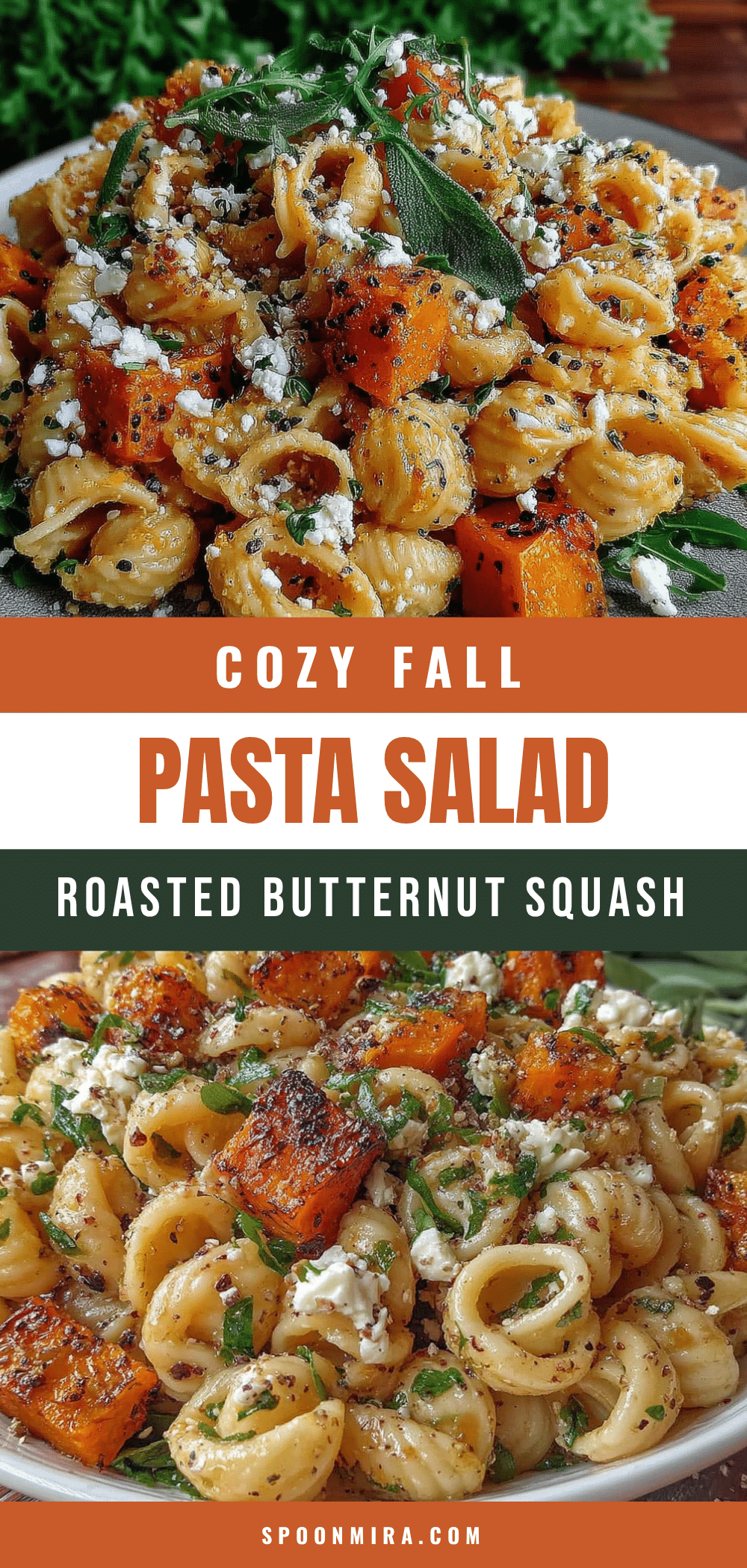
Easy Cozy Fall Pasta Salad with Roasted Butternut Squash
A quick and easy fall pasta salad featuring roasted butternut squash, tangy feta, chewy cranberries, and crunchy pecans, all tossed in a maple-Dijon dressing. Perfect for potlucks, weeknight dinners, or any cozy autumn gathering.
- Prep Time: 20 minutes
- Cook Time: 30 minutes
- Total Time: 50 minutes
- Yield: 6 servings 1x
- Category: Main Course
- Cuisine: American
Ingredients
- 1 medium butternut squash (about 3 cups cubed)
- 12 ounces (340g) short pasta (rotini, farfalle, or penne)
- 1/2 cup (75g) dried cranberries
- 1/2 cup (60g) pecans, roughly chopped
- 4 ounces (115g) feta cheese, crumbled
- 1/4 cup (40g) red onion, thinly sliced
- 2 tablespoons fresh sage, chopped (optional)
- 2 cups (60g) baby spinach or arugula
- 1/3 cup (80ml) olive oil
- 3 tablespoons (45ml) maple syrup
- 2 tablespoons (30ml) apple cider vinegar
- 1 tablespoon (15ml) Dijon mustard
- 1 clove garlic, minced
- Salt and black pepper to taste
- 1/4 teaspoon cinnamon (optional)
Instructions
- Preheat your oven to 400°F (200°C). Line a baking sheet with parchment paper if desired.
- Prep the butternut squash: cut off both ends, peel, slice in half lengthwise, scoop out seeds, and cube into 1/2-inch pieces. If using pre-cubed squash, spread on baking sheet.
- Toss the cubed squash with 2 tablespoons olive oil, 1/2 teaspoon salt, 1/4 teaspoon black pepper, and cinnamon (if using). Spread in a single layer on the baking sheet.
- Roast the squash for 25-30 minutes, flipping halfway through, until tender and golden-brown. Set aside to cool slightly.
- Cook the pasta: bring a large pot of salted water to a boil. Add pasta and cook according to package directions until al dente. Drain (do not rinse) and let cool for a few minutes.
- Toast the pecans: heat a small skillet over medium heat. Add chopped pecans and toast for 2-3 minutes, stirring frequently, until fragrant. Set aside to cool.
- Make the dressing: in a small bowl or mason jar, combine olive oil, maple syrup, apple cider vinegar, Dijon mustard, minced garlic, 1/4 teaspoon salt, and 1/4 teaspoon black pepper. Whisk or shake until well combined. Adjust seasoning to taste.
- Assemble the salad: in a large mixing bowl, combine warm pasta, roasted squash, dried cranberries, toasted pecans, crumbled feta, sliced red onion, and fresh sage (if using). Pour dressing over and toss gently until well coated.
- Gently fold in the baby spinach or arugula. Taste and adjust seasoning with more salt and pepper if needed.
- Let the salad rest for 10 minutes before serving to allow flavors to meld.
Notes
For best results, don’t skip toasting the pecans. Warm pasta absorbs dressing better than cold. Let the salad come to room temperature before serving for more pronounced flavors. If meal prepping, keep greens separate and add just before serving. Double the dressing for leftovers.
Nutrition
- Serving Size: 1.5 cups
- Calories: 380
- Sugar: 14
- Sodium: 420
- Fat: 18
- Saturated Fat: 4
- Carbohydrates: 45
- Fiber: 5
- Protein: 10
Keywords: fall pasta salad, butternut squash, roasted squash, maple dijon, potluck, vegetarian, easy, cozy