The first real cold snap of October hit hard last year, and I found myself wandering through the farmers market in a thick sweater, clutching a hot coffee like it was a lifeline. That’s where I ran into Frank, the guy who runs the hardware store three blocks from my house. Frank is not someone I’d ever associate with cooking advice — I usually see him debating the merits of different snow shovels or explaining PVC pipe fittings to confused homeowners. But there he was, standing behind a table piled high with the most beautiful butternut squash I’d ever seen, telling anyone who’d listen about the stew his wife makes every single year when the leaves start turning.
“You gotta brown the meat first,” he said, pointing a thick finger at me. “My wife, she’ll tell you it’s the only way. And don’t you dare skimp on the squash.” I stood there for a good ten minutes, listening to Frank describe this slow cooker beef and butternut squash stew with the kind of passion most people reserve for championship sports. He even drew me a little diagram on a napkin — which I still have, slightly coffee-stained, tucked into my favorite cookbook. Honestly, it was the last place I expected to find dinner inspiration, but let me tell you, Frank knew what he was talking about.
So I went home, grabbed my slow cooker, and gave it a shot. That first batch was good. But after a few rounds of tweaking — adding a little more thyme, swapping in fire-roasted tomatoes, figuring out the perfect cut for the beef — I landed on something that stopped me mid-bite the first time I tasted it. This cozy slow cooker beef and butternut squash stew is now my official “winter is coming” tradition. The beef turns fall-apart tender, the squash gets sweet and silky, and the broth? It’s the kind of rich, savory broth that makes you want to drink it straight from a mug. Maybe you’ve been there — standing in a chilly market, not looking for a recipe, but finding one anyway. This is that recipe.
Why You’ll Love This Recipe
Let me tell you why this slow cooker beef and butternut squash stew has earned a permanent spot in my fall and winter rotation. I’ve tested this recipe more times than I care to admit — including one memorable attempt where I forgot to brown the beef and ended up with gray, sad meat floating in watery broth. Lesson learned. This version is the result of all those trials, and it’s the one I keep coming back to.
- Set It and Forget It: The slow cooker does all the heavy lifting here. About 15 minutes of active prep, and then you walk away for 7-8 hours. Come back to a house that smells like comfort itself.
- Simple, Real Ingredients: No cream-of-anything cans, no weird processed shortcuts. Just beef, squash, onions, garlic, tomatoes, and a handful of pantry spices. You probably have most of this already.
- Perfect for a Cozy Fall Evening: This is the stew you want when the wind is howling and you’ve got a blanket and a good book waiting. It’s also great for Sunday meal prep — makes enough for lunches all week.
- Everyone Loves It: I’ve served this to picky eaters, to my dad who “doesn’t really like squash,” and to a friend who swore she wasn’t hungry. Empty bowls all around. It’s one of those rare dishes that pleases kids and adults equally.
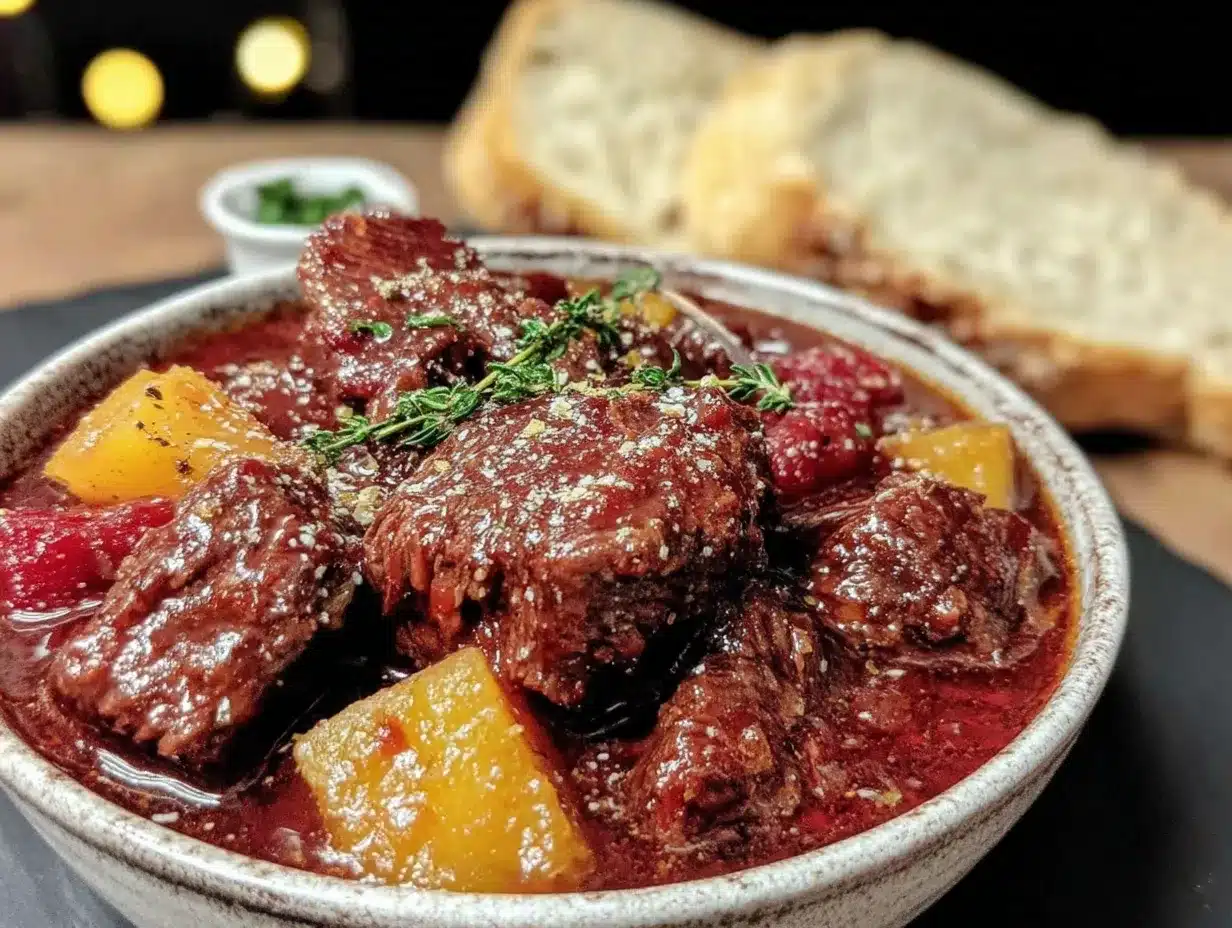
- The Flavor is Next-Level: The secret is the combination of seared beef, sweet roasted squash, and a slow-simmered broth that gets deeper and richer as it cooks. The beef literally falls apart when you poke it with a fork. It’s comfort food that actually delivers.
What makes this recipe different from all the other beef stews out there? It’s the balance. The butternut squash doesn’t just sit in the background — it melts into the broth slightly, thickening it naturally and adding a subtle sweetness that plays perfectly against the savory beef and umami-rich tomatoes. Plus, browning the meat first is non-negotiable here. That step adds a layer of flavor that you simply cannot get from dumping raw beef into a slow cooker. Trust me, I tried the lazy way. It’s not the same.
This is the kind of stew that makes you close your eyes after the first bite. It’s hearty enough to satisfy a big appetite but feels wholesome and nourishing rather than heavy. Perfect for impressing dinner guests without breaking a sweat, or for turning a regular Tuesday night into something special.
What Ingredients You Will Need
This recipe uses simple, wholesome ingredients that work together to create something truly special. Most of these are pantry staples or easy to find at any grocery store, especially during fall when squash is everywhere.
For the Stew Base
- Beef chuck, cut into 1.5-inch cubes (about 2 pounds) — look for well-marbled pieces; they’ll get tender and juicy as they cook. I like buying a whole chuck roast and cubing it myself — it’s cheaper and you control the size.
- Butternut squash, peeled and cut into 1-inch cubes (about 3 cups) — go for squash that feels heavy for its size with no soft spots. Pre-cut is fine in a pinch, but it’s often drier.
- Yellow onion, diced (1 large) — adds sweetness and depth as it cooks down.
- Garlic cloves, minced (4-5) — because garlic makes everything better. Don’t skip it.
- Fire-roasted diced tomatoes, one 14.5-ounce can — these add a subtle smoky flavor that regular diced tomatoes just don’t have. I recommend Muir Glen or Hunt’s Fire Roasted.
- Beef broth, low-sodium (2 cups) — lets you control the salt level. Better Than Bouillon roasted beef base is my go-to for rich flavor.
- Tomato paste, 2 tablespoons — this concentrates the tomato flavor and helps thicken the broth.
For Seasoning
- Dried thyme, 1 teaspoon — earthy and slightly floral, it’s a classic pairing with both beef and squash.
- Dried rosemary, 1 teaspoon — crush it between your fingers before adding to release the oils.
- Smoked paprika, 1 teaspoon — adds warmth and a hint of smokiness. Regular paprika works too, but smoked is worth seeking out here.
- Bay leaves, 2 — they infuse the broth with subtle herbal notes. Remember to fish them out before serving!
- Salt and black pepper, to taste — start with 1 teaspoon salt and 1/2 teaspoon pepper, then adjust at the end.
For Thickening and Finishing
- All-purpose flour, 2 tablespoons (optional) — for tossing with the beef before browning; it helps thicken the stew slightly. Use cornstarch for a gluten-free option.
- Fresh parsley, chopped (for garnish) — optional but nice for a pop of color and freshness.
Substitution Guidance: If you can’t find butternut squash, try sweet potatoes or even carrots — they’ll add similar sweetness and hold up well to long cooking. For a gluten-free version, skip the flour and use a cornstarch slurry (1 tablespoon cornstarch mixed with 2 tablespoons cold water) stirred in during the last 30 minutes of cooking. You can swap the beef chuck for stew meat labeled “stew beef,” but check the marbling — if it looks too lean, it might turn out dry. In summer, fresh tomatoes (diced, about 2 cups) can replace the canned, though you’ll want to add a little extra tomato paste for depth.
Equipment Needed
You don’t need a fancy kitchen to pull this off. Here’s what you’ll actually use:
- A 6-quart slow cooker — this is the sweet spot for this recipe. Too small and you’ll overcrowd everything; too large and the liquid might evaporate too quickly. I’ve been using a basic Cuisinart model for years and it’s never let me down.
- A large, heavy skillet or Dutch oven — for browning the beef. Cast iron is ideal, but any heavy-bottomed pan works. Non-stick is fine but won’t give you quite as good a sear.
- A sharp chef’s knife — peeling and cubing butternut squash is much easier (and safer) with a sharp blade. Dull knives are the enemy here.
- A vegetable peeler — for the squash. A Y-peeler gives you more control than a straight one.
- Measuring cups and spoons — nothing fancy, but accuracy matters with the seasonings.
- A wooden spoon or spatula — for scraping up the browned bits from the pan (that’s where so much flavor lives).
- A cutting board — preferably one that won’t slide around. Throw a damp paper towel under it if needed.
Budget-friendly tip: Don’t own a slow cooker? You can make this in a Dutch oven on the stovetop or in the oven at 325°F for about 2.5-3 hours, checking occasionally. A heavy-bottomed pot with a tight-fitting lid does the same job. And if you’re buying a slow cooker for the first time, check thrift stores — I found my backup one for eight dollars and it works perfectly.
Preparation Method
Alright, let’s get cooking. This looks like a lot of steps, but I promise it’s straightforward. Take it one step at a time.
- Prep your ingredients first. Cube the beef into 1.5-inch pieces. Peel and cube the butternut squash into 1-inch chunks. Dice the onion. Mince the garlic. Measure out your spices. Having everything ready makes the process smooth and prevents that panicked “where’s the paprika” moment.
- Season and flour the beef. Pat the beef cubes dry with paper towels — this is crucial for getting a good sear. In a bowl, toss the beef with 1 teaspoon salt, 1/2 teaspoon black pepper, and 2 tablespoons flour (if using). The flour helps create a nice crust and thickens the stew later.
- Sear the beef in batches. Heat 1 tablespoon of olive oil in your large skillet over medium-high heat until it shimmers. Add the beef in a single layer — don’t crowd the pan. You want to hear that satisfying sizzle. Sear for 2-3 minutes per side until deeply browned. Work in two or three batches; overcrowding will steam the meat instead of browning it. Transfer each batch to the slow cooker as it’s done.
- Cook the aromatics. Reduce the heat to medium. Add a splash more oil to the pan if it looks dry. Toss in the diced onion and cook for 3-4 minutes, scraping up those browned bits from the bottom of the pan — that’s pure flavor gold. Add the minced garlic and cook for 30 seconds more, until fragrant. Pour this into the slow cooker over the beef.
- Deglaze the pan. Pour about 1/2 cup of the beef broth into the hot skillet and scrape up any remaining browned bits. This takes about 30 seconds. Pour this liquid into the slow cooker too. Don’t skip this step — it captures all the flavor that’s stuck to the pan.
- Add everything else to the slow cooker. Add the cubed butternut squash, fire-roasted tomatoes (with their juices), tomato paste, dried thyme, dried rosemary, smoked paprika, bay leaves, and the remaining beef broth. Give everything a gentle stir to combine. The liquid should come about halfway up the ingredients — if it looks dry, add another 1/2 cup of broth or water.
- Cook low and slow. Cover and cook on LOW for 7-8 hours or on HIGH for 4-5 hours. Low and slow is better here — it gives the beef more time to break down and become tender. The stew is ready when the beef shreds easily with a fork and the squash is soft but not completely falling apart.
- Finish and adjust. About 30 minutes before serving, remove the bay leaves. Taste the broth and adjust salt and pepper — you’ll likely need a bit more salt than you think, since the flavors have mellowed during cooking. If you want a thicker stew, mash a few of the squash cubes against the side of the slow cooker and stir them in. This adds body naturally.
- Serve and enjoy. Ladle into bowls and garnish with fresh parsley if you like. The stew will be piping hot, so give it a minute to cool slightly before diving in.
Sensory cues to watch for: When you first lift the lid, you should be hit with a rich, savory aroma with hints of rosemary and smoke. The broth should be deep reddish-brown, not watery. The beef should offer no resistance when you press it with a spoon. If the squash is mushy, you’ve cooked it a bit too long — still delicious, just less pretty. No worries there.
Cooking Tips & Techniques
After making this stew more times than I can count, I’ve picked up a few tricks that make a real difference. Here’s what I wish someone had told me from the start.
Don’t skip the sear. I know it’s tempting to just dump everything in the slow cooker and walk away. I’ve done it. The result is edible but forgettable. Browning the beef creates the Maillard reaction — that complex, savory flavor that makes meat taste like meat. It takes ten extra minutes and it’s absolutely worth it. One time I was in a rush and skipped it, and my husband asked if I’d changed the recipe. He wasn’t impressed.
Cut the beef and squash to similar sizes. This ensures they cook evenly. If your beef chunks are twice the size of your squash cubes, the beef will still be tough when the squash has turned to mush. Aim for 1.5-inch beef pieces and 1-inch squash cubes. Close enough counts — it doesn’t have to be perfect.
Layer flavors strategically. Don’t just dump everything in at once. Searing the beef, cooking the aromatics, and deglazing the pan builds layers of flavor that you can’t get from a one-step dump-and-go approach. The order matters. Trust the process.
Resist the urge to peek. Every time you lift that lid, you release heat and add 15-20 minutes to the cooking time. I know it smells amazing, but let the slow cooker do its job. Check it once at the 6-hour mark if you’re cooking on low, and that’s it.
Season at the end, not just the beginning. Salt and other seasonings mellow during long cooking. What tastes perfectly salted at the start will taste flat after 8 hours. Add a little salt at the beginning (about 1 teaspoon), then taste and adjust right before serving. You’ll almost always need more than you expect.
If your stew is too thin: Remove the lid for the last 30-45 minutes of cooking to let some liquid evaporate. Or mash a few squash cubes against the side of the slow cooker and stir them in — the natural starches will thicken the broth beautifully. A cornstarch slurry works too, but I prefer the squash method for keeping things simple.
If your stew is too thick: Stir in a splash of beef broth or water until it reaches your desired consistency. This happens sometimes if you’re using a particularly starchy squash or if your slow cooker runs hot.
Variations & Adaptations
One of the best things about this stew is how adaptable it is. Here are some variations I’ve tried and loved.
Make it a complete one-pot meal: Add 2-3 peeled and diced potatoes (Yukon Gold or Russet work well) along with the squash. Or toss in a cup of pearl barley or farro for extra heartiness. If adding grains, you’ll need to increase the broth by about 1/2 cup since they absorb liquid.
Switch up the protein: Beef chuck is my favorite, but this works beautifully with lamb shoulder or even boneless short ribs. For a lighter version, try boneless, skinless chicken thighs — reduce the cooking time to 4-5 hours on low since chicken cooks faster. I made a lamb version last spring and the richness was incredible.
Seasonal vegetable swaps: In summer, replace the squash with zucchini and bell peppers (add them in the last 2 hours so they don’t turn to mush). In winter, swap in parsnips, carrots, or even celery root. Each vegetable brings its own personality to the stew.
Dietary adaptations: For a gluten-free version, skip the flour when browning the beef and use a cornstarch slurry at the end if you want a thicker broth. For a lower-carb option, replace the squash with extra mushrooms and cauliflower florets — the texture is different but still satisfying. For dairy-free, this recipe is naturally dairy-free as written, so you’re good.
Spice it up: Add 1/2 teaspoon of red pepper flakes along with the other spices for a subtle kick. Or stir in a tablespoon of harissa paste for a North African-inspired twist. I tried this once on a whim and it was surprisingly good — the warmth of the harissa played beautifully with the sweet squash.
Herb variations: No fresh thyme or rosemary? Use 1 teaspoon of dried Italian seasoning or Herbes de Provence instead. Fresh herbs are lovely, but dried work perfectly here since they have time to rehydrate during the long cooking.
Serving & Storage Suggestions
This stew is versatile when it comes to serving. Here’s how I like to enjoy it.
Serving temperature: Serve it piping hot, straight from the slow cooker. Let it sit in the bowl for a minute or two before eating — the flavor actually deepens as it cools slightly. I’ve also eaten it at room temperature the next day (don’t judge) and it was still delicious.
What to serve with it: A chunk of crusty bread is non-negotiable in my house — something with a good crust for dipping. I love a sourdough boule or a rustic whole wheat loaf. For a lighter option, serve over egg noodles, mashed potatoes, or even a bed of steamed rice. A simple green salad with a lemony vinaigrette cuts through the richness nicely. And if you’re feeling indulgent, a pat of butter melted into the stew right before serving is a game-changer.
Storage instructions: Let the stew cool completely before storing. Transfer to an airtight container and refrigerate for up to 4 days. The flavors actually get better on day two and three — something magical happens as the ingredients continue to meld. I often make a double batch specifically for leftovers.
Freezer instructions: This stew freezes beautifully. Let it cool completely, then portion into freezer-safe containers or zip-top bags. Leave a little headspace for expansion. Freeze for up to 3 months. Thaw overnight in the refrigerator before reheating.
Reheating tips: Reheat gently on the stovetop over medium-low heat, stirring occasionally, until piping hot. You can also microwave individual portions in 30-second bursts, stirring between each. If the stew has thickened during storage, add a splash of beef broth or water to loosen it up. The texture of the squash will be softer after freezing and reheating, but the flavor remains excellent.
How flavors develop: Like most stews, this one is even better the next day. The beef continues to absorb the broth’s flavor, and the squash breaks down further, making the broth even richer. If you can plan ahead, making this a day before you want to serve it is a pro move.
Nutritional Information & Benefits
Here’s an approximate nutritional breakdown for one serving (about 1.5 cups, assuming 6 servings total):
- Calories: 385
- Protein: 32g
- Fat: 14g
- Carbohydrates: 32g
- Fiber: 6g
- Sugar: 8g (naturally occurring)
- Sodium: 680mg (varies based on broth and added salt)
Health highlights: Butternut squash is packed with vitamin A (over 400% of your daily needs per cup), vitamin C, and fiber. It’s also a good source of potassium and magnesium. Beef provides high-quality protein, iron, zinc, and B vitamins — especially B12, which is important for energy and brain function. The fire-roasted tomatoes add lycopene, a powerful antioxidant that becomes more available when cooked. This is a genuinely nourishing meal that satisfies deeply without being overly heavy.
Dietary considerations: This recipe is naturally dairy-free, egg-free, and nut-free. For gluten-free, simply skip the flour step or use a gluten-free flour blend. It’s relatively low in added sugars (none, actually — all sweetness comes from the squash and tomatoes). If you’re watching your sodium, use low-sodium broth and go easy on the added salt at the end. The stew will still be plenty flavorful thanks to the herbs and spices.
Personal note: I love that this stew feels indulgent but is actually quite balanced. It’s the kind of meal that leaves you feeling satisfied and warm, not sluggish. On those cold, dark winter evenings when I want comfort without guilt, this is what I reach for.
Conclusion
So there you have it — a cozy slow cooker beef and butternut squash stew that started with a hardware store guy’s napkin drawing and became my go-to fall comfort food. It’s proof that sometimes the best recipes come from the most unexpected places. Frank probably has no idea how many times I’ve made this stew, but I think about him every time I cube a squash.
This is one of those recipes that just works. It’s forgiving enough for a beginner, satisfying enough for a seasoned cook, and adaptable enough to fit whatever you have in your kitchen. The beef gets meltingly tender, the squash turns sweet and silky, and the broth is the kind you’ll want to sop up with every last piece of bread.
I’d love to hear how it goes for you. Did you add your own twist? Swap in a different vegetable? Forget to brown the beef and learn the hard way like I did? Drop a comment below and let me know — I genuinely read every single one. And if you share a photo on Pinterest or Instagram, tag me so I can see your beautiful bowls of stew. Until next time, happy cooking, and stay warm out there.
Frequently Asked Questions
Can I make this stew in an Instant Pot instead of a slow cooker?
Absolutely. Use the sauté function to brown the beef and cook the aromatics right in the pot. Then add the remaining ingredients, pressure cook on HIGH for 35 minutes, and let the pressure release naturally for 15 minutes before quick-releasing the rest. The squash will be slightly softer than the slow cooker version, but it’s still delicious and much faster.
Do I have to peel the butternut squash?
Yes, for this recipe. The skin of butternut squash is tough and doesn’t soften enough during cooking to be pleasant to eat. A sharp vegetable peeler works well, or you can microwave the whole squash for 2-3 minutes to slightly soften the skin before peeling. If you’re really short on time, look for pre-peeled and cubed squash in the produce section.
Can I use frozen butternut squash?
You can, but there are a couple things to know. Frozen squash tends to release more water as it cooks, which can make the stew slightly thinner. It also breaks down faster, so you might end up with a softer texture. If using frozen, add it directly to the slow cooker without thawing, and consider reducing the broth by 1/4 cup to account for the extra liquid.
Why is my beef still tough after 8 hours?
A few possible reasons. First, the beef might have been cut too large — aim for 1.5-inch cubes. Second, you might be using a lean cut like sirloin or round instead of well-marbled chuck. Fat and connective tissue are what break down into tenderness during slow cooking. Third, every slow cooker runs a little differently — yours might run cool. Try cooking on LOW for an extra hour or two, or check that your slow cooker is actually reaching the right temperature.
Can I add other vegetables to this stew?
Definitely. Potatoes, carrots, parsnips, and celery all work well. Add root vegetables at the beginning along with the squash. For more delicate vegetables like green beans, peas, or zucchini, add them during the last 30-60 minutes of cooking so they don’t turn to mush. Mushrooms are also great — add them with the onions for extra savory depth.
Pin This Recipe!
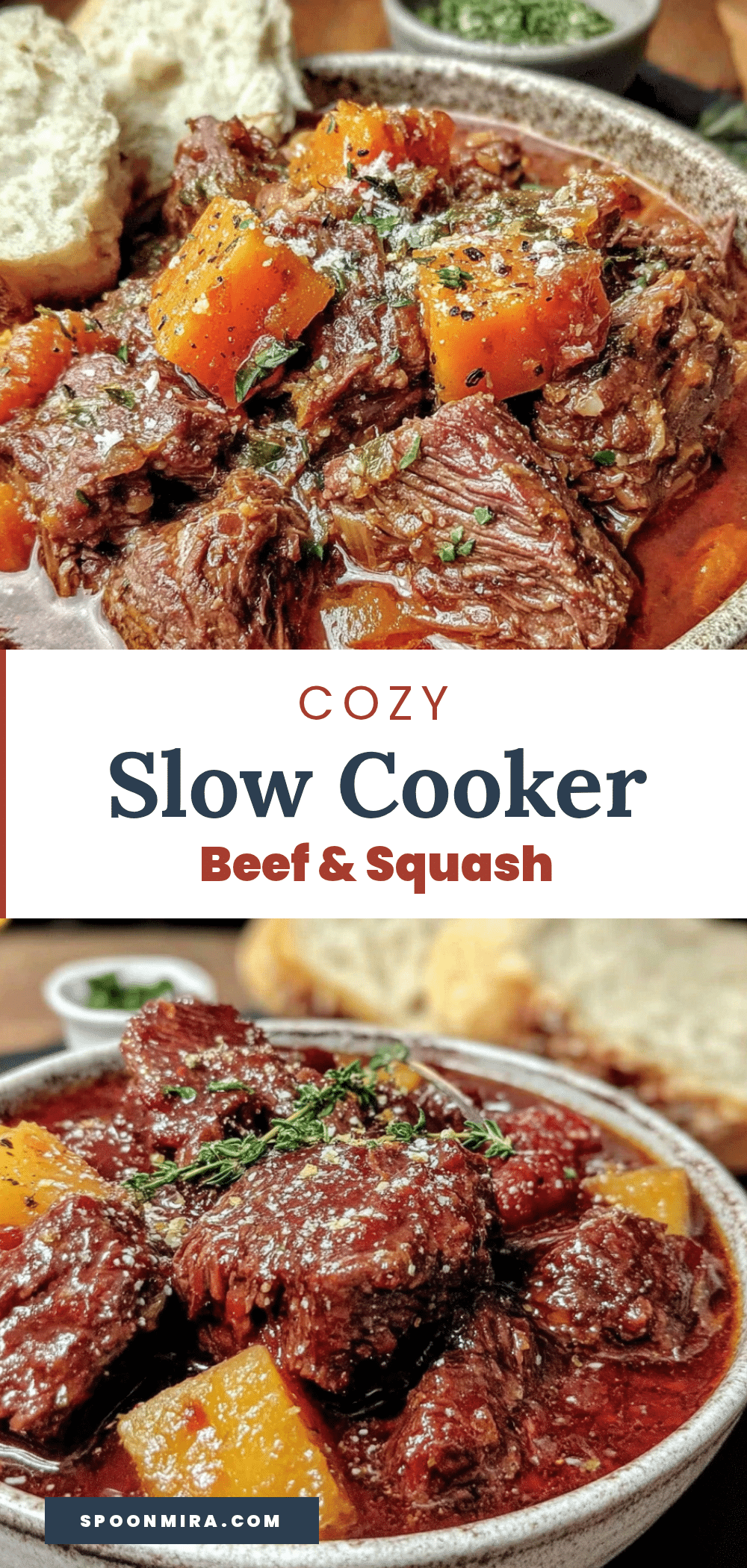
Cozy Slow Cooker Beef and Butternut Squash Stew: Easy Fall Dinner
A hearty and comforting slow cooker stew featuring fall-apart tender beef and sweet, silky butternut squash in a rich, savory broth. This easy one-pot meal is perfect for cozy fall evenings and makes delicious leftovers.
- Prep Time: 15 minutes
- Cook Time: 7-8 hours (low) or 4-5 hours (high)
- Total Time: 7 hours 15 minutes to 8 hours 15 minutes
- Yield: 6 servings 1x
- Category: Main Course
- Cuisine: American
Ingredients
- 2 pounds beef chuck, cut into 1.5-inch cubes
- 3 cups butternut squash, peeled and cut into 1-inch cubes
- 1 large yellow onion, diced
- 4–5 garlic cloves, minced
- 1 (14.5-ounce) can fire-roasted diced tomatoes
- 2 cups low-sodium beef broth
- 2 tablespoons tomato paste
- 1 teaspoon dried thyme
- 1 teaspoon dried rosemary, crushed
- 1 teaspoon smoked paprika
- 2 bay leaves
- Salt and black pepper, to taste (start with 1 teaspoon salt and 1/2 teaspoon pepper)
- 2 tablespoons all-purpose flour (optional, for thickening)
- 1 tablespoon olive oil (for searing)
- Fresh parsley, chopped (for garnish, optional)
Instructions
- Prep your ingredients first. Cube the beef into 1.5-inch pieces. Peel and cube the butternut squash into 1-inch chunks. Dice the onion. Mince the garlic. Measure out your spices.
- Pat the beef cubes dry with paper towels. In a bowl, toss the beef with 1 teaspoon salt, 1/2 teaspoon black pepper, and 2 tablespoons flour (if using).
- Heat 1 tablespoon of olive oil in a large skillet over medium-high heat. Sear the beef in batches (do not crowd the pan) for 2-3 minutes per side until deeply browned. Transfer each batch to the slow cooker.
- Reduce heat to medium. Add a splash more oil if needed. Cook the diced onion for 3-4 minutes, scraping up browned bits from the pan. Add minced garlic and cook for 30 seconds more until fragrant. Transfer to the slow cooker.
- Pour about 1/2 cup of the beef broth into the hot skillet and scrape up any remaining browned bits. Pour this liquid into the slow cooker.
- Add the cubed butternut squash, fire-roasted tomatoes (with juices), tomato paste, dried thyme, dried rosemary, smoked paprika, bay leaves, and remaining beef broth to the slow cooker. Stir gently to combine.
- Cover and cook on LOW for 7-8 hours or on HIGH for 4-5 hours, until the beef is fork-tender and the squash is soft.
- About 30 minutes before serving, remove the bay leaves. Taste and adjust salt and pepper. For a thicker stew, mash a few squash cubes against the side of the slow cooker and stir them in.
- Ladle into bowls and garnish with fresh parsley if desired. Serve hot.
Notes
For best results, do not skip browning the beef. Cut beef and squash to similar sizes for even cooking. Season at the end as flavors mellow during long cooking. For a gluten-free version, skip the flour and use a cornstarch slurry (1 tablespoon cornstarch mixed with 2 tablespoons cold water) stirred in during the last 30 minutes of cooking. The stew tastes even better the next day.
Nutrition
- Serving Size: 1.5 cups
- Calories: 385
- Sugar: 8
- Sodium: 680
- Fat: 14
- Saturated Fat: 4
- Carbohydrates: 32
- Fiber: 6
- Protein: 32
Keywords: slow cooker beef stew, butternut squash stew, fall dinner, comfort food, beef stew, slow cooker recipe, easy dinner, one-pot meal