I was standing in the frozen food aisle last Tuesday, staring at a bag of pre-seasoned salmon portions, when the smell of garlic butter hit me—not from the freezer, but from a memory so sharp it stopped me mid-reach. And suddenly I was eight years old at my neighbor Mrs. Kowalski’s kitchen table, watching her pull a sizzling skillet off the stove. She’d slide these golden, buttery pieces of salmon onto my plate with a wink, and I’d burn my tongue because I couldn’t wait. That woman could make anything taste like a hug, but her garlic butter salmon? That was magic. I haven’t seen her in fifteen years, and I’ve spent more weeknights than I care to admit trying to get that exact flavor back.
Honestly, I’ve messed up a lot of salmon in the process. Overcooked it, under-seasoned it, set off the smoke detector more than once. But last week, with a random Wednesday craving and a fridge full of nothing promising, I finally cracked it. These quick garlic butter salmon bites are it. They’re the weeknight version of that memory—fast enough for a Tuesday, good enough to make you slow down and actually taste every bite. Maybe you’ve been there, standing in your own kitchen, wanting something that feels special but doesn’t take an hour to make. This is that recipe.
What gets me is how something so simple can taste so complete. The garlic gets all mellow and sweet in the butter, the salmon gets those crispy golden edges, and the whole thing comes together in the time it takes to boil pasta or steam some rice. I made them again last night just to be sure it wasn’t a fluke. It wasn’t. This is the recipe that finally feels like coming home.
Why You’ll Love This Recipe
Let me tell you why these garlic butter salmon bites have become my most-requested weeknight dinner. I’ve tested this recipe at least a dozen times—adjusting the heat, playing with the butter-to-garlic ratio, even trying different pan materials—and this version is the one that delivers every single time. Here’s what makes it stand out:
- Quick & Easy: From start to finish, we’re talking 20 minutes. That’s less time than it takes to order takeout. Perfect for those nights when you’re staring at the fridge wondering what’s for dinner.
- Simple Ingredients: You probably have everything already. Butter, garlic, salmon, salt, pepper, maybe some lemon if you’re feeling fancy. No trips to a specialty store required.
- Perfect for Busy Weeknights: This is the kind of meal that makes a Tuesday feel like a Friday. It’s impressive enough for guests but easy enough for a solo dinner.
- Crowd-Pleaser: I’ve served these to picky eaters, seafood skeptics, and full-on salmon lovers. Everyone goes back for seconds. The crispy edges and buttery sauce win people over.
- Unbelievably Delicious: The texture is what gets me—tender, flaky salmon with these caramelized, almost crunchy bits where the butter hits the pan. It’s comfort food that happens to be good for you.
What makes this version different from every other salmon recipe out there? It’s the technique. Cutting the salmon into bite-sized pieces means more surface area for that garlic butter to work its magic. You get crispy edges on every single piece, not just the outside of a fillet. Plus, cooking in a single skillet means less cleanup—and honestly, that’s a win I’ll take any night of the week.
This isn’t just another salmon recipe. It’s the one that makes you close your eyes after the first bite. It’s healthier than takeout, faster than most pasta dishes, and somehow feels like a treat even on the busiest nights. That’s a hard combo to beat.
What Ingredients You Will Need
This recipe uses simple, pantry-friendly ingredients to create something that tastes far more complex than it is. Here’s what you’ll need and why each one matters.
- Salmon fillets (1.5 lbs / 680g), skin removed, cut into 1-inch cubes: Look for bright, firm fillets with a mild smell. I prefer wild-caught when I can find it, but farm-raised works beautifully too—it’s actually a bit more forgiving because of the higher fat content. If using frozen salmon, thaw it completely in the fridge overnight and pat it very dry before cutting.
- Unsalted butter (4 tablespoons / 56g): Butter is the backbone here. Unsalted lets you control the salt level. I’ve tried this with salted butter in a pinch, and it works, but you’ll want to go easy on the added salt. For a richer flavor, try using European-style butter like Kerrygold—it has a higher butterfat content and makes the sauce extra luxurious.
- Garlic (4-5 cloves, minced): Fresh garlic is non-negotiable here. The pre-minced stuff in a jar just doesn’t caramelize the same way. You want that sweet, mellow garlic flavor that comes from fresh cloves hitting hot butter. I use a microplane for the finest mince, but a sharp knife works perfectly.
- Olive oil (1 tablespoon / 15ml): A little oil in the pan prevents the butter from burning. Butter alone has a lower smoke point, so the oil helps stabilize it. Use a good-quality extra virgin olive oil for flavor, or a neutral oil like avocado if that’s what you have.
- Lemon juice (1 tablespoon / 15ml, fresh): Fresh lemon juice brightens everything up and cuts through the richness of the butter. Bottled lemon juice is too sharp and lacks the subtle sweetness of fresh. Roll the lemon on the counter before juicing to get the most out of it.
- Salt (1 teaspoon / 5g) and black pepper (½ teaspoon / 2g): Simple seasonings that let the salmon and butter shine. I use kosher salt for its clean flavor and easy pinch-ability. Freshly ground black pepper makes a noticeable difference here.
- Optional garnishes: Fresh parsley (chopped), lemon wedges, red pepper flakes for heat. None of these are required, but they add a nice finish. The parsley adds color, the lemon gives a final squeeze of brightness, and the red pepper flakes bring a little warmth.
A quick note on substitutions: If you need a dairy-free option, you can use a high-quality vegan butter or ghee (which is technically dairy but has the milk solids removed). I’ve also made this with coconut oil in a pinch, and while the flavor is different, it’s still delicious. For the garlic lovers out there—and I count myself among you—feel free to add an extra clove or two. This recipe is forgiving that way.
Equipment Needed
You don’t need much for this recipe, which is part of the beauty. Here’s what you’ll want on hand:
- Large skillet (10-12 inches / 25-30cm): A cast-iron skillet is my first choice—it holds heat beautifully and gives you those gorgeous golden crusts. A stainless steel pan works great too. Avoid non-stick if you can; you won’t get the same browning.
- Sharp chef’s knife: Cutting salmon into even cubes is much easier with a sharp knife. A dull blade will squish the fish and make a mess.
- Cutting board: Preferably one dedicated to fish or one you can sanitize well.
- Paper towels: For patting the salmon dry. This step is crucial for good browning, so don’t skip it.
- Tongs: For flipping the salmon bites without breaking them. A spatula works too, but tongs give you more control.
- Small bowl: For mincing garlic and holding it ready to go. Prep everything before you start cooking—this recipe moves fast.
If you don’t have a cast-iron skillet, don’t worry. I’ve made these salmon bites in a regular stainless steel pan and even an electric skillet. The key is getting the pan hot enough before adding the fish. And if you’re on a budget, a basic 12-inch skillet from a restaurant supply store will set you back about 20 bucks and last for years. That’s what I used before I splurged on my cast iron.
Preparation Method
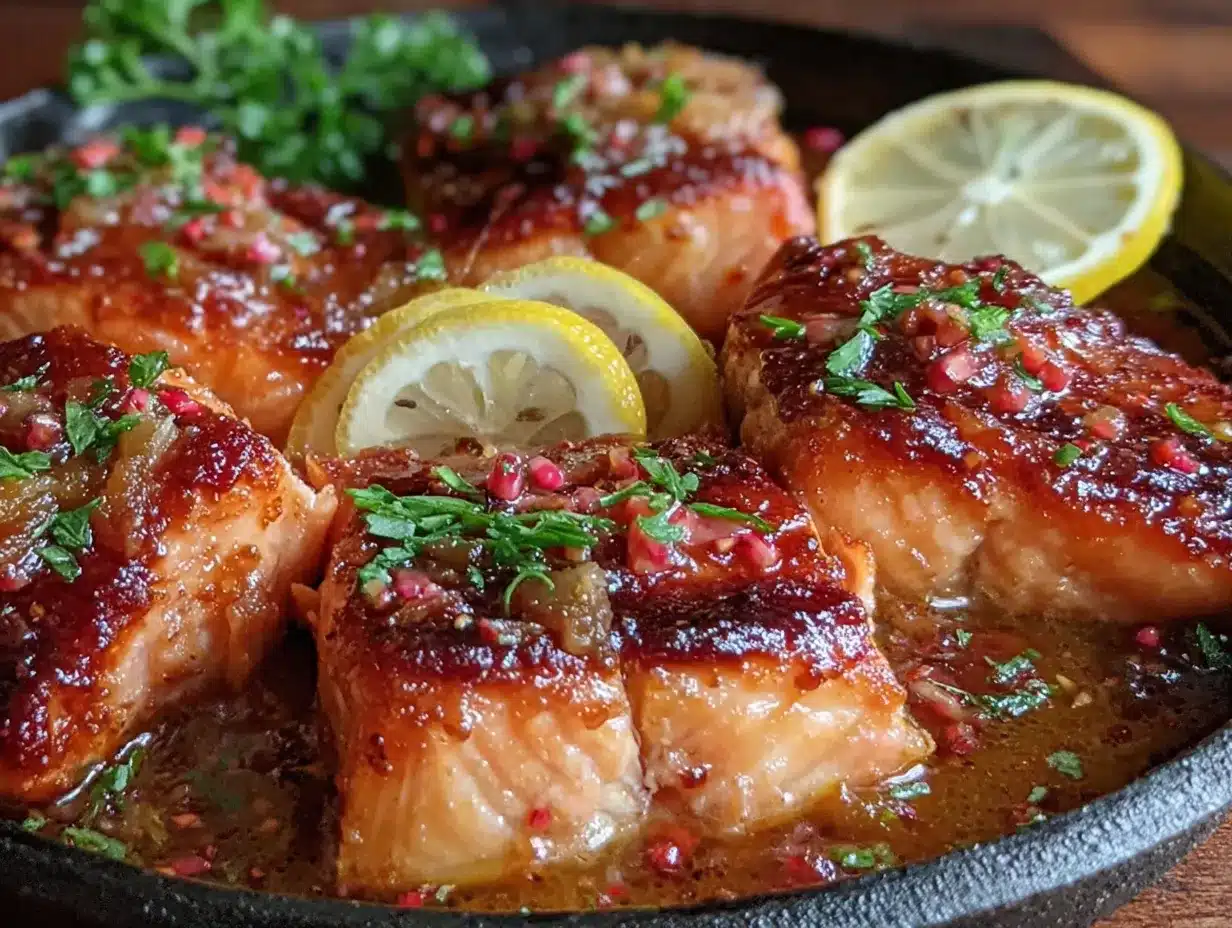
This recipe comes together fast, so I recommend reading through all the steps before you start. Trust me on this—I learned the hard way that scrambling for ingredients while garlic burns is not a good look. Here’s how to nail it:
- Prep the salmon (5 minutes): Start by patting your salmon fillets dry with paper towels. This is the most important step for getting crispy edges—wet salmon steams instead of sears. Cut the fillets into 1-inch cubes, keeping them as uniform as possible so they cook evenly. Season the cubes with salt and pepper, tossing gently to coat. Set aside while you prep the garlic.
- Mince the garlic (2 minutes): Peel 4-5 cloves of garlic and mince them finely. I like to use a microplane for the finest texture, but a sharp knife works perfectly. Just make sure the pieces are small enough that they’ll cook quickly and evenly in the butter. Set the garlic aside in a small bowl.
- Heat the pan (2 minutes): Place your skillet over medium-high heat and add the olive oil. Let it heat for about a minute until it shimmers. Swirl the pan to coat the bottom evenly. You want the oil hot but not smoking.
- Sear the salmon (4-5 minutes): Carefully place the salmon cubes in the hot skillet in a single layer. Don’t crowd the pan—work in batches if needed. Let them cook undisturbed for 2-3 minutes until the bottoms are golden brown and crispy. Flip each piece with tongs and cook for another 1-2 minutes on the other side. The salmon should be cooked through but still tender in the center.
- Add the butter and garlic (2 minutes): Reduce the heat to medium and add the butter to the pan. Once it’s melted, add the minced garlic and stir gently to coat the salmon. Cook for about 1 minute, stirring occasionally, until the garlic is fragrant and just starting to turn golden. Watch it closely—garlic goes from perfect to burnt very quickly.
- Finish with lemon (1 minute): Squeeze the fresh lemon juice over the salmon and stir to combine. Let everything cook together for another 30 seconds so the flavors meld. The butter sauce should be glossy and slightly thickened.
- Serve immediately: Transfer the salmon bites to a serving plate and spoon any remaining garlic butter from the pan over the top. Garnish with fresh parsley, lemon wedges, and red pepper flakes if desired. Serve hot.
A few things to watch for: If your salmon starts sticking to the pan when you try to flip it, it’s not ready yet. Give it another 30 seconds and try again. The salmon should release easily when the crust is properly formed. And if the garlic starts to brown too quickly, pull the pan off the heat for a few seconds—the residual heat will continue cooking it without burning.
Cooking Tips & Techniques
After making these salmon bites more times than I can count, I’ve picked up a few tricks that make a real difference. Here’s what I wish someone had told me from the start:
Patting the salmon dry is non-negotiable. I know it seems like an extra step, but moisture is the enemy of browning. If you skip this, you’ll end up with pale, steamed salmon instead of those gorgeous golden crusts. Use paper towels and really press them into the fish. I’ve even let the cubed salmon sit uncovered in the fridge for 10 minutes after patting to dry it out further—that extra step makes a noticeable difference.
Don’t move the salmon too early. When you first add the cubes to the hot pan, they’ll stick. That’s normal. Let them cook undisturbed for at least 2-3 minutes. You’ll know they’re ready to flip when they release easily from the pan with a gentle nudge from your tongs. If you have to tug, they’re not ready. I learned this the hard way after ruining a batch by being impatient—the crust stuck to the pan and I ended up with shredded salmon.
Watch the garlic like a hawk. Garlic goes from fragrant to bitter in about 30 seconds. Add it to the butter, stir for about a minute, and then add the lemon juice immediately. If you see the garlic turning more than a pale golden color, you’ve waited too long. When I’m feeling extra careful, I’ll even take the pan off the heat before adding the garlic and let the residual heat do the work.
Work in batches if needed. If your skillet isn’t big enough to hold all the salmon cubes in a single layer, cook them in two batches. Crowding the pan lowers the temperature and causes the salmon to steam instead of sear. It’s worth the extra few minutes to get that perfect crust on every piece.
Save the leftover butter sauce. Seriously, don’t throw it away. That garlic butter is liquid gold. Spoon it over rice, drizzle it on roasted vegetables, or toss it with pasta for an easy side dish. I’ve even used it as a dipping sauce for crusty bread the next day.
Variations & Adaptations
One of the best things about this recipe is how easy it is to adapt. Here are some of my favorite variations:
- Spicy Cajun Version: Add 1 teaspoon of Cajun seasoning to the salmon cubes before searing, and toss in ¼ teaspoon of cayenne pepper with the garlic. The smoky heat pairs beautifully with the butter. I make this version when I’m craving something with a kick—it’s become my go-to for game day dinners.
- Herb-Infused Butter: Add 1 tablespoon of fresh chopped dill or thyme to the butter along with the garlic. The herbs infuse the butter as it melts, giving the salmon a bright, garden-fresh flavor. This is perfect for spring and summer when fresh herbs are abundant.
- Honey Garlic Glaze: Add 1 tablespoon of honey to the butter along with the garlic. The sweetness caramelizes in the pan and creates a sticky, glossy glaze on the salmon. It’s a little sweet, a little savory, and absolutely addictive. My kids beg for this version.
- Lemon Pepper Twist: Use lemon pepper seasoning instead of salt and pepper, and add an extra squeeze of lemon at the end. The citrusy heat is bright and refreshing. I love this one with a side of steamed asparagus.
- Dairy-Free Option: Substitute the butter with a high-quality vegan butter or ghee. I’ve tried this with Miyoko’s European-style cultured vegan butter, and it works surprisingly well. The flavor is slightly different, but the texture and richness are spot on.
If you’re cooking for someone with allergies, this recipe is easy to adapt. For a nut-free version, just stick with the basic recipe. For a low-carb option, serve the salmon bites over cauliflower rice or a bed of greens. And if you’re avoiding nightshades, skip the red pepper flakes and use white pepper instead of black.
Serving & Storage Suggestions
These garlic butter salmon bites are incredibly versatile when it comes to serving. Here’s how I like to enjoy them:
Serving temperature: Serve these hot, straight from the skillet. The butter sauce should be warm and glossy, and the salmon should be tender and flaky. I like to transfer the bites to a warm platter so they stay hot while I finish any sides.
What to serve with them: These salmon bites pair beautifully with so many sides. I love them over a bed of fluffy white rice or quinoa to soak up all that garlic butter. For a low-carb option, try cauliflower rice or zucchini noodles. A simple green salad with lemon vinaigrette is a refreshing contrast to the rich salmon. And roasted vegetables—especially asparagus, broccoli, or green beans—are a natural match. If you’re feeling indulgent, serve them with crusty bread for dipping into the butter sauce.
Storage: Leftover salmon bites can be stored in an airtight container in the refrigerator for up to 3 days. The texture will change slightly—the crispy edges will soften—but the flavor is still fantastic. I actually like them cold, flaked over a salad for lunch the next day.
Reheating: The best way to reheat these salmon bites is in a skillet over medium heat with a little extra butter or oil. Just 2-3 minutes per side will warm them through without drying them out. You can also reheat them in a 350°F (175°C) oven for about 5 minutes. Avoid the microwave—it will make the salmon rubbery and the butter sauce will separate.
Freezing: I don’t recommend freezing these salmon bites. The texture of the salmon suffers, and the butter sauce can become grainy when thawed. If you need to freeze, do so before cooking—freeze the seasoned raw salmon cubes in a single layer on a baking sheet, then transfer to a freezer bag. When you’re ready to cook, thaw in the fridge overnight and proceed with the recipe.
Nutritional Information & Benefits
These garlic butter salmon bites aren’t just delicious—they’re packed with nutrients that make you feel good about eating them. Here’s the breakdown per serving (based on 4 servings):
- Calories: Approximately 420 per serving
- Protein: 38g
- Fat: 28g (including 12g saturated fat)
- Carbohydrates: 2g
- Fiber: 0g
- Sugar: 0g
- Sodium: 680mg
Salmon is one of the best sources of omega-3 fatty acids, which are essential for heart and brain health. It’s also rich in high-quality protein, B vitamins, and selenium. The garlic adds allicin, a compound known for its immune-boosting properties. And while butter is high in saturated fat, a moderate amount in a balanced diet is perfectly fine—especially when it helps you eat more nutrient-dense foods like salmon.
For those watching their sodium, you can reduce the salt to ½ teaspoon and still get great flavor. And if you’re on a low-carb or keto diet, this recipe fits perfectly—just skip any high-carb sides and load up on vegetables instead. As always, consult with a healthcare professional for personalized dietary advice.
Conclusion
These quick garlic butter salmon bites have become a staple in my kitchen for good reason. They’re fast enough for a busy weeknight, simple enough for beginner cooks, and impressive enough to serve to guests. The combination of crispy golden edges, tender flaky salmon, and that luscious garlic butter sauce is just unbeatable. Every time I make them, I think of Mrs. Kowalski and her little kitchen, and I smile.
I hope you give this recipe a try and make it your own. Maybe you’ll add a little extra garlic, or squeeze a bit more lemon, or serve it over something I haven’t thought of. That’s the beauty of cooking—making a recipe yours. If you do try it, I’d love to hear how it turns out. Drop a comment below and let me know what you think. Did you try a variation? Serve it with something unexpected? I’m always looking for new ideas.
Until next time, happy cooking. And remember—sometimes the best meals come together in the time it takes to set the table.
Frequently Asked Questions
Can I use frozen salmon for this recipe?
Yes, you can use frozen salmon, but you need to thaw it completely first. The best way is to transfer it from the freezer to the refrigerator the night before. Once thawed, pat it very dry with paper towels before cutting and seasoning. Frozen salmon tends to hold more moisture, so drying it well is even more important for getting those crispy edges.
How do I know when the salmon is cooked through?
The salmon is done when it flakes easily with a fork and the internal temperature reaches 145°F (63°C). For 1-inch cubes, this usually takes about 4-5 minutes total cooking time. The outside should be golden brown and the inside should be opaque and tender. If you’re unsure, cut one piece open to check—it should be just barely cooked through in the center.
Can I make this recipe ahead of time?
This recipe is best enjoyed fresh, but you can prep the ingredients ahead of time. Cut the salmon into cubes, season it, and store it in the fridge for up to 24 hours. Mince the garlic and store it in a small container. When you’re ready to cook, the whole process takes just 10 minutes. Leftovers can be stored in the fridge for up to 3 days.
What can I substitute for butter?
If you need a dairy-free option, ghee is the closest substitute—it’s clarified butter with the milk solids removed, so it has a similar rich flavor. Vegan butter works well too; look for one with a high fat content for the best results. Coconut oil is another option, though it will add a subtle coconut flavor. For a lower-fat version, you can use olive oil, but the sauce won’t be as rich.
Can I use salmon with the skin on?
You can, but I recommend removing the skin for this recipe. The skin can become chewy when cut into small pieces, and it prevents the butter and seasonings from penetrating the flesh. If you prefer to keep the skin on, cook the pieces skin-side down first for an extra 2 minutes to crisp it up, then flip and proceed with the recipe. Just be aware that the texture will be different.
Pin This Recipe!
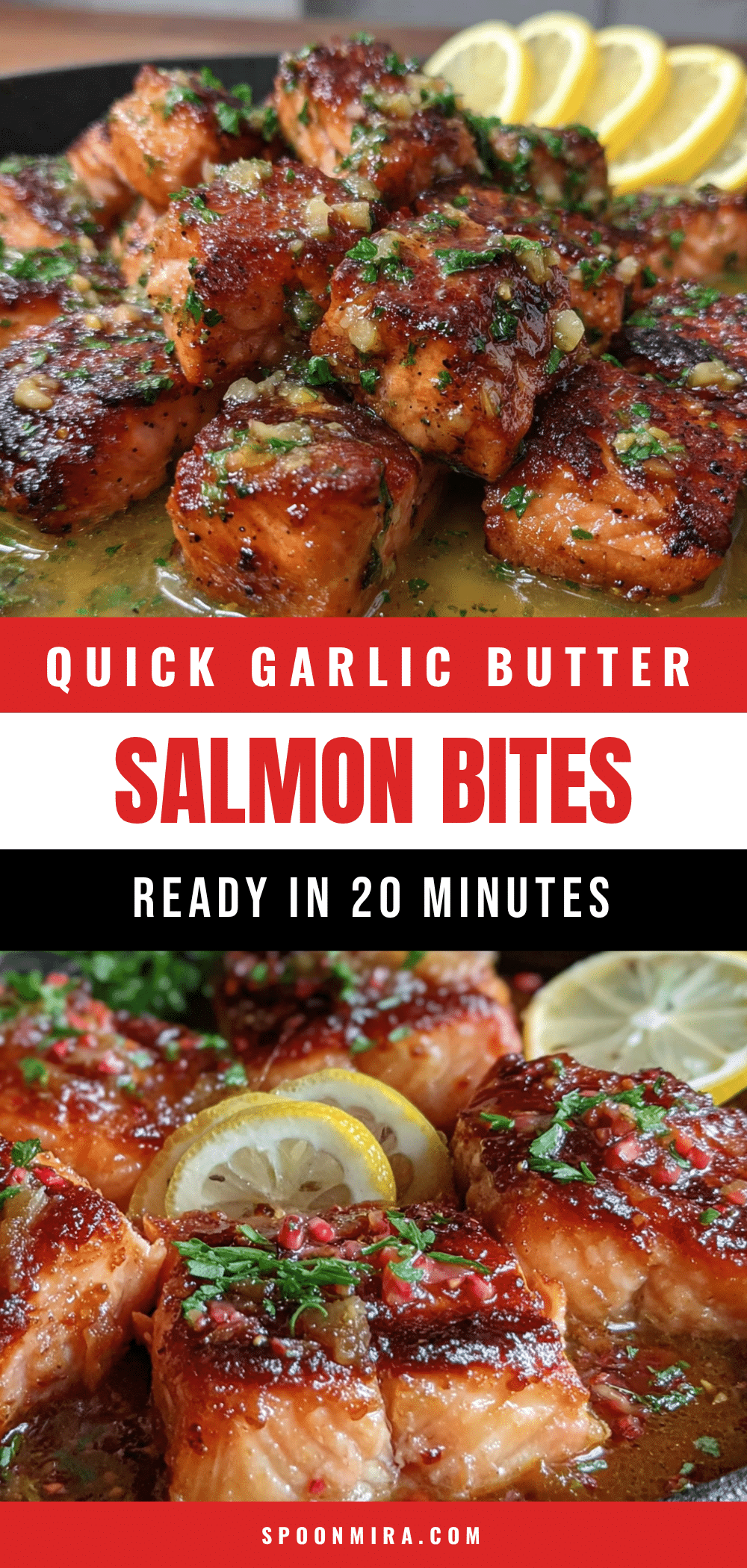
Quick Garlic Butter Salmon Bites: Best 20-Minute Dinner

These quick garlic butter salmon bites are a weeknight dinner miracle—crispy golden edges, tender flaky salmon, and a luscious garlic butter sauce, all in 20 minutes. Perfect for busy nights when you want something special without the fuss.
- Prep Time: 10 minutes
- Cook Time: 10 minutes
- Total Time: 20 minutes
- Yield: 4 servings 1x
- Category: Main Course
- Cuisine: American
Ingredients
- 1.5 lbs (680g) salmon fillets, skin removed, cut into 1-inch cubes
- 4 tablespoons (56g) unsalted butter
- 4–5 cloves garlic, minced
- 1 tablespoon (15ml) olive oil
- 1 tablespoon (15ml) fresh lemon juice
- 1 teaspoon (5g) salt
- ½ teaspoon (2g) black pepper
- Fresh parsley, chopped (optional, for garnish)
- Lemon wedges (optional, for serving)
- Red pepper flakes (optional, for heat)
Instructions
- Prep the salmon: Pat salmon fillets dry with paper towels. Cut into 1-inch cubes. Season with salt and pepper. Set aside.
- Mince the garlic: Peel and finely mince 4-5 cloves of garlic. Set aside in a small bowl.
- Heat the pan: Place a large skillet over medium-high heat and add olive oil. Heat until shimmering, about 1 minute.
- Sear the salmon: Add salmon cubes in a single layer (work in batches if needed). Cook undisturbed for 2-3 minutes until golden brown. Flip and cook another 1-2 minutes.
- Add butter and garlic: Reduce heat to medium. Add butter; once melted, add minced garlic. Stir gently for about 1 minute until fragrant and just golden.
- Finish with lemon: Squeeze fresh lemon juice over the salmon. Stir and cook for 30 seconds until sauce is glossy.
- Serve immediately: Transfer to a serving plate. Spoon remaining garlic butter over the top. Garnish with parsley, lemon wedges, and red pepper flakes if desired.
Notes
Pat the salmon very dry for the best crispy edges. Don’t crowd the pan—work in batches if needed. Watch the garlic closely to avoid burning. Leftover butter sauce is great over rice or vegetables. Store leftovers in the fridge for up to 3 days; reheat in a skillet or oven, not the microwave.
Nutrition
- Serving Size: 1 serving (about 6 o
- Calories: 420
- Sodium: 680
- Fat: 28
- Saturated Fat: 12
- Carbohydrates: 2
- Protein: 38
Keywords: garlic butter salmon, salmon bites, quick salmon recipe, 20-minute dinner, weeknight dinner, easy salmon, salmon cubes