The neighborhood block party was in four hours and I’d completely forgotten. Everyone else would be bringing elaborate appetizers—things that required overnight marinating, three separate components, and the kind of plating that belongs on a magazine cover. Me? I had a piece of salmon that I’d grabbed on a whim, a bunch of asparagus that was starting to look a little sad, and a lemon that had been sitting in my fruit bowl for a week. Honestly, I almost just ordered pizza and showed up empty-handed. But there was something about the way the light hit that lemon, all bright and yellow, that made me think maybe I could pull something together. I tossed everything on a sheet pan, drizzled some olive oil, and crossed my fingers. The result was so good that my neighbor, a retired chef, actually asked for the recipe. Let me tell you, that never happens. I mean, I’m a decent cook, but I’m not a professional. The whole thing felt like a happy accident—a last-minute scramble that turned into something I’ve been making on purpose ever since. Maybe you’ve been there, staring into your fridge with zero plan and a deadline. This is the recipe for those moments. It’s simple, it’s fast, and it somehow tastes like you spent way more effort than you actually did.
Why You’ll Love This Recipe
This isn’t just another salmon recipe. It’s the one that makes you feel like you’ve got your life together, even on a Tuesday night when you’re running on fumes. I’ve tested this method more times than I can count, tweaking the temperature, the timing, the seasoning—all so you don’t have to.
- Quick & Easy: From fridge to table in under 30 minutes. Seriously. No marinating, no complicated steps, no multiple pans to wash.
- Simple Ingredients: You probably already have most of these things in your kitchen. Salmon, asparagus, lemon, garlic, olive oil, salt, pepper. That’s it.
- Perfect for Busy Weeknights: This is the kind of meal that makes a Wednesday feel like a treat. It’s fancy enough for company, but easy enough for a solo dinner.
- Crowd-Pleaser: I’ve served this to picky eaters, seafood skeptics, and vegetable-avoiders. Everyone cleans their plate. The salmon stays tender and flaky, and the asparagus gets these gorgeous caramelized edges.
- Unbelievably Delicious: The flavor combination is simple but perfect. The lemon brightens everything up, the garlic adds a savory punch, and the salmon and asparagus just work together. It’s light, but it’s satisfying.
What makes this recipe different from all the other sheet pan dinners out there? It’s the timing. Most recipes tell you to throw everything on the pan at once, which leaves you with overcooked fish and undercooked veggies. I figured out the exact moment to add the asparagus so it comes out tender-crisp, not mushy. It’s a small tweak, but it makes a huge difference. This isn’t just another version—it’s the best version. And honestly, it’s the kind of meal that makes you close your eyes after the first bite. It’s comfort food, but lighter. Healthier, but still soul-soothing.
What Ingredients You Will Need
This recipe uses simple, wholesome ingredients to deliver bold flavor and satisfying texture without the fuss. Most of these are pantry staples, which makes this dinner perfect for those nights when you don’t want to overthink things.
- Salmon Fillets (4 fillets, about 6 ounces each): Look for fillets that are roughly the same thickness so they cook evenly. I prefer wild-caught salmon when I can find it—it has a cleaner flavor and firmer texture. But honestly, good-quality farmed salmon works great too. Just make sure it’s fresh or properly thawed if frozen.
- Asparagus (1 bunch, trimmed): Fresh asparagus is key here. Look for spears that are bright green with firm, closed tips. Thicker spears hold up better to roasting, but thin ones work too—just watch the cooking time. I usually snap off the woody ends by hand; they naturally break where the tender part starts.
- Lemon (1 large): You’ll use both the zest and the juice, so get a good one. A juicy lemon makes all the difference. I like to roll it on the counter before cutting to get the most juice out.
- Garlic (3-4 cloves, minced): Fresh garlic is non-negotiable here. The pre-minced stuff in a jar just doesn’t have the same punch. It adds a savory depth that makes the whole dish feel more complex than it is.
- Olive Oil (3 tablespoons): A good extra-virgin olive oil adds richness and helps everything get those lovely golden-brown edges. I use a mid-range one for cooking and save the fancy stuff for drizzling at the end.
- Dried Oregano (1 teaspoon): This is my little secret. Oregano adds a subtle earthy, almost floral note that pairs beautifully with salmon. You can skip it or swap in thyme if you prefer.
- Salt and Black Pepper (to taste): Don’t be shy with the seasoning. Salmon can handle a generous amount of salt, and fresh-cracked pepper adds a nice little kick.
- Optional Garnishes: Fresh dill, parsley, or a sprinkle of red pepper flakes for heat. A final squeeze of lemon right before serving brightens everything up.
Equipment Needed
You don’t need a lot of fancy gear for this one, which is part of the beauty. Here’s what you’ll need:
- Large Sheet Pan (18×13 inches): A rimmed baking sheet is ideal. The rim catches any juices and prevents spills. I’ve used cheap ones and expensive ones, and honestly, they all work. Just make sure it’s big enough to hold everything in a single layer.
- Parchment Paper or Aluminum Foil: Lining the pan makes cleanup a breeze. I prefer parchment because nothing sticks to it, but foil works too. If using foil, give it a quick spray of cooking oil.
- Chef’s Knife and Cutting Board: For trimming the asparagus and mincing the garlic. A sharp knife makes the prep feel effortless.
- Microplane or Zester: For getting that lemon zest. A fine grater works too. Just avoid the white pith—it’s bitter.
- Small Bowl: For mixing the garlic, olive oil, lemon zest, and oregano. Nothing fancy needed.
- Instant-Read Thermometer (optional but helpful): If you’re nervous about overcooking the salmon, this takes the guesswork out. Salmon is done at 125°F to 130°F in the center for medium.
Preparation Method
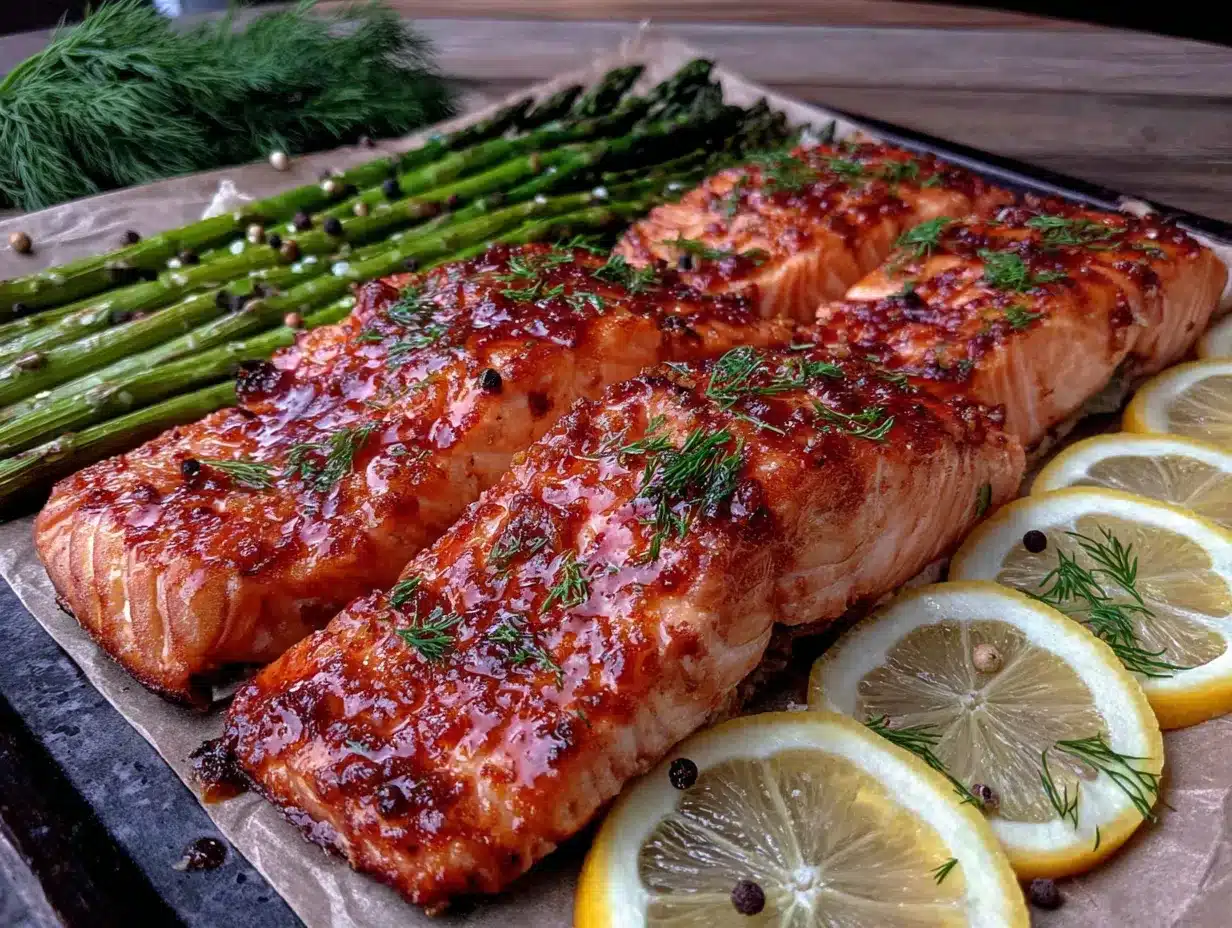
- Preheat your oven to 400°F (200°C). This is the sweet spot for salmon—hot enough to get nice browning, but not so hot that the outside burns before the inside cooks. While the oven heats up, line your sheet pan with parchment paper or foil.
- Prep the salmon. Pat the fillets dry with paper towels. This step is important—dry salmon browns better than wet salmon. Place the fillets skin-side down (if they have skin) on one half of the sheet pan. Leave a little space between each piece so they roast instead of steam.
- Make the garlic-lemon mixture. In a small bowl, combine 3 tablespoons of olive oil, the zest of 1 lemon, 3-4 minced garlic cloves, 1 teaspoon of dried oregano, and a generous pinch of salt and pepper. Stir it up. This is your flavor bomb.
- Season the salmon. Spoon about half of the garlic-lemon mixture over the salmon fillets, spreading it evenly. Let it sit while you prep the asparagus—this gives the flavors a few minutes to sink in.
- Prep the asparagus. Snap off the woody ends of the asparagus (they’ll naturally break where the tender part starts). If you’re using thick spears, you can peel the bottom inch or two with a vegetable peeler—it makes them extra tender. Toss the asparagus with the remaining garlic-lemon mixture right on the sheet pan, making sure each spear is lightly coated.
- Time the roasting. Put the salmon in the oven first. Roast for 5 minutes. This head start gives the salmon a chance to cook through without the asparagus getting mushy. After 5 minutes, pull the pan out (carefully!) and scatter the asparagus around the salmon fillets in a single layer.
- Finish roasting. Return the pan to the oven and roast for another 10-12 minutes. The salmon should be opaque and flake easily with a fork, and the asparagus should be tender-crisp with lightly browned edges. If you’re using a thermometer, look for 125°F to 130°F in the thickest part of the fillet.
- Add the final touch. Right before serving, squeeze the juice from the zested lemon over everything. That bright, fresh acidity wakes up all the flavors. If you’re using fresh dill or parsley, sprinkle it on now.
A quick note: if your salmon fillets are on the thinner side (less than an inch thick), you can skip the head start and put everything in the oven together. Just check it at the 10-minute mark to avoid overcooking.
Cooking Tips & Techniques
I’ve made this recipe enough times to know exactly where things can go wrong. Here’s what I’ve learned, sometimes the hard way.
Don’t crowd the pan. This is the number one mistake I see. If your sheet pan is too small or you pile everything on top of each other, you’ll end up steaming instead of roasting. You want those beautiful brown bits, not sad, gray fish. Use two pans if you need to.
Pat the salmon dry. I know I said this already, but it’s worth repeating. Moisture is the enemy of browning. Take an extra 30 seconds to blot those fillets with a paper towel. Your taste buds will thank you.
Watch the asparagus. Thick spears and thin spears cook at different rates. If your asparagus is pencil-thin, check it at the 8-minute mark. If it’s thick, it might need the full 12 minutes. The goal is tender-crisp—still bright green with a little bite, not limp and floppy.
Use room-temperature salmon. If you have time, let the fillets sit out for 10-15 minutes before cooking. Cold salmon straight from the fridge cooks unevenly—the outside can overcook while the center stays cold. A quick rest at room temperature fixes this.
Don’t skip the lemon zest. The zest adds a concentrated citrus flavor that you just can’t get from juice alone. It’s a small step that makes a big difference. Plus, it makes your kitchen smell amazing.
Multitask like a pro. While the salmon gets its 5-minute head start, use that time to clean up your cutting board and knife. It’s a small thing, but it makes the post-dinner cleanup so much faster. Or, you know, pour yourself a glass of wine. I won’t judge.
Variations & Adaptations
This recipe is incredibly flexible. Here are some of my favorite ways to change it up:
- Make it Mediterranean: Swap the oregano for dried thyme or rosemary. Add a handful of cherry tomatoes and a few slices of red onion to the pan. Crumble some feta cheese over the finished dish. The salty, briny feta is amazing with the salmon.
- Go spicy: Add a pinch of red pepper flakes or a drizzle of sriracha to the garlic-lemon mixture. For extra heat, toss the asparagus with a little smoked paprika before roasting. It gives everything a warm, smoky kick.
- Try different vegetables: Asparagus is great, but this method works with all kinds of veggies. Try broccoli florets, green beans, zucchini slices, or bell pepper strips. Just adjust the cooking time based on the vegetable’s density. Broccoli might need a few extra minutes; zucchini will cook faster.
- Make it dairy-free/gluten-free: This recipe is naturally both! Just double-check your spices if you’re sensitive to gluten—some spice blends contain additives. Otherwise, you’re good to go.
- Swap the protein: This same method works beautifully with chicken thighs (boneless, skinless) or firm white fish like cod or halibut. For chicken, you’ll need to increase the cooking time to about 20-25 minutes total. For fish, stick with the same timing as salmon.
One of my favorite variations is adding a drizzle of honey or maple syrup to the garlic-lemon mixture. It adds a touch of sweetness that caramelizes beautifully in the oven. I tried it on a whim one night when I was craving something a little different, and it’s been a regular in my rotation ever since.
Serving & Storage Suggestions
This dish is best served hot, straight from the oven. The salmon is at its flakiest and the asparagus has that perfect tender-crisp texture. But it’s also surprisingly good at room temperature, which makes it a great option for meal prep or picnics.
How to serve: I like to plate the salmon and asparagus together, then finish with a final squeeze of lemon and a sprinkle of fresh herbs. A side of crusty bread or rice is nice for soaking up the juices, but honestly, it’s satisfying enough on its own. For a heartier meal, serve it with a simple green salad or some roasted potatoes.
What to drink: A crisp white wine like Sauvignon Blanc or Pinot Grigio pairs beautifully with the lemon and garlic. For a non-alcoholic option, try sparkling water with a splash of lemon or a tall glass of iced green tea.
Storing leftovers: If you have any leftovers (which is rare in my house), let them cool completely, then store in an airtight container in the refrigerator for up to 3 days. The asparagus will soften a bit, but the flavor is still great.
Reheating: The best way to reheat is in a low oven (300°F) for about 10 minutes, or in a skillet over medium heat with a splash of water or broth. The microwave works in a pinch, but it can make the salmon rubbery and the asparagus mushy. If you’re using the microwave, go low and slow—30-second bursts at 50% power.
Can you freeze it? I don’t recommend freezing the cooked dish, as the texture of both the salmon and asparagus will suffer. But you can freeze the raw salmon fillets and roast them straight from frozen—just add a few extra minutes to the cooking time.
Nutritional Information & Benefits
This meal is as good for you as it is delicious. Salmon is packed with omega-3 fatty acids, which are great for heart health and brain function. It’s also a fantastic source of high-quality protein, vitamin D, and B vitamins. Asparagus is a nutritional powerhouse too—it’s loaded with fiber, folate, and vitamins A, C, and K.
Here are the approximate nutritional values per serving (based on 4 servings):
| Nutrient | Amount |
|---|---|
| Calories | 380 |
| Protein | 35g |
| Fat | 22g |
| Carbohydrates | 8g |
| Fiber | 4g |
| Vitamin D | 15mcg |
This recipe is naturally gluten-free, dairy-free, and low-carb, making it a great option for a variety of dietary needs. The only potential allergen is the fish itself. If you’re serving someone with a seafood allergy, this recipe isn’t for them, but the asparagus and seasoning method works beautifully with chicken or tofu.
Conclusion
This salmon sheet pan dinner has become my go-to for so many reasons. It’s fast enough for a frantic weeknight, but impressive enough for company. It’s healthy without feeling like a sacrifice. And it’s proof that you don’t need a dozen ingredients or hours in the kitchen to make something truly delicious. I love that it’s so forgiving—you can swap in whatever vegetables you have, adjust the seasoning to your mood, and it almost always turns out great.
I hope you give this recipe a try. And if you do, I’d love to hear about it. Did you add your own twist? Did it save you on a busy night? Leave a comment below and let me know how it went. And if you loved it, share it with a friend who needs a little dinner inspiration. Happy cooking, friends!
Frequently Asked Questions
Can I use frozen salmon for this recipe?
Yes, you can. Just make sure to thaw it completely in the refrigerator overnight, then pat it dry before cooking. If you’re in a hurry, you can thaw it in a bowl of cold water for about 30 minutes. Cooking from frozen isn’t recommended because it will cook unevenly.
How do I know when the salmon is done?
The easiest way is to use an instant-read thermometer. Salmon is cooked to medium at 125°F to 130°F in the thickest part. If you don’t have a thermometer, look for the fish to be opaque and flake easily with a fork. The internal color should be just barely translucent in the center.
Can I use other vegetables instead of asparagus?
Absolutely. Broccoli, green beans, zucchini, bell peppers, and cherry tomatoes all work well. Just keep in mind that different vegetables cook at different rates. Dense vegetables like broccoli might need a few extra minutes, while tender ones like zucchini will cook faster. Cut them into similar-sized pieces for even cooking.
What if I don’t have a sheet pan?
Any large, rimmed baking sheet will work. You can also use a 9×13-inch baking dish, but you might need to cook the salmon in batches to avoid overcrowding. If you’re using a dark-colored pan, keep an eye on the cooking time—dark pans absorb more heat and can cause faster browning.
Can I make this recipe ahead of time?
This dish is best enjoyed fresh from the oven, but you can prep the ingredients ahead of time. Wash and trim the asparagus, mince the garlic, and zest the lemon up to a day in advance. Store them separately in the refrigerator. When you’re ready to cook, just toss everything together and roast. The actual cooking time is so short that it’s almost as fast as reheating leftovers.
Pin This Recipe!
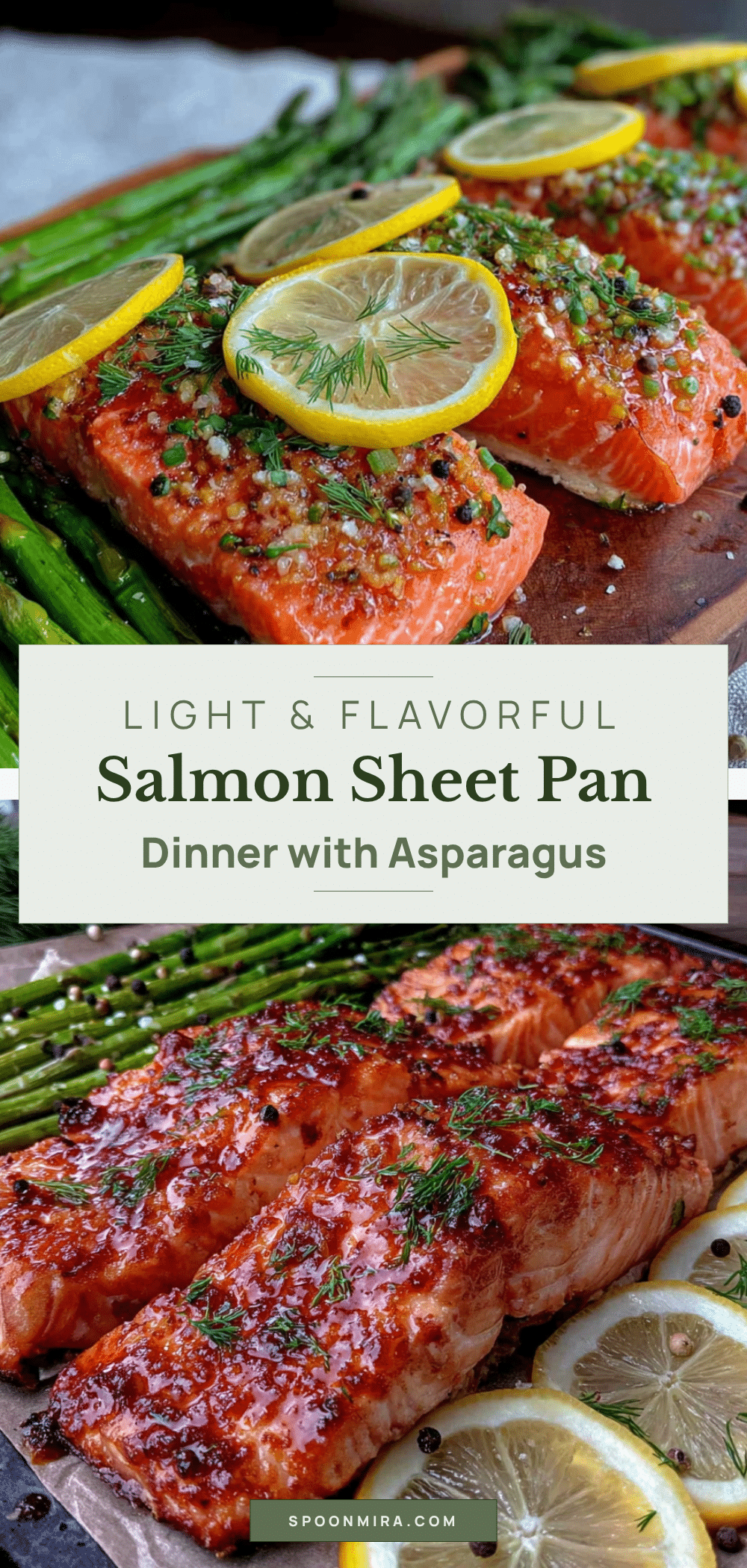
Best Easy Salmon and Asparagus Sheet Pan Dinner
A quick and easy sheet pan dinner with tender salmon and caramelized asparagus, perfect for busy weeknights. Ready in under 30 minutes with simple ingredients.
- Prep Time: 10 minutes
- Cook Time: 15-17 minutes
- Total Time: 25-27 minutes
- Yield: 4 servings 1x
- Category: Main Course
- Cuisine: American
Ingredients
- 4 salmon fillets (about 6 ounces each)
- 1 bunch asparagus, trimmed
- 1 large lemon (zested and juiced)
- 3–4 cloves garlic, minced
- 3 tablespoons olive oil
- 1 teaspoon dried oregano
- Salt and black pepper to taste
- Optional: fresh dill, parsley, or red pepper flakes for garnish
Instructions
- Preheat oven to 400°F (200°C). Line a large sheet pan with parchment paper or aluminum foil.
- Pat salmon fillets dry with paper towels. Place skin-side down on one half of the sheet pan, leaving space between each fillet.
- In a small bowl, combine olive oil, lemon zest, minced garlic, dried oregano, salt, and pepper. Stir to combine.
- Spoon half of the garlic-lemon mixture over the salmon fillets and spread evenly. Let sit while prepping asparagus.
- Snap off woody ends of asparagus. Toss asparagus with remaining garlic-lemon mixture on the sheet pan.
- Roast salmon alone for 5 minutes. Remove pan from oven and scatter asparagus around salmon in a single layer.
- Return to oven and roast for another 10-12 minutes, until salmon is opaque and flakes easily, and asparagus is tender-crisp.
- Squeeze juice from the zested lemon over everything before serving. Garnish with fresh herbs if desired.
Notes
For thinner salmon fillets (less than 1 inch thick), skip the 5-minute head start and roast everything together for 10-12 minutes. Don’t crowd the pan to ensure proper roasting. Pat salmon dry for better browning. Let salmon sit at room temperature for 10-15 minutes before cooking for even cooking.
Nutrition
- Serving Size: 1 salmon fillet with
- Calories: 380
- Sugar: 3
- Sodium: 450
- Fat: 22
- Saturated Fat: 4
- Carbohydrates: 8
- Fiber: 4
- Protein: 35
Keywords: salmon, asparagus, sheet pan dinner, quick dinner, healthy dinner, weeknight dinner, easy recipe