There used to be a tiny farm-to-table spot tucked between a laundromat and a vintage shop in my neighborhood — a place called The Gathered Table — that made a roasted butternut squash side dish I still dream about. When they closed suddenly two summers ago, I actually stood outside the locked door for a minute, staring at the “Permanently Closed” sign like I’d lost a friend. That squash was something else — caramelized at the edges, barely sweet, with these little bursts of tartness that caught you off guard in the best way. After twelve tries — and one particularly sad attempt that came out tasting like a candle — I finally got it.
This easy maple roasted butternut squash with pomegranate is my faithful recreation of that dish, and honestly, it’s become its own thing in my kitchen now. The original used honey, but I found that pure maple syrup gives it a deeper, almost woodsy sweetness that pairs better with the squash’s natural nuttiness. And those pomegranate arils? They’re not just pretty — they pop against the soft, roasted flesh in a way that makes every bite interesting.
I mean, I won’t pretend I didn’t burn my forearm on the baking sheet on try number seven, or that I didn’t accidentally use pomegranate molasses instead of arils on try number four (don’t ask). But that’s the thing about chasing a recipe memory — you learn what doesn’t work almost as clearly as what does. Maybe you’ve been there, standing over a cutting board at 9 PM, convinced that *this* version will be the one. Let me tell you — when you nail it, it’s worth every singed fingertip and questionable experiment.
What keeps me coming back to this dish is how it manages to feel both special and simple at the same time. It’s elegant enough for a holiday table but easy enough that I’ve made it on a random Tuesday just because I had a squash that needed using. The maple syrup caramelizes into these sticky, golden edges while the pomegranate stays bright and fresh — it’s a contrast that never gets old.
Why You’ll Love This Recipe
I’ve tested this recipe more times than I care to count — through different squash varieties, varying oven temperatures, and even a few altitude adjustments when I brought it to my sister’s place in Denver. What I landed on is the version that works every single time, no fuss, no stress.
- Quick & Easy : From cutting board to table in about 45 minutes, with only 10 minutes of active prep. Perfect for those nights when you want something impressive without the production.
- Simple Ingredients : You need exactly five main ingredients — butternut squash, maple syrup, olive oil, salt, and pomegranate arils. That’s it. No specialty shopping required.
- Perfect for Any Occasion : It’s right at home alongside a weeknight roast chicken, but it also holds its own on a Thanksgiving spread or holiday brunch table.
- Crowd-Pleaser : I’ve brought this to potlucks and watched people who swear they don’t like squash go back for seconds. The maple-pomegranate combo is basically magic.
- Unbelievably Delicious : The texture is what gets me every time — tender, caramelized squash with pops of juicy tartness from the pomegranate. It’s comfort food that somehow feels bright and fresh.
What makes this version different from the dozens of roasted squash recipes out there? It’s the timing. Most recipes tell you to toss everything together and roast, but that pomegranate turns into sad, shriveled raisins if it goes in the oven. I add it at the very end, right before serving, so it stays plump and juicy. It’s a small tweak that makes a huge difference — the kind of thing you only figure out after ruining a few batches.
This recipe isn’t just good — it’s the kind that makes you close your eyes after the first bite. That moment when the sweet, caramelized squash meets the bright pop of pomegranate? Pure gold. It’s comfort food reimagined — lighter, fresher, but with the same soul-soothing satisfaction you want from a roasted vegetable dish.
What Ingredients You Will Need
This recipe uses simple, wholesome ingredients to deliver bold flavor and satisfying texture without the fuss. Most of these are pantry staples or easy to find at any grocery store, especially during fall and winter when squash and pomegranates are at their peak.
For the Roasted Squash
- 1 medium butternut squash (about 2.5 to 3 pounds), peeled, seeded, and cut into 1-inch cubes — look for one that feels heavy for its size and has a creamy beige color without green streaks
- 3 tablespoons pure maple syrup (I prefer Grade A Dark Amber for its richer flavor — it caramelizes beautifully without being cloying)
- 2 tablespoons olive oil (use a good-quality extra virgin for better flavor, or avocado oil if you prefer a neutral taste)
- 1/2 teaspoon fine sea salt (or kosher salt — if using table salt, reduce to 1/4 teaspoon)
- 1/4 teaspoon black pepper, freshly ground
- 1/4 teaspoon cinnamon (optional, but it adds a warmth that complements the maple beautifully)
For the Garnish
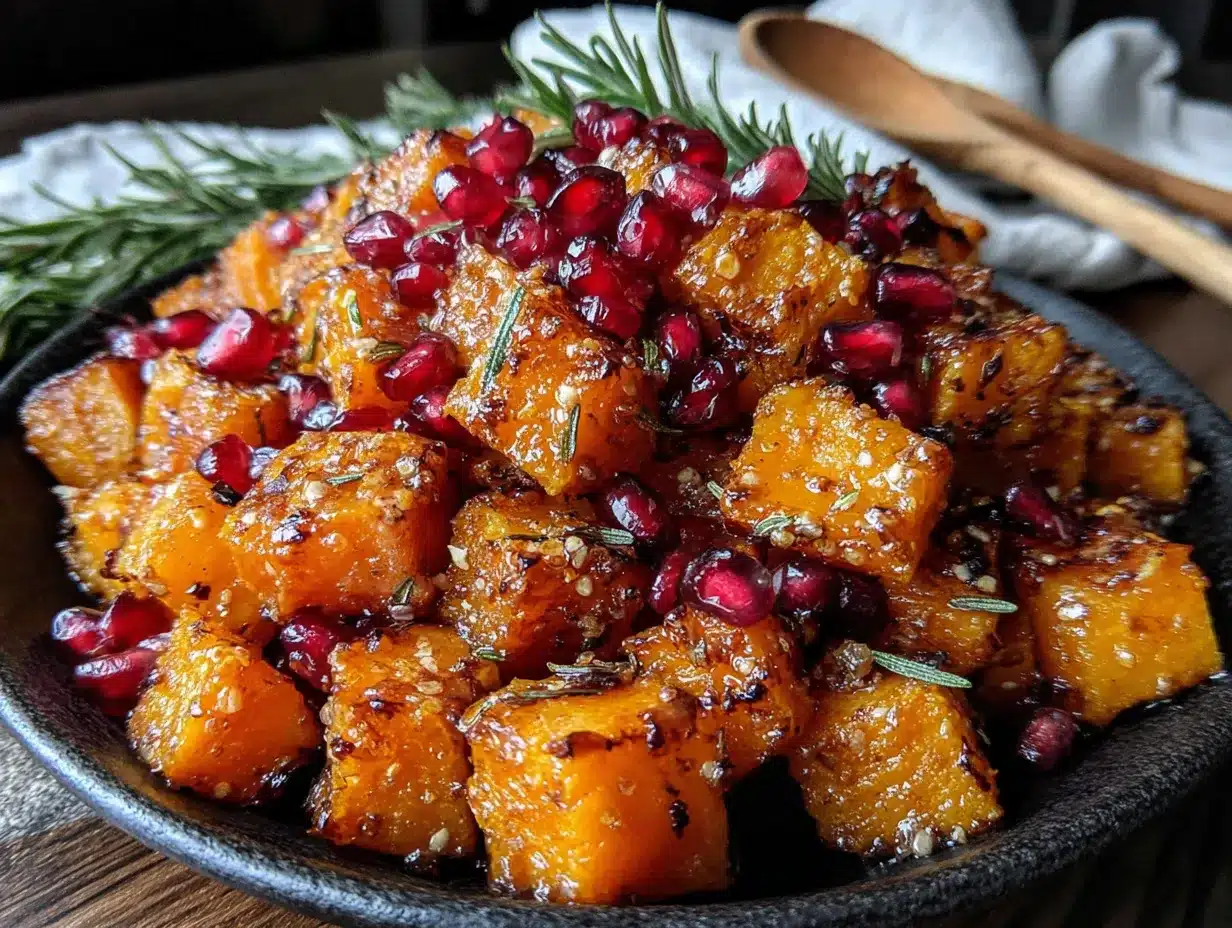
- 1/2 cup pomegranate arils (from about 1 medium pomegranate — or use pre-packaged arils to save time)
- 2 tablespoons fresh parsley or mint, roughly chopped (optional, but the green adds a nice pop of color and freshness)
- Flaky sea salt, for finishing (like Maldon — trust me on this one, it makes a difference)
A few notes on ingredients: I’ve tested this with both honey and maple syrup, and while honey works in a pinch, maple syrup gives a deeper, more complex sweetness that doesn’t overpower the squash. If you’re using frozen butternut squash cubes, thaw them completely and pat them very dry before roasting — otherwise, they’ll steam instead of caramelizing.
For the pomegranate arils, I recommend seeding your own pomegranate if you have the time. The pre-packaged ones work fine, but they’re often a bit drier and less vibrant. Here’s a tip I picked up from my neighbor Maria: cut the pomegranate in half horizontally, hold it cut-side down over a bowl, and whack the skin firmly with a wooden spoon. The arils fall right out, and you don’t end up with stained fingers.
If pomegranates aren’t in season, dried cranberries make a decent substitute — just rehydrate them in warm water for 10 minutes first so they’re plump and juicy. You lose a bit of that fresh pop, but the tart-sweet contrast still works beautifully.
Equipment Needed
You don’t need anything fancy for this recipe, which is part of why I love it. Here’s what you’ll need:
- Large baking sheet (18×13 inches or similar) — rimmed is ideal to catch any syrupy drips; if yours is non-stick, you might not need parchment, but I always use it for easy cleanup
- Parchment paper or silicone baking mat — highly recommended for preventing sticking and making cleanup a breeze
- Chef’s knife (8-inch is perfect) — a sharp knife makes cutting butternut squash much safer and easier
- Vegetable peeler — for removing the squash skin; a Y-shaped peeler works best for the curves of butternut squash
- Large mixing bowl — for tossing the squash with the maple mixture
- Measuring spoons — for the maple syrup, oil, and spices
- Spatula or tongs — for flipping the squash halfway through roasting
If you don’t have a large baking sheet, you can use two smaller ones — just make sure the squash pieces are in a single layer with a little space between them. Crowding the pan is the number one mistake people make with roasted vegetables, and it leads to steaming instead of caramelization. I learned this the hard way after a particularly soggy batch that looked more like squash soup than roasted cubes.
A good vegetable peeler is worth the investment — I use a Kuhn Rikon Y-peeler that cost about eight dollars and has lasted me years. For the knife, any sharp chef’s knife will do, but if you’re nervous about cutting squash, you can find pre-cut butternut squash cubes in the produce section of most grocery stores. They cost a bit more, but they save time and reduce the risk of kitchen mishaps.
Preparation Method
Let me walk you through this step by step. I’ve included all the little details that make the difference between good roasted squash and absolutely unforgettable roasted squash.
- Preheat your oven to 400°F (200°C) with the rack in the middle position. While it’s heating, line your baking sheet with parchment paper or a silicone mat. This isn’t strictly necessary, but trust me — you’ll thank yourself later when you’re not scrubbing caramelized maple syrup off your pan.
- Prep the butternut squash. Using a sharp chef’s knife, cut off both ends of the squash so you have flat surfaces. Stand the squash upright on one end and slice down the middle from top to bottom. Scoop out the seeds and stringy bits with a spoon — a grapefruit spoon with serrated edges works great for this, but a regular spoon does the job too. Use a vegetable peeler to remove the skin from each half. Cut each half into 1-inch thick half-moons, then cut those into 1-inch cubes. Try to keep the pieces roughly the same size so they cook evenly. Honestly, don’t stress too much about perfect cubes — rustic shapes look more appealing anyway.
- Make the maple coating. In a large mixing bowl, whisk together the maple syrup, olive oil, salt, pepper, and cinnamon (if using). The mixture should be smooth and slightly thick. Taste it — you want a balance of sweet and savory. If it tastes overwhelmingly sweet, add a pinch more salt.
- Toss the squash. Add the cubed squash to the bowl with the maple mixture. Use your hands or a spatula to toss everything together until every piece is evenly coated. I prefer using my hands here — you can feel when each piece is covered, and it’s honestly kind of satisfying. Just wash your hands thoroughly afterward because maple syrup is sticky business.
- Arrange on the baking sheet. Spread the squash pieces in a single layer on your prepared baking sheet. Make sure they’re not touching — give them a little breathing room. If they’re crowded, they’ll steam instead of caramelizing. If you have more squash than fits in one layer, use two baking sheets or roast in batches.
- Roast for 20 minutes. Place the baking sheet in the preheated oven and set a timer. Don’t be tempted to peek too often — every time you open the oven door, you let heat escape and slow down the cooking.
- Flip and rotate. After 20 minutes, remove the baking sheet from the oven. Use a spatula or tongs to flip each piece of squash over. This ensures even caramelization on all sides. If your oven has hot spots, rotate the baking sheet front to back at this point. The squash should be starting to brown on the edges and look slightly translucent.
- Roast for another 15-20 minutes. Return the baking sheet to the oven and continue roasting until the squash is tender when pierced with a fork and the edges are deeply caramelized — golden brown with some darker spots. The total roasting time is usually 35-40 minutes, but ovens vary, so start checking at the 30-minute mark. You want the squash to be fork-tender but not mushy — it should hold its shape when you pick it up.
- Cool slightly. Remove the baking sheet from the oven and let the squash cool on the pan for 3-5 minutes. This allows the caramelized coating to set slightly so it doesn’t slide off when you move the pieces.
- Add the pomegranate and garnish. Transfer the roasted squash to a serving platter or bowl. Sprinkle the pomegranate arils evenly over the top — they’ll warm slightly from the residual heat but stay bright and juicy. Add the fresh herbs if using, and finish with a pinch of flaky sea salt. The salt is non-negotiable in my book — it makes the sweetness pop and balances all the flavors.
A quick note on timing: you can prep the squash and mix the coating up to a day ahead. Just store the coated squash in an airtight container in the fridge, then spread it on the baking sheet and roast when you’re ready. You might need to add 5 minutes to the roasting time since the squash will be cold from the fridge.
Cooking Tips & Techniques
After making this recipe more times than I can count, here are the things I wish someone had told me from the start.
Don’t skip the drying step. If your squash is wet when it goes into the oven, it will steam rather than caramelize. After peeling and cutting, pat the cubes dry with a clean kitchen towel or paper towels before tossing them with the maple mixture. This one step makes a huge difference in getting those beautiful golden edges.
Space is your friend. I cannot emphasize this enough — overcrowding the pan is the enemy of good roasted vegetables. If the pieces are touching, they trap steam between them and never develop that caramelized crust. When I first started making this, I used a too-small baking sheet and ended up with pale, soggy squash. Now I use a half-sheet pan and make sure there’s at least half an inch between pieces.
Maple syrup burns faster than you think. Because maple syrup has a lower smoke point than oil, it can burn if the oven is too hot or if you leave it in too long. That’s why I use 400°F instead of 425°F — it gives the squash time to cook through without the sugar burning. If you notice the edges getting too dark before the squash is tender, tent the pan loosely with foil for the last 5-10 minutes.
Flip with intention. When you flip the squash at the 20-minute mark, take a moment to rearrange the pieces so that the ones that were on the outer edges of the pan move toward the center and vice versa. This compensates for oven hot spots and ensures even cooking. I learned this trick from a pastry chef friend who roasts hundreds of pounds of vegetables every week.
Temperature matters for pomegranate. The arils should be added after roasting, but if your squash is piping hot, they’ll start to soften and lose their crunch. Let the squash rest for those 3-5 minutes before adding the pomegranate — the warmth will slightly plump the arils without cooking them. If you’re serving this dish cold or at room temperature, you can add the pomegranate right away.
Season in layers. Salting the squash before roasting draws out moisture and helps the caramelization process. But adding a little flaky salt at the end — right before serving — gives you that satisfying crunch and a burst of salty flavor that contrasts with the sweet maple. It’s a small thing that makes a big difference.
One mistake I made repeatedly was using too much maple syrup thinking it would make the squash sweeter. What actually happens is the excess syrup pools on the pan and burns before the squash is cooked through. Stick to the measurements in the recipe — the squash’s natural sweetness will shine through, and the maple is there to enhance, not overwhelm.
Variations & Adaptations
This recipe is wonderfully flexible, and I’ve tried quite a few variations over the years. Here are some of my favorites:
Savory Herb Version: Skip the cinnamon and add 1 teaspoon of fresh thyme leaves and 1/2 teaspoon of smoked paprika to the maple mixture. Roast as directed, then garnish with fresh rosemary instead of parsley. This version pairs beautifully with roasted chicken or pork and has a more rustic, savory feel.
Spicy Maple Version: Add 1/4 teaspoon of cayenne pepper or red pepper flakes to the maple mixture. The heat cuts through the sweetness and creates a wonderful sweet-spicy balance. I made this for a Super Bowl party and watched people devour it straight off the pan. If you’re nervous about spice, start with just a pinch — you can always add more next time.
Maple Balsamic Version: Replace 1 tablespoon of the maple syrup with balsamic vinegar. The acidity adds complexity and helps balance the sweetness. This version is especially good if you’re serving the squash alongside a rich protein like steak or lamb. The balsamic also deepens the color of the roasted squash, giving it a gorgeous dark glaze.
Nutty Crunch Version: After flipping the squash at the 20-minute mark, sprinkle 1/4 cup of chopped pecans or walnuts over the pan. They’ll toast in the remaining cooking time and add a wonderful crunch. Just watch them carefully — nuts can burn quickly. If they start looking too dark before the squash is done, remove them from the pan and add them back at the end.
Dairy-Free Creamy Version: Drizzle the finished squash with a little coconut cream or tahini sauce before adding the pomegranate. The creaminess adds another layer of texture and flavor. For the tahini sauce, whisk together 2 tablespoons tahini, 1 tablespoon lemon juice, and enough warm water to thin it to a drizzling consistency.
Sheet Pan Meal Version: Add chicken thighs or bratwurst to the baking sheet alongside the squash for a complete one-pan dinner. Arrange the protein around the squash pieces, making sure everything has space. Chicken thighs will need about the same roasting time as the squash — just check that they reach an internal temperature of 165°F before serving.
If you need a nut-free version, skip the pecan variation and instead try toasted pumpkin seeds for crunch. They’re nut-free and add a lovely earthy flavor that complements the squash. For a lower-sugar option, reduce the maple syrup to 2 tablespoons and add an extra tablespoon of olive oil — the squash will still caramelize beautifully from its natural sugars.
Serving & Storage Suggestions
This dish is incredibly versatile when it comes to serving. Here’s how I like to enjoy it:
Serving Temperature: This squash is best served warm, right after roasting, when the edges are still caramelized and the pomegranate arils are bright and juicy. But honestly, it’s also delicious at room temperature — I’ve been known to pick at the leftovers straight from the fridge. If you’re serving it as part of a buffet or holiday spread, it holds up beautifully for about an hour at room temperature.
Presentation Ideas: For a dinner party, I like to arrange the squash on a large white platter in a single layer, then scatter the pomegranate arils and herbs over the top. The contrast of the golden-orange squash, ruby-red arils, and bright green herbs is stunning. For a more casual meal, just serve it straight from the baking sheet — rustic and honest.
What to Serve With It: This squash pairs beautifully with roast chicken, pork tenderloin, or grilled salmon. For a vegetarian meal, serve it over a bed of quinoa or farro with a handful of arugula and a simple lemon vinaigrette. It also makes an excellent side dish for Thanksgiving — it’s lighter than the traditional sweet potato casserole but just as festive.
Storage: Store leftovers in an airtight container in the refrigerator for up to 4 days. The pomegranate arils will soften slightly over time, but the squash stays delicious. I wouldn’t recommend freezing this dish — the texture of both the squash and the pomegranate suffers when thawed.
Reheating: The best way to reheat this squash is in the oven or toaster oven at 350°F for 5-8 minutes — this helps recrisp the edges. You can also reheat it in a skillet over medium heat, stirring occasionally, for about 5 minutes. The microwave works in a pinch, but the squash will be softer and lose some of its caramelized texture. If you’re reheating, you might want to add a few fresh pomegranate arils afterward to brighten it up.
One thing I love about this dish is that the flavors actually develop and deepen overnight. The squash absorbs more of the maple flavor, and the pomegranate’s tartness mellows slightly. I’ve made it a day ahead for holiday dinners and just reheated it before serving — nobody ever guesses it wasn’t made fresh.
Nutritional Information & Benefits
This dish is as nutritious as it is delicious, which is one of the reasons I make it so often. Here’s a rough breakdown per serving (based on 6 servings):
Estimated Nutrition Per Serving:
- Calories: 165
- Total Fat: 5g
- Saturated Fat: 0.7g
- Carbohydrates: 32g
- Fiber: 6g
- Sugar: 14g (naturally occurring plus maple syrup)
- Protein: 3g
- Sodium: 200mg
- Vitamin A: 457% of the Daily Value
- Vitamin C: 52% of the Daily Value
Butternut squash is a nutritional powerhouse — it’s loaded with vitamin A (in the form of beta-carotene), which supports eye health and immune function. It’s also a great source of fiber, which helps with digestion and keeps you feeling full. The pomegranate arils add a boost of antioxidants, particularly punicalagins and anthocyanins, which have anti-inflammatory properties.
This recipe is naturally gluten-free, dairy-free, and vegan, making it suitable for a wide range of dietary needs. If you’re watching your sugar intake, you can reduce the maple syrup to 2 tablespoons — the squash’s natural sweetness will still shine through. The olive oil provides healthy monounsaturated fats, which support heart health.
I love that this dish feels indulgent — all that caramelized sweetness and jewel-like pomegranate — but it’s actually packed with vegetables and healthy ingredients. It’s the kind of recipe that makes you feel good about eating well, without making you feel like you’re missing out on anything.
Conclusion
This easy maple roasted butternut squash with pomegranate has become one of those recipes I turn to again and again, whether I’m cooking for a holiday crowd or just a quiet weeknight dinner. It started as a quest to recreate a lost restaurant memory, but it’s become something entirely its own — a dish that’s simple enough for a Tuesday but special enough for a celebration.
What I love most about this recipe is how forgiving it is. You can tweak the spices, swap in different herbs, or adjust the sweetness to your taste, and it still comes out beautifully. The combination of caramelized squash and bright, juicy pomegranate is one of those perfect pairings that feels both familiar and surprising every time.
I’d love to hear how this turns out for you — did you try any of the variations? Did you discover a new favorite way to serve it? Drop a comment below and let me know. And if you share a photo on Pinterest or Instagram, tag me — I love seeing your creations. Here’s to recreating those unforgettable flavors in our own kitchens, one batch at a time.
Frequently Asked Questions
Can I use frozen butternut squash for this recipe?
Yes, you can, but you’ll need to take a few extra steps. Thaw the frozen squash completely, then pat it very dry with paper towels or a clean kitchen towel. Frozen squash has more moisture than fresh, so it’s prone to steaming instead of caramelizing. You might also need to add 5-10 minutes to the roasting time, and the texture won’t be quite as firm as fresh squash.
How do I seed a pomegranate without making a mess?
Cut the pomegranate in half horizontally through the middle, not through the stem. Hold one half cut-side down over a deep bowl and whack the skin firmly with a wooden spoon. The arils will fall out through your fingers while the pith stays in your hand. It takes about 30 seconds per half and works like magic. Just wear an apron — those arils can spit juice!
Can I make this recipe ahead of time?
Absolutely. You can prep the squash and toss it with the maple mixture up to 24 hours ahead — just store it in an airtight container in the fridge. Roast it just before serving for the best texture. Alternatively, you can roast the squash a day ahead, store it in the fridge, and reheat it in a 350°F oven for 8-10 minutes. Add the pomegranate arils and fresh herbs right before serving.
What can I substitute for pomegranate arils?
Dried cranberries work well — just rehydrate them in warm water for 10 minutes first so they’re plump. Fresh or frozen cranberries are another option, though they’re more tart. If you want a similar pop of juicy sweetness, try fresh blueberries or halved red grapes. The key is finding something that provides that tart-sweet contrast to the roasted squash.
Is this recipe suitable for meal prep?
Yes, with a few adjustments. Roast the squash as directed but store the pomegranate arils separately. When you’re ready to serve, reheat the squash and add the arils at the end. The squash keeps well in the fridge for up to 4 days, and the arils stay fresh for about the same amount of time if stored separately. This dish works great for lunch bowls — just add some quinoa, arugula, and a simple vinaigrette.
Pin This Recipe!
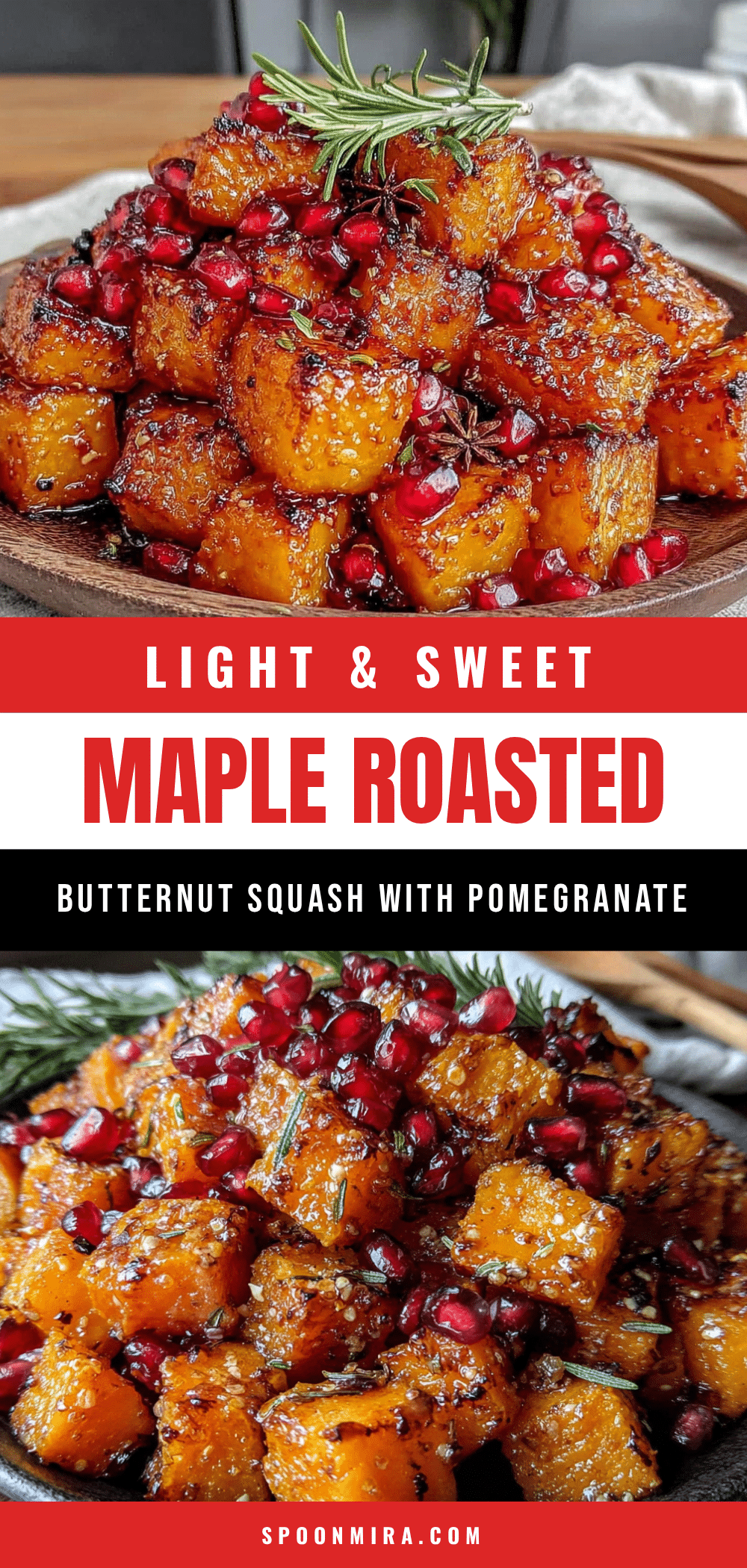
Easy Maple Roasted Butternut Squash with Pomegranate
A simple yet elegant side dish featuring caramelized butternut squash coated in maple syrup, finished with bright, juicy pomegranate arils. Perfect for weeknight dinners or holiday feasts.
- Prep Time: 10 minutes
- Cook Time: 35-40 minutes
- Total Time: 45-50 minutes
- Yield: 6 servings 1x
- Category: Side Dish
- Cuisine: American
Ingredients
- 1 medium butternut squash (about 2.5 to 3 pounds), peeled, seeded, and cut into 1-inch cubes
- 3 tablespoons pure maple syrup (Grade A Dark Amber preferred)
- 2 tablespoons olive oil (extra virgin or avocado oil)
- 1/2 teaspoon fine sea salt (or kosher salt; reduce to 1/4 teaspoon if using table salt)
- 1/4 teaspoon black pepper, freshly ground
- 1/4 teaspoon cinnamon (optional)
- 1/2 cup pomegranate arils (from about 1 medium pomegranate)
- 2 tablespoons fresh parsley or mint, roughly chopped (optional)
- Flaky sea salt (like Maldon), for finishing
Instructions
- Preheat your oven to 400°F (200°C) with the rack in the middle position. Line a large baking sheet with parchment paper or a silicone mat.
- Prep the butternut squash: Cut off both ends, stand upright, and slice down the middle. Scoop out seeds and stringy bits. Use a vegetable peeler to remove the skin. Cut each half into 1-inch thick half-moons, then into 1-inch cubes.
- Make the maple coating: In a large mixing bowl, whisk together the maple syrup, olive oil, salt, pepper, and cinnamon (if using).
- Toss the squash: Add the cubed squash to the bowl and toss with your hands or a spatula until every piece is evenly coated.
- Arrange on the baking sheet: Spread the squash pieces in a single layer, ensuring they are not touching. Use two baking sheets if needed.
- Roast for 20 minutes. Do not open the oven door frequently.
- Flip and rotate: After 20 minutes, remove the baking sheet and flip each piece of squash. Rotate the baking sheet front to back if your oven has hot spots.
- Roast for another 15-20 minutes, until the squash is tender when pierced with a fork and the edges are deeply caramelized (total roasting time: 35-40 minutes).
- Cool slightly: Let the squash cool on the pan for 3-5 minutes.
- Add the pomegranate and garnish: Transfer the roasted squash to a serving platter. Sprinkle pomegranate arils evenly over the top. Add fresh herbs if using, and finish with a pinch of flaky sea salt.
Notes
For best caramelization, pat the squash cubes dry before tossing with the maple mixture. Avoid overcrowding the pan. Add pomegranate arils after roasting to keep them plump and juicy. If using frozen butternut squash, thaw completely and pat very dry. For a lower-sugar option, reduce maple syrup to 2 tablespoons and add 1 extra tablespoon olive oil.
Nutrition
- Serving Size: 1 serving (about 1 c
- Calories: 165
- Sugar: 14
- Sodium: 200
- Fat: 5
- Saturated Fat: 0.7
- Carbohydrates: 32
- Fiber: 6
- Protein: 3
Keywords: roasted butternut squash, maple roasted squash, pomegranate squash, easy side dish, holiday side dish, vegan, gluten-free