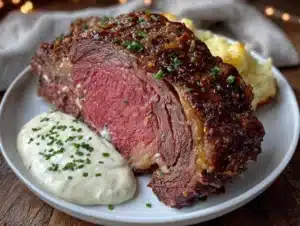
This was supposed to be a straightforward Sunday roast, just a simple prime rib cooked the usual way. I grabbed the wrong oven rack, the temperature dial was set to broil instead of bake, and I was already running late with hungry kids circling the kitchen like sharks. What came out was nothing like the plan—burnt edges, uneven cooking, and a pan of drippings that looked more like a science experiment. Honestly, my heart sank thinking I’d ruined the centerpiece of the meal.
But here’s the thing: after letting the roast rest, I sliced into it and found the most tender, juicy meat with a beautiful crust that had somehow developed despite the chaos. The horseradish cream sauce I whipped up last minute—the only thing I hadn’t messed with—tied it all together in a way that made me pause and smile. Maybe you’ve been there, too: when kitchen disasters turn into unexpected wins.
That accidental reverse-sear moment turned into my go-to method for prime rib, especially when feeding a family on a budget where every bite counts and leftovers need to reheat well without drying out. It’s practical, it’s forgiving, and it makes everyone at the table happy—even the picky ones. So, let me tell you why this perfect reverse-sear prime rib roast with horseradish cream sauce recipe has quietly become my quiet little miracle in the kitchen.
Why You’ll Love This Recipe
After many trial-and-error sessions (some more disastrous than others), this recipe has been tested and approved by my family, neighbors, and yes, even my most skeptical teenage son. Here’s why it stands out:
- Quick & Easy: The reverse-sear technique means you can mostly set it and forget it in the oven, perfect for busy weeknights or last-minute dinners.
- Simple Ingredients: No need for fancy cuts or obscure spices—just a well-marbled prime rib, salt, pepper, and a few pantry staples for the sauce.
- Perfect for Family Meals: It’s hearty, comforting, and satisfying, making it ideal for regular dinners that must please everyone from kids to grandparents.
- Crowd-Pleaser: The horseradish cream sauce adds a gentle kick that even picky eaters find intriguing without overwhelming the meat’s natural flavor.
- Unbelievably Delicious: The slow, low-temperature roast followed by a high-heat sear creates a crust that’s crisp and flavorful, while the inside stays juicy and tender.
This isn’t just another roast recipe—it’s a smart, sensible way to get restaurant-quality prime rib at home without stress or waste. The horseradish cream sauce is my little twist, adding creaminess and zing that balances the rich meat perfectly. After all, family dinners should feel like a warm hug, not a kitchen marathon.
What Ingredients You Will Need
This recipe uses simple, wholesome ingredients to deliver bold flavor and satisfying texture without the fuss. These are mostly pantry staples, with the star being a good quality prime rib roast. Here’s what you’ll need:
- Prime Rib Roast: About 4 to 5 pounds (1.8 to 2.3 kg) of bone-in prime rib (look for USDA Choice or Prime grade for the best marbling)
- Salt: Kosher salt is best for seasoning the roast evenly
- Freshly Ground Black Pepper: For that essential peppery crust
- Garlic Powder: Optional, but adds a subtle depth to the seasoning
- Olive Oil: Just a little to help the seasoning stick and promote browning
For the horseradish cream sauce:
- Sour Cream: ½ cup (120 ml), full-fat for richness (I like Daisy brand for its tang)
- Prepared Horseradish: 2 tablespoons, adjust to taste (freshly grated if you’re feeling adventurous)
- Lemon Juice: 1 tablespoon, fresh squeezed to brighten the sauce
- Dijon Mustard: 1 teaspoon for a smooth tang
- Salt and Pepper: To taste
Substitutions:
- Use Greek yogurt instead of sour cream for a lighter sauce
- For a dairy-free option, swap sour cream with coconut yogurt
- If horseradish is too strong, mix in a bit more sour cream or add a pinch of sugar to balance
Equipment Needed
- Roasting Pan with Rack: Essential to keep the roast elevated for even cooking; if you don’t have a rack, crumpled foil balls work in a pinch.
- Meat Thermometer: Absolutely crucial for this recipe. I recommend an instant-read digital thermometer like the ThermoPro TP03—budget-friendly and reliable.
- Mixing Bowls: For preparing the horseradish cream sauce and seasoning the roast.
- Knife and Cutting Board: A sharp chef’s knife makes slicing the roast much easier.
- Aluminum Foil: For tenting the roast during resting to keep it juicy.
If you don’t own a roasting pan, a heavy-duty baking sheet with a wire rack can substitute. Just make sure the pan has sides high enough to catch drippings for gravy if you want to make some.
Preparation Method
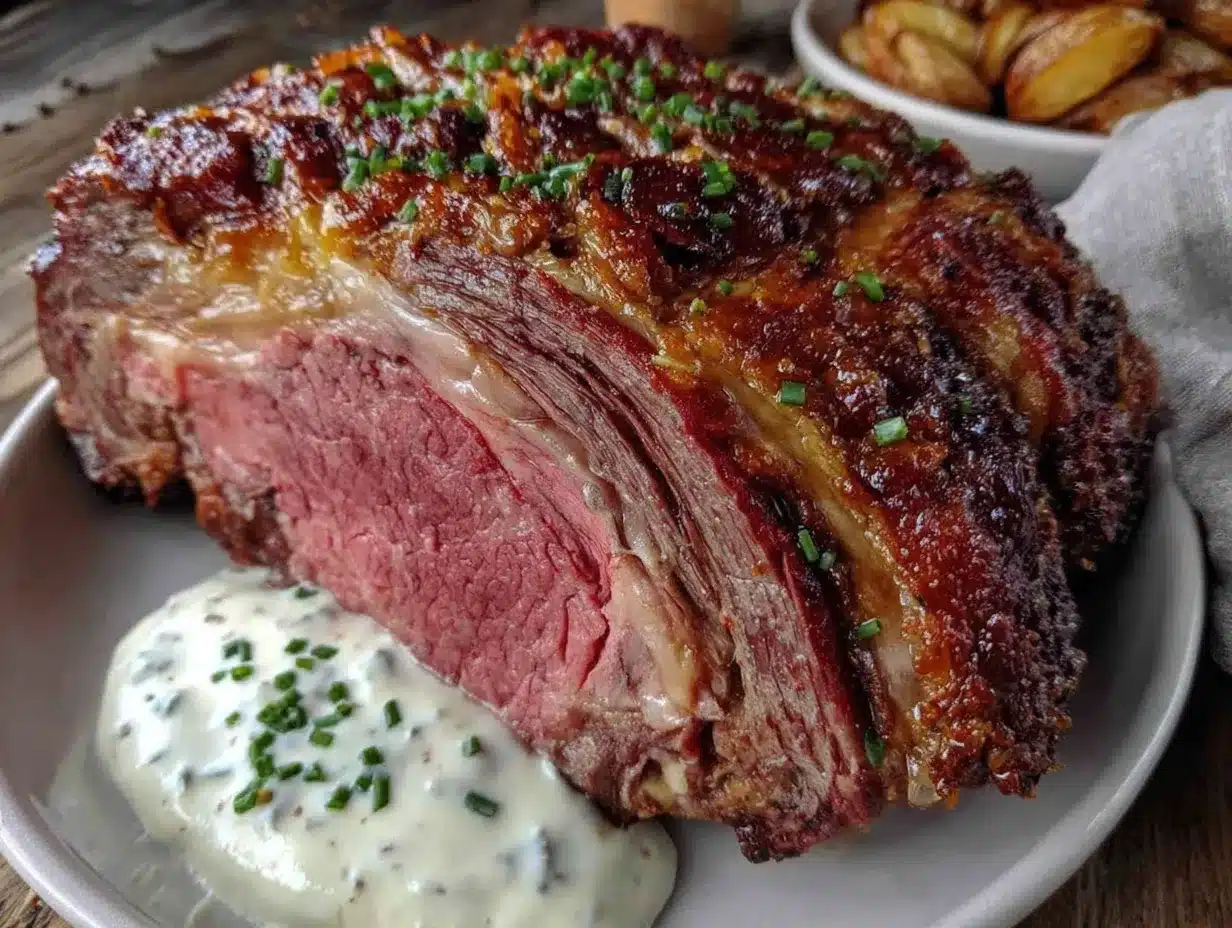
- Season the Roast (15 minutes + overnight rest): Pat the prime rib dry with paper towels to remove excess moisture. Rub the entire roast with olive oil, then generously season with kosher salt, freshly ground black pepper, and a sprinkle of garlic powder if you like. Wrap it loosely in plastic wrap and refrigerate uncovered overnight or at least for 6 hours. This dry brine step is key—the salt penetrates the meat, boosting flavor and tenderness.
- Bring to Room Temperature (30-45 minutes): Remove the roast from the fridge about 45 minutes before cooking to let it come to room temperature. This helps it cook evenly and prevents the outside from overcooking before the center warms up.
- Preheat Oven to Low Temperature (225°F / 107°C): Position the oven rack in the middle and heat the oven to a gentle 225°F (or 107°C). This low-and-slow approach is the hallmark of the reverse-sear method—it cooks the meat evenly and gently.
- Roast the Prime Rib (1.5 to 2 hours): Place the roast bone-side down on the rack in your roasting pan. Insert the meat thermometer probe into the thickest part of the roast, avoiding bone. Roast until the internal temperature reaches 120-125°F (49-52°C) for rare, or 130-135°F (54-57°C) for medium-rare. This usually takes about 1.5 to 2 hours but start monitoring after 1 hour 15 minutes to avoid overcooking. Remember, the temperature will rise a bit during the searing step.
- Rest the Roast (20-30 minutes): Tent the roast loosely with foil and let it rest. This step lets the juices redistribute so the meat stays juicy when sliced.
- Sear the Roast (10-15 minutes): Increase oven temperature to 500°F (260°C) or preheat a heavy skillet over high heat with a little oil. Quickly sear the roast on all sides until a deep brown crust forms. In the oven, this takes about 10-15 minutes; on the stove, 2-3 minutes per side. This final sear locks in flavor and texture.
- Make the Horseradish Cream Sauce: While the roast rests, whisk together sour cream, prepared horseradish, lemon juice, Dijon mustard, salt, and pepper in a bowl. Taste and adjust the horseradish level to your liking. Chill until serving.
- Slice and Serve: Carve the roast against the grain in thick slices. Serve with a dollop of horseradish cream sauce on the side. The contrast of the rich beef and the zesty, creamy sauce is pure magic.
Cooking Tips & Techniques
Perfecting the reverse-sear prime rib roast comes down to a few smart moves:
- Don’t skip the dry brine: I can’t stress this enough. Salting the roast overnight helps develop flavor and texture in ways that just sprinkling salt before cooking doesn’t.
- Use a reliable thermometer: Cooking by time alone is risky. Meat varies and ovens can be unpredictable. I’ve learned the hard way that a probe thermometer is the best way to get consistent results.
- Resting is your friend: Let the roast rest after the slow roast and after searing. Both resting periods are crucial for juicy meat.
- Searing in the oven vs. stovetop: I prefer oven searing to avoid splatters and keep the kitchen cleaner, but a hot cast-iron skillet works beautifully if you like that charred flavor.
- Watch the crust: Don’t leave the roast unattended during searing. The high heat can quickly go from perfect crust to burnt edges.
Honestly, the first time I tried skipping the resting step, the meat was dry and disappointing. Now I never rush it. Also, when I’m juggling the kids and dinner, setting the meat thermometer’s alarm has saved me more than once from overcooking.
Variations & Adaptations
This recipe is flexible enough to suit different tastes and dietary needs:
- Herb-Crusted Variation: Add chopped fresh rosemary, thyme, and garlic to the salt and pepper rub for an aromatic crust.
- Spicy Horseradish Sauce: Mix in a pinch of cayenne or hot sauce to the horseradish cream for a bolder kick.
- Gluten-Free Adaptation: This recipe is naturally gluten-free, but double-check horseradish brands for hidden gluten.
- Slow Cooker Adaptation: While the reverse-sear is best in the oven, you can slow-cook the roast on low for 4-5 hours then finish with a quick skillet sear for crust.
- Dairy-Free Sauce: Swap sour cream with coconut yogurt and use freshly grated horseradish for a creamy, allergen-friendly sauce.
I once tried smoked paprika in the seasoning mix, and while it added an interesting smoky note, my family preferred the classic version. But hey, that’s the joy of this recipe—you can make it your own.
Serving & Storage Suggestions
Serve the prime rib warm, right after searing and resting, for the best texture and flavor. Thick slices paired with the cool, creamy horseradish sauce make a simple yet elegant presentation that’s perfect for family dinners or holiday gatherings.
This roast pairs beautifully with roasted vegetables, creamy mashed potatoes, or even a crisp green salad to balance the richness. For drinks, a full-bodied red wine or a sparkling water with lemon works well.
Leftovers store wonderfully in an airtight container in the fridge for up to 4 days. Reheat gently in a low oven (about 250°F / 120°C) covered with foil to maintain juiciness. The horseradish cream sauce can be stored separately and spooned on fresh slices at serving.
Flavors actually deepen after a day, so leftovers might taste even better—perfect for quick lunches or easy family dinners on busy nights.
Nutritional Information & Benefits
This prime rib roast is a protein powerhouse, providing essential nutrients like iron, zinc, and B vitamins that support energy and immune function. The horseradish cream sauce adds a bit of tang without too many extra calories, especially if you choose low-fat sour cream or Greek yogurt.
Estimated per serving (based on 6 servings):
| Calories | Protein | Fat | Carbohydrates |
|---|---|---|---|
| 450 kcal | 40g | 30g | 2g |
This recipe is naturally gluten-free and can be adapted for dairy-free diets as noted. It’s a hearty, satisfying choice that fits well into balanced, family-friendly meal plans.
Conclusion
If you’re looking for a roast that’s both impressive and practical, this perfect reverse-sear prime rib roast with horseradish cream sauce is it. The technique takes the stress out of prime rib cooking, while the sauce adds that special something that keeps everyone coming back for more.
Feel free to tweak the seasoning or sauce to fit your family’s tastes—it’s a recipe that welcomes personalization. Personally, I keep coming back to it because it’s forgiving, delicious, and affordable enough to make special dinners feel effortless.
Give it a try on your next family meal, and please share your experience or any creative twists you come up with in the comments below. Happy cooking and even happier eating!
Frequently Asked Questions
Can I use a boneless prime rib roast for this recipe?
Yes, boneless works fine. Just adjust cooking time slightly as it may cook a bit faster without the bone.
What if I don’t have a meat thermometer?
It’s really the best tool here. Without one, you risk over or undercooking. If you must, check for visual cues and slice to test doneness, but a thermometer is highly recommended.
How long can I store leftover prime rib?
Store leftovers in an airtight container in the fridge for up to 4 days. Reheat gently to keep it juicy.
Is the horseradish cream sauce very spicy?
It has a gentle kick, but you can adjust the amount of horseradish to suit your family’s taste.
Can I prepare the sauce ahead of time?
Absolutely! Make the sauce a day ahead and keep it refrigerated. The flavors meld nicely over time.
Pin This Recipe!
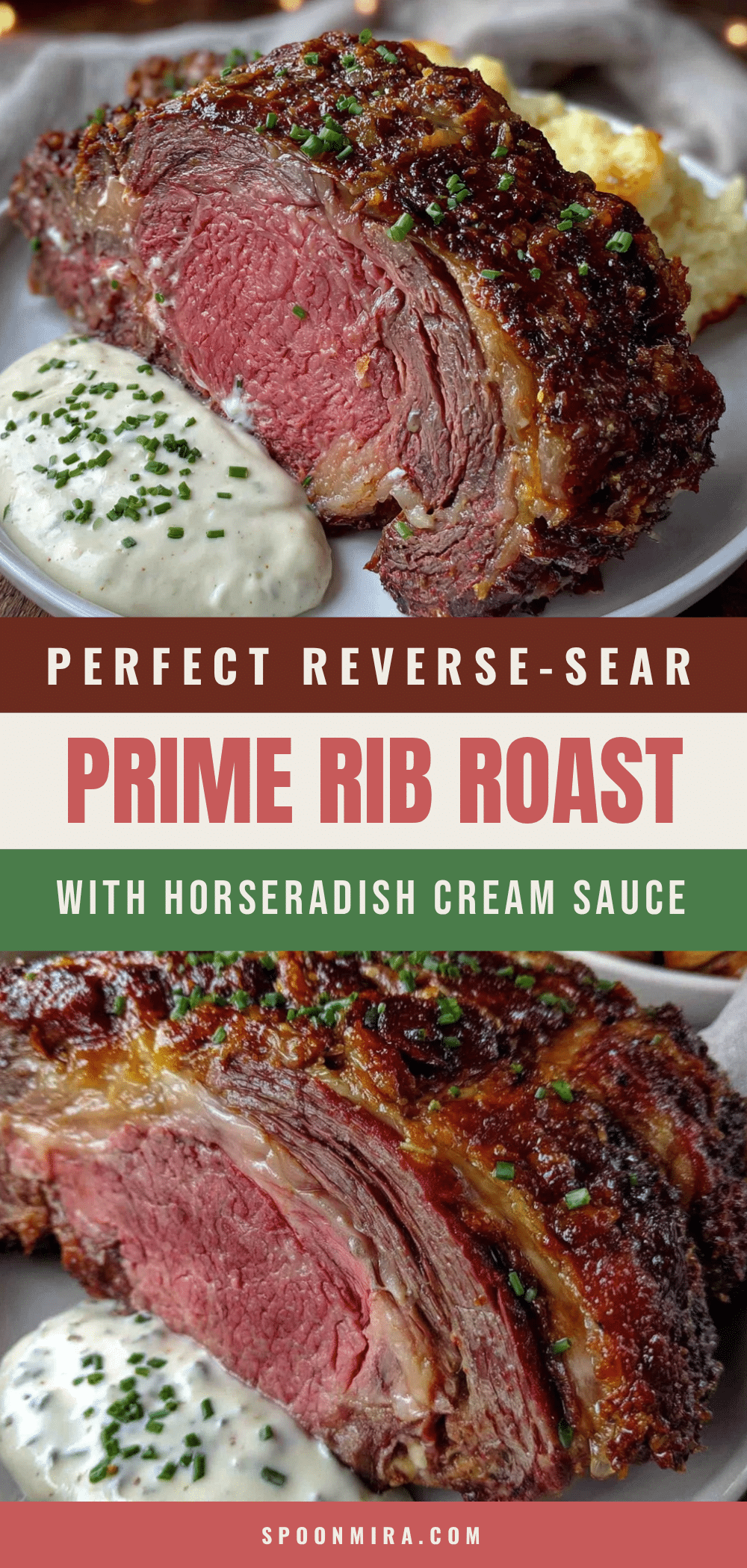
Perfect Reverse-Sear Prime Rib Roast Recipe with Creamy Horseradish Sauce
A practical and forgiving reverse-sear prime rib roast recipe paired with a creamy horseradish sauce that delivers tender, juicy meat with a flavorful crust. Ideal for family meals and special occasions.
- Prep Time: 15 minutes plus overnight rest
- Cook Time: 1.5 to 2 hours roasting plus 10-15 minutes searing
- Total Time: Approximately 2 hours 15 minutes plus overnight resting
- Yield: 6 servings 1x
- Category: Main Course
- Cuisine: American
Ingredients
- 4 to 5 pounds bone-in prime rib roast (USDA Choice or Prime grade)
- Kosher salt
- Freshly ground black pepper
- Garlic powder (optional)
- Olive oil
- ½ cup sour cream (full-fat)
- 2 tablespoons prepared horseradish
- 1 tablespoon fresh lemon juice
- 1 teaspoon Dijon mustard
- Salt and pepper to taste
Instructions
- Pat the prime rib dry with paper towels to remove excess moisture.
- Rub the entire roast with olive oil, then generously season with kosher salt, freshly ground black pepper, and garlic powder if using.
- Wrap loosely in plastic wrap and refrigerate uncovered overnight or at least 6 hours for dry brining.
- Remove the roast from the fridge about 45 minutes before cooking to bring to room temperature.
- Preheat oven to 225°F (107°C) and position the rack in the middle.
- Place the roast bone-side down on a rack in a roasting pan and insert a meat thermometer probe into the thickest part, avoiding bone.
- Roast until internal temperature reaches 120-125°F (49-52°C) for rare or 130-135°F (54-57°C) for medium-rare, about 1.5 to 2 hours, starting to check after 1 hour 15 minutes.
- Tent the roast loosely with foil and let it rest for 20-30 minutes.
- Increase oven temperature to 500°F (260°C) or preheat a heavy skillet over high heat with a little oil.
- Sear the roast on all sides until a deep brown crust forms, about 10-15 minutes in the oven or 2-3 minutes per side on the stove.
- While the roast rests, whisk together sour cream, prepared horseradish, lemon juice, Dijon mustard, salt, and pepper in a bowl. Chill until serving.
- Carve the roast against the grain in thick slices and serve with horseradish cream sauce.
Notes
Do not skip the dry brine step for best flavor and tenderness. Use a reliable meat thermometer to avoid overcooking. Rest the roast after roasting and searing to keep it juicy. Oven searing is preferred for less mess, but stovetop searing works well for a charred flavor. Adjust horseradish in the sauce to taste. Leftovers keep well refrigerated for up to 4 days and reheat gently covered with foil.
Nutrition
- Serving Size: One thick slice (app
- Calories: 450
- Fat: 30
- Carbohydrates: 2
- Protein: 40
Keywords: prime rib, reverse sear, roast beef, horseradish sauce, family dinner, holiday roast, easy roast recipe