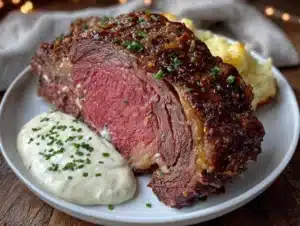
There used to be a little French bistro on the corner of Elm and 4th called Le Petit Pot that made a beef stew so rich and tender it ruined all other stews for me. When they closed their doors suddenly two winters ago—a “For Lease” sign taped in the window where the chalkboard menu used to be—I honestly felt a little lost. That deep, winey broth with carrots so soft they melted on your tongue, the beef that pulled apart with just a glance… I needed it back in my life. After seven tries—some too boozy, one that turned out gray and sad, another my kids refused to touch—I finally cracked the code. This kid-approved slow cooker beef stew with red wine is that bistro memory, but made for a Tuesday night when you’ve got soccer practice at five and a mountain of laundry staring at you. Let me tell you, getting the wine right without making it taste like a fancy dinner party was the trick. The slow cooker does all the heavy lifting, and somehow the alcohol cooks off completely, leaving behind this deep, almost sweet richness that even my picky seven-year-old devours. I mean, she asked for seconds the first time I served this. Seconds! Maybe you’ve been there—standing over a pot, wondering how to get that restaurant depth without spending all day in the kitchen. This is it. This is the stew that brought Le Petit Pot back to my table, and honestly, it might just become your family’s new favorite too.
Why You’ll Love This Recipe
Let’s be real for a second—most slow cooker beef stews end up tasting like boiled meat in watery broth. Not this one. After testing this recipe for my own family (and subjecting my neighbors to a few failed batches), I can tell you exactly why this version works when others fall flat.
- Family-Friendly Flavor : The red wine adds incredible depth without any boozy taste—the alcohol cooks off completely during the long simmer, leaving behind a rich, savory broth that kids actually love. My daughter calls it “fancy soup” and asks for it weekly.
- Budget-Friendly Ingredients : This recipe uses chuck roast (one of the most affordable cuts of beef), basic root vegetables, and a bottle of wine you can grab for under $10. No fancy grocery trips required—you probably have most of this in your kitchen right now.
- Set It and Forget It : Twenty minutes of prep in the morning, and dinner is ready when you walk through the door. Perfect for those chaotic weeknights when you’re juggling homework, practices, and just trying to keep everyone fed.
- Leftovers That Actually Get Better : This stew tastes even better the next day. The flavors meld together overnight, making it perfect for meal prep or feeding a crowd without stress.
- Crowd-Pleaser Status : I’ve served this to my in-laws (who are notoriously picky), a group of hungry teenagers after a basketball game, and my toddler’s playdate crew. Empty bowls every single time.
What makes this different from every other slow cooker beef stew recipe out there? It’s the technique of searing the beef first (I know, I know—an extra step, but trust me) and the precise balance of red wine to broth. Most recipes either use too much wine, making it bitter, or not enough, making it bland. This ratio? It’s the sweet spot. Plus, I add the potatoes and carrots at just the right time so they don’t turn to complete mush. This isn’t just another stew recipe—it’s the one that’ll make your family think you spent hours in the kitchen when really, your slow cooker did all the work.
What Ingredients You Will Need
This recipe uses simple, honest ingredients that work together to create something truly special. Most of these are pantry staples or easy to find at any grocery store, which is exactly what you want when feeding a family on a budget.
For the Stew Base
- 2 pounds beef chuck roast, cut into 1½-inch cubes (chuck is ideal—it gets tender without breaking the bank; look for good marbling)
- 3 tablespoons all-purpose flour (for coating the beef—this helps thicken the stew naturally)
- 2 tablespoons olive oil (for searing; use a neutral oil with a high smoke point)
- 1 large yellow onion, diced (about 1½ cups; yellow onions have the best flavor for slow cooking)
- 4 cloves garlic, minced (fresh garlic is non-negotiable here—skip the jarred stuff)
The Liquid Gold
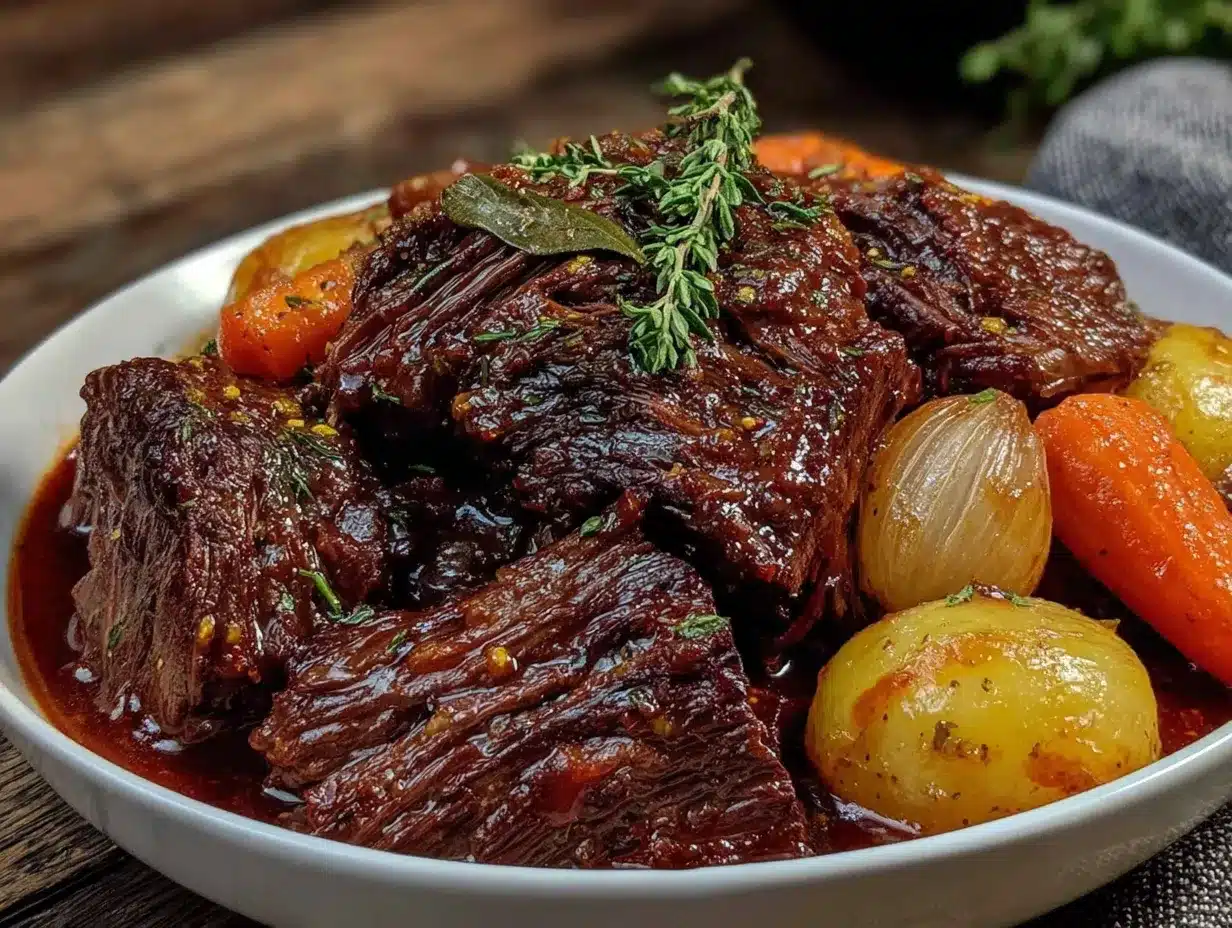
- 1 cup dry red wine (I recommend Merlot or Cabernet Sauvignon—something you’d actually drink; avoid “cooking wine” which has added salt and preservatives)
- 2 cups beef broth, low-sodium (I prefer Better Than Bouillon mixed with water—it has the richest flavor and you can control the salt)
- 2 tablespoons tomato paste (this adds depth and helps thicken the broth beautifully)
- 1 tablespoon Worcestershire sauce (a little umami boost that makes everything taste more “beefy”)
The Vegetables
- 4 medium carrots, peeled and cut into 1-inch chunks (about 2 cups; I use rainbow carrots when they’re in season for a prettier presentation)
- 3 medium Yukon Gold potatoes, cut into 1-inch cubes (about 2 cups; Yukon Golds hold their shape better than Russets)
- 2 celery stalks, sliced into ½-inch pieces (adds subtle flavor and texture)
- 1 cup frozen peas (add these at the end so they stay bright green and slightly sweet)
Seasoning & Herbs
- 1 teaspoon dried thyme (or 2 teaspoons fresh—thyme and beef are a classic pairing for good reason)
- 2 bay leaves (remove before serving; they add an earthy background note)
- 1 teaspoon salt (plus more to taste; go easy if your broth is salted)
- ½ teaspoon black pepper (freshly ground is best)
- 2 tablespoons fresh parsley, chopped (for garnish—optional but nice)
Ingredient Notes & Substitutions : If you need a gluten-free option, swap the all-purpose flour for cornstarch or arrowroot powder—mix 2 tablespoons with ¼ cup cold water and stir it in during the last 30 minutes of cooking. For a dairy-free version, this recipe is naturally dairy-free as written. If you don’t have red wine on hand, you can use an extra cup of beef broth with 2 tablespoons of balsamic vinegar mixed in—it won’t be exactly the same, but it’ll still be delicious. I’ve tested this with both, and honestly, the wine version is better, but the balsamic trick works in a pinch.
Equipment Needed
You don’t need a professional kitchen to make this stew, but having the right tools makes the process smoother. Here’s what you’ll need:
- 6-quart slow cooker (this is the sweet spot size for this recipe; a 4-quart will be too tight, and an 8-quart might cook too quickly)
- Large heavy-bottomed skillet or Dutch oven (for searing the beef—a cast iron skillet is ideal, but any heavy pan works)
- Sharp chef’s knife (a dull knife makes cutting beef and vegetables frustrating and dangerous; I’ve been using my Victorinox Fibrox for years and it’s affordable and stays sharp)
- Cutting board (wood or plastic—just make sure it’s large enough to handle all the chopping)
- Wooden spoon or spatula (for scraping up the browned bits from the pan—those bits are pure flavor)
- Measuring cups and spoons (accuracy matters, especially with the wine and broth)
- Tongs (for flipping the beef while searing; much easier than a fork)
If you don’t have a slow cooker, you can absolutely make this in a Dutch oven on the stovetop or in the oven at 325°F for about 2½ to 3 hours. I’ve done it both ways, and the slow cooker version is hands-down easier for busy days. A good quality slow cooker doesn’t have to be expensive—my first one was a basic Crock-Pot from Target that cost $30 and lasted five years.
Preparation Method
This recipe comes together in about 20 minutes of active prep time, then your slow cooker does the rest. Here’s how to nail it every single time.
Step 1: Prep the Beef (5 minutes)
Pat the beef chuck cubes dry with paper towels. This is important—wet beef won’t brown properly, and browning is where all the flavor lives. Season the cubes generously with salt and pepper, then sprinkle the flour over them and toss to coat evenly. Shake off any excess flour; you want a light coating, not a thick paste.
Step 2: Sear the Beef (8-10 minutes)
Heat the olive oil in your large skillet over medium-high heat until it shimmers. Working in batches (don’t crowd the pan!), add the beef cubes in a single layer. Let them sear undisturbed for 2-3 minutes until a deep brown crust forms. Flip each piece with tongs and sear the other side. You’re looking for a rich, dark brown—not gray. Transfer the seared beef to your slow cooker. If the bottom of the pan looks dark and crusty, that’s exactly what you want—those browned bits are flavor gold.
Step 3: Sauté the Aromatics (3 minutes)
Reduce the heat to medium and add the diced onion to the same skillet. Cook for 2 minutes, scraping up those browned bits with your wooden spoon. Add the minced garlic and cook for 30 seconds until fragrant. Don’t let the garlic burn—it turns bitter fast. Transfer the onion and garlic to the slow cooker on top of the beef.
Step 4: Deglaze the Pan (1 minute)
Pour the red wine into the hot skillet and stir vigorously, scraping up every last bit of those browned bits from the bottom. Let it bubble for about 30 seconds to cook off some of the alcohol, then pour the wine into the slow cooker. This step is where the magic happens—that wine is now carrying all the concentrated beef flavor from the pan.
Step 5: Add the Liquids and Seasonings (2 minutes)
Pour the beef broth into the slow cooker. Add the tomato paste, Worcestershire sauce, dried thyme, and bay leaves. Stir everything together gently until the tomato paste dissolves. The liquid should come about halfway up the beef—if it looks low, add a splash more broth or water.
Step 6: Slow Cook (6-8 hours on low, or 4-5 hours on high)
Cover the slow cooker and set it to low for 6-8 hours or high for 4-5 hours. I strongly recommend low and slow—the beef gets noticeably more tender, and the flavors have time to develop properly. About 2 hours before serving, add the carrots, potatoes, and celery. If you add them at the beginning, they’ll turn to complete mush. Trust me on this timing—I learned the hard way.
Step 7: Finish and Serve (5 minutes)
About 15 minutes before serving, stir in the frozen peas (no need to thaw them first). Remove the bay leaves—they’re tough and not pleasant to bite into. Taste the broth and adjust salt and pepper if needed. The stew should be thick enough to coat the back of a spoon; if it’s too thin, mix 1 tablespoon of cornstarch with 2 tablespoons of cold water and stir it in, then let it cook for 10 more minutes.
Ladle the stew into bowls and garnish with fresh parsley if you’re feeling fancy. Serve with crusty bread for sopping up that incredible broth—this is non-negotiable in my house.
Cooking Tips & Techniques
After making this stew more times than I can count (and messing it up plenty along the way), here are the things I wish someone had told me from the start.
Don’t skip the searing step. I know it’s tempting to just toss everything in the slow cooker and walk away, but that 10 minutes of browning the beef makes a dramatic difference. The Maillard reaction—that browning process—creates complex, savory flavors that you simply cannot get from boiling meat in liquid. One time I was in a rush and skipped it, and the stew tasted like boiled beef. My kids noticed. They actually said, “Mom, this tastes different.” That’s how important it is.
Cut your vegetables uniformly. I learned this after one batch where some carrot pieces were mushy and others were still crunchy. Aim for 1-inch chunks on everything—carrots, potatoes, celery. Consistent size means consistent cooking. Also, cutting your potatoes slightly larger than the carrots helps them hold up better since potatoes take longer to soften.
Watch your salt carefully. Beef broth, Worcestershire sauce, and even some tomato pastes contain significant sodium. I always use low-sodium broth and add salt gradually. You can always add more salt at the end, but you can’t take it out. I made this mistake once with regular broth and the stew was almost inedibly salty—we ended up adding extra potatoes to soak up some of the salt.
Layer your flavors. Don’t just dump everything in at once. Searing the beef builds a base layer. Sautéing the onions adds another. Deglazing with wine captures all those browned bits. Adding tomato paste early lets it caramelize slightly. Each step adds depth that you can taste in the final dish.
Let it rest before serving. If you can, let the stew sit in the slow cooker on warm for 15-20 minutes before serving. This allows the flavors to settle and the broth to thicken slightly. It also gives you time to slice some bread and set the table without rushing.
Variations & Adaptations
One of the best things about this stew is how adaptable it is. Here are some variations I’ve tried and loved.
Vegetable-Packed Version : Add a cup of chopped mushrooms (cremini or button) along with the onions for extra umami. Swap half the potatoes for parsnips or sweet potatoes for a different flavor profile. My kids actually prefer the version with parsnips—they’re sweeter and blend right in. You can also add a cup of chopped kale or spinach in the last 10 minutes for a nutrient boost.
Herb-Forward Variation : Swap the dried thyme for fresh rosemary and add a sprig of fresh oregano along with the bay leaves. The rosemary gives the stew a more Mediterranean feel. I made this version last fall and served it with garlic bread—it was a hit with everyone, including my neighbor who stopped by to borrow sugar and ended up staying for dinner.
Slow Cooker-Free Adaptation : If you don’t own a slow cooker, make this in a Dutch oven on the stovetop. After searing the beef and sautéing the aromatics, add all the liquids and bring to a simmer. Cover and cook on low heat for 1½ hours, then add the vegetables and cook for another 45 minutes to 1 hour until everything is tender. The stovetop version actually develops even deeper flavor because of the direct heat, but it requires more attention.
Allergy-Friendly Adjustments : For a gluten-free version, use cornstarch or arrowroot powder instead of flour for coating the beef. For a lower-sodium option, use no-salt-added beef broth and skip the added salt until the very end. This recipe is naturally dairy-free and egg-free, which makes it great for families with multiple dietary needs.
Serving & Storage Suggestions
This stew is incredibly versatile when it comes to serving. Here’s how I make the most of it.
Serving Temperature and Presentation : Serve the stew piping hot in deep bowls. I like to ladle it over a scoop of mashed potatoes for an extra hearty meal, or alongside crusty sourdough bread for dipping. A sprinkle of fresh parsley on top adds a pop of color and freshness. For a complete meal, serve with a simple green salad dressed with lemon vinaigrette—the acidity cuts through the richness of the stew beautifully.
Complementary Dishes : This stew pairs wonderfully with roasted Brussels sprouts, steamed green beans, or a simple cucumber salad. For beverages, a glass of the same red wine you used in the stew is perfect for adults, while kids love it with apple cider or sparkling water with a splash of cranberry juice.
Storage Instructions : Store leftovers in an airtight container in the refrigerator for up to 4 days. The flavors actually improve overnight as they meld together. For longer storage, freeze the stew in freezer-safe containers or zip-top bags for up to 3 months. I like to portion it into individual servings for easy lunches—just thaw overnight in the fridge and reheat.
Reheating Methods : Reheat gently on the stovetop over medium-low heat, stirring occasionally, until warmed through. You can also microwave individual portions in 30-second bursts, stirring between each. If the stew has thickened too much during storage, add a splash of beef broth or water to loosen it up. Avoid boiling the stew when reheating, as it can make the beef tough.
Nutritional Information & Benefits
This stew is not just delicious—it’s packed with nutrients that make it a smart choice for family meals.
Estimated Nutrition Per Serving (based on 8 servings): Approximately 380 calories, 28g protein, 22g carbohydrates, 18g fat, 5g fiber, 8g sugar, 680mg sodium. These values will vary based on exact ingredients and portion sizes.
Health Benefits : Beef chuck is an excellent source of high-quality protein, iron, and B vitamins—particularly B12, which supports energy and brain function. The carrots provide beta-carotene (converted to vitamin A in the body), while potatoes offer potassium and vitamin C. The red wine contains antioxidants called polyphenols, which have been linked to heart health when consumed in moderation. Plus, the slow cooking method preserves more nutrients compared to high-heat cooking methods.
Dietary Considerations : This recipe is naturally dairy-free, egg-free, and nut-free. For a gluten-free version, simply swap the flour for cornstarch. It’s also relatively low in added sugars—the sweetness comes naturally from the carrots and wine. If you’re watching your sodium, use low-sodium broth and go easy on the added salt.
Potential Allergens : This recipe contains gluten (from the flour coating) and sulfites (naturally occurring in red wine). Always check your Worcestershire sauce label, as some brands contain anchovies (fish) and soy.
Conclusion
This kid-approved slow cooker beef stew with red wine has become a staple in my kitchen, and I honestly think it deserves a spot in yours too. It’s proof that you don’t need fancy techniques or expensive ingredients to create something truly memorable—just a little patience, a good slow cooker, and the willingness to spend ten minutes searing beef. The first time I served this to my family, my daughter looked up from her bowl and said, “Mom, this is the best thing you’ve ever made.” Coming from a kid who once declared that mac and cheese was the only food group she needed, that meant everything.
I’d love for you to try this recipe and make it your own. Add more vegetables, swap the herbs, serve it over egg noodles—whatever works for your family. Cooking should be flexible, not stressful. If you make this stew, drop a comment below and let me know how it turned out. Did your kids ask for seconds? Did you discover a new favorite variation? I genuinely want to hear about it. And if you share a photo on Pinterest, tag me—I love seeing your beautiful bowls of comfort food.
Here’s to slow cooker dinners that bring everyone to the table, one bowl at a time.
Frequently Asked Questions
Can I make this stew without wine?
Absolutely. Replace the red wine with an equal amount of beef broth and add 2 tablespoons of balsamic vinegar for acidity and depth. It won’t have quite the same complexity, but it’ll still be delicious and family-friendly.
Why did my beef turn out tough?
This usually happens for one of two reasons: the beef wasn’t cooked long enough, or you used a lean cut like sirloin instead of chuck. Chuck has enough marbling to break down during long cooking. If your beef is tough, give it another hour or two on low—it should eventually become tender.
Can I use frozen beef or vegetables?
You can use frozen beef, but thaw it completely and pat it dry before searing, or it won’t brown properly. Frozen vegetables (like the peas) work fine—add them straight from the freezer. Frozen carrots and potatoes tend to get mushy, so stick with fresh for those.
How do I thicken the stew if it’s too thin?
Mix 1 tablespoon of cornstarch with 2 tablespoons of cold water until smooth. Stir this slurry into the stew and let it cook on high for 10-15 minutes. You can also mash some of the potatoes against the side of the slow cooker to release their starch, which naturally thickens the broth.
Can I double this recipe?
Yes, but make sure your slow cooker is at least 7-8 quarts to accommodate the extra volume. You’ll need to sear the beef in batches to avoid overcrowding the pan. The cooking time may need to increase by about an hour, so check for tenderness before serving.
Pin This Recipe!
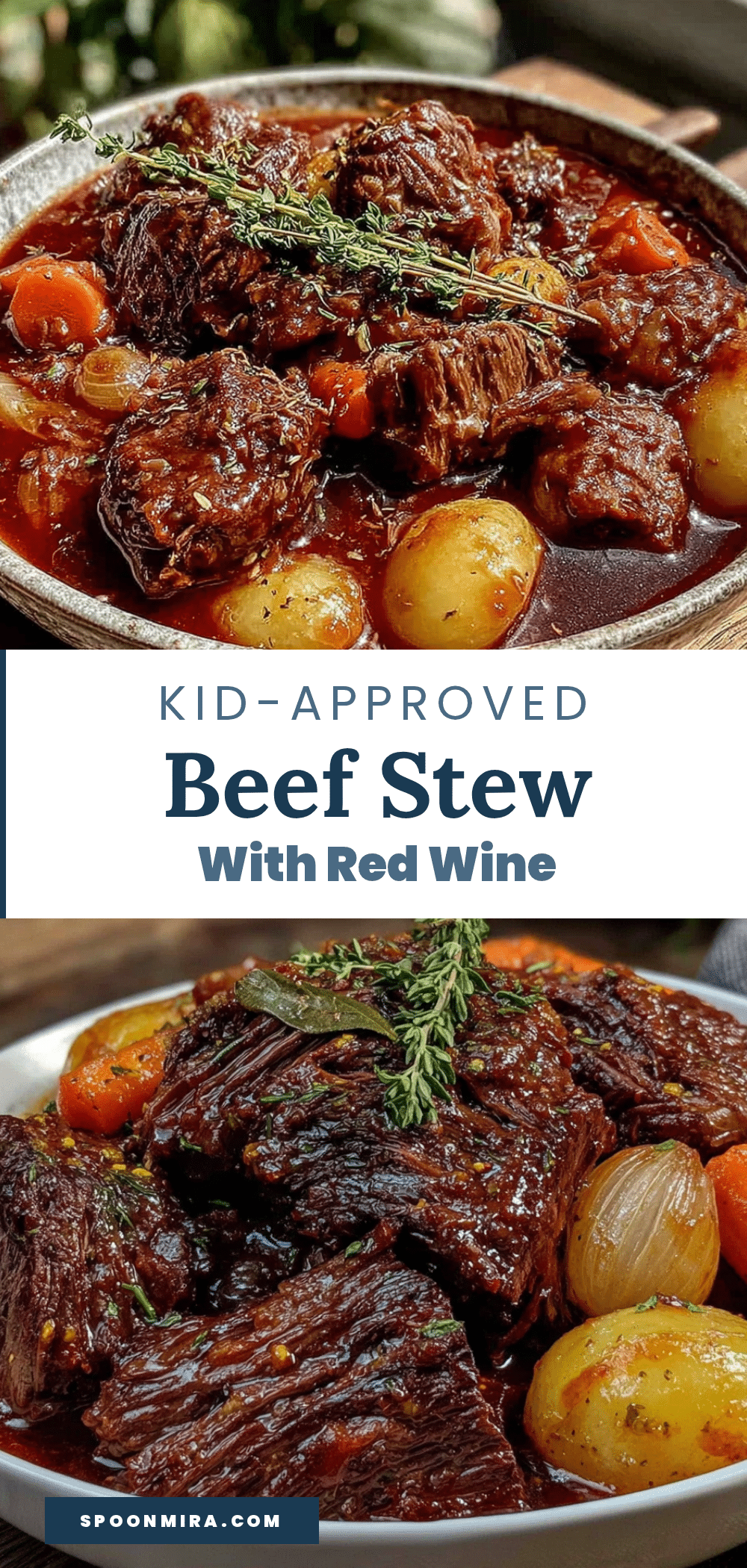
Kid-Approved Slow Cooker Beef Stew with Red Wine
A rich, tender beef stew with red wine that’s kid-approved and perfect for busy weeknights. The slow cooker does all the work, delivering deep, savory flavor without any boozy taste.
- Prep Time: 20 minutes
- Cook Time: 6-8 hours (low) or 4-5 hours (high)
- Total Time: 6 hours 20 minutes to 8 hours 20 minutes
- Yield: 8 servings 1x
- Category: Main Course
- Cuisine: French
Ingredients
- 2 pounds beef chuck roast, cut into 1½-inch cubes
- 3 tablespoons all-purpose flour
- 2 tablespoons olive oil
- 1 large yellow onion, diced (about 1½ cups)
- 4 cloves garlic, minced
- 1 cup dry red wine (Merlot or Cabernet Sauvignon)
- 2 cups low-sodium beef broth
- 2 tablespoons tomato paste
- 1 tablespoon Worcestershire sauce
- 4 medium carrots, peeled and cut into 1-inch chunks (about 2 cups)
- 3 medium Yukon Gold potatoes, cut into 1-inch cubes (about 2 cups)
- 2 celery stalks, sliced into ½-inch pieces
- 1 cup frozen peas
- 1 teaspoon dried thyme
- 2 bay leaves
- 1 teaspoon salt (plus more to taste)
- ½ teaspoon black pepper (freshly ground)
- 2 tablespoons fresh parsley, chopped (for garnish)
Instructions
- Pat the beef chuck cubes dry with paper towels. Season generously with salt and pepper, then sprinkle with flour and toss to coat evenly. Shake off excess flour.
- Heat olive oil in a large skillet over medium-high heat. Working in batches, sear the beef cubes for 2-3 minutes per side until a deep brown crust forms. Transfer seared beef to a 6-quart slow cooker.
- Reduce heat to medium. Add diced onion to the same skillet and cook for 2 minutes, scraping up browned bits. Add minced garlic and cook for 30 seconds until fragrant. Transfer onion and garlic to the slow cooker.
- Pour red wine into the hot skillet and stir vigorously, scraping up all browned bits. Let bubble for 30 seconds, then pour into the slow cooker.
- Add beef broth, tomato paste, Worcestershire sauce, dried thyme, and bay leaves to the slow cooker. Stir gently until tomato paste dissolves.
- Cover and cook on low for 6-8 hours or on high for 4-5 hours. About 2 hours before serving, add carrots, potatoes, and celery.
- About 15 minutes before serving, stir in frozen peas. Remove bay leaves. Taste and adjust salt and pepper if needed. If stew is too thin, mix 1 tablespoon cornstarch with 2 tablespoons cold water and stir in; let cook 10 more minutes.
- Ladle into bowls, garnish with fresh parsley, and serve with crusty bread.
Notes
Don’t skip searing the beef—it builds deep flavor. Add vegetables later to prevent mushiness. For gluten-free, use cornstarch instead of flour. For a wine substitute, use extra beef broth with 2 tablespoons balsamic vinegar. Leftovers taste even better the next day.
Nutrition
- Serving Size: 1 bowl (about 1.5 cu
- Calories: 380
- Sugar: 8
- Sodium: 680
- Fat: 18
- Saturated Fat: 6
- Carbohydrates: 22
- Fiber: 5
- Protein: 28
Keywords: slow cooker beef stew, red wine beef stew, kid-friendly stew, easy beef stew, family dinner, comfort food, slow cooker recipe