There used to be a tiny Irish bakery tucked between a dry cleaner and a shoe repair shop on the corner of 5th and Elm that made the most unforgettable soda bread. When they closed suddenly three years ago — a “For Lease” sign appeared overnight, no goodbye — I actually felt a little lost. That bread was my emergency dinner companion, my Sunday morning toast, my “I don’t know what to bring to the party” hero. After twelve tries — some so dense they could have doubled as doorstops — I finally got it. This Easy Classic Irish Soda Bread with Raisins and Caraway is the one. Honestly, I almost cried the first time I pulled it from the oven and that familiar, craggy top stared back at me.
The thing about this particular loaf is that it doesn’t ask much of you. No yeast, no kneading, no waiting around for dough to rise. You mix it in one bowl, shape it into a round, slash a cross on top, and bake. That’s it. The raisins add little pockets of sweetness, and the caraway seeds bring this subtle, almost grassy warmth that makes the whole thing taste like something your grandmother might have made — even if your grandmother was from Ohio and never touched caraway in her life.
I remember the day I finally cracked the code. It was a rainy Tuesday, the kind where you just want carbs and comfort. I’d scribbled notes from three different cookbooks, a random blog I found at 2 a.m., and my own memory of that bakery’s crust. I forgot to add the buttermilk at first — poured the dry ingredients right into the bowl and stood there staring at them like an idiot. Had to start over. But that second attempt? Perfection. The crust was golden and crackly, the inside was tender but sturdy enough to hold a thick layer of butter. Maybe you’ve been there — chasing a food memory that feels just out of reach. This loaf brings it back.
Why You’ll Love This Recipe
Let me tell you why this Easy Classic Irish Soda Bread with Raisins and Caraway has become my most-requested recipe. I’ve tested it for friends, for holiday brunches, and for those nights when you just need bread in under an hour. It delivers every single time.
- Quick & Easy: From mixing bowl to oven in about 10 minutes. No yeast, no rising time, no fuss. Perfect for a last-minute dinner addition or a sudden craving for warm bread.
- Simple Ingredients: You probably have everything in your pantry right now. Flour, baking soda, salt, buttermilk, raisins, caraway seeds. That’s it. No specialty trips required.
- Perfect for St. Patrick’s Day or Any Day: Sure, it’s a classic for March, but honestly, I make this year-round. It’s great for breakfast with jam, alongside a bowl of soup, or just as a snack with a cup of tea.
- Crowd-Pleaser: I’ve brought this to potlucks and watched it disappear. Kids pick out the raisins, adults appreciate the caraway. Everyone finds something to love.
- Unbelievably Delicious: The texture is what gets me every time. That craggy, rustic crust gives way to a tender, slightly crumbly interior. The raisins soften and plump up during baking, and the caraway seeds add this unexpected little pop of flavor that keeps you coming back for “just one more slice.”
What makes this version different from the rest? It’s the ratio. I spent a lot of failed loaves figuring out the perfect balance of wet to dry ingredients so the bread stays moist without being gummy. The buttermilk and baking soda reaction is the real star here — it gives you that lift and tang that defines good soda bread. And I add the raisins and caraway in a way that distributes them evenly, so every bite has a little something special. This isn’t just another recipe — it’s the one I’d make for someone who says they don’t like soda bread. It changes minds.
There’s something about pulling a loaf of bread from the oven that feels like a small victory. And when that bread is this easy, this forgiving, this good — it’s the kind of recipe that makes you feel like a real baker, even on a busy Tuesday night.
What Ingredients You Will Need
This recipe uses simple, wholesome ingredients to deliver big flavor and that classic, rustic texture. Most of these are pantry staples, which is exactly why I love making this bread on a whim. Here’s what you’ll need and why each ingredient matters.
- All-purpose flour (4 cups / 480g): The backbone of the bread. I use unbleached all-purpose flour for the best texture. King Arthur Flour is my go-to brand — it has a consistent protein content that gives you a reliable crumb. Don’t use bread flour here; it’ll make the bread too tough. And skip self-rising flour since we’re adding our own leavening.
- Baking soda (1 teaspoon): This is your leavening agent. It reacts with the acid in the buttermilk to create carbon dioxide bubbles, which give the bread its lift. Make sure your baking soda is fresh — if it’s been sitting in your cabinet for over a year, it might not work as well. Test it by dropping a little in vinegar; if it fizzes vigorously, you’re good.
- Salt (1 teaspoon): Don’t skip this. Salt does more than just add flavor — it strengthens the gluten structure and balances the sweetness from the raisins. I use fine sea salt. If you’re using kosher salt, you might need a bit more.
- Sugar (2 tablespoons / 25g): Just a touch of sweetness to complement the raisins and round out the tangy buttermilk. You can leave it out if you prefer a more savory loaf, but I think it makes a difference.
- Cold unsalted butter (4 tablespoons / 56g), cut into small cubes: This is where the tenderness comes from. You’re cutting the butter into the flour until it looks like coarse meal, just like you would for biscuits. It creates little pockets of fat that melt during baking, giving you a softer crumb. Use cold butter straight from the fridge. I’ve used salted butter in a pinch and just reduced the added salt — it works fine.
- Buttermilk (1 ¾ cups / 420ml), cold: The most important ingredient after flour. The acid in buttermilk reacts with the baking soda to create the rise. It also gives the bread its signature tangy flavor. If you don’t have buttermilk, you can make a quick substitute: add 1 tablespoon of lemon juice or white vinegar to a measuring cup, then fill with regular milk to the 1 ¾ cup line. Let it sit for 5 minutes until it curdles. It’s not quite the same, but it works in a pinch. I’ve done it many times.
- Raisins (1 cup / 150g): I use regular dark raisins, but golden raisins work too. They plump up during baking and add little bursts of sweetness. Make sure your raisins are fresh and soft — if they’re hard and dry, soak them in hot water for 10 minutes, then drain before using. I’ve also used dried currants for a more traditional Irish version.
- Caraway seeds (1 ½ tablespoons): This is the flavor that makes Irish soda bread distinct. Caraway has a slightly sweet, anise-like flavor that pairs beautifully with the raisins and tangy bread. If you’re not a fan, you can leave them out, but I really encourage you to try them at least once. They’re subtle, not overwhelming. I buy my caraway seeds from the bulk section at my local co-op — they’re fresher and cheaper that way.
That’s it. Seven ingredients (eight if you count the caraway) and you’re on your way to a loaf of bread that tastes like you spent hours on it. You won’t.
Equipment Needed
The beauty of this Easy Classic Irish Soda Bread with Raisins and Caraway is that it doesn’t require any fancy equipment. Here’s what you’ll need:
- Large mixing bowl: Any big bowl will do. I use a ceramic one because it’s heavy and doesn’t slide around, but glass or metal works just fine.
- Whisk or fork: For mixing the dry ingredients together. A whisk is faster, but a fork gets the job done.
- Pastry cutter or two knives: To cut the butter into the flour. You can also use your fingertips — just work quickly so the butter doesn’t warm up too much. I’ve used a pastry cutter for years and it’s worth the few dollars it costs.
- Rubber spatula or wooden spoon: For mixing the dough. A spatula is easier to scrape the bowl clean.
- Baking sheet: A regular half-sheet pan works perfectly. Line it with parchment paper for easy cleanup. I forgot parchment once and the bread stuck a little — not a disaster, but annoying.
- Sharp knife or lame: For slashing the cross on top of the loaf. A serrated knife works best. Don’t use a dull knife — it’ll drag and tear the dough.
- Cooling rack: Essential for letting the bread cool properly. If you leave it on the baking sheet, the bottom can get soggy from trapped steam.
That’s really all you need. No stand mixer, no bread proofing basket, no fancy thermometer. This is bread for the people, made with what you already have.
Preparation Method
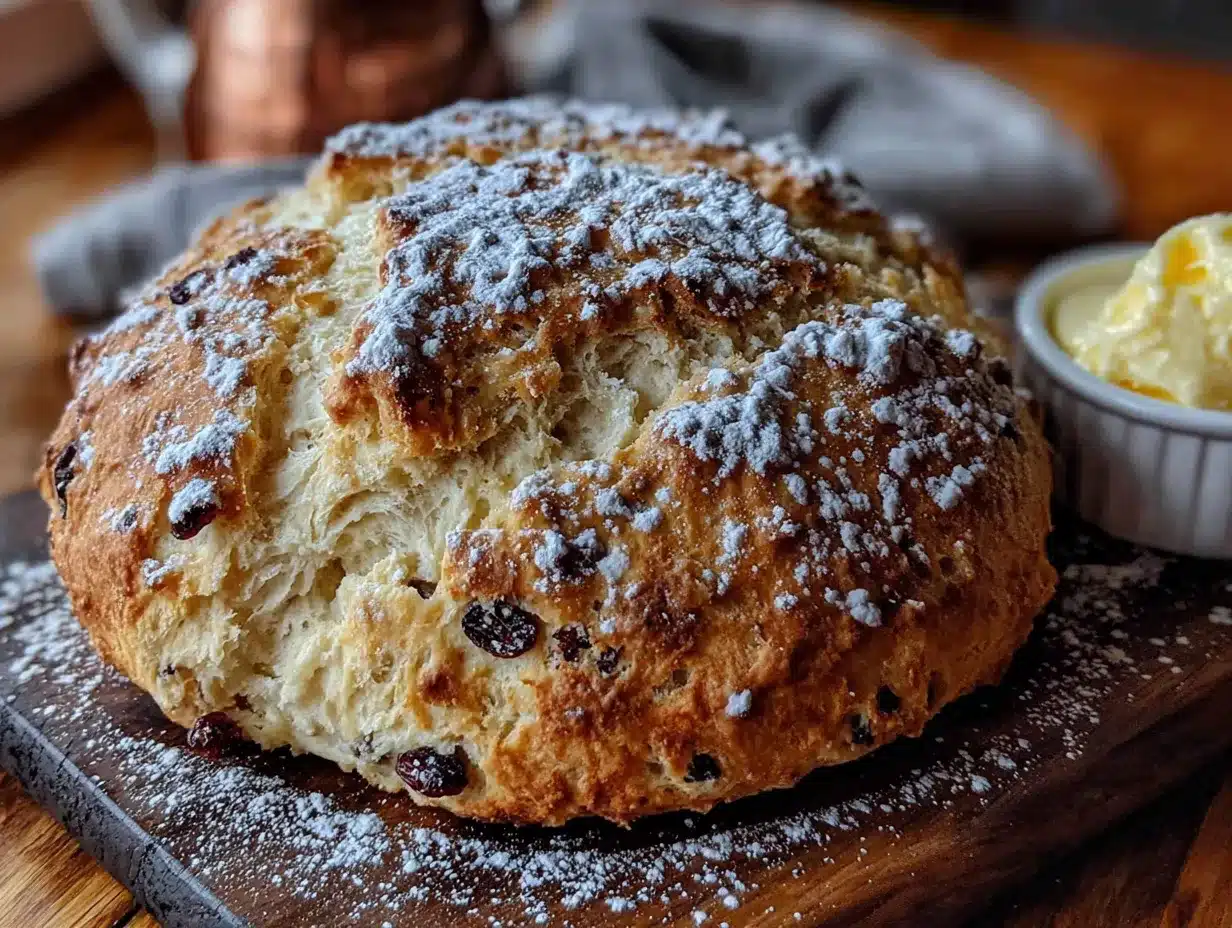
Let’s make some bread. I promise, this is easier than you think. Take a deep breath, preheat your oven, and let’s go.
- Preheat your oven to 425°F (220°C). Place a rack in the middle position. Line a baking sheet with parchment paper. Getting the oven hot is important — that initial blast of heat helps the baking soda react quickly and gives the bread its rise.
- Whisk the dry ingredients. In your large mixing bowl, whisk together 4 cups (480g) all-purpose flour, 1 teaspoon baking soda, 1 teaspoon salt, and 2 tablespoons (25g) sugar. Make sure the baking soda is evenly distributed — you don’t want a pocket of it in one bite. I usually whisk for a good 15-20 seconds to be sure.
- Cut in the butter. Add the 4 tablespoons (56g) cold cubed butter to the flour mixture. Use your pastry cutter, two knives, or your fingertips to cut the butter into the flour until it looks like coarse meal with some pea-sized butter pieces remaining. Work quickly — you want the butter to stay cold. If it starts to feel warm, pop the bowl in the fridge for 5 minutes. I’ve definitely had to do that on a hot summer day.
- Stir in the raisins and caraway seeds. Add 1 cup (150g) raisins and 1 ½ tablespoons caraway seeds to the flour-butter mixture. Stir to coat them in the flour — this helps prevent them from sinking to the bottom of the loaf. I learned this the hard way after pulling out a loaf with all the raisins clustered at the bottom.
- Add the buttermilk. Make a well in the center of the flour mixture and pour in 1 ¾ cups (420ml) cold buttermilk. Use your rubber spatula or a wooden spoon to stir everything together. Mix just until the dough comes together — it will look shaggy and a little sticky. Don’t overmix! Overmixing develops gluten and makes the bread tough. A few streaks of flour are totally fine. This is where I messed up on my third attempt — I kept mixing to make it smooth, and ended up with a brick.
- Shape the dough. Lightly flour your work surface. Turn the dough out onto it. With floured hands, gently bring the dough together into a ball. Don’t knead it — just shape it. If it’s too sticky, dust your hands with a little more flour, but try not to add too much. The dough should be soft and slightly tacky. Pat it into a round about 6-7 inches in diameter and about 2 inches thick.
- Place on the baking sheet. Transfer the dough round to your parchment-lined baking sheet. No need to grease anything — the parchment does the work.
- Slash a deep cross on top. Using a sharp knife or lame, cut a deep cross into the top of the dough, about ½ to ¾ inch deep. This isn’t just for looks — it helps the bread bake evenly by allowing heat to penetrate the center. In Irish tradition, it’s also said to let the fairies out. I’m not superstitious, but I’m also not taking any chances with my bread.
- Bake for 35-40 minutes. Place the baking sheet in the preheated oven. Bake until the bread is deep golden brown and sounds hollow when you tap the bottom. If you have an instant-read thermometer, the internal temperature should be around 190°F (88°C). Start checking at 35 minutes. Every oven is different — mine runs a little hot, so I start checking early.
- Cool on a wire rack. Transfer the bread to a cooling rack. Let it cool for at least 30 minutes before slicing. I know, the smell is torture, but if you cut it too soon, the inside will be gummy. Trust me on this — I’ve made that mistake more times than I care to admit. The bread continues to set as it cools.
And there you have it. A beautiful, golden loaf of Irish soda bread that required almost no effort. The crust will be crackly and crisp, the inside tender and studded with sweet raisins and fragrant caraway. You did that. In under an hour.
Cooking Tips & Techniques
Over the course of those twelve attempts, I learned a few things the hard way. Here are the tips that made the difference between a good loaf and a great one.
Keep everything cold. Cold butter, cold buttermilk, even cold hands if you can manage it. The butter needs to stay solid until it hits the hot oven. If it melts into the flour before baking, you lose that tender, flaky texture. I keep my butter in the freezer for 10 minutes before I start. It sounds extra, but it works.
Don’t overmix the dough. This is the number one mistake I see people make. Soda bread is supposed to be rustic and a little rough. Mix just until the flour is moistened and the dough comes together. A few dry spots are okay. Overmixing develops gluten, and gluten makes bread tough. You’re not making a yeasted loaf here — you’re aiming for something tender and almost scone-like.
Trust your senses. Recipes give you times and temperatures, but your oven might be different. Look for that deep golden brown color. Listen for the hollow sound when you tap the bottom. Feel the weight — a fully baked loaf feels lighter than it looks. I’ve pulled loaves that looked perfect at 35 minutes and others that needed the full 40. Your mileage will vary.
Toast leftover slices. Day-old soda bread makes the best toast you’ve ever had. The crumb firms up overnight, and when you toast it, the exterior gets crispy while the inside stays soft. Slather it with butter and a little jam, and you’ve got breakfast. I actually look forward to day-two soda bread more than fresh-out-of-the-oven bread. It’s that good.
One failure I’ll never forget: On attempt number five, I used expired baking soda. The loaf barely rose and had a weird, metallic taste. I stared at it for a full minute before I realized what I’d done. Check your expiration dates, folks. Baking soda loses its potency over time, and without that reaction with the buttermilk, you’ve got a dense, flat disc. Not your finest moment.
Variations & Adaptations
This Easy Classic Irish Soda Bread with Raisins and Caraway is wonderful as written, but it’s also incredibly adaptable. Here are some variations I’ve tried and loved.
Savory Soda Bread: Leave out the sugar, raisins, and caraway seeds. Add 1 cup of shredded sharp cheddar cheese, 2 tablespoons of fresh rosemary (chopped), and a teaspoon of black pepper. It’s incredible alongside a bowl of tomato soup or stew. I made this for a friend who doesn’t have a sweet tooth, and she ate half the loaf in one sitting.
Whole Wheat Version: Substitute 2 cups of the all-purpose flour with whole wheat flour. You’ll need to add an extra 2-3 tablespoons of buttermilk because whole wheat flour absorbs more liquid. The bread will be denser and nuttier, but still delicious. I use white whole wheat flour when I want a milder flavor.
Gluten-Free Adaptation: I’ve tested this with a 1:1 gluten-free baking flour blend (the one with xanthan gum already added). It works, but the texture is more crumbly. Add an extra ¼ cup of buttermilk and handle the dough gently. It won’t be exactly the same, but it’s still a good loaf. My gluten-free neighbor gave it a thumbs up.
Dried Fruit Swap: Don’t like raisins? Use dried cranberries, chopped dried apricots, or dried cherries instead. I made a version with dried cranberries and orange zest for the holidays, and it was a hit. The tartness of the cranberries balances the sweet, tender bread perfectly.
Spiced Version: Add 1 teaspoon of cinnamon and ¼ teaspoon of nutmeg along with the dry ingredients. It gives the bread a warm, cozy flavor that’s perfect for fall. I’ve also added a pinch of cardamom for a more complex spice profile. It’s subtle but noticeable.
Serving & Storage Suggestions
This bread is best served warm, but it’s good at every temperature. Here’s how I like to enjoy it.
Serving: Slice the bread and serve it with a generous pat of good-quality salted butter. Kerrygold is my favorite — it’s rich and creamy and complements the tangy bread perfectly. The butter will melt into the warm crumb, and honestly, it’s one of life’s simple pleasures. You can also serve it with jam, honey, or even a slice of sharp cheddar cheese. For a more traditional Irish experience, have it with a cup of strong black tea.
What to serve alongside: This bread is made for soups and stews. I love it with a hearty beef stew, a creamy potato soup, or a simple lentil soup. It’s also great for breakfast with scrambled eggs and bacon, or as a side for a Sunday roast. Honestly, it goes with almost everything.
Storage: Store the bread in an airtight container or wrapped tightly in plastic wrap at room temperature for up to 3 days. Do not refrigerate it — the cold temperature will dry it out and make it stale faster. I wrap mine in a clean kitchen towel and keep it in a bread box. It stays soft for days.
Freezing: This bread freezes beautifully. Wrap the completely cooled loaf tightly in plastic wrap, then in aluminum foil. Freeze for up to 3 months. To thaw, leave it at room temperature for a few hours or overnight. To reheat, wrap the loaf in foil and warm it in a 350°F (175°C) oven for 10-15 minutes. It’ll taste almost fresh-baked.
Reheating: For individual slices, pop them in the toaster. It revives the crust and warms the inside perfectly. For a whole loaf, the oven method works best. Microwaving will make it rubbery, so I avoid that.
How flavors develop: The caraway seeds become more pronounced after a day or two. The crust softens slightly, but the interior stays tender. Honestly, I think this bread is even better on day two, especially toasted. The flavors have time to meld and mellow.
Nutritional Information & Benefits
I’m not a nutritionist, but I can give you a rough idea of what’s in a slice of this bread. Values are approximate and based on 12 slices per loaf.
| Nutrient | Per Slice (approx.) |
|---|---|
| Calories | 220 |
| Total Fat | 5g |
| Saturated Fat | 3g |
| Cholesterol | 12mg |
| Sodium | 280mg |
| Total Carbohydrates | 39g |
| Dietary Fiber | 2g |
| Sugars | 11g |
| Protein | 5g |
A few health notes: This bread is relatively low in sugar compared to many baked goods. The raisins provide some natural sweetness along with fiber and antioxidants. Caraway seeds are known for their digestive benefits — they’ve been used for centuries to settle upset stomachs. The buttermilk adds calcium and protein. Is this health food? No. But it’s real food made with simple ingredients, and there’s a lot to be said for that.
Dietary considerations: This recipe contains gluten and dairy. For a dairy-free version, use a plant-based buttermilk substitute (milk + lemon juice) and a dairy-free butter alternative. For a gluten-free version, use a 1:1 gluten-free flour blend as mentioned in the variations section. This recipe is vegetarian.
I personally believe that food should nourish you in more ways than one. This bread feeds the soul as much as the body. It’s the kind of thing you make when you need a little comfort, a little warmth, a little taste of something simple and good.
Conclusion
So here it is. My twelve-attempt, rain-soaked-Tuesday, finally-cracked-the-code version of that bakery’s Irish soda bread. And you know what? I think mine might actually be better. Not because I’m some kind of bread genius, but because I made it for myself, in my own kitchen, with my own two hands. There’s something about that process that makes the bread taste different. Better. More yours.
This Easy Classic Irish Soda Bread with Raisins and Caraway is forgiving, fast, and deeply satisfying. It’s the kind of recipe you’ll come back to again and again, whether you’re celebrating St. Patrick’s Day or just need a loaf of bread to get you through the week. It doesn’t demand much from you, but it gives back so much. That crackly crust, that tender crumb, those little bursts of raisin sweetness and caraway warmth — it’s comfort in its purest form.
I hope you make this bread. I hope you eat it warm with butter and share it with people you love. And I hope it becomes your version of that bakery loaf — the one you remember, the one you recreate, the one that feels like home.
If you make this recipe, I’d love to hear about it. Leave a comment below and tell me how it turned out. Did you make any changes? Did you serve it with something amazing? Did you, like me, have to start over because you forgot an ingredient? Share your story. That’s what makes this whole thing worthwhile.
Happy baking, friends. Go make some bread.
Frequently Asked Questions
Can I use regular milk instead of buttermilk?
You can, but you’ll need to acidify it first. Add 1 tablespoon of lemon juice or white vinegar to 1 ¾ cups of regular milk and let it sit for 5 minutes. It won’t be quite as tangy, but it will still react with the baking soda to give you some rise. The texture might be slightly different — a little less tender — but it works in a pinch.
Why did my soda bread turn out so dense?
The most common culprit is overmixing the dough. Soda bread should be mixed just until it comes together — a few streaks of flour are fine. Overmixing develops gluten and makes the bread tough. Other possibilities include expired baking soda (check the date!) or not enough buttermilk. The dough should be soft and slightly sticky, not dry and crumbly.
Can I leave out the caraway seeds?
Absolutely. Caraway seeds are traditional, but not everyone loves them. If you leave them out, you’ll have a plain raisin soda bread, which is still delicious. You could also replace them with a teaspoon of orange zest for a different flavor profile. Make it your own — that’s the beauty of this recipe.
How do I know when the bread is fully baked?
Look for three signs: a deep golden brown crust, a hollow sound when you tap the bottom of the loaf, and an internal temperature of about 190°F (88°C) if you’re using a thermometer. The bread should also feel firm to the touch, not soft or squishy. If you’re unsure, give it an extra 5 minutes — it’s better to overbake slightly than to have a gummy center.
Can I make this bread ahead of time?
Yes! This bread actually keeps well for a few days at room temperature. You can also freeze the baked loaf for up to 3 months. If you want to serve it fresh on a specific day, you can mix the dry ingredients (flour, baking soda, salt, sugar) ahead of time and store them in a bag. Then just add the butter, raisins, caraway, and buttermilk when you’re ready to bake. It takes about 10 minutes of active work.
Pin This Recipe!
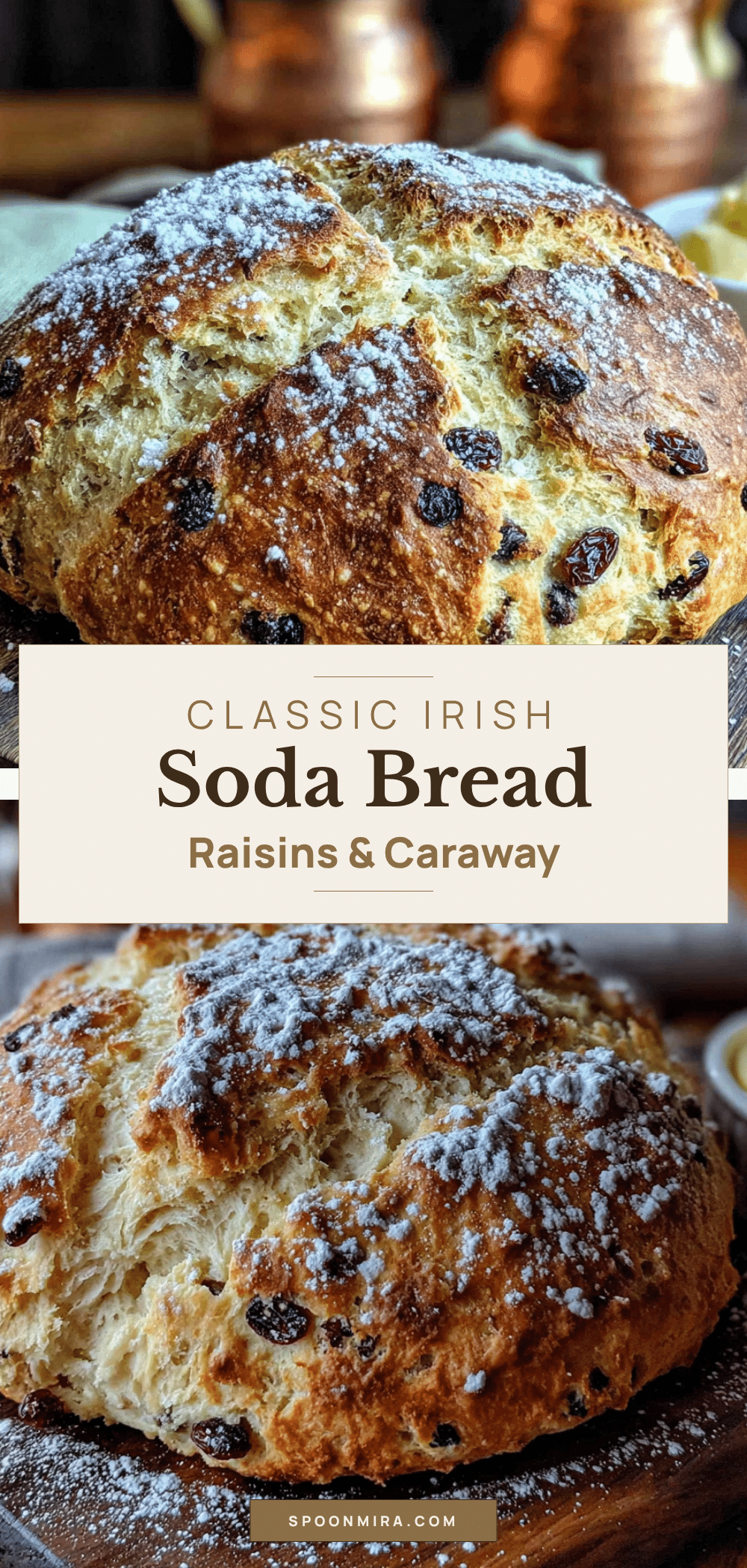
Easy Classic Irish Soda Bread with Raisins & Caraway

A quick and easy Irish soda bread with raisins and caraway seeds, featuring a crackly crust and tender crumb. No yeast, no kneading, and ready in under an hour.
- Prep Time: 10 minutes
- Cook Time: 35-40 minutes
- Total Time: 45-50 minutes
- Yield: 12 servings 1x
- Category: Bread
- Cuisine: Irish
Ingredients
- 4 cups (480g) all-purpose flour
- 1 teaspoon baking soda
- 1 teaspoon salt
- 2 tablespoons (25g) sugar
- 4 tablespoons (56g) cold unsalted butter, cut into small cubes
- 1 ¾ cups (420ml) cold buttermilk
- 1 cup (150g) raisins
- 1 ½ tablespoons caraway seeds
Instructions
- Preheat your oven to 425°F (220°C). Place a rack in the middle position. Line a baking sheet with parchment paper.
- In a large mixing bowl, whisk together 4 cups (480g) all-purpose flour, 1 teaspoon baking soda, 1 teaspoon salt, and 2 tablespoons (25g) sugar.
- Add the 4 tablespoons (56g) cold cubed butter to the flour mixture. Use a pastry cutter, two knives, or your fingertips to cut the butter into the flour until it looks like coarse meal with some pea-sized butter pieces remaining.
- Stir in 1 cup (150g) raisins and 1 ½ tablespoons caraway seeds until coated in flour.
- Make a well in the center of the flour mixture and pour in 1 ¾ cups (420ml) cold buttermilk. Stir with a rubber spatula or wooden spoon just until the dough comes together. It will look shaggy and slightly sticky. Do not overmix.
- Lightly flour your work surface. Turn the dough out onto it. With floured hands, gently bring the dough together into a ball. Do not knead. Pat into a round about 6-7 inches in diameter and about 2 inches thick.
- Transfer the dough round to the parchment-lined baking sheet.
- Using a sharp knife or lame, cut a deep cross into the top of the dough, about ½ to ¾ inch deep.
- Bake for 35-40 minutes, until deep golden brown and the bread sounds hollow when tapped on the bottom. Internal temperature should be around 190°F (88°C).
- Transfer the bread to a wire rack and let cool for at least 30 minutes before slicing.
Notes
Keep all ingredients cold for best texture. Do not overmix the dough. For a dairy-free version, use plant-based buttermilk substitute and dairy-free butter. For gluten-free, use a 1:1 gluten-free flour blend with added xanthan gum. Day-old bread makes excellent toast.
Nutrition
- Serving Size: 1 slice
- Calories: 220
- Sugar: 11
- Sodium: 280
- Fat: 5
- Saturated Fat: 3
- Carbohydrates: 39
- Fiber: 2
- Protein: 5
Keywords: Irish soda bread, easy soda bread, raisin soda bread, caraway soda bread, quick bread, St. Patrick's Day bread