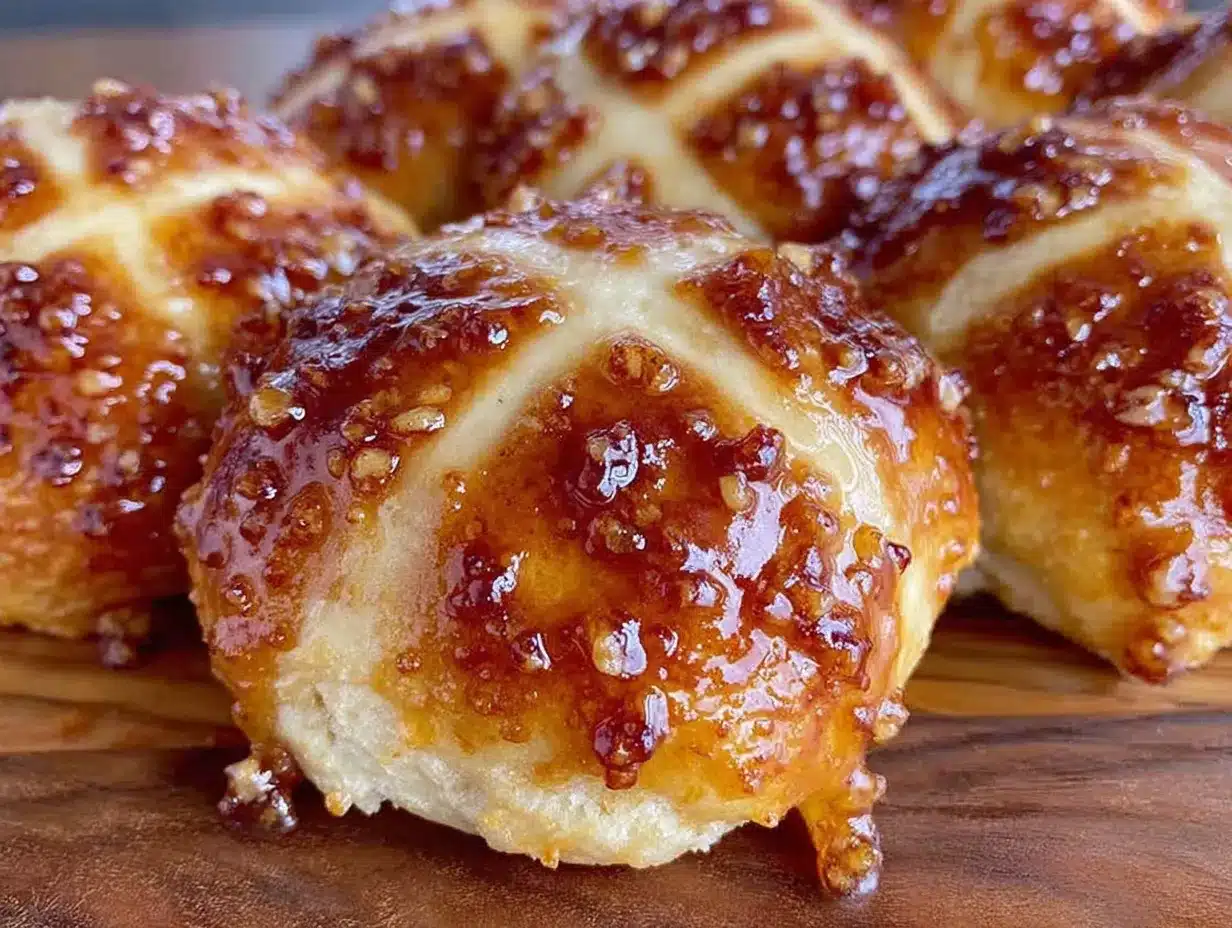
My brother claimed to hate raisins for twenty-seven years. Twenty-seven years of picking them out of cookies, pushing them to the side of his plate, making that face like he’d bitten into a lemon. Then last Easter, I caught him standing in my kitchen at midnight, pulling one of these orange glazed hot cross buns apart with his bare hands, eating the raisins one by one. He didn’t even see me watching from the doorway.
I’d made a batch “just for myself” that morning, honestly feeling a little smug about my annual Easter baking tradition. The dough had come together beautifully—soft and pillowy, speckled with dried fruit and warm spices. I’d brushed the tops with a sticky orange glaze that caught the light like stained glass. Around 11 PM, I heard the floorboards creak. There he was, halfway through his third bun, muttering something about “not bad” with crumbs all over his favorite sweatshirt.
That’s the thing about these buns, I guess. They sneak up on you. The orange zest cuts through the sweetness, the spices wrap around you like a warm blanket, and the raisins—yes, raisins—become little bursts of chewiness you actually look forward to. I’ve been tweaking this recipe for about four years now, and this version finally feels like the one. The one that converts raisin-haters. The one that makes Easter morning feel special without requiring you to wake up at dawn. The one that fills your kitchen with that smell—you know the one—that makes everyone wander in asking what’s for breakfast.
Maybe you’ve got a picky eater in your life, or maybe you’re the one who’s never quite loved hot cross buns. Either way, I think these might change your mind. They certainly changed my brother’s.
Why You’ll Love This Recipe
These orange glazed hot cross buns aren’t just another Easter recipe sitting on the internet. I’ve tested this dough at least eight times to get the texture exactly right—soft, tender, with just enough structure to hold the fruit without turning into a brick. Let me tell you what makes them special.
- Quick & Easy: The dough comes together in about 15 minutes of active work. With a stand mixer doing the kneading, you can prep these while your coffee brews.
- Simple Ingredients: No trip to a specialty store required. Flour, butter, milk, eggs, sugar, and spices—all pantry staples.
- Perfect for Easter Morning: Make the dough the night before, let it rise in the fridge, and bake fresh in the morning. Your kitchen will smell incredible.
- Crowd-Pleaser: My brother isn’t the only convert. These buns disappear at every brunch, potluck, and family gathering I bring them to.
- Unbelievably Delicious: The orange glaze isn’t just a pretty topping—it soaks into the warm buns, making every bite sticky, citrusy, and completely irresistible.
What sets this recipe apart is the orange element. Most hot cross buns rely solely on dried fruit and spices, but the fresh zest and juice in both the dough and glaze add a brightness that balances the richness. It’s not just another version—it’s the version that makes people close their eyes after the first bite.
These buns are comfort food reimagined for a special morning—cozier, more aromatic, with the same soul-soothing satisfaction that makes you want to curl up with a cup of tea and savor every crumb.
What Ingredients You Will Need
This recipe uses simple, wholesome ingredients to deliver bold flavor and satisfying texture without the fuss. Most of these are probably in your kitchen right now, which makes this perfect for spontaneous Easter baking.
For the Dough
- All-purpose flour, 3 ½ cups (440g) – I prefer Gold Medal or King Arthur for consistent results. Bread flour works too, but the buns will be slightly chewier.
- Granulated sugar, ⅓ cup (65g) – Just enough sweetness to balance the spices.
- Active dry yeast, 2 ¼ teaspoons (one packet) – Make sure it’s fresh. If you’re unsure, proof it in warm milk first.
- Warm milk, ¾ cup (180ml) – Whole milk gives the richest texture, but 2% works fine. Heat to about 110°F—warm but not hot.
- Unsalted butter, ¼ cup (60g), melted and cooled slightly – Adds tenderness and richness.
- Large eggs, 2, room temperature – Cold eggs will shock the dough. Leave them on the counter for 30 minutes.
- Fresh orange zest, 2 tablespoons – From about 2 large oranges. This is where the magic happens.
- Ground cinnamon, 1 ½ teaspoons – The backbone of the spice blend.
- Ground nutmeg, ½ teaspoon – Freshly grated if you have it.
- Ground allspice, ¼ teaspoon – Adds that warm, almost clove-like depth.
- Salt, 1 teaspoon – Don’t skip it. Salt controls yeast activity and enhances flavor.
- Mixed dried fruit, 1 cup (150g) – I use a combination of raisins, currants, and chopped dried apricots. The apricots add a nice chewiness.
For the Cross Paste
- All-purpose flour, ¼ cup (30g)
- Water, 3 tablespoons – Add more if needed for a pipeable consistency.
For the Orange Glaze
- Powdered sugar, 1 ½ cups (180g) – Sifted to avoid lumps.
- Fresh orange juice, 3 tablespoons – From the oranges you zested.
- Vanilla extract, ½ teaspoon – A small addition that rounds out the citrus.
Ingredient Selection Tip: Look for oranges that feel heavy for their size—they’re juicier. I usually buy navel oranges for this recipe because they’re sweet and easy to zest. If you can only find juice oranges, reduce the sugar in the glaze slightly.
Substitution Guidance: Use bread flour for a chewier texture, or swap half the all-purpose flour with white whole wheat for a heartier bun. For a dairy-free version, substitute the milk with oat milk and use vegan butter. The texture will be slightly less tender, but still delicious.
Equipment Needed
You don’t need a professional bakery setup for these buns. Here’s what I use:
- Stand mixer with dough hook – Makes kneading effortless, but you can absolutely do this by hand. It’ll take about 10 minutes of arm work.
- Large mixing bowl – For the first rise. Glass or ceramic works best.
- 9×13-inch baking pan – Glass or metal both work. Line it with parchment paper for easy removal.
- Microplane or fine zester – For getting all that orange zest without the bitter white pith.
- Piping bag or zip-top bag – For the cross paste. A zip-top bag with a tiny corner snipped off works perfectly.
- Pastry brush – For applying the glaze while the buns are still warm.
- Kitchen scale – Not required, but highly recommended for consistent results. I use mine every single time.
Budget-Friendly Options: If you don’t have a stand mixer, knead the dough by hand on a lightly floured surface. It’s actually quite meditative. No piping bag? Use a spoon to drizzle the cross paste in a thin line—it won’t look as neat, but it’ll taste the same.
Maintenance Tip: If you use a glass baking pan, let it come to room temperature before adding the dough. Putting cold dough into a cold pan can slow down the second rise.
Preparation Method
Let’s make these buns. I’ve broken this down into clear steps with all the little details that make a difference.
- Proof the yeast (5 minutes): In a small bowl, combine the warm milk (about 110°F) with 1 tablespoon of the sugar. Sprinkle the yeast on top and let it sit for 5 minutes until foamy. If it doesn’t foam, your yeast might be dead—start over with fresh yeast.
- Mix the dough (10 minutes): In the bowl of your stand mixer, whisk together the flour, remaining sugar, cinnamon, nutmeg, allspice, and salt. Add the proofed yeast mixture, melted butter, eggs, and orange zest. Mix on low speed with the dough hook until a shaggy dough forms, about 2 minutes. Increase to medium speed and knead for 6-7 minutes until the dough is smooth and elastic. It should pull away from the sides of the bowl but still feel slightly tacky.
- Add the fruit (2 minutes): With the mixer on low, gradually add the dried fruit. Mix just until evenly distributed. Don’t overmix at this stage or the fruit will break down.
- First rise (1-1.5 hours): Transfer the dough to a lightly greased bowl, turning once to coat. Cover with plastic wrap or a clean kitchen towel. Let rise in a warm place until doubled in size. I usually put mine in the oven with the light on—it stays at the perfect temperature.
- Shape the buns (15 minutes): Punch down the dough gently. Turn it out onto a lightly floured surface. Divide into 12 equal pieces (about 85g each if you’re weighing). Shape each piece into a smooth ball by pulling the edges underneath and pinching the seam. Place them in your greased 9×13-inch pan, spacing them evenly—they should touch slightly after rising.
- Second rise (45 minutes): Cover the pan loosely with plastic wrap. Let the buns rise until puffy and touching each other, about 45 minutes. They should spring back slowly when poked.
- Preheat the oven (20 minutes before baking): Set your oven to 375°F (190°C). Position a rack in the center.
- Make the cross paste (5 minutes): In a small bowl, mix the flour and water until smooth. Transfer to your piping bag or zip-top bag.
- Pipe the crosses (5 minutes): Pipe vertical lines down each row of buns, then horizontal lines across. The paste should be thick enough to hold its shape. Don’t worry about perfection—rustic crosses have charm.
- Bake (20-25 minutes): Bake until golden brown on top and the internal temperature reaches 190°F. The buns should sound hollow when tapped. If the tops brown too quickly, tent loosely with foil for the last 5 minutes.
- Make the glaze (5 minutes): While the buns bake, whisk together the powdered sugar, orange juice, and vanilla until smooth. The glaze should be thick but pourable.
- Glaze while warm (5 minutes): As soon as the buns come out of the oven, brush them generously with the orange glaze. The warmth will make the glaze soak in slightly, creating that perfect sticky top. Let cool in the pan for 10 minutes, then transfer to a wire rack.
Sensory Cue: The buns are ready when they’re golden brown and the kitchen smells like a bakery in heaven—warm spices, toasted butter, and bright citrus all mingling together.
Cooking Tips & Techniques
I’ve made plenty of mistakes with these buns over the years. Here’s what I’ve learned so you don’t have to repeat them.
Temperature matters more than you think. The first time I made these, I used milk that was too hot and killed the yeast. The buns turned out like hockey pucks. Now I always use a thermometer—milk at 110°F is perfect. If you don’t have a thermometer, it should feel like warm bath water on your wrist.
Don’t skip the second rise. I know it’s tempting to rush, but underproofed buns will be dense and heavy. They should be visibly puffy and when you gently poke one, the indent should slowly spring back. If it springs back immediately, give them more time.
Zest before you juice. This seems obvious, but I’ve definitely forgotten and had to wrestle with a slippery, juiced orange. Zest first, then juice for the glaze.
Use room temperature eggs. Cold eggs will seize up the butter and make the dough stiff. Leave them on the counter for 30 minutes before starting, or place them in a bowl of warm water for 5 minutes.
Brush the glaze twice. For the shiniest, most flavorful tops, brush once immediately out of the oven, then again 5 minutes later. The first layer soaks in, and the second layer stays glossy.
Multitasking strategy: While the dough rises for the first time, clean up your kitchen and set out your pan and piping bag. During the second rise, make your coffee and set the table. This way, when the buns come out of the oven, you’re ready to enjoy them immediately.
Variations & Adaptations
One of the best things about this recipe is how flexible it is. Here are some variations I’ve tried and loved.
Dried Fruit Swap: Not a raisin fan? Use dried cranberries, chopped dried cherries, or diced dried figs instead. My sister makes these with dried blueberries and lemon zest instead of orange—equally delicious.
Spice It Up: Add ½ teaspoon of ground cardamom or ginger for a different flavor profile. I made a batch with cardamom and orange last December, and they were perfect for Christmas morning.
Chocolate Orange Version: Swap the dried fruit for ¾ cup of dark chocolate chips and add 1 tablespoon of orange zest. The chocolate melts into the warm dough—absolutely decadent.
Whole Wheat Option: Replace half the all-purpose flour with white whole wheat flour. The buns will be denser and nuttier, but still soft. Add an extra tablespoon of milk to compensate for the whole wheat’s thirstiness.
Vegan Adaptation: Use plant-based milk, vegan butter, and a flax egg (1 tablespoon ground flaxseed mixed with 3 tablespoons water, let sit for 5 minutes). The texture won’t be quite as tender, but the flavor is still wonderful.
Make It a Bread Pudding: If you have leftover buns (unlikely, but possible), cube them and use them in a bread pudding with extra orange glaze. It’s a whole new dessert.
Serving & Storage Suggestions
These buns are best served warm, straight from the oven, with the glaze still slightly sticky. Here’s how to make the most of them.
Serving Temperature: Warm is non-negotiable. The glaze melts slightly into the dough, and the spices are more aromatic. If they’ve cooled, pop them in a 300°F oven for 5 minutes.
Presentation: Arrange the buns on a wooden board or a pretty platter, slightly separated so the glaze shows. A small bowl of softened butter on the side is always welcome.
Complementary Dishes: These pair beautifully with a cup of strong coffee, a pot of Earl Grey tea, or a glass of cold milk. For a brunch spread, serve them alongside scrambled eggs, fresh fruit, and crispy bacon.
Storage: Store leftover buns in an airtight container at room temperature for up to 3 days. The glaze will soften slightly, but they’ll still be delicious. Do not refrigerate—it dries them out.
Freezing: These freeze beautifully. Cool completely, wrap individually in plastic wrap, then place in a freezer bag. They’ll keep for up to 3 months. To reheat, unwrap and microwave for 20 seconds, or warm in a 300°F oven for 10 minutes.
Flavor Development: Honestly, the buns taste even better the next day. The spices and orange flavor meld together overnight, and the texture becomes even more tender. If you can resist eating them all on day one, you’re in for a treat.
Nutritional Information & Benefits
While these buns are definitely a treat, they do offer some nutritional benefits worth noting.
Estimated Nutritional Values (per bun): Approximately 280 calories, 7g fat, 48g carbohydrates, 6g protein, 2g fiber, 22g sugar. These values will vary based on exact ingredients and portion sizes.
Health Benefits of Key Ingredients: The dried fruit provides fiber and natural sweetness. Oranges offer vitamin C and antioxidants. Cinnamon has anti-inflammatory properties and may help regulate blood sugar. The eggs and milk contribute protein and calcium.
Dietary Considerations: This recipe contains gluten, dairy, and eggs. For a gluten-free version, use a 1:1 gluten-free flour blend. For dairy-free, follow the substitutions listed above. The buns are nut-free as written.
Potential Allergens: Wheat, milk, eggs. Always check your ingredient labels, especially for dried fruit which may be processed in facilities that handle nuts.
My Wellness Perspective: I believe in balance. These buns are meant for celebration—Easter morning, a special brunch, a cozy weekend. Enjoy them fully, savor every bite, and don’t stress about the numbers. Food is about joy and connection, and these buns deliver both.
Conclusion
These orange glazed hot cross buns are more than just an Easter recipe—they’re a tradition waiting to happen. The soft, spiced dough, the burst of citrus, the sticky-sweet glaze that makes your fingers a little messy—it all adds up to something truly special.
I love that this recipe has converted my raisin-hating brother, but I love even more that it fills my kitchen with warmth and my home with people wandering in to see what’s baking. That’s what cooking is about, isn’t it? Creating moments that stick.
I’d love to hear how these turn out for you. Did you try a variation? Did you convert a picky eater in your life? Drop a comment below and let me know. And if you share a photo on Pinterest, tag me—I want to see your beautiful buns!
Happy Easter, friends. Go make something that smells amazing.
Frequently Asked Questions
Can I make the dough the night before?
Absolutely. After the first rise, punch down the dough, cover it tightly, and refrigerate overnight. In the morning, let it sit at room temperature for 30 minutes, then shape and proceed with the second rise. The cold fermentation actually develops more flavor.
My dough is too sticky. What should I do?
Add flour one tablespoon at a time while kneading, but be careful not to add too much. The dough should be slightly tacky but not sticky enough to leave residue on your hands. If it’s extremely sticky, you might have measured the flour incorrectly—always spoon and level rather than scooping.
Can I use instant yeast instead of active dry?
Yes! Use the same amount (2 ¼ teaspoons) and skip the proofing step. Mix the instant yeast directly with the flour and other dry ingredients. You may need to add the warm milk a minute or two earlier in the mixing process.
Why did my cross paste disappear during baking?
This happens when the paste is too thin. Make sure you’re using a thick, pipeable consistency—it should hold its shape when piped. If it’s runny, add a little more flour. Also, don’t pipe the crosses too early; do it right before baking so the paste doesn’t have time to spread.
How do I get the perfect orange flavor without bitterness?
Only zest the orange part of the peel, avoiding the white pith underneath. The pith is bitter and will ruin the flavor. I use a microplane and gently graze the surface of the orange, rotating as I go. Two oranges should give you plenty of zest for both the dough and the glaze.
Pin This Recipe!

Cozy Orange Glazed Hot Cross Buns: Best Easter Recipe

These orange glazed hot cross buns are soft, pillowy, and speckled with dried fruit and warm spices. The orange zest cuts through the sweetness, the spices wrap around you like a warm blanket, and the sticky orange glaze makes every bite irresistible.
- Prep Time: 15 minutes
- Cook Time: 25 minutes
- Total Time: 2 hours 30 minutes
- Yield: 12 servings 1x
- Category: Breakfast
- Cuisine: American
Ingredients
- 3 ½ cups (440g) all-purpose flour
- ⅓ cup (65g) granulated sugar
- 2 ¼ teaspoons active dry yeast (one packet)
- ¾ cup (180ml) warm milk (about 110°F)
- ¼ cup (60g) unsalted butter, melted and cooled slightly
- 2 large eggs, room temperature
- 2 tablespoons fresh orange zest (from about 2 large oranges)
- 1 ½ teaspoons ground cinnamon
- ½ teaspoon ground nutmeg
- ¼ teaspoon ground allspice
- 1 teaspoon salt
- 1 cup (150g) mixed dried fruit (raisins, currants, chopped dried apricots)
- ¼ cup (30g) all-purpose flour (for cross paste)
- 3 tablespoons water (for cross paste)
- 1 ½ cups (180g) powdered sugar, sifted (for glaze)
- 3 tablespoons fresh orange juice (for glaze)
- ½ teaspoon vanilla extract (for glaze)
Instructions
- Proof the yeast: In a small bowl, combine warm milk (about 110°F) with 1 tablespoon of the sugar. Sprinkle yeast on top and let sit for 5 minutes until foamy.
- Mix the dough: In a stand mixer bowl, whisk together flour, remaining sugar, cinnamon, nutmeg, allspice, and salt. Add proofed yeast mixture, melted butter, eggs, and orange zest. Mix on low speed with dough hook until shaggy, about 2 minutes. Increase to medium speed and knead for 6-7 minutes until smooth and elastic.
- Add the fruit: With mixer on low, gradually add dried fruit. Mix just until evenly distributed.
- First rise: Transfer dough to a lightly greased bowl, turning once to coat. Cover and let rise in a warm place until doubled in size, about 1-1.5 hours.
- Shape the buns: Punch down dough. Turn onto a lightly floured surface. Divide into 12 equal pieces (about 85g each). Shape each into a smooth ball. Place in a greased 9×13-inch pan, spacing evenly.
- Second rise: Cover pan loosely with plastic wrap. Let buns rise until puffy and touching each other, about 45 minutes.
- Preheat oven to 375°F (190°C) about 20 minutes before baking.
- Make the cross paste: In a small bowl, mix ¼ cup flour and 3 tablespoons water until smooth. Transfer to a piping bag or zip-top bag.
- Pipe the crosses: Pipe vertical lines down each row of buns, then horizontal lines across.
- Bake for 20-25 minutes until golden brown and internal temperature reaches 190°F. Tent with foil if browning too quickly.
- Make the glaze: While buns bake, whisk together powdered sugar, orange juice, and vanilla until smooth.
- Glaze while warm: Brush buns generously with orange glaze immediately after removing from oven. Let cool in pan for 10 minutes, then transfer to a wire rack.
Notes
For best results, use room temperature eggs and milk at 110°F. Brush glaze twice for shiniest tops: once immediately out of oven, then again 5 minutes later. Buns taste even better the next day as flavors meld. Store at room temperature up to 3 days; freeze up to 3 months.
Nutrition
- Serving Size: 1 bun
- Calories: 280
- Sugar: 22
- Sodium: 210
- Fat: 7
- Saturated Fat: 4
- Carbohydrates: 48
- Fiber: 2
- Protein: 6
Keywords: hot cross buns, orange glaze, Easter recipe, breakfast buns, spiced buns, dried fruit buns, Easter breakfast