Late August, and the only thing I want is a pan of cherry tomatoes, split open and blistering in a slow oven. It was almost ten at night, the kitchen still warm from the day’s heat, and I had a cardboard flat of tomatoes that were too soft for a salad but too good to waste. I didn’t turn on any lights—just the glow from the oven. That first pop of a tomato skin breaking, the smell hitting you before you even see it… that is the smell of August slowing down.
I started making this easy oven-roasted cherry tomato sauce with fresh basil a few summers ago, back when I was trying to use up the last of the farmer’s market haul without turning on the stove. The stovetop felt too aggressive for those late-season tomatoes. The oven, though—it coaxes something out of them. A sweetness that isn’t cloying, a depth that doesn’t need hours of simmering. Honestly, it felt like cheating at first. You just toss, roast, and stir in some basil. That’s it.
But the first time I tossed it with pasta, I remember stopping mid-bite. It tasted like summer had been distilled into something you could put in a jar. Not complicated. Not fussy. Just the real flavor of the fruit, concentrated and honest. That’s the kind of recipe that sticks with you—not because it’s fancy, but because it feels like a secret you want to share.
So here it is. A sauce that asks almost nothing of you but gives back everything.
Why You’ll Love This Recipe
This isn’t your average tomato sauce. It’s not the kind that simmers all day on the back burner. This is the weeknight hero you didn’t know you needed. Here’s why it works:
- Incredibly Easy : The oven does all the work. You literally toss, roast, and blend. No standing over a hot stove, no stirring, no splattering. It’s the kind of recipe you can make while you clean out the fridge or pour a glass of wine.
- Simple, Real Ingredients : Cherry tomatoes, garlic, olive oil, basil, salt, and pepper. That’s it. You probably have most of these in your kitchen right now. No fancy grocery store runs required.
- Perfect for Meal Prep : This sauce freezes like a dream. Make a double batch on a Sunday, and you have pasta sauce, pizza base, or soup starter ready to go for weeks. I’ve pulled it out of the freezer on frantic Tuesday nights and felt like a hero.
- Unbelievably Versatile : It’s not just for pasta. Spoon it over grilled chicken, use it as a bruschetta topping, dollop it on eggs, or stir it into soups. It’s the kind of condiment that makes everything it touches taste more alive.
- Crowd-Pleaser : I’ve served this at casual dinners and slightly more ambitious gatherings, and it always gets the same reaction—people asking, “What did you put in this?” They can’t believe it’s so simple.
What makes this recipe different from the rest? It’s the roasting. Roasting concentrates the natural sugars in the tomatoes without adding any sugar. It gives you that deep, caramelized flavor usually reserved for slow-simmered sauces, but in a fraction of the time. Plus, the fresh basil added at the very end keeps the whole thing bright and alive. It’s not a heavy winter sauce—it’s summer in a bowl.
What Ingredients You Will Need
This recipe is a testament to the power of simple ingredients. Each one has a job to do, and together, they create something far greater than the sum of their parts. You don’t need a pantry overhaul; you just need a few good things.
- Cherry tomatoes (2 pounds / about 900g) : The star of the show. Look for tomatoes that are firm but give slightly to pressure. I prefer a mix of red and yellow or orange cherry tomatoes if I can find them—it adds a beautiful color variation to the final sauce. If you have an abundance from your garden, even better. The smaller the tomato, the quicker it roasts.
- Garlic (6-8 cloves, smashed) : Don’t mince it. Smashing the cloves whole means they’ll roast slowly and turn sweet and buttery without burning. Burnt garlic is bitter, and we want the opposite. I’ve used as many as 12 cloves in a batch because I love roasted garlic that much.
- Extra-virgin olive oil (¼ cup / 60ml) : Use a good one here—you’ll taste it. The olive oil helps the tomatoes caramelize and carries the flavor of the garlic and basil. I like a fruity, medium-bodied olive oil for this, nothing too peppery.
- Fresh basil leaves (½ cup / about 15-20 leaves, loosely packed) : Fresh is non-negotiable here. Dried basil won’t give you that bright, peppery, almost minty finish. I tear the leaves by hand just before stirring them in. It’s a small thing, but it makes a difference.
- Kosher salt (1 teaspoon, plus more to taste) : Salt is crucial for drawing out the tomatoes’ moisture and concentrating their flavor. I use kosher salt because it’s less intense than table salt and easier to control. Start with a teaspoon, then adjust at the end.
- Black pepper (½ teaspoon, freshly ground) : Freshly ground pepper adds a subtle warmth that plays nicely with the sweet tomatoes. Pre-ground pepper is fine in a pinch, but the flavor won’t be as bright.
- Optional: Red pepper flakes (¼ teaspoon) : I add these about half the time. They don’t make the sauce spicy—they just add a little warmth in the background. If you’re sensitive to heat, leave them out. If you like a kick, add more.
- Optional: Balsamic vinegar (1 tablespoon) : This is my secret weapon. A tiny splash of balsamic at the end brightens the whole sauce and adds a touch of acidity that balances the sweetness. I don’t always add it, but when I do, I never regret it.
Equipment Needed
You don’t need a lot of fancy gear for this one. That’s part of the beauty. Here’s what you’ll need:
- Rimmed baking sheet (half-sheet pan, 18×13 inches) : A rimmed sheet is important—you want to catch all those tomato juices as they roast. I’ve made the mistake of using a flat cookie sheet before, and cleaning up the caramelized mess from the bottom of the oven was not fun. A half-sheet pan is the perfect size for 2 pounds of tomatoes.
- Parchment paper or silicone baking mat : Not strictly necessary, but it makes cleanup a breeze. The tomatoes will release sticky juices, and parchment paper saves you from scrubbing. I use a silicone mat most of the time because it’s reusable.
- Immersion blender or standard blender : An immersion blender is ideal because you can blend the sauce right in the pan. Less cleanup, less mess. If you don’t have one, a standard blender works perfectly—just let the tomatoes cool for a few minutes first, and be careful when blending hot liquids. Work in batches and leave the lid slightly ajar to let steam escape.
- Chef’s knife and cutting board : For halving the tomatoes (if you choose to) and smashing the garlic.
- Large bowl : For tossing the tomatoes with oil and seasonings before roasting.
- Wooden spoon or spatula : For stirring and scraping the pan.
- Storage containers : Mason jars or airtight containers for storing the finished sauce. I use wide-mouth half-pint jars for freezing—they’re the perfect size for one batch of pasta.
If you don’t have an immersion blender, don’t let that stop you. A potato masher works in a pinch if you want a chunkier sauce. Or you can just leave the tomatoes whole after roasting—they’ll be so soft they’ll break apart with a fork.
Preparation Method
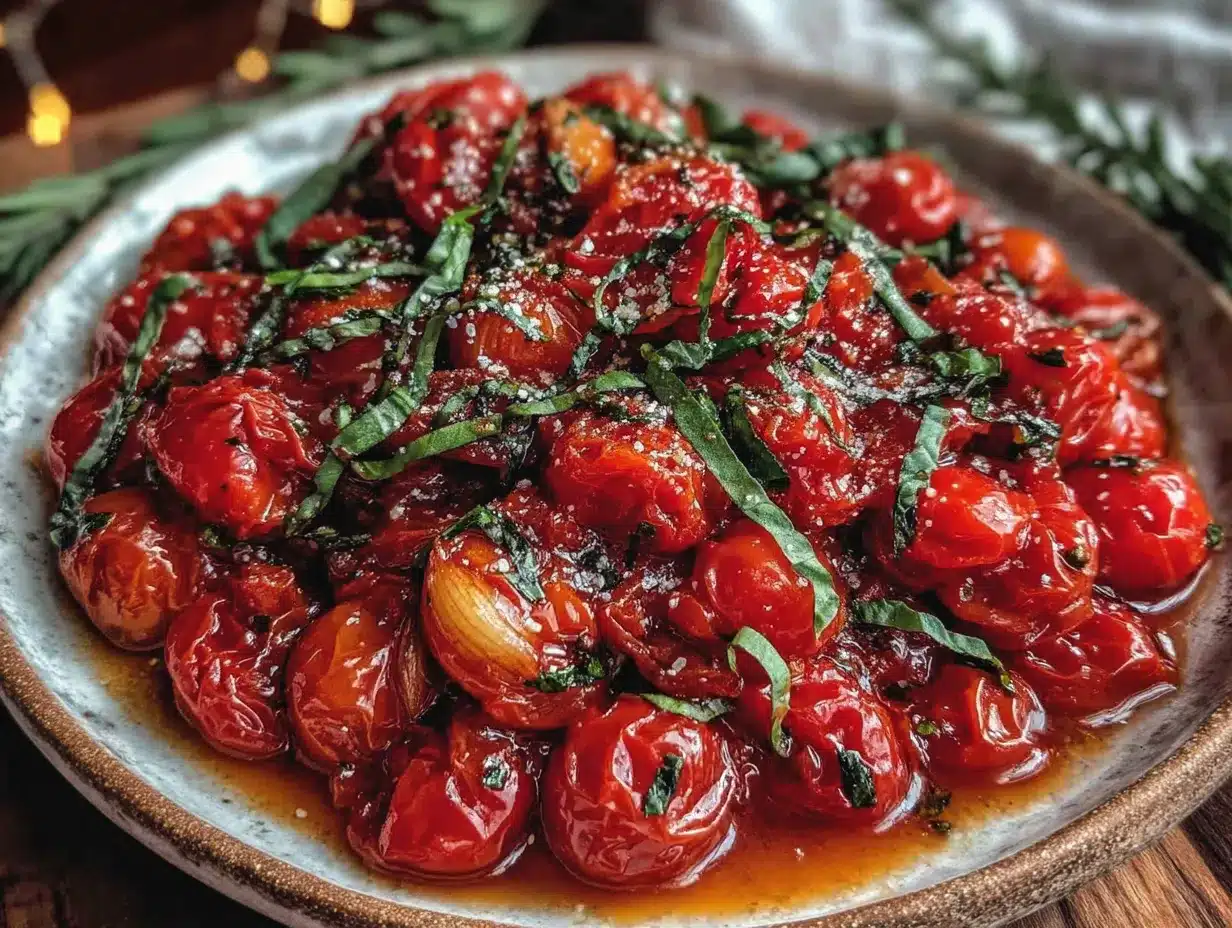
Alright, let’s get to it. This is the easy part. The whole process takes about 10 minutes of active time and 40 minutes of roasting. Here’s how it goes:
- Preheat your oven to 400°F (200°C). Give it a full 15-20 minutes to come to temperature. A hot oven is key for getting those tomatoes to caramelize instead of just steaming.
- Prepare the tomatoes. Rinse your cherry tomatoes and pat them dry. You have a choice here: you can leave them whole, or you can halve them. Leaving them whole takes less time but they’ll take a little longer to roast. Halving them exposes more surface area to the heat, which means more caramelization and a slightly faster cook time. I usually halve them because I want as much of that concentrated flavor as possible. If you’re in a hurry, just leave them whole—they’ll still be delicious.
- Smash the garlic. Take 6-8 cloves of garlic, lay them flat on your cutting board, and give them a firm whack with the side of your chef’s knife. The skin will loosen, and the clove will crack open. Remove the skins. Leave the cloves whole—don’t chop them. They’ll soften and sweeten as they roast.
- Toss everything together. In a large bowl, combine the tomatoes, smashed garlic cloves, ¼ cup of olive oil, 1 teaspoon of kosher salt, ½ teaspoon of black pepper, and the red pepper flakes if you’re using them. Toss gently with your hands or a spatula until everything is evenly coated. Make sure every tomato has a little oil on it—that’s what helps them caramelize.
- Spread on the baking sheet. Pour the tomato mixture onto your lined baking sheet and spread it into a single layer. Don’t overcrowd—the tomatoes need a little space between them to roast properly. If they’re piled on top of each other, they’ll steam instead of roast. If you need to, use two baking sheets. It’s worth the extra pan.
- Roast for 35-40 minutes. Place the sheet in the preheated oven and roast until the tomatoes are wrinkled, blistered, and starting to caramelize around the edges. About halfway through (at the 20-minute mark), give the pan a gentle shake or stir with a spatula to ensure even cooking. The garlic should be soft and golden, not burnt. If your oven runs hot, check at 30 minutes.
- Let it cool slightly. Once the tomatoes are done, pull the pan out of the oven and let it sit for 5 minutes. This helps the juices settle and makes it safer to handle when blending.
- Blend to your desired consistency. If you’re using an immersion blender, blend the tomatoes and garlic right in the pan until you reach your preferred texture. I like mine a little chunky—not completely smooth, but not whole tomatoes either. If you prefer a silky sauce, blend it longer. If you’re using a standard blender, carefully transfer the tomato mixture to the blender jar. Work in batches if needed, and leave the lid slightly ajar to let steam escape. Blend until smooth or chunky, as you like.
- Stir in the fresh basil. Tear the basil leaves by hand (chopping can bruise them) and stir them into the warm sauce. The heat will wilt the basil slightly and release its oils. Taste the sauce and adjust the salt and pepper. If it tastes flat, a tiny splash of balsamic vinegar can brighten it up beautifully.
- Serve or store. Use immediately over pasta, or let it cool completely before transferring to storage containers. The sauce will keep in the fridge for up to a week or in the freezer for up to three months.
Cooking Tips & Techniques
I’ve made this sauce probably two dozen times now, and I’ve learned a few things the hard way. Here are the tips that make the biggest difference:
Don’t skip the single layer. I know it’s tempting to pile all the tomatoes on one sheet to save on dishes, but they won’t roast properly. They’ll steam and release too much liquid, and you’ll end up with watery sauce instead of concentrated, jammy goodness. If you have to, use two pans or roast in batches.
Watch your garlic. Garlic burns faster than tomatoes. If your garlic cloves are small, check the pan at 25 minutes instead of 35. Burnt garlic is bitter and will ruin the sweetness of the sauce. If you see the garlic getting too dark before the tomatoes are done, just remove the cloves from the pan and set them aside, then add them back when you blend.
Taste before you salt. The tomatoes concentrate as they roast, which means their natural saltiness becomes more pronounced. Start with a teaspoon of salt before roasting, then taste and adjust at the end. You can always add more salt, but you can’t take it out.
Use the pan juices. When you blend the sauce, don’t leave any of those caramelized bits stuck to the pan. Scrape them off with a spatula and blend them in. That’s where the deep flavor lives. It’s the same principle as deglazing a pan—those browned bits are pure flavor gold.
Let it rest. The sauce tastes even better the next day. The flavors meld and deepen overnight. So if you can, make it a day ahead. I’ve made it on Sunday and used it for a quick pasta dinner on Monday, and it was noticeably better.
My biggest failure? The first time I made this, I used a standard blender while the tomatoes were still piping hot. I filled the blender too full, put the lid on tight, and when I turned it on—boom. Hot tomato sauce erupted everywhere. It was on the ceiling, on my shirt, on the dog. So please: let the tomatoes cool for at least 5 minutes, work in small batches, and leave the blender lid slightly ajar to release steam. Or just use an immersion blender and avoid the mess entirely.
Variations & Adaptations
This recipe is a fantastic base for experimentation. Here are some of my favorite variations:
Herb Swaps : If you don’t have fresh basil, try fresh oregano, thyme, or rosemary. Each brings a different character. Oregano makes it more Italian, thyme adds an earthy note, and rosemary gives it a piney, almost savory depth. I’ve even used a mix of basil and mint for a surprisingly fresh twist.
Roasted Veggie Add-Ins : Toss in a chopped red bell pepper or a small diced onion along with the tomatoes. They’ll roast at the same time and add sweetness and body. I’ve also added a handful of cherry peppers for a smoky, slightly spicy kick. If you have zucchini or eggplant from the garden, dice them small and add them in—they’ll soften and almost melt into the sauce.
Dairy-Free Creamy Sauce : After blending, stir in a splash of full-fat coconut milk or cashew cream. It turns the sauce into a rich, creamy pink sauce that’s completely dairy-free. I did this once when I had unexpected guests who were lactose-intolerant, and honestly, I liked it better than the original.
Spicy Version : Add a whole dried chili (like a small arbol or chipotle) to the pan before roasting. Remove it before blending, or blend it in if you like heat. You can also stir in a spoonful of harissa paste at the end for a North African-inspired twist.
No-Blend Chunky Sauce : Skip the blending step entirely. After roasting, just crush the tomatoes with a fork or potato masher. You’ll get a rustic, chunky sauce that’s perfect for bruschetta or spooning over grilled fish. This is my go-to when I’m feeling lazy and don’t want to wash the blender.
Freezer-Friendly Packs : Portion the sauce into ice cube trays before freezing. Once frozen, pop the cubes out and store them in a freezer bag. Each cube is about 2 tablespoons—perfect for adding a burst of summer flavor to soups, stews, or scrambled eggs all winter long.
Serving & Storage Suggestions
This sauce is incredibly versatile. Here’s how I like to use it:
Over Pasta : The classic. Toss the warm sauce with al dente spaghetti, bucatini, or pappardelle. Add a splash of pasta water to help the sauce cling to the noodles. Top with fresh Parmesan and extra basil. It’s simple, but it’s perfect. For a heartier meal, try it with creamy Italian sausage stuffed zucchini boats for a complete dinner.
On Pizza or Flatbread : Use it as a pizza sauce instead of canned tomato sauce. Spread it thin on a pre-baked crust, top with mozzarella and fresh basil, and bake until bubbly. It’s especially good on a fig and goat cheese flatbread—the sweetness of the roasted tomatoes pairs beautifully with the tangy cheese.
With Eggs : Spoon the sauce into a small baking dish, crack a few eggs on top, and bake until the whites are set. Serve with crusty bread for dipping. It’s one of my favorite lazy weekend breakfasts.
As a Dip : Serve it warm with crusty bread, crostini, or even tortilla chips. It’s like a sophisticated bruschetta topping. I’ve also used it as a dipping sauce for crispy air fryer boneless chicken thighs—the contrast of the sweet, tangy sauce with the crunchy chicken is amazing.
Storage : Let the sauce cool completely before storing. Transfer to an airtight container and refrigerate for up to 1 week. To freeze, pour into freezer-safe jars or bags, leaving about an inch of headspace for expansion. It will keep for up to 3 months. Thaw overnight in the fridge or reheat directly from frozen in a saucepan over low heat.
Reheating : Reheat gently on the stovetop over medium-low heat, stirring occasionally. If the sauce seems too thick, stir in a splash of water, broth, or olive oil. Don’t microwave it—it can separate and become watery.
Flavor Development : The sauce actually gets better after a day or two in the fridge. The flavors meld and deepen. So don’t be afraid to make it ahead. I often make a double batch on Sunday and use it throughout the week.
Nutritional Information & Benefits
This sauce is not just delicious—it’s genuinely good for you. Here’s a rough estimate per serving (about ½ cup, without pasta):
- Calories : ~90-110
- Fat : ~7g (mostly from heart-healthy olive oil)
- Carbohydrates : ~8g
- Fiber : ~2g
- Sugar : ~5g (natural, from tomatoes)
- Protein : ~2g
- Vitamin C : 20% of the Daily Value
- Vitamin A : 15% of the Daily Value
- Potassium : 10% of the Daily Value
Key health benefits:
- Lycopene : Cherry tomatoes are packed with lycopene, a powerful antioxidant linked to heart health and reduced cancer risk. Roasting actually increases the bioavailability of lycopene, so you absorb more of it.
- Heart-Healthy Fats : The olive oil provides monounsaturated fats that support cardiovascular health.
- Anti-Inflammatory : Garlic and basil both have anti-inflammatory properties. It’s a small thing, but eating this sauce regularly can contribute to overall wellness.
- Low in Added Sugar : Unlike many jarred sauces, this one has zero added sugar. The sweetness comes entirely from the roasted tomatoes.
Dietary Considerations : This recipe is naturally vegan, gluten-free, dairy-free, and paleo-friendly. It contains no common allergens. If you’re watching your sodium, you can reduce the salt or use a salt substitute.
Conclusion
This easy oven-roasted cherry tomato sauce with fresh basil is the kind of recipe that makes you feel like you’ve discovered a secret. It’s so simple that you almost don’t believe it will work, and then you taste it and you’re hooked. It’s the taste of summer, captured and concentrated, ready to be pulled out of the freezer on a cold winter night.
I love this recipe because it reminds me that cooking doesn’t have to be complicated to be extraordinary. Sometimes the best things come from just letting good ingredients do what they do. The oven does the work. The basil does the singing. All you have to do is show up and enjoy.
I’d love to hear how this sauce turns out for you. Did you add any twists? Serve it with something unexpected? Share your version in the comments below—I read every single one, and I’m always looking for new ideas. And if you loved it, please share this recipe with a friend who needs a little summer in their kitchen.
Happy cooking, friends. Go make some sauce.
Frequently Asked Questions
Can I use grape tomatoes instead of cherry tomatoes?
Absolutely. Grape tomatoes are slightly less sweet and a bit firmer, but they work perfectly. You might need to add an extra 5 minutes to the roasting time since they’re a little denser. The flavor will be slightly different—less fruity, more savory—but still delicious.
Do I have to peel the tomatoes before roasting?
Nope. The skins are thin and tender, and they break down during roasting and blending. If you’re making a chunky sauce, you might notice a few tiny pieces of skin, but they’re not unpleasant. If you really want a silky-smooth sauce, you can pass the blended sauce through a fine-mesh sieve, but I never bother.
Can I make this sauce in the slow cooker or Instant Pot?
You can, but the results won’t be the same. The oven’s dry heat is what caramelizes the tomatoes and concentrates their flavor. A slow cooker or Instant Pot creates steam, which will make the sauce more watery. If you’re in a pinch, you can roast the tomatoes in a slow cooker on high with the lid off for about 2 hours, but the texture won’t be as rich.
How long will this sauce last in the fridge?
Stored in an airtight container, it will keep for up to 1 week. I like to pour a thin layer of olive oil on top before sealing—it helps preserve the color and flavor. If it starts to smell or look off, trust your nose and toss it.
Can I can this sauce for long-term storage?
This recipe is not suitable for water bath canning because of the low acid content (the olive oil and basil). For long-term storage, freezing is your best bet. If you want to can a tomato sauce, you’ll need a pressure canner and a tested recipe. This one is strictly for the fridge or freezer.
Pin This Recipe!
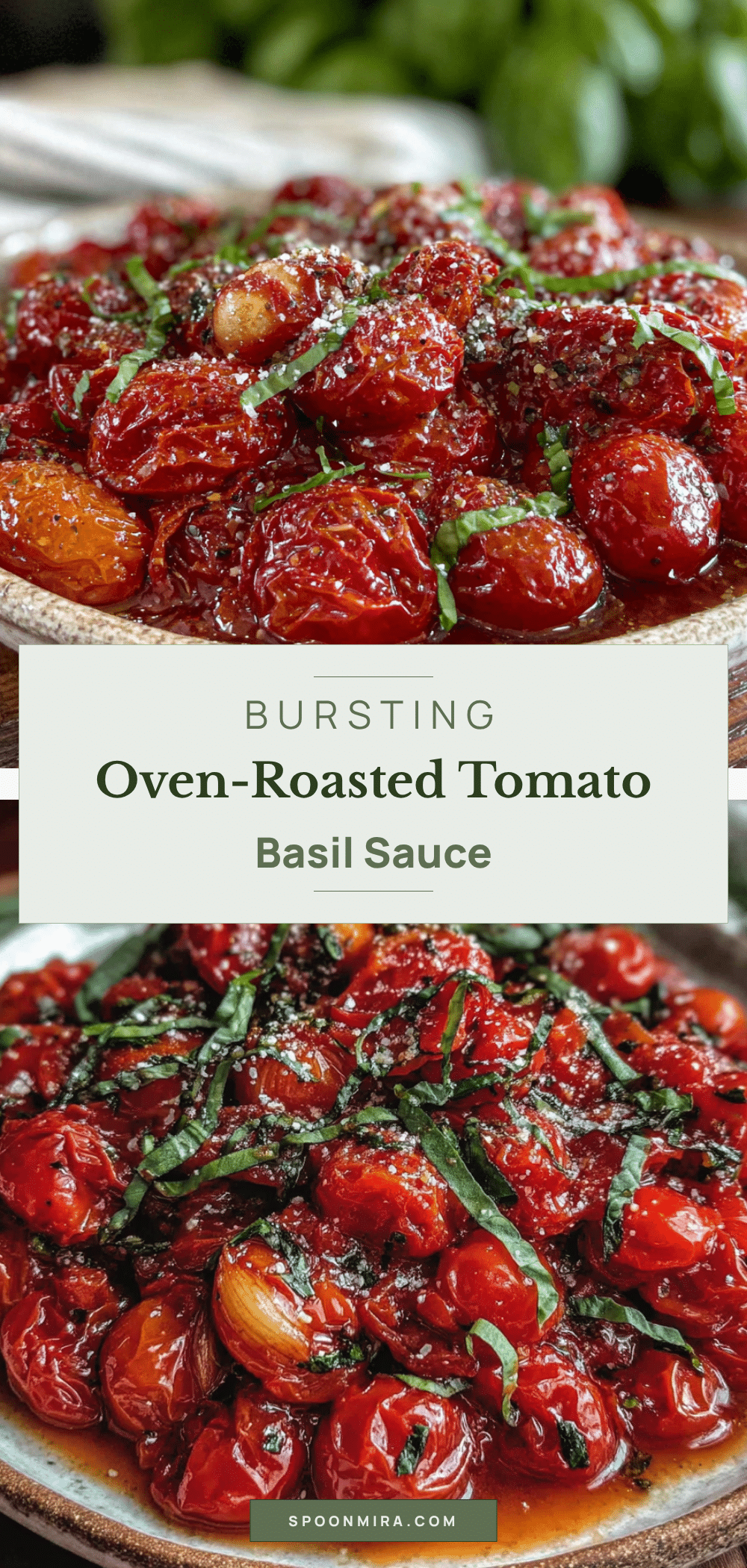
Easy Oven-Roasted Cherry Tomato Sauce with Fresh Basil
A simple, no-fuss sauce that captures the essence of summer. Cherry tomatoes are roasted until caramelized and sweet, then blended with garlic and fresh basil for a bright, versatile sauce perfect for pasta, pizza, or as a dip.
- Prep Time: 10 minutes
- Cook Time: 40 minutes
- Total Time: 50 minutes
- Yield: 4 servings 1x
- Category: Sauce
- Cuisine: Italian
Ingredients
- 2 pounds (about 900g) cherry tomatoes
- 6–8 cloves garlic, smashed
- ¼ cup (60ml) extra-virgin olive oil
- ½ cup (about 15–20 leaves, loosely packed) fresh basil leaves, torn
- 1 teaspoon kosher salt, plus more to taste
- ½ teaspoon freshly ground black pepper
- ¼ teaspoon red pepper flakes (optional)
- 1 tablespoon balsamic vinegar (optional)
Instructions
- Preheat your oven to 400°F (200°C).
- Rinse the cherry tomatoes and pat them dry. You can leave them whole or halve them for faster roasting and more caramelization.
- Smash the garlic cloves with the side of a chef’s knife, remove the skins, and leave the cloves whole.
- In a large bowl, combine the tomatoes, smashed garlic, olive oil, salt, black pepper, and red pepper flakes (if using). Toss gently until everything is evenly coated.
- Spread the tomato mixture in a single layer on a rimmed baking sheet lined with parchment paper or a silicone baking mat. Avoid overcrowding.
- Roast for 35-40 minutes, until the tomatoes are wrinkled, blistered, and starting to caramelize. Halfway through, gently shake the pan or stir with a spatula.
- Remove from the oven and let cool for 5 minutes.
- Blend the tomatoes and garlic using an immersion blender directly in the pan, or carefully transfer to a standard blender (work in batches, leaving the lid slightly ajar to release steam). Blend to your desired consistency—chunky or smooth.
- Stir in the torn fresh basil. Taste and adjust salt and pepper. If desired, add a splash of balsamic vinegar to brighten the flavor.
- Serve immediately over pasta, or let cool completely and store in airtight containers in the refrigerator for up to 1 week or in the freezer for up to 3 months.
Notes
For best results, spread tomatoes in a single layer to avoid steaming. Watch garlic closely as it can burn faster than tomatoes. Let the sauce rest overnight for deeper flavor. When blending hot liquids, work in small batches and leave the blender lid slightly ajar to release steam. The sauce freezes well for up to 3 months.
Nutrition
- Serving Size: ½ cup
- Calories: 90110
- Sugar: 5
- Sodium: 240
- Fat: 7
- Saturated Fat: 1
- Carbohydrates: 8
- Fiber: 2
- Protein: 2
Keywords: roasted cherry tomato sauce, easy tomato sauce, fresh basil sauce, summer tomato sauce, vegan tomato sauce, gluten-free sauce, homemade pasta sauce