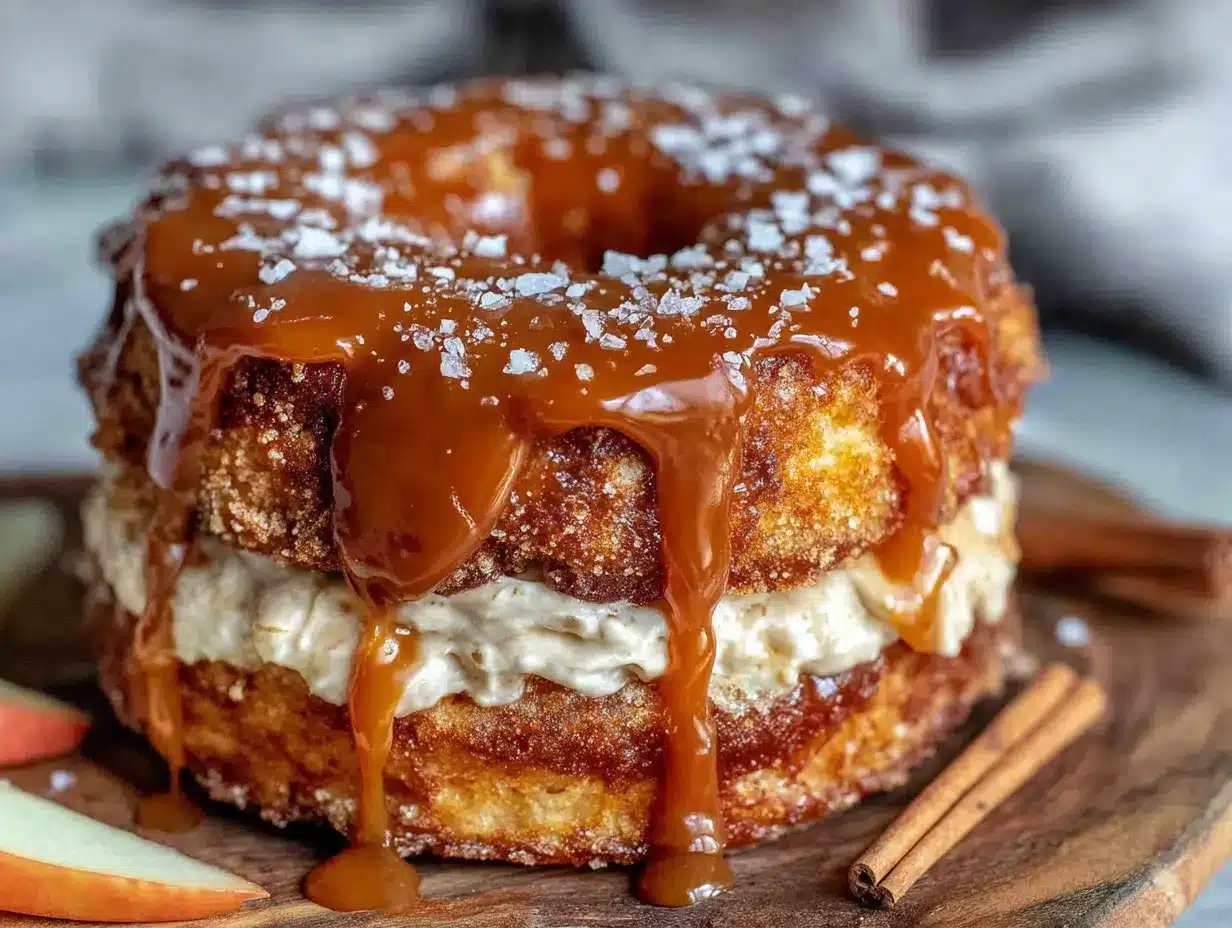
The faint crackle of the sugar-and-spice crust as you press down with a fork—that’s the whole point of this cake. I wasn’t looking for another apple dessert; I was chasing the memory of a bakery donut I’d eaten three autumns ago, one that had a shatteringly crisp shell and a crumb so tender it barely held together. This Easy Salted Caramel Apple Cider Donut Cake was born from that single, stubborn fixation.
I wanted the texture of a fried donut without the mess of hot oil. I wanted the deep, tangy-sweet flavor of boiled-down apple cider, not just apple sauce. And I absolutely needed that ribbon of salted caramel running through the middle, because let’s be honest—plain donuts are fine, but salted caramel makes them unforgettable. I tested this cake four times before I got it right. The first version was too dense. The second was too dry. The third had the perfect crumb but the caramel sank to the bottom. That fourth bake? That was the one where I finally closed my eyes after the first bite and just sat there, fork hovering, not wanting the moment to end.
This cake isn’t trying to be fancy. It’s trying to taste like a Saturday morning in October, when the air is crisp and someone has a batch of apple cider simmering on the stove. It’s the kind of dessert you make for no reason at all—or for every reason, from a casual brunch to a Thanksgiving table where you want something a little different. Trust me when I say this: once you taste that combination of spiced apple cake, sticky caramel, and flaky salt, you’ll understand why I couldn’t stop baking it until it was perfect.
Why You’ll Love This Recipe
I’ve tested this recipe more times than I care to admit, and here’s what I can promise you: it delivers the soul of an apple cider donut in a fraction of the effort. No frying, no donut pan, no standing over a pot of hot oil. Just one bowl, one pan, and a dessert that will make your kitchen smell like heaven.
- Quick & Easy: From mixing bowl to oven in about 15 minutes. The hardest part is waiting for it to bake and cool enough to add the glaze.
- Simple Ingredients: You probably have most of these in your pantry right now. Apple cider is the star, and it’s easy to find at any grocery store this time of year.
- Perfect for Fall Gatherings: This cake shows up at every tailgate, potluck, and family dinner I host from September through November. It never lasts long.
- Crowd-Pleaser: I’ve served it to kids who usually push away anything with fruit, and to adults who swear they’re “not dessert people.” Both groups come back for seconds.
- Unbelievably Delicious: The texture is where this cake shines—crispy, sugary exterior, moist and tender interior, with pockets of gooey salted caramel that surprise you in every slice.
What makes this different from every other apple cider cake out there? It’s the reduction. I boil down the apple cider until it’s thick and intensely flavored, concentrating all that apple goodness into a syrup that gives the cake a depth you just can’t get from regular cider. And the salted caramel? I make it from scratch, but I promise it’s simpler than you think—and so worth the extra few minutes.
This is the kind of dessert that makes you close your eyes after the first bite. It’s comfort food reimagined—familiar enough to feel like home, but special enough to feel like an occasion. Whether you’re serving it for a cozy weekend breakfast or as the grand finale to a fall dinner party, this cake delivers every single time.
What Ingredients You Will Need
This recipe uses simple, wholesome ingredients to deliver that signature donut flavor and satisfying texture. Most of these are pantry staples, and the few that aren’t are easy to find at any grocery store during apple season.
For the Cake
- 2 cups apple cider (use fresh, unfiltered cider for the best flavor—I like a local orchard brand when I can find it)
- 2 cups all-purpose flour (spooned and leveled; don’t scoop straight from the bag or you’ll end up with a dry cake)
- 1 teaspoon baking powder
- 1/2 teaspoon baking soda
- 1/2 teaspoon salt
- 1 1/2 teaspoons ground cinnamon
- 1/2 teaspoon ground nutmeg (freshly grated if you have it—it makes a difference)
- 1/4 teaspoon ground cloves
- 1/2 cup unsalted butter, softened (plus more for greasing the pan)
- 3/4 cup granulated sugar
- 1/2 cup packed light brown sugar
- 2 large eggs, room temperature
- 1 teaspoon vanilla extract
- 1/2 cup buttermilk, room temperature (or make your own by adding 1/2 tablespoon lemon juice to regular milk and letting it sit for 5 minutes)
For the Salted Caramel
- 1/2 cup granulated sugar
- 3 tablespoons unsalted butter, cubed and at room temperature
- 1/4 cup heavy cream, at room temperature
- 1/2 teaspoon flaky sea salt (like Maldon—skip the table salt here)
- 1/2 teaspoon vanilla extract
For the Cinnamon-Sugar Coating
- 1/4 cup unsalted butter, melted
- 1/2 cup granulated sugar
- 1 tablespoon ground cinnamon
One quick note on the apple cider: don’t skip the reduction step. It’s what gives this cake that concentrated, almost caramelized apple flavor. If you’re in a pinch, you can use store-bought apple cider concentrate, but the real stuff boiled down is just better. And for the salted caramel, make sure your butter and cream are at room temperature—cold ingredients will seize the caramel and leave you with a grainy mess. I learned that the hard way on test number two.
Equipment Needed
You don’t need a fancy bakery setup for this cake. Here’s what you’ll need:
- 9-inch round cake pan (or an 8-inch square pan works too—just adjust the baking time by a few minutes)
- Medium saucepan for reducing the apple cider
- Small saucepan for the salted caramel
- Large mixing bowl
- Medium mixing bowl
- Whisk
- Rubber spatula
- Electric hand mixer or stand mixer (you can do it by hand, but a mixer makes the creaming step easier)
- Cooling rack
- Pastry brush (for the melted butter coating)
- Parchment paper (trust me, line your pan)
If you don’t have a pastry brush, you can just dip the cake slices in melted butter. And if you’re using a dark nonstick pan, keep an eye on the cake—it’ll bake faster and might need a few minutes less time. I’ve used my grandmother’s old aluminum cake pan for years, and it gives the most even browning. Sometimes the simplest tools really do work best.
Preparation Method
Take your time with this one. The steps are straightforward, but each one builds on the last to create that perfect donut cake texture.
- Reduce the apple cider (do this first!): Pour the 2 cups of apple cider into a medium saucepan. Bring it to a boil over medium-high heat, then reduce the heat to medium and let it simmer, stirring occasionally, until it reduces to about 1/2 cup. This takes 15-20 minutes. You’ll know it’s ready when it’s thick, syrupy, and smells intensely of apples. Set it aside to cool completely. Don’t rush this—hot cider reduction will mess with your batter temperature.
- Preheat and prep: Preheat your oven to 350°F (175°C). Grease your 9-inch cake pan generously with butter, then line the bottom with a circle of parchment paper. This step is non-negotiable if you want the cake to release cleanly, especially with that caramel layer.
- Whisk the dry ingredients: In a medium bowl, whisk together the flour, baking powder, baking soda, salt, cinnamon, nutmeg, and cloves. Set aside.
- Cream the butter and sugars: In a large bowl, beat the softened butter, granulated sugar, and brown sugar together until light and fluffy, about 3 minutes with an electric mixer. You want it pale and airy—this is where the texture starts.
- Add the eggs and vanilla: Beat in the eggs one at a time, making sure each is fully incorporated before adding the next. Then add the vanilla extract and the cooled apple cider reduction. Mix until just combined. The batter might look a little curdled at this point—that’s normal, don’t panic.
- Alternate the dry and wet ingredients: With the mixer on low speed, add the flour mixture in three additions, alternating with the buttermilk. Start and end with the flour mixture. Mix until just combined—overmixing will make the cake tough. Scrape down the sides of the bowl with a rubber spatula to make sure everything is evenly incorporated.
- Make the salted caramel: While the cake bakes, make the caramel. In a small saucepan, spread the 1/2 cup of sugar in an even layer. Cook over medium heat, without stirring, until the sugar starts to melt around the edges. Swirl the pan gently (don’t stir!) until all the sugar is melted and turns a deep amber color. Remove from heat immediately. Whisk in the cubed butter—it will bubble up violently, that’s okay. Then slowly pour in the heavy cream while whisking constantly. Add the flaky sea salt and vanilla, and whisk until smooth. Let it cool for 10 minutes before using.
- Assemble and bake: Pour half the cake batter into the prepared pan and spread it evenly. Drizzle about 1/3 cup of the salted caramel over the batter (save the rest for drizzling on top). Use a knife to gently swirl the caramel into the batter—don’t overdo it, you want pockets of caramel, not a fully mixed cake. Pour the remaining batter on top and spread gently. Bake for 35-40 minutes, or until a toothpick inserted in the center comes out with just a few moist crumbs. The top should be golden brown and spring back when lightly pressed.
- Cool and coat: Let the cake cool in the pan for 10 minutes, then turn it out onto a cooling rack and remove the parchment paper. While the cake is still warm (but not hot), brush the top and sides with the melted butter for the coating. In a small bowl, mix the 1/2 cup sugar and 1 tablespoon cinnamon. Sprinkle this generously over the buttered cake. Let it cool completely before slicing.
- Drizzle and serve: Once the cake is completely cool, drizzle the remaining salted caramel over the top. Sprinkle with a little extra flaky salt if you’re feeling fancy. Slice and serve—preferably with a hot cup of coffee or a glass of cold milk.
A few sensory cues to watch for: when you’re reducing the cider, it should coat the back of a spoon. When the caramel is done, it should smell nutty and rich, not burnt. And when the cake is baked, your kitchen will smell like a donut shop in the best possible way.
Cooking Tips & Techniques
I’ve made this cake enough times to know where things can go wrong. Here are the lessons I learned the hard way so you don’t have to.
Don’t skip the cider reduction. I know it adds an extra step, but this is where all the flavor lives. Regular apple cider has too much water to give you that intense apple punch. Reducing it concentrates the sugars and flavors, and it also helps keep the cake moist without making it soggy. If you try to use straight cider, you’ll end up with a bland, watery cake.
Room temperature ingredients matter. Cold eggs and cold buttermilk will seize the butter in your creamed mixture, leaving you with a dense, lumpy batter. Take them out of the fridge 30 minutes before you start baking. Same goes for the butter and cream in the caramel—cold dairy will make your caramel seize into a grainy mess. Trust me, I’ve been there.
Watch your caramel like a hawk. Sugar goes from perfectly amber to burnt in about 30 seconds. Once it starts turning color, don’t walk away. Swirl the pan gently and keep an eye on it. If you see wisps of smoke, you’ve gone too far. Start over—it’s not worth salvaging burnt caramel.
Let the cake cool before glazing. I know it’s tempting to pour that caramel all over a warm cake, but it will just slide right off and pool at the bottom. Let the cake cool completely, or at least until it’s just barely warm to the touch. The caramel will cling to the surface and create that beautiful, glossy finish.
Use a sharp knife for slicing. This cake is tender, and a dull knife will squish it. Run your knife under hot water, wipe it dry, and slice with a gentle sawing motion. Clean the blade between cuts for the prettiest slices.
Variations & Adaptations
This cake is forgiving, and I’ve played around with plenty of variations. Here are a few of my favorites:
- Gluten-Free Version: Swap the all-purpose flour for a 1:1 gluten-free baking flour blend. I’ve used Bob’s Red Mill with great results. Add 1/4 teaspoon of xanthan gum if your blend doesn’t already include it. The texture will be slightly more tender, but the flavor is spot on.
- Dairy-Free Adaptation: Use vegan butter and coconut cream (the thick part from a can of full-fat coconut milk) in place of the butter and heavy cream. The caramel will be a little thinner, but it still tastes amazing. Use a dairy-free milk mixed with lemon juice for the buttermilk substitute.
- Spice It Up: Add 1/4 teaspoon of cardamom or allspice to the flour mixture for a more complex spice profile. I did this for a Thanksgiving version last year, and it was a hit.
- Bourbon Caramel: Replace the vanilla extract in the caramel with 1 tablespoon of bourbon. The smoky, oaky notes pair beautifully with the apple cider. Just make sure you cook off the alcohol by letting the caramel simmer for an extra minute.
- Apple Chunks: Fold in 1 cup of finely diced fresh apple (I like Honeycrisp or Fuji) into the batter before baking. It adds little pockets of tender fruit that make the cake even more rustic and satisfying.
One variation I tried last fall that surprised me: I swapped half the all-purpose flour for whole wheat pastry flour. The cake came out slightly denser but with a nutty, wholesome flavor that worked perfectly with the caramel. It’s not for everyone, but if you like a heartier dessert, give it a shot.
Serving & Storage Suggestions
This cake is at its absolute best the day it’s made, when the cinnamon-sugar coating is still slightly crisp and the caramel is glossy and soft. Serve it at room temperature or slightly warm—pop a slice in the microwave for 10 seconds if you want that just-baked feel.
For a truly indulgent presentation, serve each slice with a dollop of lightly sweetened whipped cream or a scoop of vanilla bean ice cream. The cold creaminess against the spiced cake and salty caramel is pure magic. A drizzle of extra caramel on the plate never hurts either.
This cake pairs beautifully with a hot cup of spiced chai, a dark roast coffee, or a glass of cold apple cider. If you’re serving it for brunch, a side of crispy bacon or cozy slow cooker kielbasa and potato soup makes for a surprisingly good savory-sweet combo.
Storage: Keep the cake in an airtight container at room temperature for up to 3 days. The cinnamon-sugar coating will soften over time, but that’s not a bad thing—it starts to taste more like a traditional coffee cake. If you’ve already added the caramel drizzle, store the cake in the refrigerator to keep the caramel from getting too sticky. Bring slices to room temperature before serving.
Freezing: This cake freezes beautifully. Wrap the completely cooled cake (without the caramel drizzle) tightly in plastic wrap, then foil, and freeze for up to 3 months. When you’re ready to serve, thaw it overnight in the refrigerator, then warm it in a 300°F oven for 10 minutes before adding the caramel and coating. I’ve done this for holiday prep, and no one ever knows it wasn’t baked that morning.
The flavors actually deepen after a day or two—the apple cider reduction continues to meld with the spices, and the caramel soaks into the cake just enough to make every bite even more delicious. If you can resist eating it all on day one, you’ll be rewarded on day two.
Nutritional Information & Benefits
Let’s be real—this is a treat, not a health food. But that doesn’t mean it can’t have some redeeming qualities. Here’s the approximate nutritional breakdown for one slice (based on 10 servings):
- Calories: 380
- Fat: 18g
- Carbohydrates: 53g
- Protein: 4g
- Fiber: 1g
- Sugar: 38g
- Sodium: 280mg
The apple cider reduction does provide a small amount of vitamin C and antioxidants, and the cinnamon has anti-inflammatory properties. The buttermilk adds a touch of calcium and probiotics (if you use real cultured buttermilk). And hey, apples are fruit—so technically, this counts as a serving of fruit, right?
For those watching their sugar intake, you can reduce the granulated sugar in the cake to 1/2 cup and skip the cinnamon-sugar coating. The cake will be less sweet, but the caramel will still provide plenty of sweetness. If you’re gluten-sensitive, use the gluten-free flour blend I mentioned in the variations section. And if you’re dairy-free, the substitutions I listed work beautifully.
My personal take? This is a dessert for celebrating the season. I don’t make it every week, but when I do, I savor every single bite. Life’s too short to skip the caramel.
Conclusion
This Easy Salted Caramel Apple Cider Donut Cake is everything I love about fall baking—warm spices, concentrated apple flavor, and that irresistible combination of sweet and salty. It’s the kind of dessert that makes people close their eyes and go quiet for a second, and honestly, that’s the highest compliment a baker can get.
I’ve made this cake for brunches, for Thanksgiving, for random Tuesday nights when I just needed something cozy. Every single time, it delivers. The texture is perfect, the flavor is deep and complex, and the salted caramel takes it from “good” to “I need the recipe” in one bite.
I’d love to hear how yours turns out. Did you try a variation? Add bourbon to the caramel? Fold in some fresh apple chunks? Drop a comment below and let me know—I read every single one, and I love seeing how you make this recipe your own. And if you’re looking for more fall inspiration, don’t miss my cozy baked apple cider donuts with cinnamon sugar or these perfect brown butter pumpkin bars with cream cheese frosting for even more seasonal sweetness.
Happy baking, friends. May your kitchen smell like apples and cinnamon, and may your caramel never burn.
Frequently Asked Questions
Can I use store-bought caramel sauce instead of making my own?
You can, but I really recommend making the homemade version. Store-bought caramel is usually too thick and sweet, and it doesn’t have that same complex, buttery flavor. The homemade version takes about 10 minutes and makes a noticeable difference. If you’re in a real pinch, look for a high-quality salted caramel sauce—preferably one that lists cream and butter as the first ingredients.
Can I make this cake ahead of time for a party?
Absolutely. Bake the cake a day ahead, but don’t add the caramel drizzle or the cinnamon-sugar coating until right before serving. Store the naked cake wrapped tightly at room temperature. When you’re ready to serve, brush it with melted butter, coat it in the cinnamon sugar, and drizzle the caramel on top. It’ll taste just-baked.
Why did my caramel turn grainy?
Grainy caramel usually happens when sugar crystals form during cooking. To prevent this, make sure your saucepan and utensils are completely clean—any residue can cause crystallization. Also, don’t stir the sugar while it’s melting; just swirl the pan gently. If your caramel does seize, you can sometimes save it by adding a splash of warm water and whisking vigorously over low heat.
Can I use apple juice instead of apple cider?
Technically yes, but the flavor won’t be the same. Apple juice is usually filtered and sweeter, with less of that tangy, complex apple flavor that cider has. If you only have juice, reduce it the same way, and consider adding a tablespoon of lemon juice to brighten the flavor. But honestly, cider is worth seeking out for this recipe.
How do I know when the cake is done baking?
Insert a toothpick or a thin skewer into the center of the cake. If it comes out with just a few moist crumbs clinging to it (not wet batter), the cake is done. You can also gently press the top—it should spring back. If your finger leaves an indent, it needs more time. Start checking at 35 minutes, and don’t overbake, or the cake will be dry.
Pin This Recipe!
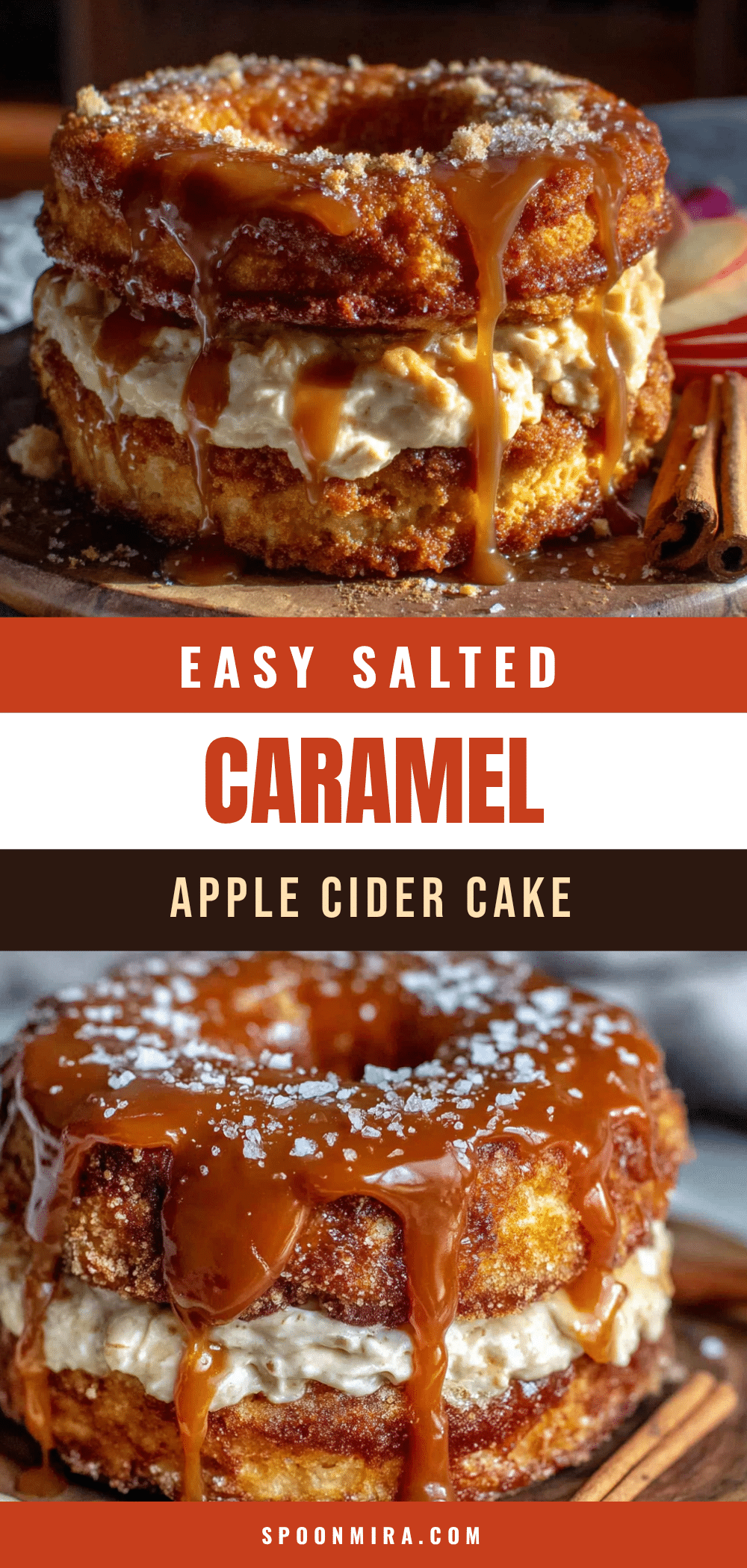
Easy Salted Caramel Apple Cider Donut Cake – Best Fall Dessert

This Easy Salted Caramel Apple Cider Donut Cake delivers the soul of an apple cider donut in a fraction of the effort. No frying, no donut pan, just one bowl, one pan, and a dessert that will make your kitchen smell like heaven.
- Prep Time: 15 minutes
- Cook Time: 35-40 minutes
- Total Time: 50-55 minutes
- Yield: 10 servings 1x
- Category: Dessert
- Cuisine: American
Ingredients
- 2 cups apple cider
- 2 cups all-purpose flour
- 1 teaspoon baking powder
- 1/2 teaspoon baking soda
- 1/2 teaspoon salt
- 1 1/2 teaspoons ground cinnamon
- 1/2 teaspoon ground nutmeg
- 1/4 teaspoon ground cloves
- 1/2 cup unsalted butter, softened
- 3/4 cup granulated sugar
- 1/2 cup packed light brown sugar
- 2 large eggs, room temperature
- 1 teaspoon vanilla extract
- 1/2 cup buttermilk, room temperature
- 1/2 cup granulated sugar (for salted caramel)
- 3 tablespoons unsalted butter, cubed and at room temperature (for salted caramel)
- 1/4 cup heavy cream, at room temperature (for salted caramel)
- 1/2 teaspoon flaky sea salt (for salted caramel)
- 1/2 teaspoon vanilla extract (for salted caramel)
- 1/4 cup unsalted butter, melted (for cinnamon-sugar coating)
- 1/2 cup granulated sugar (for cinnamon-sugar coating)
- 1 tablespoon ground cinnamon (for cinnamon-sugar coating)
Instructions
- Reduce the apple cider: Pour 2 cups of apple cider into a medium saucepan. Bring to a boil over medium-high heat, then reduce heat to medium and simmer, stirring occasionally, until reduced to about 1/2 cup (15-20 minutes). Set aside to cool completely.
- Preheat oven to 350°F (175°C). Grease a 9-inch round cake pan with butter and line the bottom with parchment paper.
- In a medium bowl, whisk together flour, baking powder, baking soda, salt, cinnamon, nutmeg, and cloves. Set aside.
- In a large bowl, beat softened butter, granulated sugar, and brown sugar together until light and fluffy, about 3 minutes with an electric mixer.
- Beat in eggs one at a time, then add vanilla extract and cooled apple cider reduction. Mix until just combined.
- With mixer on low speed, add flour mixture in three additions, alternating with buttermilk, starting and ending with flour. Mix until just combined.
- Make the salted caramel: In a small saucepan, spread 1/2 cup sugar in an even layer. Cook over medium heat without stirring until sugar melts around edges. Swirl pan gently until sugar is melted and deep amber. Remove from heat. Whisk in cubed butter, then slowly pour in heavy cream while whisking. Add flaky sea salt and vanilla, whisk until smooth. Let cool 10 minutes.
- Pour half the cake batter into prepared pan. Drizzle about 1/3 cup salted caramel over batter and gently swirl with a knife. Pour remaining batter on top and spread gently.
- Bake for 35-40 minutes, until a toothpick inserted in center comes out with a few moist crumbs. Let cool in pan 10 minutes, then turn out onto a cooling rack and remove parchment.
- While cake is still warm, brush top and sides with melted butter. Mix 1/2 cup sugar and 1 tablespoon cinnamon, then sprinkle generously over buttered cake. Let cool completely.
- Once cool, drizzle remaining salted caramel over top. Sprinkle with extra flaky salt if desired. Slice and serve.
Notes
Don’t skip the cider reduction—it concentrates the apple flavor. Room temperature ingredients are crucial for proper texture. Watch caramel carefully as it can burn quickly. Let cake cool completely before glazing to prevent caramel from sliding off.
Nutrition
- Serving Size: 1 slice
- Calories: 380
- Sugar: 38
- Sodium: 280
- Fat: 18
- Saturated Fat: 11
- Carbohydrates: 53
- Fiber: 1
- Protein: 4
Keywords: apple cider donut cake, salted caramel cake, fall dessert, apple cake, cinnamon sugar cake, easy cake recipe