I burned my garlic butter shrimp pasta four times before I finally figured out what I was doing wrong. And honestly? I still ate the burned versions because even scorched, the combination of buttery garlic sauce and tender shrimp was hard to resist. But there is a difference between edible and actually good, and let me tell you, once I got the timing right, this dish became my weeknight emergency button.
The first time I attempted this recipe, I threw everything into the pan at once like I was making a stir-fry. Big mistake. The garlic turned bitter, the shrimp turned rubbery, and the pasta soaked up all the butter before I even had a chance to toss it properly. It was a sad, oily mess that tasted more like regret than dinner.
But I kept coming back to it. There is something about quick garlic butter shrimp pasta that feels like a little luxury on a regular Tuesday. It is the kind of meal that makes you feel like you have your life together, even when you are standing in your kitchen in sweatpants with dish soap on your shirt. And once I learned to respect the sequence of events, everything clicked.
Now this recipe is my go-to when I need dinner on the table in fifteen minutes flat. No complicated techniques, no obscure ingredients, and no stress. Just perfectly cooked shrimp, al dente pasta, and a garlic butter sauce that coats every single strand. It is simple enough for a beginner but satisfying enough for someone who actually knows what they are doing.
Why You Will Love This Recipe
I have tested this quick garlic butter shrimp pasta more times than I care to admit, and every version taught me something new. The version I am sharing today is the one that finally made me stop tweaking and start eating.
- Ready in 15 Minutes: From the moment you start boiling water to the moment you sit down to eat, this recipe takes exactly fifteen minutes. That is faster than takeout delivery and way more satisfying.
- Simple Pantry Ingredients: You probably already have garlic, butter, pasta, and lemon in your kitchen right now. The only thing you might need to pick up is shrimp, which freezes beautifully and thaws in minutes.
- Perfect for Busy Weeknights: When you are tired, hungry, and running on fumes, this is the recipe that saves dinner without making you feel like you cooked all day.
- Restaurant-Quality at Home: The secret is in the technique, not the ingredients. With a few simple tricks, you get that glossy, emulsified sauce that makes pasta taste like it came from a fancy Italian spot.
- Crowd-Pleasing Flavor: Garlic and butter are a universal love language. Even picky eaters tend to clean their plates with this one.
What makes this recipe different from every other shrimp pasta out there is the timing. Most recipes tell you to cook the shrimp separately, then toss everything together at the end. That works, but it misses the magic. By finishing the pasta directly in the garlic butter pan with a splash of pasta water, you create a sauce that clings to every strand instead of pooling at the bottom of the bowl. It is a small shift that makes a huge difference.
This is the kind of meal that makes you close your eyes after the first bite. It is comfort food that feels elegant, simple food that tastes special. And on those nights when cooking feels like a chore, this recipe reminds you why you actually enjoy being in the kitchen.
What Ingredients You Will Need
This recipe uses straightforward ingredients that work together to create something greater than the sum of their parts. No fancy shopping lists, no specialty items you will use once and forget about.
- Shrimp (1 pound, peeled and deveined): I prefer medium to large shrimp for this dish. They cook quickly and stay tender if you do not overcook them. Look for raw shrimp with the tails on or off, whichever you prefer. I usually buy frozen shrimp and thaw them under cold running water while the pasta boils. It saves time and money.
- Pasta (8 ounces, any long shape): Linguine, spaghetti, or fettuccine all work beautifully. The key is using a shape that lets the sauce cling to every strand. I recommend Barilla or De Cecco for consistent texture, but any good-quality pasta will do.
- Butter (4 tablespoons, unsalted): Butter is the backbone of this sauce. Unsalted gives you control over the salt level. If you only have salted butter on hand, just reduce the added salt later.
- Garlic (4-5 cloves, minced): Fresh garlic is non-negotiable here. Pre-minced jarred garlic has a different flavor and tends to burn faster. Take the extra thirty seconds to mince fresh cloves. Your taste buds will thank you.
- Olive Oil (2 tablespoons, extra virgin): A little olive oil keeps the butter from browning too quickly and adds fruity depth to the sauce.
- Red Pepper Flakes (½ teaspoon, optional): This gives the dish a gentle warmth without making it spicy. Leave it out if you prefer a milder flavor, or add more if you like heat.
- Lemon (1 whole): You will use both the zest and the juice. The acidity cuts through the richness of the butter and keeps the dish bright and balanced.
- Fresh Parsley (¼ cup, chopped): Parsley adds color and freshness. Flat-leaf Italian parsley has the best flavor, but curly parsley works in a pinch.
- Pasta Water (½ cup, reserved): This is the secret weapon. The starchy water helps emulsify the butter and garlic into a silky sauce that coats the pasta perfectly.
- Salt and Black Pepper (to taste): Season the pasta water generously, and season the shrimp right before they hit the pan.
Equipment Needed
You do not need a professional kitchen to make this quick garlic butter shrimp pasta. Most of these tools are probably already in your drawer.
- Large Pot: For boiling the pasta. Make sure it is big enough that the pasta has room to move around without sticking together.
- Large Skillet or Saute Pan: A 12-inch skillet gives you enough surface area to cook the shrimp in a single layer. Nonstick works fine, but stainless steel or cast iron will give you better browning.
- Colander: For draining the pasta. Do not rinse it, you want that starch to help the sauce stick.
- Measuring Cups and Spoons: Accuracy matters, especially with the pasta water and butter.
- Chef’s Knife and Cutting Board: For mincing garlic, chopping parsley, and zesting the lemon.
- Microplane or Zester: A microplane makes quick work of lemon zest and gives you fine, fragrant shreds that melt into the sauce.
- Tongs: For tossing the pasta with the sauce. Tongs give you better control than a spoon.
If you do not have a microplane, you can use the small holes on a box grater. And if you do not have a large skillet, you can cook the shrimp in batches to avoid overcrowding. Overcrowding leads to steaming instead of searing, and that is how you end up with bland, rubbery shrimp.
Preparation Method
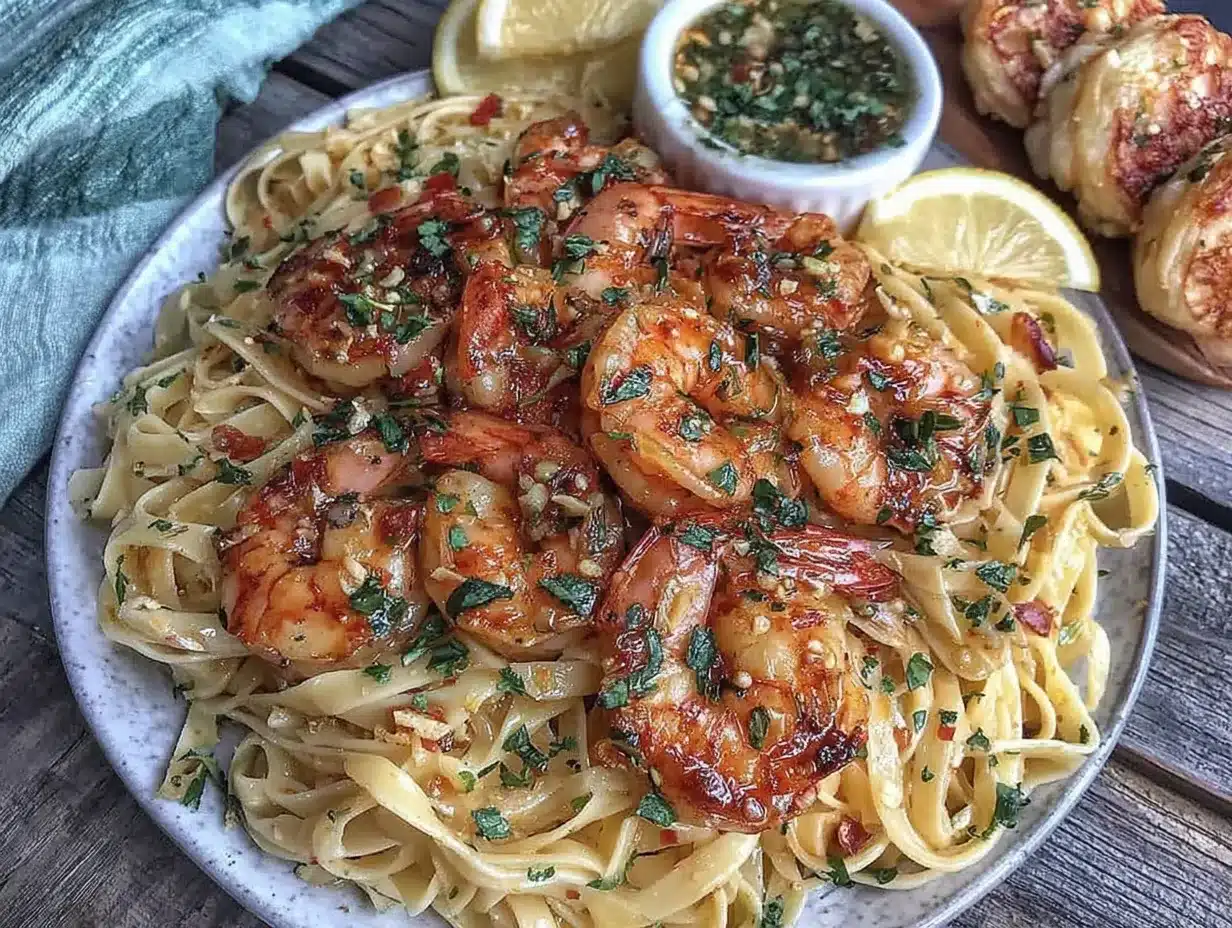
This is where everything comes together. Follow these steps in order, and you will have dinner on the table in fifteen minutes flat.
- Bring a large pot of salted water to a rolling boil. Use about a tablespoon of salt per gallon of water. The pasta water should taste like the sea. Drop in your 8 ounces of pasta and cook according to package directions until al dente. For most dried pastas, that is about 8 to 10 minutes.
- While the pasta cooks, pat your shrimp dry with paper towels. Moisture is the enemy of browning. Dry shrimp will sear beautifully; wet shrimp will steam and turn rubbery. Season them lightly with salt and a pinch of black pepper.
- Heat your large skillet over medium-high heat. Add 2 tablespoons of olive oil and 2 tablespoons of butter. Swirl the pan until the butter melts and starts to foam. The oil raises the smoke point of the butter, so you get nutty flavor without burning.
- Add the shrimp to the pan in a single layer. Cook for 90 seconds on the first side without moving them. You want a golden-brown crust. Flip each shrimp and cook for another 60 to 90 seconds, until they are pink and opaque. Transfer the cooked shrimp to a plate and set aside.
- Reduce the heat to medium-low. Add the remaining 2 tablespoons of butter to the pan. Once it melts, add the minced garlic and red pepper flakes. Stir constantly for about 30 seconds until the garlic is fragrant. Do not walk away here, garlic burns fast and turns bitter.
- By now, your pasta should be al dente. Use a measuring cup to scoop out about ½ cup of the starchy pasta water before draining. Drain the pasta in a colander, but do not rinse it.
- Add the drained pasta directly to the skillet with the garlic butter. Toss with tongs to coat every strand. Pour in about ¼ cup of the reserved pasta water and continue tossing. The starch in the water will emulsify with the butter to create a silky, glossy sauce.
- Return the cooked shrimp to the pan. Add the lemon zest, lemon juice, and half the chopped parsley. Toss everything together for about 30 seconds until the shrimp are warmed through and the sauce coats the pasta evenly.
- Taste and adjust seasoning. Add more salt, black pepper, or lemon juice as needed. If the sauce seems too thick, add another splash of pasta water. It should be loose enough to coat the pasta without pooling.
- Divide among warm bowls. Top with the remaining parsley and a few extra red pepper flakes if you like heat. Serve immediately.
One thing I learned the hard way: do not rinse the pasta. That starch is liquid gold for your sauce. And if you are wondering why your sauce sometimes looks greasy instead of creamy, you probably need more pasta water. The starch is what binds the butter and water together into a cohesive sauce. Without it, the butter just slides off the pasta and sits at the bottom of the bowl.
Cooking Tips & Techniques
I have made this quick garlic butter shrimp pasta more times than I can count, and I have made every mistake in the book. Here is what I learned so you do not have to repeat my errors.
Pat your shrimp dry. This is the single most important step for getting that beautiful golden sear. If your shrimp are wet, they will steam in the pan and turn pale and rubbery. Take the extra twenty seconds to blot them with paper towels. It makes a world of difference.
Do not overcook the shrimp. Shrimp cook fast, and they keep cooking even after you take them off the heat. The moment they turn pink and curl into a loose C shape, they are done. If they curl into a tight O, you have gone too far. I pull mine off the heat just before they are fully cooked through because they will finish cooking when I toss them back with the pasta.
Reserve more pasta water than you think you need. I always scoop out a full cup, even though I usually only use half. It is better to have extra than to be scrambling for more after you have already drained the pot. The starchy water is your best friend for creating that restaurant-quality sauce.
Use fresh garlic, not pre-minced. I know it is tempting to reach for the jar, but pre-minced garlic has a different flavor profile and tends to burn faster because it is packed in liquid. Fresh garlic takes thirty seconds to mince and tastes infinitely better.
Work in batches if needed. If your skillet is not large enough to hold all the shrimp in a single layer, cook them in two batches. Overcrowding drops the pan temperature and causes the shrimp to steam instead of sear. A little extra effort now means significantly better texture later.
Finish the pasta in the sauce. This is the technique that separates good pasta from great pasta. By tossing the drained pasta directly in the garlic butter pan with pasta water, you allow the pasta to absorb some of the sauce and the starch to thicken everything into a cohesive dish. It is the same technique Italian grandmothers have been using forever, and it works.
Variations & Adaptations
One of the best things about this quick garlic butter shrimp pasta is how adaptable it is. I have made versions that look completely different from the original, and they were all delicious in their own way.
Make it creamy: Add ¼ cup of heavy cream along with the pasta water for a richer, more indulgent sauce. This turns the dish into something closer to an Alfredo-style pasta. I do this when I am craving something extra comforting on a cold night.
Go gluten-free: Swap the regular pasta for your favorite gluten-free brand. Just be careful not to overcook it, gluten-free pasta can go from al dente to mush very quickly. Reserve extra pasta water because gluten-free pasta tends to absorb more liquid.
Add vegetables: Toss in a handful of fresh spinach or cherry tomatoes when you add the garlic. The spinach wilts in seconds, and the tomatoes soften and burst, adding sweetness and color. I have also added asparagus tips and frozen peas with great results.
Try a different protein: If shrimp is not your thing, this recipe works beautifully with chicken, scallops, or even firm tofu. For chicken, slice it thin and cook it through before starting the garlic butter. For scallops, sear them just like the shrimp.
Boost the heat: If you like spicy food, add a full teaspoon of red pepper flakes or a minced fresh chili along with the garlic. You can also drizzle chili oil over the finished dish for an extra kick.
Make it dairy-free: Substitute the butter with a good-quality vegan butter or olive oil. The sauce will be slightly different in texture, but still delicious. I have used Miyoko’s vegan butter with excellent results.
I once made this recipe with leftover grilled corn and black beans I had in the fridge, and it turned into something completely unexpected but wonderful. It reminded me that recipes are just guidelines, and some of the best meals come from using what you have on hand. If you are looking for another quick and satisfying meal, try my one-pan garlic butter chicken and rice for a similar flavor profile with a different protein.
Serving & Storage Suggestions
This quick garlic butter shrimp pasta is best served immediately, while the sauce is still glossy and the shrimp are tender. But I understand that life happens, and sometimes you end up with leftovers.
Serving temperature: Serve this pasta hot, straight from the pan. If it sits too long, the sauce will start to thicken as the pasta absorbs the liquid. If you need to hold it for a few minutes, toss it with a splash of reserved pasta water right before serving to loosen it up.
Presentation: Twirl the pasta into neat nests using tongs or a carving fork. Arrange the shrimp on top or around the edges so they are visible. Finish with a sprinkle of fresh parsley, a pinch of red pepper flakes, and a wedge of lemon on the side. It looks impressive with almost no effort.
What to serve alongside: A simple green salad with lemon vinaigrette is my go-to side. The acidity cuts through the richness of the butter. Crusty bread is also excellent for sopping up any leftover sauce. If you want to round out the meal, try serving it with my fresh loaded cowboy caviar for a bright, colorful starter.
Storage: Store leftovers in an airtight container in the refrigerator for up to 2 days. The shrimp will lose some of their texture upon reheating, but the flavor will still be good. I do not recommend freezing this dish because the texture of both the shrimp and the pasta will suffer significantly.
Reheating: The best way to reheat is in a skillet over medium-low heat with a splash of water or chicken broth. Toss gently until warmed through. Microwaving works in a pinch, but it tends to make the shrimp rubbery and the pasta mushy. If you must use the microwave, do it in short bursts and stir between each one.
Flavor development: Honestly, this dish is at its absolute best the moment it is made. The flavors do not improve with time the way a stew or braise might. That is the trade-off for a recipe that comes together in fifteen minutes. Eat it fresh, and you will not be disappointed.
Nutritional Information & Benefits
This quick garlic butter shrimp pasta strikes a nice balance between indulgence and nutrition. It feels like a treat, but it is not as heavy as you might think.
Estimated nutritional values per serving (based on 4 servings):
- Calories: 485
- Protein: 32g
- Carbohydrates: 45g
- Fat: 18g
- Fiber: 3g
- Sodium: 620mg
Health benefits: Shrimp is an excellent source of lean protein, providing about 20 grams per serving with very little saturated fat. It is also rich in selenium, vitamin B12, and iodine. Garlic has been studied for its potential immune-boosting and anti-inflammatory properties. The olive oil adds heart-healthy monounsaturated fats.
Dietary considerations: This recipe is naturally low in sugar and can be made gluten-free with a simple pasta swap. It is not suitable for a vegan diet because of the shrimp and butter, but you could adapt it with plant-based alternatives. If you are watching your sodium, use unsalted butter and go light on the added salt, the pasta water and lemon juice provide plenty of flavor on their own.
Potential allergens: This recipe contains shellfish (shrimp), dairy (butter), and gluten (pasta). If you have allergies, use the substitutions mentioned in the variations section. I personally love that this meal feels satisfying without being heavy, which is rare for a pasta dish.
Conclusion
This quick garlic butter shrimp pasta is the recipe I turn to when I need dinner to be easy but not boring. It is fast enough for a busy weeknight but good enough to serve to guests who think you spent way more time than you actually did. The combination of tender shrimp, al dente pasta, and that glossy garlic butter sauce is just about perfect in my book.
I want you to make this recipe your own. Add extra lemon if you like things bright. Pile on the red pepper flakes if you crave heat. Toss in whatever vegetables are lingering in your fridge. The framework is forgiving, and the results are always satisfying.
I would love to hear how it turns out for you. Did you add your own twist? Did it save your dinner on a chaotic night? Drop a comment below and let me know. And if you are looking for another quick weeknight dinner that delivers big flavor with minimal effort, you might enjoy my easy slow cooker beef and broccoli for those days when you want dinner to cook itself.
Now go make yourself some garlic butter shrimp pasta. You deserve a good meal, and this one takes just fifteen minutes. Happy cooking!
Frequently Asked Questions
Can I use frozen shrimp without thawing first?
You can, but the texture will not be as good. Frozen shrimp release a lot of water as they thaw in the pan, which prevents browning and can make the sauce watery. If you are in a hurry, thaw them under cold running water for about five minutes, then pat them dry before cooking.
What is the best pasta shape for this recipe?
Long, thin shapes like linguine, spaghetti, or fettuccine work best because they allow the garlic butter sauce to coat every strand evenly. Short shapes like penne or rotini will work in a pinch, but the sauce distribution will not be as consistent.
Can I make this recipe dairy-free?
Absolutely. Substitute the butter with a good-quality vegan butter or use all olive oil instead. The sauce will be slightly less rich, but still delicious. I have made it with Miyoko’s vegan butter and it was very close to the original.
Why did my garlic turn bitter?
Garlic burns quickly, especially in butter. If your heat was too high or you cooked the garlic for more than 30 to 45 seconds, it likely burned. Always add the garlic after lowering the heat, and stir constantly. Burnt garlic has a sharp, acrid flavor that cannot be saved.
How do I know when the shrimp are fully cooked?
Perfectly cooked shrimp turn pink and opaque throughout. They will curl into a loose C shape when done. If they curl into a tight O, they are overcooked. The cooking time is very short, about 90 seconds per side for medium shrimp. When in doubt, pull them off the heat a little early because they will continue cooking in the residual heat.
Pin This Recipe!
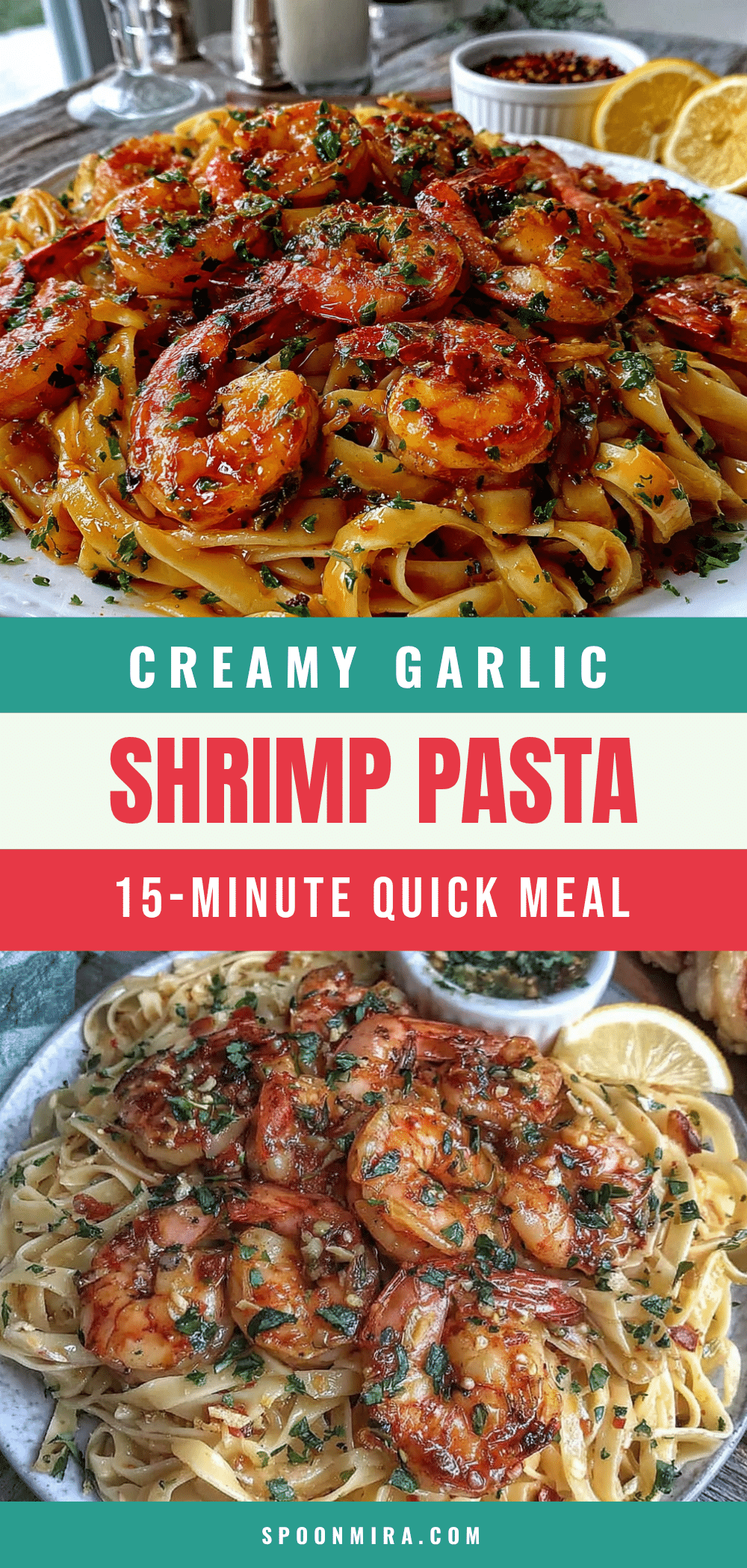
Quick Garlic Butter Shrimp Pasta: Easy 15-Min Recipe
This quick garlic butter shrimp pasta is a 15-minute weeknight dinner that combines tender shrimp, al dente pasta, and a glossy garlic butter sauce. It’s simple enough for beginners but satisfying enough for experienced cooks.
- Prep Time: 5 minutes
- Cook Time: 10 minutes
- Total Time: 15 minutes
- Yield: 4 servings 1x
- Category: Main Course
- Cuisine: Italian
Ingredients
- 1 pound shrimp, peeled and deveined
- 8 ounces pasta (linguine, spaghetti, or fettuccine)
- 4 tablespoons unsalted butter
- 4–5 cloves garlic, minced
- 2 tablespoons extra virgin olive oil
- ½ teaspoon red pepper flakes (optional)
- 1 lemon (zest and juice)
- ¼ cup fresh parsley, chopped
- ½ cup reserved pasta water
- Salt and black pepper to taste
Instructions
- Bring a large pot of salted water to a rolling boil. Cook pasta according to package directions until al dente, about 8-10 minutes.
- While pasta cooks, pat shrimp dry with paper towels and season lightly with salt and pepper.
- Heat a large skillet over medium-high heat. Add olive oil and 2 tablespoons butter. Swirl until butter melts and foams.
- Add shrimp in a single layer. Cook 90 seconds on first side without moving, then flip and cook 60-90 seconds until pink and opaque. Transfer to a plate.
- Reduce heat to medium-low. Add remaining 2 tablespoons butter. Once melted, add minced garlic and red pepper flakes. Stir constantly for 30 seconds until fragrant.
- Reserve ½ cup pasta water before draining. Drain pasta (do not rinse).
- Add drained pasta to skillet with garlic butter. Toss with tongs. Add ¼ cup reserved pasta water and toss until sauce is glossy.
- Return shrimp to pan. Add lemon zest, lemon juice, and half the parsley. Toss 30 seconds until shrimp are warmed through.
- Taste and adjust seasoning. Add more pasta water if sauce is too thick.
- Divide among bowls. Top with remaining parsley and extra red pepper flakes if desired. Serve immediately.
Notes
Do not rinse the pasta; the starch helps emulsify the sauce. Pat shrimp dry for best browning. Use fresh garlic, not pre-minced. Reserve more pasta water than you think you need. Work in batches if skillet is overcrowded.
Nutrition
- Serving Size: 1 serving
- Calories: 485
- Sugar: 2
- Sodium: 620
- Fat: 18
- Saturated Fat: 8
- Carbohydrates: 45
- Fiber: 3
- Protein: 32
Keywords: garlic butter shrimp pasta, quick pasta recipe, 15-minute dinner, shrimp pasta, easy weeknight dinner