I’d stopped by my neighbor’s house to pick up a package that got delivered to her by mistake, and the smell hit me before I even knocked. It was a gray, drizzly Tuesday in late October—no holiday, no party, no special occasion at all. She opened the door in sweatpants, holding a wooden spoon, and just said, “Oh hey, come grab it, it’s on the counter.” But I couldn’t move. That smell—warm, buttery, with this bright citrus note cutting through the herbs—had me frozen on her porch like a complete weirdo. She caught me sniffing the air and laughed. “It’s just a turkey,” she said, like it was nothing. Like people just casually roast whole turkeys on random Tuesdays while wearing fuzzy slippers.
I followed her into the kitchen anyway, and honestly, I don’t think I’ve ever felt so at home in someone else’s house. The turkey was sitting there on a sheet pan, golden brown and glistening, with little bits of fresh herbs stuck to the skin. She had a half-empty glass of wine next to the cutting board and was humming along to some old country song on the radio. She wasn’t trying to impress me. She wasn’t testing a recipe for a blog or prepping for a dinner party. She just wanted a cozy roast turkey for dinner on a rainy night, and that was the most relatable thing I’d ever seen. I mean, who does that? Apparently, she does. And let me tell you, I’ve been making this cozy herb-roasted whole turkey with citrus butter ever since.
Maybe you’ve been there—standing in someone’s kitchen, watching them do something that seems way too ambitious for a regular day, and realizing it’s actually not that complicated at all. That’s exactly what this recipe is. It’s not a holiday production. It’s not a stress-inducing centerpiece that requires three days of prep. It’s just a really, really good turkey with a citrus-herb butter that makes the whole house smell like comfort. The kind of meal that makes you want to light a candle, pour a glass of something nice, and actually sit down at the table. I’ve made this cozy herb-roasted whole turkey at least a dozen times since that rainy Tuesday, and every single time, I feel like I’m back on her porch, smelling something extraordinary from someone who didn’t even realize she was making magic.
Why You’ll Love This Recipe
Let me tell you—this isn’t just another turkey recipe. I’ve tested this cozy herb-roasted whole turkey more times than I can count, tweaking the butter ratio, swapping herbs, adjusting temperatures until it was absolutely perfect. And I can say with total confidence: this is the one. Here’s why you’re going to love it:
- Surprisingly Simple for a Whole Turkey: I know roasting a whole bird sounds intimidating, but this recipe breaks it down into straightforward steps. The citrus butter does most of the heavy lifting for flavor, and the herb rub practically applies itself. You don’t need any fancy equipment or chef-level skills.
- Pantry-Friendly Ingredients: Fresh herbs, butter, citrus, salt, pepper—that’s really the backbone here. No weird specialty items that you’ll use once and forget about. You probably already have most of this in your kitchen right now.
- Perfect for Cozy Evenings or Small Celebrations: This isn’t just a Thanksgiving turkey. I’ve made it for a quiet Christmas dinner, a Sunday supper with close friends, and yes, a random Tuesday when I needed comfort food. It fits any occasion where you want to feel like you’re taking care of yourself and the people you love.
- Guaranteed to Impress Without the Stress: The first time I made this for my family, my dad actually asked if I’d ordered it from a restaurant. The citrus butter keeps the meat incredibly moist, and the herb crust gives it that gorgeous golden look. You’ll get all the credit with half the effort.
- Unbelievably Juicy and Flavorful: The secret is the citrus butter—it bastes the turkey from the inside out. Every bite has this subtle brightness from the orange and lemon, balanced by earthy rosemary and thyme. It’s the kind of turkey that makes you close your eyes after the first bite.
Honestly, what makes this recipe different is that it’s designed for real life. I’ve roasted turkeys that required brining for 24 hours, flipping the bird halfway through, basting every 20 minutes—exhausting. This one? You make the butter, rub it all over, stuff the cavity with herbs and citrus, and let the oven do the work. It’s comfort food reimagined: simpler, more aromatic, and somehow even more soul-soothing than the complicated versions. Perfect for when you want to feel like you’ve made something special without spending your whole day in the kitchen.
What Ingredients You Will Need
This recipe uses simple, wholesome ingredients to deliver that bold, comforting flavor without any fuss. Most of these are things you probably already have on hand, especially if you keep fresh herbs and citrus around during the cooler months. Let me walk you through what you’ll need and why each ingredient matters.
- 1 whole turkey (12-14 pounds), thawed if frozen — Look for a turkey that’s not pre-basted or injected with broth, if possible. I prefer organic or free-range when I can find them—the flavor is noticeably cleaner. Make sure it’s fully thawed (allow 24 hours per 4-5 pounds in the fridge) and remove the giblets and neck from the cavity before you start.
- 1 cup (2 sticks) unsalted butter, softened — This is the foundation of the citrus butter. Use good-quality butter here—it really does make a difference. I like Kerrygold or any European-style butter for the richness. Let it sit at room temperature for at least an hour before you start so it’s easy to work with.
- 2 tablespoons fresh orange zest — From about 2 medium oranges. Make sure you zest before you juice, and try to get just the orange part—the white pith is bitter. The zest is where all the aromatic oils live, and it’s what gives the butter that bright, sunny flavor.
- 1 tablespoon fresh lemon zest — From about 1 medium lemon. Same deal—zest first, juice later. The lemon zest adds a little sharpness that balances the sweetness of the orange.
- 3 tablespoons fresh orange juice — From those same oranges. Fresh juice is non-negotiable here—bottled juice just doesn’t have the same brightness. It adds moisture and a subtle fruity note to the butter.
- 1 tablespoon fresh lemon juice — Fresh only. The acid helps tenderize the meat slightly and cuts through the richness of the butter.
- 3 tablespoons fresh rosemary, finely chopped — I prefer to chop the leaves very fine so they distribute evenly through the butter. Strip the leaves from the woody stems and give them a good mince. Dried rosemary won’t give you the same fresh, piney flavor.
- 3 tablespoons fresh thyme leaves — Just run your fingers down the stems to strip the leaves. No need to chop them further—they’re small enough as is. Thyme is earthy and slightly floral, and it pairs beautifully with the citrus.
- 2 tablespoons fresh sage, finely chopped — Sage has this warm, slightly peppery flavor that screams comfort food. Chop it finely so it blends into the butter without leaving big leafy bits.
- 4 cloves garlic, minced — Fresh garlic only—the jarred stuff is too watery and won’t distribute as well. Mince it fine so it melts into the butter.
- 2 teaspoons kosher salt, plus more for seasoning — I use Diamond Crystal kosher salt. If you’re using table salt, reduce the amount by about half. Kosher salt has a flakier texture that adheres better to the turkey skin.
- 1 teaspoon black pepper, freshly ground — Freshly ground pepper has so much more flavor than pre-ground. Don’t skip this—it adds a gentle warmth that complements the herbs.
- 1 orange, quartered — This goes inside the cavity. The heat releases the juices, steaming the turkey from the inside and keeping the breast meat incredibly moist. Use whatever orange you have left after zesting and juicing.
- 1 lemon, quartered — Same idea—into the cavity it goes. The lemon adds more acidity and helps tenderize the meat from the inside out.
- 1 small bunch fresh rosemary — For stuffing into the cavity. The whole sprigs release their oils slowly as the turkey roasts, infusing the meat with that herbaceous aroma.
- 1 small bunch fresh thyme — Also for the cavity. Don’t bother stripping the leaves—just toss the whole sprigs in there. They’ll soften and release their flavor during roasting.
- 1 small bunch fresh sage — Into the cavity it goes. The stems are tender enough that they won’t cause any issues.
- 1 onion, quartered — This adds a subtle savory depth to the cavity juices. The onion softens and caramelizes slightly, adding sweetness to the drippings if you want to make gravy later.
- 2 tablespoons olive oil — For rubbing over the skin after you apply the butter. This helps the skin crisp up and turn that gorgeous golden brown. Use a good extra-virgin olive oil if you have it—the flavor is worth it.
Ingredient Substitution Notes: If you don’t have fresh herbs, you can use dried, but reduce the amounts by half—dried herbs are more concentrated. For a dairy-free version, substitute the butter with a good-quality vegan butter or coconut oil (though the flavor will change slightly). No oranges on hand? Use all lemon zest and juice for a brighter, tarter butter. You can also add a teaspoon of dried poultry seasoning if you want to layer in even more herb flavor, but honestly, the fresh herbs are where this recipe shines.
Equipment Needed
You don’t need a professional kitchen to pull off this cozy herb-roasted whole turkey. Here’s what I use every single time I make this recipe:
- Large roasting pan with a rack — The rack is important because it lifts the turkey off the bottom of the pan, allowing hot air to circulate all around for even cooking. If you don’t have a rack, you can use chopped carrots and celery as a makeshift one—they’ll also add flavor to the drippings.
- Instant-read meat thermometer — This is non-negotiable. Don’t rely on those pop-up thermometers that come with some turkeys—they’re notoriously inaccurate. I use a digital probe thermometer that I can leave in the turkey while it roasts, and it beeps when it hits the right temperature. Best investment I ever made for roasting.
- Kitchen twine — For trussing the legs. This helps the turkey cook more evenly and gives it that nice, compact shape. You can find kitchen twine at any grocery store for a couple of dollars.
- Mixing bowl — For making the citrus butter. Any medium bowl will do.
- Microplane or zester — For zesting the citrus. A box grater works too, but a microplane gives you finer, fluffier zest that blends more easily into the butter.
- Chef’s knife and cutting board — For chopping herbs and quartering the citrus and onion. A sharp knife makes all the difference—dull knives crush fresh herbs instead of cutting them.
- Basting brush or spoon — For applying the butter. A silicone brush is easiest, but a regular spoon works fine too. You can also use your hands—just make sure they’re clean.
- Aluminum foil — For tenting the turkey if the skin gets too dark before the meat is done. Better to have it ready and not need it than to scramble for it mid-roast.
- Carving board and knife — A large cutting board with a groove to catch juices is ideal. A long, sharp carving knife makes slicing the breast meat much easier, but a good chef’s knife will work in a pinch.
If you don’t have a roasting pan, a large rimmed baking sheet with a wire cooling rack set inside works surprisingly well. I’ve done it that way when I was traveling and didn’t have access to my full kitchen setup. The turkey won’t look quite as picture-perfect, but it will taste just as good.
Preparation Method
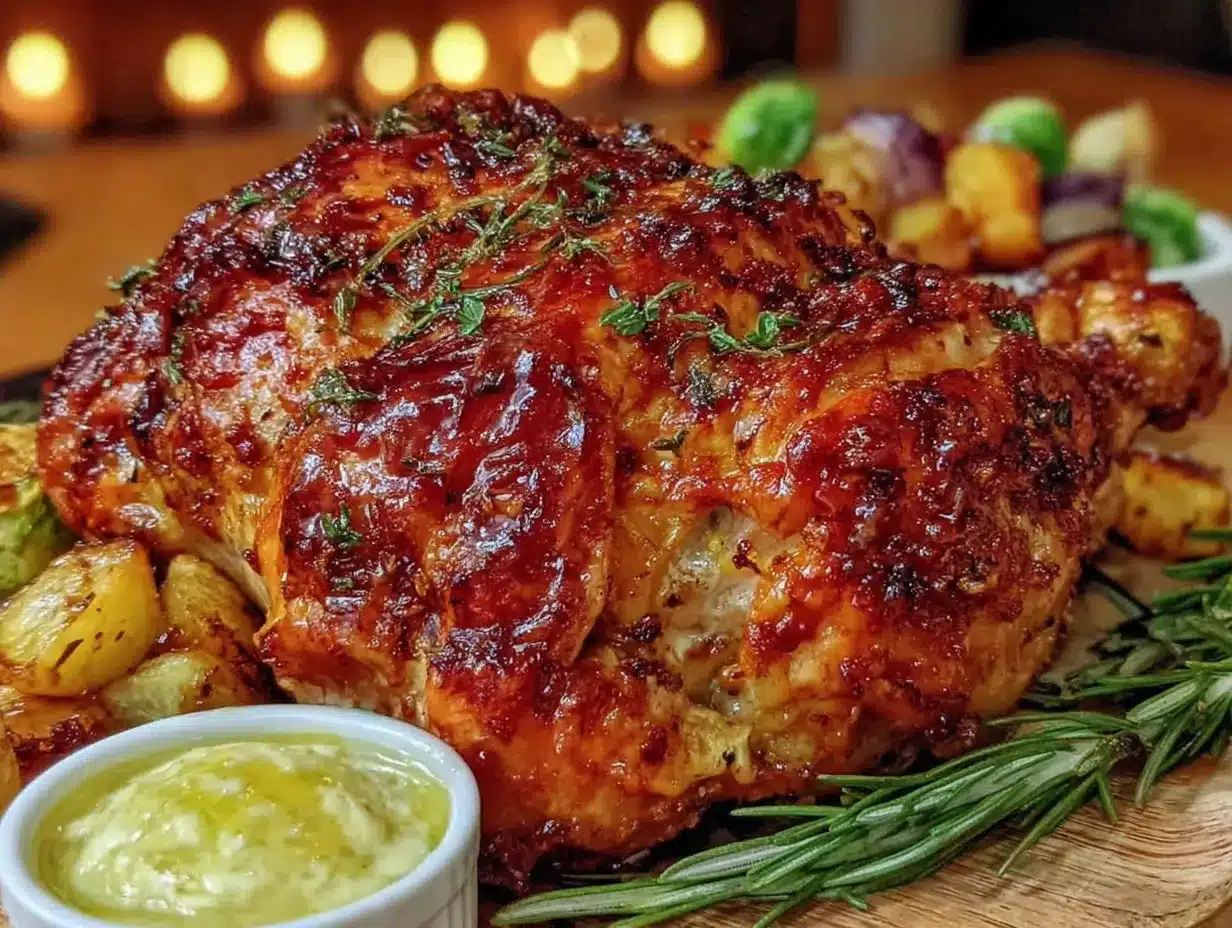
Alright, let’s get to the good part. I’m going to walk you through every step of making this cozy herb-roasted whole turkey, exactly the way I do it at home. Take your time, and don’t rush the butter application—that’s where the magic happens.
Step 1: Prep the Turkey
Take your thawed turkey out of the refrigerator about 1 hour before you plan to roast it. This takes the chill off and helps it cook more evenly. Remove the turkey from its packaging, and reach inside both cavities (neck and main) to pull out the giblets and neck—save those for making stock if you’re into that sort of thing. Pat the turkey completely dry with paper towels, inside and out. Getting the skin dry is crucial—moisture is the enemy of crispy skin. Place the turkey on a rimmed baking sheet or in your roasting pan while you make the butter.
Step 2: Make the Citrus Herb Butter
In a medium mixing bowl, combine the softened butter, orange zest, lemon zest, orange juice, lemon juice, chopped rosemary, thyme leaves, chopped sage, minced garlic, 2 teaspoons kosher salt, and 1 teaspoon black pepper. Mix everything together with a fork or spatula until it’s well combined and looks like a soft, fragrant paste. Taste a tiny bit—it should be bright and herbal with a good salt level. If it tastes flat, add another pinch of salt. Set it aside at room temperature.
Step 3: Apply the Butter
Here’s the most important part. Using your hands, gently loosen the skin of the turkey over the breast and thighs. You want to slide your fingers between the skin and the meat, being careful not to tear the skin. Work about two-thirds of the citrus butter under the skin, spreading it evenly over the breast meat and the tops of the thighs. Massage it through the skin so it’s distributed as evenly as possible. Then, take the remaining butter and rub it all over the outside of the turkey—the legs, the wings, the back, everywhere. Don’t forget the little flaps of skin near the cavity opening. This butter is what gives you that incredible flavor and golden-brown color.
Step 4: Stuff the Cavity
Take the quartered orange, lemon, onion, and the whole sprigs of rosemary, thyme, and sage, and stuff them into the main cavity of the turkey. Don’t pack it too tight—you want air to circulate in there. These aromatics will steam from the inside, keeping the meat moist and infusing it with flavor. If there’s extra space, you can add a couple more garlic cloves or a halved apple for sweetness.
Step 5: Truss the Turkey
Cut a piece of kitchen twine about 3 feet long. Cross the turkey’s legs at the ankles and tie them together with the twine. Tuck the wing tips under the body of the turkey—this prevents them from burning before the rest of the bird is done. Trussing isn’t strictly necessary, but it gives the turkey a neater shape and helps it cook more evenly. If you’re short on time or patience, you can skip this step—just tuck the legs in as best you can.
Step 6: Season and Oil the Skin
Drizzle the olive oil over the outside of the turkey and rub it in gently. Sprinkle a little extra kosher salt and black pepper over the skin—just a light dusting. This helps the skin crisp up and adds another layer of flavor.
Step 7: Roast the Turkey
Preheat your oven to 425°F (220°C). Place the turkey on a rack in your roasting pan, breast side up. Roast at 425°F for 30 minutes—this high heat gives the skin a head start on browning. Then, without opening the oven, reduce the temperature to 350°F (175°C) and continue roasting. The total roasting time will be about 13-15 minutes per pound, so for a 12-14 pound turkey, you’re looking at roughly 2.5 to 3 hours total. Start checking the temperature about 30 minutes before you think it’ll be done.
Step 8: Check for Doneness
The turkey is done when an instant-read thermometer inserted into the thickest part of the thigh (avoiding the bone) reads 165°F (74°C). Also check the breast—it should be at least 160°F (71°C), and it will rise to 165°F while resting. If the skin is getting too dark before the meat is cooked through, loosely tent the turkey with aluminum foil. I usually do this about halfway through the roasting time.
Step 9: Rest the Turkey
This step is absolutely critical—do not skip it. Once the turkey is done, carefully transfer it to a cutting board or platter. Let it rest for at least 20-30 minutes before carving. Resting allows the juices to redistribute throughout the meat, so your turkey stays moist instead of turning into a puddle on the cutting board. Tent it loosely with foil to keep it warm while it rests.
Step 10: Carve and Serve
After resting, remove the twine and discard the aromatics from the cavity (they’ve done their job). Carve the turkey by removing the legs and thighs first, then slicing the breast meat against the grain. Arrange everything on a warm platter and serve immediately. The meat will be incredibly tender, juicy, and infused with that gorgeous citrus-herb flavor.
Cooking Tips & Techniques
I’ve made this cozy herb-roasted whole turkey enough times to learn a few things the hard way. Here are my best tips to help you avoid the same mistakes I made.
Don’t Skip the Drying Step
The first time I made this, I was so excited to get the butter on that I barely patted the turkey dry. The skin came out streaky and pale instead of that beautiful golden brown. Patting the turkey dry with paper towels is one of those small steps that makes a huge difference. Moisture on the skin creates steam, and steam prevents browning. You want the skin as dry as possible before you apply the butter and oil.
Let the Butter Come to Room Temperature
Cold butter straight from the fridge is impossible to spread evenly under the skin. It’ll just sit in clumps. I learned this the hard way when I found a solid chunk of cold butter hiding under the skin of my first turkey. Let your butter sit out for at least an hour before you start, or if you forgot, microwave it in 5-second bursts until it’s soft but not melted.
Use a Thermometer, Not a Timer
I cannot stress this enough—oven temperatures vary wildly, and the size and shape of your turkey will affect cooking time. The only reliable way to know if your turkey is done is with a meat thermometer. I’ve had a 12-pound turkey that took 3 hours and another that was done in 2 hours 15 minutes. Trust the thermometer, not the clock.
Baste Sparingly (or Not at All)
I know every holiday movie shows someone basting a turkey every 20 minutes, but honestly? It’s not necessary with this recipe. The citrus butter keeps the meat incredibly moist, and opening the oven repeatedly lets out heat, which can dry out the turkey and extend cooking time. If you want to baste, do it once or twice during the last hour of roasting—no more.
Let It Rest—Really
I once got impatient and carved a turkey after only 10 minutes of resting. The juices ran everywhere, the breast meat was dry, and I was so disappointed. Resting for a full 20-30 minutes is non-negotiable. The internal temperature will also rise by about 5-10°F during resting, which is called carryover cooking. So if your turkey hits 160°F in the breast, you can pull it out of the oven and let it rest—it’ll reach 165°F on its own.
Variations & Adaptations
One of the best things about this cozy herb-roasted whole turkey is how adaptable it is. Here are some variations I’ve tried and loved:
Citrus Swap
If you don’t have oranges, use all lemon and lime for a brighter, more tart butter. I made this version for a spring dinner once, and the lime gave it this unexpected freshness that was perfect with roasted asparagus on the side. You can also try grapefruit zest and juice if you want a slightly bitter, more complex citrus note.
Herb Variations
Not a fan of sage? Swap it out for fresh tarragon or marjoram. Tarragon has this subtle anise-like flavor that pairs beautifully with citrus. I’ve also used dried herbes de Provence in a pinch (about 2 tablespoons), and it worked wonderfully—just make sure to crush the dried herbs between your fingers before adding them to release the oils.
Spicy Citrus Butter
For a little heat, add 1 teaspoon of red pepper flakes or a minced fresh jalapeño (seeds removed) to the butter. The spice cuts through the richness of the butter and adds a warmth that’s perfect for cold winter nights. I made this version for a Friendsgiving dinner, and it was gone in minutes.
Garlic-Lover’s Version
Double the garlic in the butter, and also stuff 4-5 whole peeled garlic cloves into the cavity with the citrus and herbs. The roasted garlic softens and sweetens as it cooks, and you can spread it on bread or mash it into the gravy. Honestly, is there anything better than roasted garlic?
Make It Dairy-Free
Substitute the butter with a high-quality vegan butter or ghee (if you can tolerate it). I’ve used Miyoko’s European-style cultured vegan butter, and it worked beautifully—the texture was almost identical, and the flavor was rich and creamy. Just make sure your vegan butter is softened before you mix it with the herbs and citrus.
Serving & Storage Suggestions
This cozy herb-roasted whole turkey is a showstopper on its own, but here’s how I like to serve it and store the leftovers.
Serving Suggestions
Serve the turkey warm, carved and arranged on a large platter. Garnish with fresh herb sprigs and citrus slices for a beautiful presentation. I love pairing it with classic sides like creamy mashed potatoes, roasted Brussels sprouts with balsamic glaze, and a simple green salad with vinaigrette to cut through the richness. For bread, try warm dinner rolls or a crusty sourdough to soak up any juices on the plate. A dry white wine like Sauvignon Blanc or a light Pinot Noir complements the citrus-herb flavors beautifully.
Storage Instructions
Leftover turkey keeps beautifully. Remove the meat from the bones and store it in an airtight container in the refrigerator for up to 4 days. The meat will stay moist and flavorful—I actually think it gets even better as the flavors meld overnight. For longer storage, you can freeze the carved turkey in a freezer-safe bag or container for up to 3 months. Squeeze out as much air as possible before sealing to prevent freezer burn.
Reheating Tips
The best way to reheat leftover turkey is gently, so it doesn’t dry out. Place the meat in a baking dish with a splash of chicken broth or water, cover with foil, and warm in a 300°F oven for about 15-20 minutes. You can also reheat individual portions in the microwave, but add a damp paper towel over the plate to create steam. For crispy skin, reheat in a skillet over medium heat with a tiny bit of butter—just a minute or two per side.
How Flavors Develop Over Time
Here’s a little secret: leftover turkey from this recipe is actually amazing the next day. The citrus and herb flavors continue to meld and deepen overnight, so cold turkey sandwiches on day two are something I genuinely look forward to. Slice it thin, pile it on good bread with a smear of the leftover citrus butter (if you have any) and some cranberry sauce—absolute heaven.
Nutritional Information & Benefits
While I’m not a nutritionist, I can share some general information about this cozy herb-roasted whole turkey. A 4-ounce serving of roasted turkey breast (without skin) provides approximately:
- Calories: 180-200
- Protein: 25-30 grams
- Fat: 8-10 grams (from the butter and olive oil)
- Carbohydrates: 2-3 grams (from the citrus)
Turkey is an excellent source of lean protein, which is great for muscle repair and keeping you full and satisfied. It’s also rich in B vitamins, particularly B6 and B12, which support energy metabolism and brain health. The fresh herbs in this recipe—rosemary, thyme, and sage—are packed with antioxidants and have anti-inflammatory properties. Citrus zest adds a boost of vitamin C, which supports immune health, especially during the colder months when we’re craving comfort food like this.
Dietary Considerations: This recipe is naturally gluten-free and low-carb. For a dairy-free version, use vegan butter as mentioned in the variations. It’s also suitable for most low-carb and keto diets if you skip any high-carb sides. The main allergens are dairy (butter) and potentially garlic, though garlic allergies are rare.
Personally, I love that this recipe feels indulgent and special but is actually quite balanced. You’re getting a good dose of protein, healthy fats from the olive oil, and the nutritional benefits of fresh herbs and citrus. It’s comfort food that actually makes you feel good—the best kind of meal, if you ask me.
Conclusion
So there it is—my cozy herb-roasted whole turkey with easy citrus butter, the recipe that turned a random rainy Tuesday into one of my most memorable kitchen moments. I hope you give it a try, whether it’s for a holiday celebration, a special Sunday dinner, or just a night when you need something warm and comforting to fill your home with that incredible smell.
What I love most about this recipe is how forgiving it is. You don’t have to be a professional chef to pull it off. You just need good ingredients, a little patience, and the willingness to believe that you can absolutely roast a whole turkey on a random Tuesday if you want to. Because you can. And you should. Trust me—your kitchen will smell amazing, and you’ll feel like the coziest, most accomplished person alive.
I’d love to hear how yours turns out! Leave a comment below and let me know if you tried any fun variations or if this recipe became a new tradition in your home. And if you’re looking for another cozy, comforting dish to round out your meal, you might enjoy this creamy herb mashed potatoes recipe—they pair beautifully with the citrus-herb turkey. Happy roasting, friends!
Frequently Asked Questions
Can I use dried herbs instead of fresh?
Yes, you can substitute dried herbs for fresh, but reduce the amount by half. For example, use 1½ tablespoons dried rosemary instead of 3 tablespoons fresh. Keep in mind that dried herbs are more concentrated, so the flavor will be slightly different—still good, just not as bright and aromatic as fresh.
Do I need to brine the turkey first?
No, brining is not necessary for this recipe. The citrus butter does an excellent job of keeping the meat moist and flavorful. If you prefer a brined turkey, you can certainly do that, but reduce the salt in the butter slightly to avoid over-salting.
How do I know when the turkey is fully thawed?
A fully thawed turkey should feel soft and pliable, with no ice crystals in the cavity. The easiest way to thaw a frozen turkey is in the refrigerator—allow 24 hours for every 4-5 pounds. Never thaw a turkey at room temperature, as this can encourage bacterial growth.
Can I stuff the turkey with traditional stuffing?
I don’t recommend stuffing the cavity with bread-based stuffing because it can prevent the turkey from cooking evenly and may not reach a safe temperature. Instead, cook your stuffing separately in a baking dish. You can still add aromatics like citrus and herbs to the cavity for flavor.
What should I do with the drippings?
The drippings from this turkey are liquid gold. After roasting, pour the pan juices through a fine-mesh strainer into a fat separator or a bowl. Use the defatted juices to make a simple gravy—just whisk in a little flour or cornstarch slurry over medium heat until thickened. The citrus-herb flavor in the drippings makes for an incredible gravy.
Pin This Recipe!
Cozy Herb-Roasted Whole Turkey with Easy Citrus Butter

A simple yet flavorful whole turkey recipe featuring a citrus-herb butter that keeps the meat incredibly moist and golden. Perfect for cozy evenings or small celebrations without the stress of traditional holiday roasting.
- Prep Time: 20 minutes
- Cook Time: 2 hours 45 minutes
- Total Time: 3 hours 5 minutes
- Yield: 8 servings 1x
- Category: Main Course
- Cuisine: American
Ingredients
- 1 whole turkey (12–14 pounds), thawed if frozen
- 1 cup (2 sticks) unsalted butter, softened
- 2 tablespoons fresh orange zest
- 1 tablespoon fresh lemon zest
- 3 tablespoons fresh orange juice
- 1 tablespoon fresh lemon juice
- 3 tablespoons fresh rosemary, finely chopped
- 3 tablespoons fresh thyme leaves
- 2 tablespoons fresh sage, finely chopped
- 4 cloves garlic, minced
- 2 teaspoons kosher salt, plus more for seasoning
- 1 teaspoon black pepper, freshly ground
- 1 orange, quartered
- 1 lemon, quartered
- 1 small bunch fresh rosemary
- 1 small bunch fresh thyme
- 1 small bunch fresh sage
- 1 onion, quartered
- 2 tablespoons olive oil
Instructions
- Prep the Turkey: Take the thawed turkey out of the refrigerator about 1 hour before roasting. Remove giblets and neck, pat dry with paper towels inside and out.
- Make the Citrus Herb Butter: In a medium bowl, combine softened butter, orange zest, lemon zest, orange juice, lemon juice, chopped rosemary, thyme leaves, chopped sage, minced garlic, 2 teaspoons kosher salt, and 1 teaspoon black pepper. Mix until well combined.
- Apply the Butter: Gently loosen the skin over the breast and thighs. Spread about two-thirds of the butter under the skin, then rub the remaining butter all over the outside of the turkey.
- Stuff the Cavity: Stuff the quartered orange, lemon, onion, and whole herb sprigs into the main cavity.
- Truss the Turkey: Tie the legs together with kitchen twine and tuck the wing tips under the body.
- Season and Oil the Skin: Drizzle olive oil over the turkey and rub in. Sprinkle with extra salt and pepper.
- Roast the Turkey: Preheat oven to 425°F (220°C). Roast at 425°F for 30 minutes, then reduce temperature to 350°F (175°C) and continue roasting for about 2.5 to 3 hours total (13-15 minutes per pound).
- Check for Doneness: Turkey is done when an instant-read thermometer inserted into the thickest part of the thigh reads 165°F (74°C) and breast reads at least 160°F (71°C). Tent with foil if skin gets too dark.
- Rest the Turkey: Transfer to a cutting board and let rest for 20-30 minutes before carving.
- Carve and Serve: Remove twine and discard aromatics. Carve and serve warm.
Notes
Pat the turkey dry for crispy skin. Let butter come to room temperature. Use a thermometer, not a timer. Baste sparingly. Let the turkey rest for at least 20-30 minutes before carving.
Nutrition
- Serving Size: 4 ounces
- Calories: 190
- Sugar: 1
- Sodium: 450
- Fat: 9
- Saturated Fat: 5
- Carbohydrates: 2
- Protein: 27
Keywords: roasted turkey, herb turkey, citrus butter turkey, whole turkey, Thanksgiving turkey, cozy turkey