The last ladle scraped the bottom of the pot, and my husband looked up at me with an expression I will never forget. It was part disbelief, part hope, and entirely directed at the empty Dutch oven sitting on the stove. “Is there… more?” he asked, peeking over my shoulder. We had polished off a full batch of this poor man’s beef stew in one sitting, and I honestly hadn’t planned on leftovers anyway. That was the moment I knew this recipe was going to become a permanent fixture in our home.
You see, I didn’t grow up eating something called “poor man’s stew.” My grandmother called it “stretch-the-beef stew,” and she made it every payday Friday when the grocery budget was running thin. She would take one modest piece of chuck, maybe a pound if we were lucky, and somehow turn it into a meal that fed seven people with seconds to spare. The secret was all in how she treated that meat and the humble vegetables that surrounded it. Potatoes and carrots did the heavy lifting, and honestly, they made the whole thing taste richer than any expensive cut ever could.
This isn’t a fancy recipe. It doesn’t call for red wine or fresh thyme or any ingredient that requires a special trip to the store. It is the kind of food that makes you feel taken care of, even on a Tuesday night when the fridge looks bare and your energy is lower than your grocery budget. The beef gets impossibly tender, the broth turns silky and rich, and those potatoes and carrots soak up every bit of flavor until they are practically melting. I make this stew when I need to feed my family something real without breaking the bank.
Why You’ll Love This Recipe
Let me tell you why this poor man’s beef stew has earned a permanent spot in my weekly rotation. It isn’t just about saving money, though that is a very nice bonus. This recipe delivers on flavor, comfort, and practicality in ways that fancy stews simply cannot touch.
- Budget-Friendly Genius: One pound of beef stretches to feed four to six people. The potatoes and carrots bulk it up beautifully without costing much at all. I have made this stew for under ten dollars total, and it tastes like it simmered all day in a rustic French kitchen.
- Simple Pantry Ingredients: You probably have most of these in your kitchen right now. No fancy wine, no exotic spices, no trips to a specialty market. Just good honest food that works together perfectly.
- Deep, Rich Flavor Without Hours of Work: The magic happens through a simple browning technique and a slow simmer. The broth develops this incredible depth that tastes like it cooked all day, even when you use a quicker method.
- Perfect for Busy Weeknights and Cozy Weekends: This stew fits any occasion. Throw it together after work, let it simmer while you unwind, and dinner practically makes itself. It is also wonderful for Sunday meal prep.
- Family-Approved and Kid-Friendly: My kids actually ask for seconds of this one. The tender beef, soft potatoes, and sweet carrots are universally loved. Even picky eaters tend to clean their bowls.
- Freezes Like a Dream: Make a double batch and freeze half for those nights when cooking feels impossible. The flavors actually get better after a day or two in the fridge.
What makes this recipe different from every other beef stew out there? It is the technique. Most poor man’s stews end up watery and bland because people skip the crucial browning step or they rush the cooking time. I spent months testing this version to get the perfect balance of tender meat, velvety broth, and perfectly cooked vegetables. The result is a stew that tastes like it cost three times as much to make. It is comfort food at its most honest and most delicious.
What Ingredients You Will Need
This recipe uses simple, hearty ingredients that work together to create something truly special. Each component plays an important role, and I have tested every substitution so you can cook with confidence.
- Beef chuck or stew meat (1 pound): Look for chuck roast cut into 1-inch cubes. It has enough marbling to stay tender during the long simmer. I prefer buying a whole chuck roast and cubing it myself, but pre-cut stew meat works fine too. If you can, trim off any large pieces of fat but leave some for flavor.
- Yellow onions (2 medium, diced): Onions form the flavor base of this stew. They melt into the broth as they cook, adding sweetness and depth. Yellow onions are my go-to, but white or sweet onions work well too.
- Garlic (4 cloves, minced): Fresh garlic makes a difference here. Pre-minced garlic from a jar tends to be bitter when simmered for a long time. Take the extra minute to chop fresh cloves.
- Carrots (4 medium, peeled and sliced into 1/2-inch rounds): Carrots add sweetness and color. I like to cut them on a slight diagonal for a more rustic look. Baby carrots work in a pinch, but they don’t have quite the same sweetness as whole carrots.
- Russet potatoes (3 medium, peeled and cut into 1-inch cubes): Russets hold up beautifully during the simmer and they break down just enough to thicken the broth naturally. Yukon Gold potatoes are my second choice, they stay a bit firmer and add a buttery texture.
- All-purpose flour (1/4 cup): This helps thicken the stew and gives the beef a nice crust during browning. For a gluten-free version, use 2 tablespoons of cornstarch mixed with 2 tablespoons of cold water added at the end.
- Beef broth (4 cups): Use a good quality broth here. I recommend Swanson or Pacific Foods for consistent flavor. Low-sodium broth lets you control the salt level. Homemade beef broth is amazing if you have it on hand.
- Tomato paste (2 tablespoons): This adds richness and a subtle tang that balances the savory flavors. It also helps deepen the color of the broth. I buy tomato paste in a tube so I can use just what I need.
- Worcestershire sauce (1 tablespoon): Worcestershire adds umami and complexity. It is a secret weapon in this stew. Lea and Perrins is my trusted brand.
- Bay leaves (2): Bay leaves add an earthy, herbal note that you will miss if you skip them. Remove them before serving.
- Dried thyme (1 teaspoon): Thyme and beef are a classic pairing. Dried thyme works perfectly here, but use 1 tablespoon of fresh if you have it.
- Salt and black pepper (to taste): Season as you go. I add a pinch of salt when browning the beef and adjust at the end. Freshly ground black pepper makes a noticeable difference.
- Vegetable oil (2 tablespoons): Use a neutral oil with a high smoke point for browning. Canola, avocado, or grapeseed oil all work well.
- Unsalted butter (2 tablespoons): Butter adds richness to the sautéed vegetables. You can substitute olive oil if you prefer.
- Frozen peas (1 cup, optional): I add peas in the last five minutes of cooking for a pop of color and sweetness. They are optional but highly recommended.
- Fresh parsley (2 tablespoons, chopped, for garnish): A sprinkle of fresh parsley brightens the finished stew and makes it look beautiful.
Equipment Needed
You do not need a fancy kitchen to make this poor man’s beef stew. Most of these tools are probably already in your cabinets.
- Large Dutch oven or heavy-bottomed pot (5 to 6 quarts): A Dutch oven is ideal for even heat distribution and browning. I use my trusty Lodge enameled cast iron pot. If you do not have one, any heavy-bottomed stockpot will work. Just be careful to avoid scorching on thinner pots.
- Sharp chef’s knife: A good knife makes cutting beef and vegetables much easier. A dull knife is dangerous and frustrating. I recommend a Victorinox Fibrox for an affordable option.
- Cutting board: Use a sturdy board that won’t slip. Wood or plastic both work fine.
- Wooden spoon or spatula: You need something sturdy for stirring and scraping up the browned bits from the bottom of the pot. Those browned bits are pure flavor.
- Measuring cups and spoons: Accurate measurements matter, especially for the flour and broth.
- Large bowl: For tossing the beef with flour and seasoning before browning.
- Ladle: For serving the stew into bowls.
- Timer: Helpful for keeping track of simmering times, though I often just go by look and smell.
If you do not own a Dutch oven, do not rush out to buy one. A heavy stainless steel pot or even a slow cooker can work. For the slow cooker method, brown the beef and vegetables on the stovetop first, then transfer everything to the slow cooker and cook on low for 6 to 8 hours.
Preparation Method
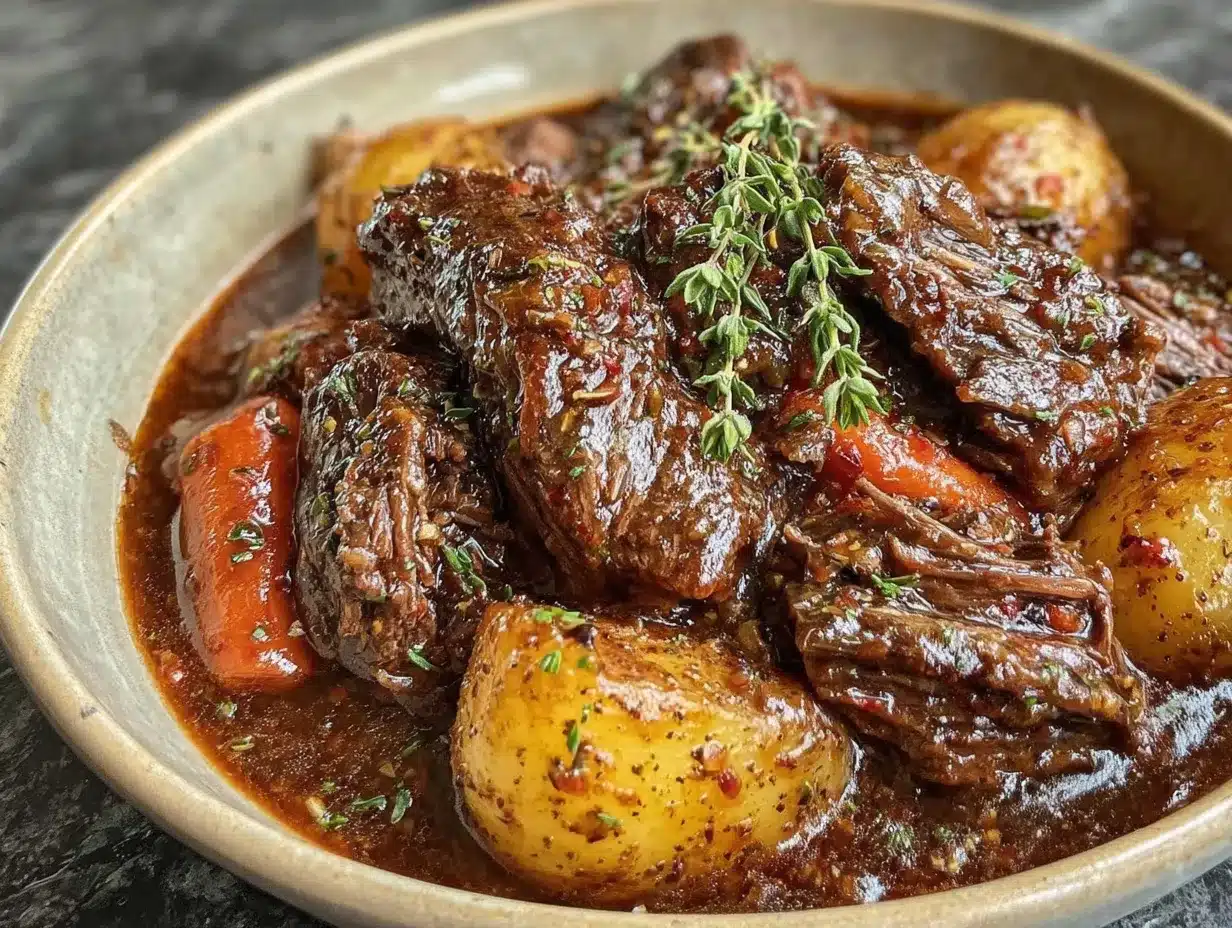
Follow these steps carefully, and you will end up with the most comforting bowl of poor man’s beef stew you have ever tasted. I have included all the little details that make a big difference.
- Prep your ingredients first. This is the most important step. Cut the beef into 1-inch cubes, dice the onions, mince the garlic, peel and slice the carrots, and peel and cube the potatoes. Having everything ready before you start cooking makes the process smooth and stress-free. Trust me, you do not want to be chopping carrots while your beef is browning.
- Season and flour the beef. Place the beef cubes in a large bowl. Sprinkle with 1/2 teaspoon of salt and 1/4 teaspoon of black pepper. Add the 1/4 cup of all-purpose flour and toss everything together until each piece of beef is lightly coated. Shake off any excess flour before adding the beef to the pot. This flour coating will help create a beautiful brown crust and thicken the stew later.
- Brown the beef in batches. Heat 1 tablespoon of vegetable oil in your Dutch oven over medium-high heat until it shimmers. Add half of the beef cubes in a single layer. Do not overcrowd the pot, that will steam the meat instead of browning it. Let the beef cook undisturbed for 3 to 4 minutes until the bottom is deep golden brown. Flip each piece and brown the other side for another 2 to 3 minutes. Transfer the browned beef to a clean plate and repeat with the remaining oil and beef. The browned bits stuck to the bottom of the pot are gold, do not clean them out.
- Sauté the aromatics. Reduce the heat to medium. Add the 2 tablespoons of butter to the pot. Once it melts, add the diced onions. Cook for 5 to 6 minutes, stirring occasionally, until the onions are soft and translucent. Scrape up any browned bits from the bottom of the pot as the onions release their moisture. Add the minced garlic and cook for 1 more minute until fragrant. Your kitchen should smell amazing right now.
- Add tomato paste and seasonings. Stir in the 2 tablespoons of tomato paste and cook for 2 minutes. This step deepens the flavor and removes any raw tomato taste. Add the dried thyme and stir to combine.
- Deglaze the pot. Pour in about 1/2 cup of the beef broth and use your wooden spoon to scrape up every last browned bit from the bottom of the pot. This is where so much flavor lives. Let the liquid bubble for a minute or two until it reduces slightly.
- Return the beef and add the broth. Put the browned beef back into the pot, along with any juices that accumulated on the plate. Pour in the remaining 3 1/2 cups of beef broth and the Worcestershire sauce. Add the 2 bay leaves. Stir everything together gently.
- Bring to a simmer, then reduce heat. Increase the heat to high and bring the stew to a gentle boil. As soon as it bubbles, reduce the heat to low so the liquid is barely simmering. You want small bubbles breaking the surface, not a vigorous boil. Cover the pot with the lid slightly ajar to let some steam escape.
- Simmer for 45 minutes. Let the stew cook gently for 45 minutes. This gives the beef time to start breaking down and becoming tender. The broth will begin to thicken and deepen in color. Stir occasionally to prevent anything from sticking to the bottom.
- Add the vegetables. After 45 minutes, add the sliced carrots and cubed potatoes to the pot. Stir them in gently. Replace the lid, still slightly ajar, and continue simmering for another 30 to 40 minutes. The vegetables should be fork-tender but not falling apart. The beef should be melt-in-your-mouth tender by this point.
- Add peas if using. If you are adding frozen peas, stir them in during the last 5 minutes of cooking. They only need to heat through. Their bright green color adds a lovely contrast to the rich brown stew.
- Season and adjust. Remove the bay leaves and discard them. Taste the stew and adjust the salt and pepper as needed. I usually add another 1/2 teaspoon of salt and a good crack of black pepper at this stage. If the stew seems too thick, stir in a splash of extra broth or water. If it seems too thin, let it simmer uncovered for 5 to 10 minutes to reduce.
- Rest before serving. Turn off the heat and let the stew sit for 10 minutes before serving. This allows the flavors to settle and the stew to thicken slightly more. Ladle into bowls and garnish with fresh chopped parsley.
Cooking Tips & Techniques
I have made this poor man’s beef stew more times than I can count, and I have learned a few things along the way. These tips will help you avoid my mistakes and get perfect results every time.
Do not skip the browning step. I know it takes extra time and creates more dishes, but browning the beef is non-negotiable. That deep brown crust is where the rich flavor comes from. If you skip it, your stew will taste flat and one-dimensional. I learned this the hard way when I was in a hurry and ended up with a pot of gray, sad-tasting stew.
Pat the beef dry before seasoning. Wet beef will not brown properly. Use paper towels to pat the beef cubes dry before you toss them with flour and salt. This is a small step that makes a huge difference in the final color and flavor.
Use low-sodium broth. Regular beef broth can be very salty, and as the stew reduces, that saltiness concentrates. Low-sodium broth gives you control over the final seasoning. You can always add more salt at the end, but you cannot take it out.
Cut vegetables into uniform sizes. Try to cut your potatoes and carrots into similar-sized pieces so they cook evenly. Nothing is worse than biting into a rock-hard potato chunk next to a mushy one. Aim for 1-inch cubes for potatoes and 1/2-inch rounds for carrots.
Resist the urge to stir too much. Once the stew is simmering, you only need to stir it every 15 to 20 minutes. Constant stirring can break up the beef and vegetables and make the stew mushy. Let it do its thing.
Make it ahead for the best flavor. This stew tastes even better the next day. The flavors meld together overnight and become deeper and more complex. I often make it a day ahead and reheat it gently on the stovetop. If you do this, add the potatoes right before serving, or they will absorb too much liquid and turn mushy. Cook the potatoes separately and stir them in when you reheat.
Thicken the stew naturally. If you want an even thicker stew, mash a few of the cooked potato cubes against the side of the pot and stir them in. They will dissolve into the broth and create a naturally creamy texture without any added flour or cornstarch.
Variations & Adaptations
This poor man’s beef stew is wonderfully adaptable. Here are some of my favorite variations that I have tested in my own kitchen.
Slow Cooker Version: Brown the beef and sauté the onions and garlic on the stovetop first. Transfer everything to a slow cooker, add the broth, Worcestershire, tomato paste, and seasonings. Cook on low for 6 to 8 hours. Add the potatoes and carrots during the last 2 hours of cooking so they do not turn to mush. Add peas 10 minutes before serving.
Instant Pot Version: Use the sauté function to brown the beef and cook the onions. Add the garlic, tomato paste, and seasonings. Pour in the broth and Worcestershire. Pressure cook on high for 20 minutes with a natural release. Add the potatoes and carrots, then pressure cook for another 5 minutes with a quick release. Stir in the peas and let sit for 5 minutes before serving.
Gluten-Free Adaptation: Skip the flour coating on the beef. Instead, brown the beef without flour, then thicken the stew at the end by mixing 2 tablespoons of cornstarch with 2 tablespoons of cold water to make a slurry. Stir the slurry into the simmering stew and cook for 2 to 3 minutes until thickened.
Vegetable-Packed Version: Add extra vegetables to stretch the stew even further. Chopped celery, parsnips, turnips, or sweet potatoes all work beautifully. Add them at the same time as the carrots and potatoes. I love adding a cup of chopped mushrooms for extra umami flavor.
Herb Variations: Experiment with different herbs. A sprig of fresh rosemary added during the last 30 minutes of cooking adds a lovely piney note. A teaspoon of smoked paprika adds warmth and a subtle smokiness. A pinch of red pepper flakes gives it a gentle heat.
Serving & Storage Suggestions
This poor man’s beef stew is a complete meal on its own, but the right accompaniments can make it even better.
Serving Temperature: Serve the stew piping hot. Ladle it into deep bowls so none of that delicious broth escapes. I like to let it cool for about 5 minutes after ladling so it is not scalding hot, but still very warm.
Perfect Pairings: A chunk of crusty bread is essential for sopping up every last drop of broth. Sourdough, French bread, or a warm dinner roll all work beautifully. For a lighter option, serve the stew over steamed rice or egg noodles. A simple side salad with a tangy vinaigrette cuts through the richness nicely. If you are looking for another cozy meal to round out your week, try this cozy apple cider braised pork shoulder for a different but equally comforting dinner.
Garnish Ideas: A sprinkle of fresh parsley adds color and freshness. A dollop of sour cream or Greek yogurt adds a cool, creamy contrast. A few cracks of fresh black pepper right before serving brightens the flavor.
Storage Instructions: Let the stew cool completely before storing. Transfer it to an airtight container and refrigerate for up to 4 days. The flavors will continue to develop, and it often tastes even better on day two. Store the stew without the potatoes if you want to avoid them absorbing too much liquid. Cook fresh potatoes when you reheat.
Freezing Instructions: This stew freezes beautifully. Let it cool completely, then transfer to freezer-safe containers or zip-top bags. Leave about an inch of headspace for expansion. Label with the date and freeze for up to 3 months. Thaw overnight in the refrigerator before reheating. The potatoes may become slightly grainy after freezing, so consider adding fresh potatoes when you reheat.
Reheating Methods: Reheat the stew gently on the stovetop over medium-low heat, stirring occasionally. Add a splash of broth or water if it has thickened too much. You can also reheat individual portions in the microwave for 2 to 3 minutes, stirring halfway through. Avoid boiling the stew when reheating, as it can make the beef tough.
Nutritional Information & Benefits
This poor man’s beef stew is not just comforting, it is also packed with nutrition. Here is a rough estimate per serving based on six servings.
- Calories: Approximately 350 to 400 per serving
- Protein: 25 to 30 grams
- Carbohydrates: 35 to 40 grams
- Fat: 12 to 15 grams
- Fiber: 5 to 7 grams
- Sodium: 600 to 800 milligrams (varies based on broth and added salt)
Health Benefits: Beef is an excellent source of high-quality protein, iron, and B vitamins, especially B12, which supports energy and brain function. Carrots are packed with beta-carotene, which your body converts to vitamin A for healthy vision and immune function. Potatoes provide potassium, vitamin C, and resistant starch, which supports gut health. The slow simmering process makes the nutrients more bioavailable, meaning your body can absorb them more easily.
Dietary Considerations: This recipe is naturally dairy-free if you use oil instead of butter. It is also nut-free and egg-free. For a gluten-free version, follow the adaptation above. The stew is relatively low in added sugars and contains no artificial ingredients. If you are watching your sodium intake, use low-sodium broth and go easy on the added salt. You can also add more vegetables to increase the fiber content and lower the calorie density.
Allergen Information: This recipe contains wheat (from the all-purpose flour) and possible dairy (from the butter). Use gluten-free flour or cornstarch to avoid wheat. Use olive oil instead of butter to make it dairy-free.
Conclusion
This poor man’s beef stew is proof that you do not need expensive ingredients or complicated techniques to make something truly wonderful. It is the kind of recipe that gets passed down because it works, because it feeds people without breaking the bank, and because it tastes like home. Every time I make it, I think about my grandmother standing over her old pot, stretching a little bit of beef into a meal that made everyone feel full and happy.
I love this recipe because it reminds me that good food is not about perfection or presentation. It is about nourishment, comfort, and the simple joy of sharing a warm meal with the people you love. The beef gets tender, the broth gets rich, and those humble potatoes and carrots soak up every bit of flavor until they are the best part of the whole dish.
I would love to hear how this stew turns out for you. Did you add any extra vegetables? Did you serve it with bread or rice? Did your family ask for seconds the way mine does every single time? Drop a comment below and let me know. And if you make it, tag me in your photos, I love seeing your creations. For another cozy one-pot meal that delivers big flavor with simple ingredients, check out this easy slow cooker beef and broccoli that is perfect for busy weeknights.
Go ahead and make this stew. Your wallet will thank you, your family will thank you, and your soul will thank you. Happy cooking, friend.
Frequently Asked Questions
Can I use a different cut of beef for this stew?
Absolutely. Chuck roast is ideal because it has good marbling that breaks down during cooking. You can also use bottom round, top round, or even sirloin tips. Just avoid very lean cuts like eye of round, they will turn tough and dry. If you use a leaner cut, reduce the simmering time to about 1 hour total and check for tenderness early.
Why is my stew broth thin and watery?
This usually happens for one of three reasons. You might have added too much broth, you might not have simmered it long enough for the liquid to reduce, or you might have skipped the flour coating on the beef. To fix a thin stew, mash a few potato cubes against the side of the pot and stir them in, or mix a cornstarch slurry and stir it in during the last few minutes of cooking.
Can I make this stew in a slow cooker?
Yes, and it works beautifully. Brown the beef and sauté the onions and garlic on the stovetop first for the best flavor. Transfer everything to the slow cooker with the broth, Worcestershire, tomato paste, and seasonings. Cook on low for 6 to 8 hours. Add the potatoes and carrots during the last 2 hours so they do not turn mushy. Add frozen peas 10 minutes before serving.
How do I prevent my potatoes from turning mushy?
Cut your potatoes into larger 1-inch cubes and add them later in the cooking process. In this recipe, the potatoes go in during the last 30 to 40 minutes of simmering. If you are making the stew ahead of time, cook the potatoes separately and add them when you reheat the stew. Russet potatoes tend to hold their shape better than Yukon Golds in long simmers.
Can I add other vegetables to this stew?
Absolutely. This recipe is very forgiving. Chopped celery, parsnips, turnips, sweet potatoes, mushrooms, and even green beans all work well. Add firmer vegetables like carrots and potatoes at the same time as the recipe directs. Add quicker-cooking vegetables like peas or green beans during the last 5 to 10 minutes. Just keep the total vegetable volume similar so the broth ratio stays balanced.
Pin This Recipe!
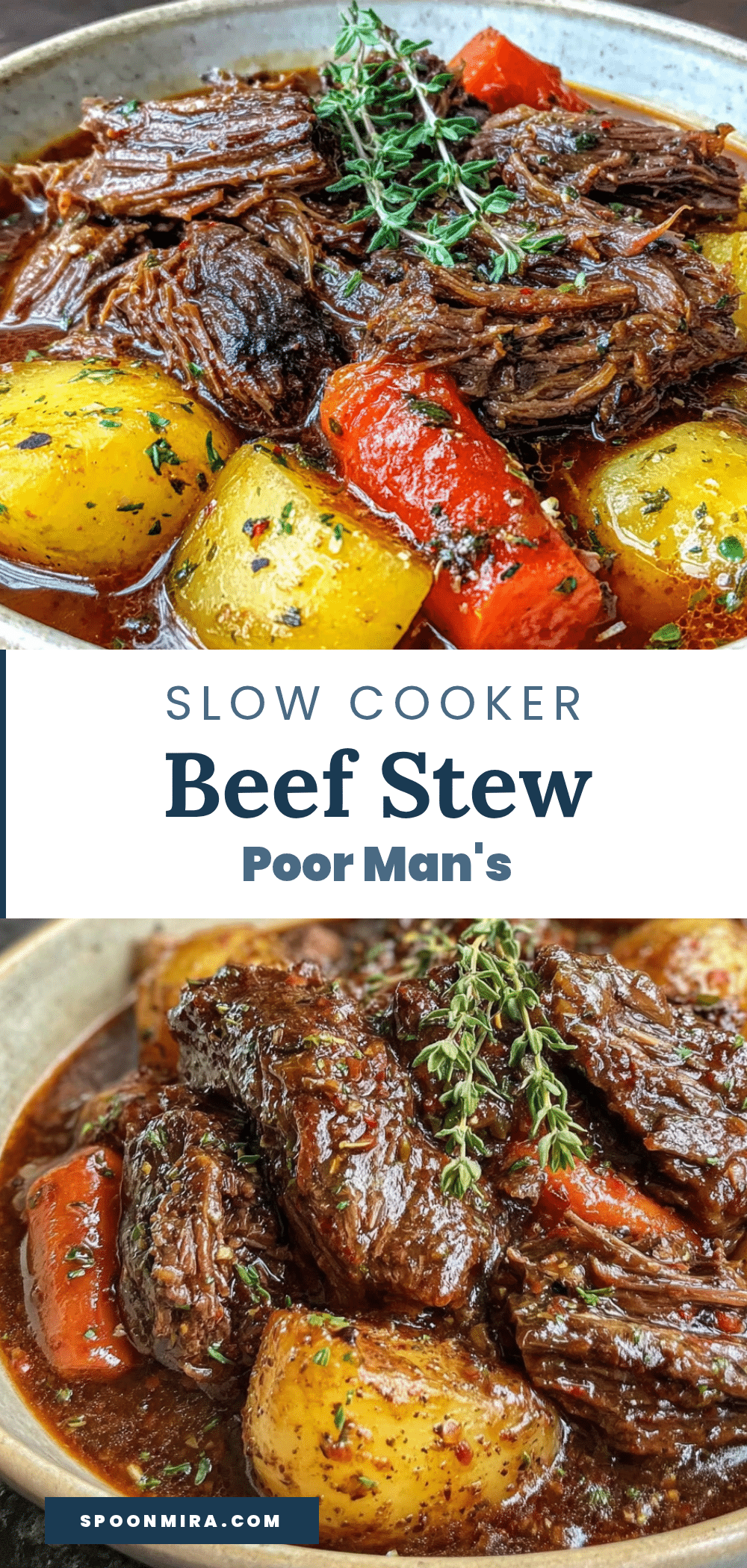
Cozy Poor Mans Beef Stew with Potatoes and Carrots
A budget-friendly, hearty beef stew made with tender chuck, potatoes, and carrots in a rich, savory broth. This comforting one-pot meal stretches a pound of beef to feed a family, delivering deep flavor without expensive ingredients.
- Prep Time: 20 minutes
- Cook Time: 1 hour 30 minutes
- Total Time: 1 hour 50 minutes
- Yield: 6 servings 1x
- Category: Main Course
- Cuisine: American
Ingredients
- 1 pound beef chuck or stew meat, cut into 1-inch cubes
- 2 medium yellow onions, diced
- 4 cloves garlic, minced
- 4 medium carrots, peeled and sliced into 1/2-inch rounds
- 3 medium russet potatoes, peeled and cut into 1-inch cubes
- 1/4 cup all-purpose flour
- 4 cups beef broth (low-sodium recommended)
- 2 tablespoons tomato paste
- 1 tablespoon Worcestershire sauce
- 2 bay leaves
- 1 teaspoon dried thyme
- Salt and black pepper to taste
- 2 tablespoons vegetable oil (canola, avocado, or grapeseed)
- 2 tablespoons unsalted butter
- 1 cup frozen peas (optional)
- 2 tablespoons fresh parsley, chopped (for garnish)
Instructions
- Prep all ingredients: cut beef into 1-inch cubes, dice onions, mince garlic, peel and slice carrots, peel and cube potatoes.
- Place beef cubes in a large bowl. Sprinkle with 1/2 teaspoon salt and 1/4 teaspoon black pepper. Add 1/4 cup flour and toss until beef is lightly coated. Shake off excess flour.
- Heat 1 tablespoon vegetable oil in a large Dutch oven or heavy-bottomed pot over medium-high heat until shimmering. Add half the beef in a single layer; cook undisturbed 3-4 minutes until deep golden brown. Flip and brown other side 2-3 minutes. Transfer to a plate. Repeat with remaining oil and beef. Do not clean pot.
- Reduce heat to medium. Add 2 tablespoons butter to pot. Once melted, add diced onions. Cook 5-6 minutes, stirring occasionally, until soft and translucent, scraping up browned bits. Add minced garlic and cook 1 minute until fragrant.
- Stir in 2 tablespoons tomato paste and cook 2 minutes. Add dried thyme and stir.
- Pour in about 1/2 cup beef broth and scrape up all browned bits from bottom of pot. Let bubble 1-2 minutes until slightly reduced.
- Return browned beef and any accumulated juices to pot. Add remaining 3 1/2 cups beef broth, Worcestershire sauce, and bay leaves. Stir gently.
- Increase heat to high and bring to a gentle boil. Reduce heat to low so liquid is barely simmering (small bubbles breaking surface). Cover pot with lid slightly ajar.
- Simmer for 45 minutes, stirring occasionally.
- After 45 minutes, add sliced carrots and cubed potatoes. Stir gently. Replace lid slightly ajar and continue simmering 30-40 minutes until vegetables are fork-tender and beef is melt-in-your-mouth tender.
- If using frozen peas, stir them in during the last 5 minutes of cooking.
- Remove bay leaves and discard. Taste and adjust salt and pepper as needed. If stew is too thick, stir in a splash of broth or water. If too thin, simmer uncovered 5-10 minutes to reduce.
- Turn off heat and let stew rest 10 minutes before serving. Ladle into bowls and garnish with fresh chopped parsley.
Notes
Do not skip browning the beef—it builds deep flavor. Pat beef dry before seasoning for better browning. Use low-sodium broth to control salt. Cut vegetables into uniform sizes for even cooking. Stir only every 15-20 minutes to avoid breaking up ingredients. Stew tastes even better the next day; if making ahead, add potatoes just before serving to prevent mushiness. To thicken naturally, mash a few cooked potato cubes against the pot and stir in.
Nutrition
- Serving Size: 1 bowl (about 1.5 cu
- Calories: 375
- Sugar: 8
- Sodium: 700
- Fat: 14
- Saturated Fat: 5
- Carbohydrates: 38
- Fiber: 6
- Protein: 28
Keywords: poor man's beef stew, beef stew with potatoes and carrots, budget beef stew, easy beef stew, hearty stew, comfort food, one-pot meal