My friend Jen asked why I couldn’t just throw the wine in at the beginning with everything else. I was mid-sentence, explaining the importance of searing the meat first and deglazing later, when I stopped. I mean, honestly — why couldn’t I?
I’d been making beef stew the same way for years. Brown the meat in batches, set it aside, sauté the aromatics, deglaze with wine, then add everything back. It worked. It was the “right” way. But Jen, who barely cooks, was watching me with this practical confusion that made me question everything. She wasn’t trying to teach me anything — she just wanted dinner on the table faster. And her simple question cracked something open in my brain.
That night, I tried it her way. I dumped the wine in with the beef from the start, let it all simmer together, and waited for disaster. What I got instead was the most deeply flavored, melt-in-your-mouth beef stew I’d ever made. The wine mellowed into something rich and almost sweet, the beef absorbed flavor from the very first minute, and the whole thing came together with about half the effort. I sat there eating it, feeling equal parts thrilled and ridiculous. Sometimes the person who doesn’t know the “rules” makes the best dinner. This cozy red wine beef stew with tender potatoes is proof.
Why You’ll Love This Recipe
Let me tell you why this stew has become my go-to for cold nights and lazy Sundays. It’s the kind of meal that fills your kitchen with that deep, savory smell that makes everyone wander in asking “what’s for dinner?”
- One-Pot Wonder : Everything cooks in a single pot, which means less cleanup and more time curled up on the couch. Honestly, I’m all about recipes that don’t leave me with a mountain of dishes.
- Simple Ingredients : No fancy cuts of meat or obscure spices here. Chuck roast, red wine, potatoes, carrots, and a few pantry staples — that’s it. You probably have most of this already.
- Perfect for Meal Prep : This stew actually gets better after a day in the fridge. Make it on Sunday, and you’ve got amazing lunches or dinners all week. The flavors just keep deepening.
- Crowd-Pleaser : I’ve served this to everyone from my picky nephew to my wine-snob uncle, and it gets rave reviews every single time. It’s comfort food that impresses without trying too hard.
- Unbelievably Tender : The combination of low, slow cooking and a splash of red wine breaks down the beef until it falls apart with a fork. Those potatoes? They soak up all that rich broth and become little flavor bombs.
What makes this different from other beef stew recipes is the technique — or rather, the lack of it. By letting the wine cook with the beef from the start, you get a deeper, more integrated flavor without any extra steps. It’s not fancy. It’s not complicated. It’s just smart cooking that delivers every single time.
This isn’t just stew. It’s the kind of meal that makes you slow down, take a deep breath, and actually taste what you’re eating. And honestly? We could all use more of that.
What Ingredients You Will Need
This recipe relies on simple, hearty ingredients that work together to create something truly special. Most of these are probably already in your kitchen, which makes this perfect for those days when you need a warm hug in a bowl without a trip to the store.
For the Stew Base
- 2 pounds beef chuck roast, cut into 1.5-inch cubes (look for well-marbled pieces — that fat equals flavor and tenderness)
- 2 tablespoons olive oil, divided (I use extra virgin, but regular works fine)
- 1 large yellow onion, diced (about 1.5 cups)
- 3 cloves garlic, minced (fresh is best, but jarred works in a pinch)
- 3 tablespoons all-purpose flour (for thickening — use gluten-free flour if needed)
- 2 tablespoons tomato paste (adds depth and a touch of sweetness)
- 1.5 cups dry red wine (Cabernet Sauvignon or Merlot are my go-to choices)
- 3 cups beef broth, low sodium (I prefer Better Than Bouillon for the richest flavor)
- 2 bay leaves
- 1 teaspoon dried thyme (or 3 sprigs fresh)
- 1 teaspoon salt, plus more to taste
- ½ teaspoon black pepper
For the Vegetables
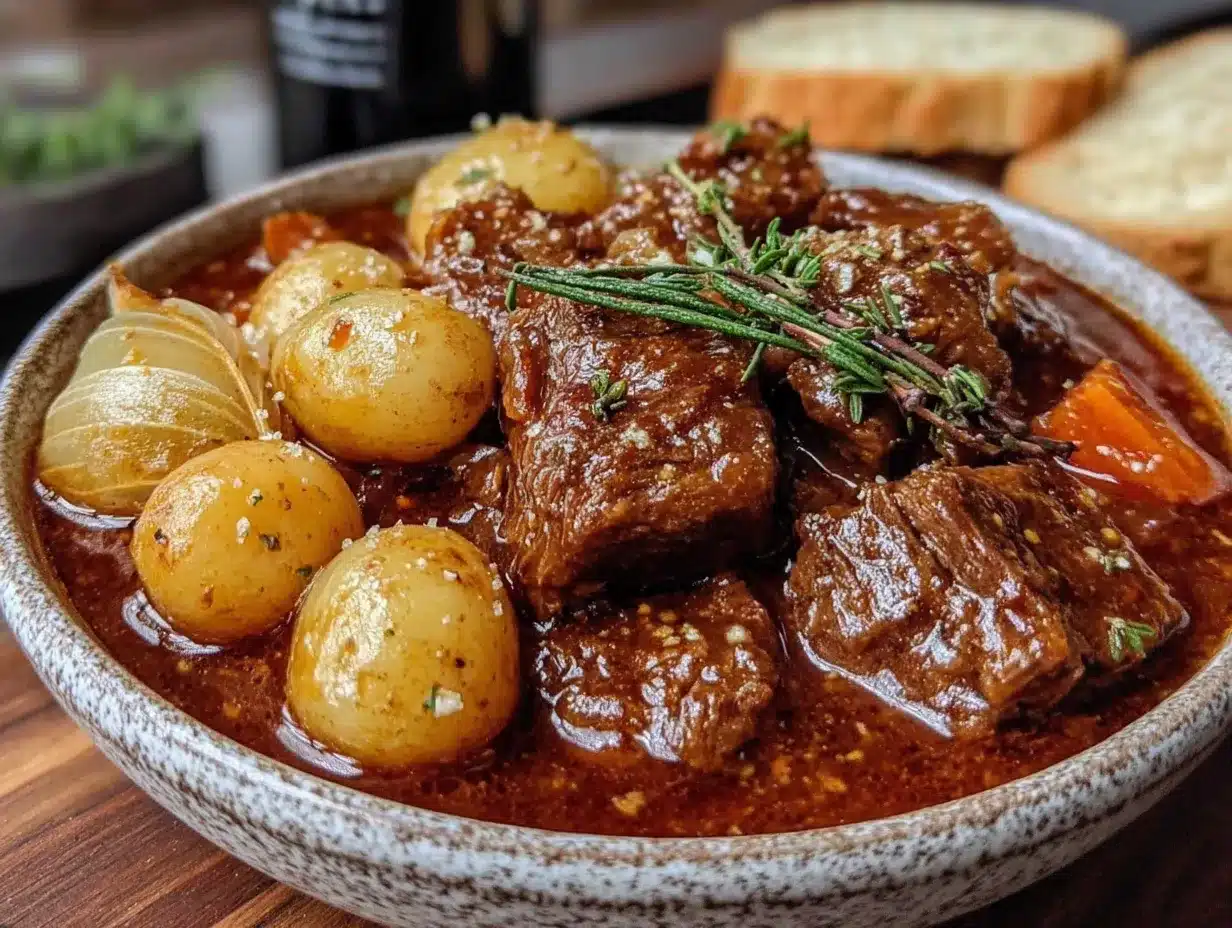
- 1.5 pounds Yukon Gold potatoes, cut into 1-inch chunks (they hold their shape beautifully and get perfectly creamy)
- 3 large carrots, peeled and cut into 1-inch rounds
- 2 celery stalks, sliced into ½-inch pieces
- 1 cup frozen peas (add them at the end for a pop of color and sweetness)
Ingredient Tips
For the beef, look for chuck roast with good marbling. It’s not the most expensive cut, but it’s the best for stew because that fat renders down and keeps the meat moist. I’ve tried sirloin and round, and honestly, they just don’t get as tender. Stick with chuck.
When it comes to wine, use something you’d actually drink. I know people say “cooking wine” is fine, but it usually has added salt and none of the complexity you want. A mid-range Cabernet or Merlot works perfectly. If you’re not a wine drinker, ask the store staff for a recommendation — they’re usually happy to help.
For the potatoes, Yukon Golds are my secret weapon. They’re waxy enough to hold their shape during long cooking, but they still get that creamy interior that soaks up the broth. Russets will fall apart (which isn’t terrible, but you’ll end up with a thicker, more mashed-potato-like stew).
Equipment Needed
- Dutch oven or heavy-bottomed pot (5-6 quart size is ideal — I use my Le Creuset, but a Lodge enameled cast iron works beautifully and costs less)
- Sharp chef’s knife (for cutting beef and vegetables — a dull knife makes everything harder and more dangerous)
- Cutting board (wood or plastic, whichever you prefer)
- Wooden spoon or spatula (for stirring and scraping up those flavorful browned bits)
- Measuring cups and spoons
- Large bowl (for holding the seared beef)
- Optional but helpful: A ladle for serving and a vegetable peeler if your carrots need it
If you don’t have a Dutch oven, any heavy-bottomed pot with a tight-fitting lid will work. I’ve made this in a stainless steel stockpot and it came out great — just keep an eye on the heat so nothing sticks to the bottom. And if you’re on a budget, thrift stores often have perfectly good enameled cast iron for a fraction of the price.
Preparation Method
- Prep your ingredients first — This is one of those recipes where having everything ready makes the process so much smoother. Cut your beef into 1.5-inch cubes, dice your onion, mince your garlic, chop your carrots and celery, and cut your potatoes. Set them all aside in separate bowls. Trust me, once you start cooking, you won’t want to be scrambling to chop things.
- Season and sear the beef — Pat the beef cubes dry with paper towels (this is crucial for good browning). Season generously with salt and pepper. Heat 1 tablespoon of olive oil in your Dutch oven over medium-high heat until it shimmers. Add the beef in a single layer — don’t crowd the pot. You’ll need to do this in 2-3 batches. Let each piece brown undisturbed for 3-4 minutes per side. You’re looking for a deep, dark crust. Transfer the browned beef to a large bowl and set aside.
- Sauté the aromatics — Reduce the heat to medium and add the remaining tablespoon of olive oil. Add the diced onion and cook for 4-5 minutes, stirring occasionally, until it’s soft and translucent. Scrape up any browned bits from the bottom of the pot — that’s pure flavor. Add the minced garlic and cook for another 30 seconds until fragrant. Your kitchen should smell amazing right about now.
- Build the flavor base — Sprinkle the flour over the onions and garlic, stirring constantly for 1-2 minutes. This cooks out the raw flour taste and helps thicken the stew later. Add the tomato paste and stir for another minute until it darkens slightly. This is where the depth starts to build.
- Add the wine and beef — Pour in the red wine and scrape the bottom of the pot with your wooden spoon to release any stuck-on bits. Let it simmer for 2-3 minutes, then return the browned beef to the pot along with any juices that accumulated in the bowl. Add the beef broth, bay leaves, and dried thyme. Stir everything together.
- Start the slow simmer — Bring the stew to a gentle boil, then reduce the heat to low. Cover the pot and let it simmer for 1 hour. Don’t rush this — the low heat is what breaks down the connective tissue in the beef and makes it tender. Your house will smell incredible, and you’ll be tempted to peek, but try to resist lifting the lid too often.
- Add the vegetables — After 1 hour, add the potatoes, carrots, and celery to the pot. Stir them in gently, making sure they’re mostly submerged in the liquid. Cover again and continue simmering for another 45 minutes to 1 hour, until the potatoes are fork-tender and the beef is falling apart.
- Finish with peas and adjust seasoning — Stir in the frozen peas and let them warm through for about 5 minutes. Remove the bay leaves. Taste the broth and add more salt and pepper if needed. I usually add another ½ teaspoon of salt at this point — the potatoes absorb a lot of seasoning during cooking.
- Rest and serve — Let the stew sit off the heat for 10-15 minutes before serving. This allows the flavors to settle and the broth to thicken slightly. Ladle into bowls and serve with crusty bread for dipping. The first bite will make all that waiting worth it.
Cooking Tips & Techniques
I’ve made this stew more times than I can count, and I’ve learned a few things the hard way. Here are my best tips for getting it right every time.
Don’t skip the browning. I know it’s tempting to just dump everything in the pot and walk away, but that initial sear is where the magic happens. The browned bits on the bottom of the pot — called fond — are packed with flavor that will infuse the entire stew. If you skip this step, you’ll end up with a stew that tastes flat and one-dimensional. Trust me, I’ve done it, and I regretted it.
Pat the beef dry. Wet meat won’t brown properly. It’ll steam instead of sear, and you’ll miss out on that deep, caramelized crust. Take the extra 30 seconds to pat those cubes dry with paper towels. Your future self will thank you.
Low and slow is non-negotiable. I once tried to speed things up by simmering the stew on medium heat instead of low. The beef came out tough, the potatoes were mushy on the outside and hard in the center, and the broth reduced too much. Low heat gives the collagen in the beef time to break down into gelatin, which gives the broth that silky, luxurious texture. Don’t rush it.
Season in layers. Add salt at each stage — when you season the beef, when you sauté the onions, and again at the end. This builds complexity and ensures every bite is well-seasoned. Just be careful not to overdo it, especially if you’re using salted broth.
Make it ahead. This is one of those rare recipes that actually tastes better the next day. The flavors have time to meld and deepen, and the texture gets even more luxurious. I often make this on a Saturday and serve it on Sunday — it’s like magic.
Variations & Adaptations
One of the best things about this stew is how adaptable it is. Here are some of my favorite variations I’ve tried over the years.
Dietary Adaptations
- Gluten-Free : Swap the all-purpose flour for a gluten-free blend or use 2 tablespoons of cornstarch mixed with 2 tablespoons of cold water (slurry) added at the end to thicken. I’ve done this for friends with celiac, and nobody noticed the difference.
- Dairy-Free : This recipe is naturally dairy-free, which is great. Just double-check your beef broth ingredients if you’re strictly avoiding dairy.
- Lower-Carb : Replace the potatoes with cauliflower florets or turnips. Add them in the last 20 minutes of cooking so they don’t get too soft. I’ve tried this with cauliflower, and while it’s not exactly the same, it’s surprisingly good.
Flavor Twists
- Herb Swap : Replace the thyme with rosemary or a mix of rosemary and sage. Both add a lovely earthy note that pairs beautifully with the red wine.
- Mushroom Magic : Add 8 ounces of sliced cremini mushrooms along with the onions. They soak up the wine and broth and become little flavor sponges. This is my personal favorite variation.
- Smoky Depth : Add 1 teaspoon of smoked paprika along with the tomato paste. It gives the stew a subtle smokiness that’s absolutely addictive.
Cooking Method Variations
- Slow Cooker : Sear the beef and sauté the aromatics on the stovetop first, then transfer everything (except the peas) to a slow cooker. Cook on low for 7-8 hours or high for 4-5 hours. Add the peas in the last 30 minutes. The result is incredibly tender, though the broth won’t reduce as much — you can thicken it with a cornstarch slurry at the end.
- Instant Pot : Use the sauté function to brown the beef and cook the aromatics, then add the remaining ingredients (except peas). Pressure cook on high for 35 minutes with a natural release. Add the peas and let them warm through. It’s faster, but the flavor isn’t quite as deep as the stovetop version.
Serving & Storage Suggestions
This stew is a meal in itself, but a few thoughtful accompaniments can take it from great to unforgettable.
Serving : Ladle the stew into warm bowls — cold bowls will cool it down too fast. I like to serve it with a thick slice of crusty sourdough or a warm baguette for soaking up every last drop of that rich broth. A simple green salad with a lemon vinaigrette on the side adds a bright, fresh contrast to the hearty stew. For a truly cozy night, serve it with a glass of the same red wine you used in the cooking — it ties everything together beautifully.
Garnish ideas : A sprinkle of fresh parsley adds color and a fresh note. A dollop of sour cream or crème fraîche adds richness. And if you’re feeling fancy, a few crispy fried shallots on top add amazing texture.
Storage : This stew keeps beautifully in the refrigerator for up to 4 days. Let it cool completely before transferring to an airtight container. The flavors actually deepen over time, so leftovers are a gift. To reheat, warm it gently on the stovetop over medium-low heat, adding a splash of broth or water if it’s too thick. You can also microwave individual portions — just cover the bowl and heat in 1-minute intervals, stirring in between.
Freezing : This stew freezes wonderfully for up to 3 months. Let it cool completely, then transfer to freezer-safe containers or zip-top bags. Leave a little room for expansion. To thaw, move it to the refrigerator overnight, then reheat on the stovetop. I like to freeze individual portions for easy lunches — just grab one and go.
Flavor development : Here’s something I love about this stew — it’s even better the next day. The flavors meld together overnight, and the broth gets even richer and more complex. If you can, make it a day ahead and reheat it gently before serving. Your patience will be rewarded.
Nutritional Information & Benefits
This cozy red wine beef stew isn’t just delicious — it’s also packed with nutrients that make it a smart choice for a wholesome meal.
| Nutrient | Per Serving (approx. 1.5 cups) |
|---|---|
| Calories | 420 |
| Protein | 35g |
| Fat | 18g |
| Carbohydrates | 30g |
| Fiber | 5g |
| Iron | 25% Daily Value |
| Vitamin A | 80% Daily Value |
| Vitamin C | 20% Daily Value |
Beef is an excellent source of high-quality protein, iron, and B vitamins, which support energy metabolism and red blood cell health. The carrots provide a massive dose of vitamin A for eye health and immune function. Potatoes offer potassium and vitamin C, along with resistant starch that’s great for gut health when cooled slightly. And the red wine? It contains antioxidants like resveratrol, which has been linked to heart health benefits — though honestly, I’m eating this stew because it tastes amazing, not because I’m trying to be healthy.
This recipe is naturally gluten-free if you use a gluten-free flour or cornstarch, and it’s dairy-free as written. It’s also relatively low in added sugars — the sweetness comes from the carrots and the natural sugars in the wine. If you’re watching your sodium, use low-sodium beef broth and go easy on the added salt. You can always add more at the table.
Conclusion
This cozy red wine beef stew with tender potatoes has become my cold-weather comfort food of choice. It’s the recipe I turn to when I need something warm, satisfying, and completely unfussy. The beef gets fall-apart tender, the potatoes soak up all that rich, wine-infused broth, and the whole thing comes together in a single pot with minimal effort. Honestly, what’s not to love?
I hope you give this a try, especially on one of those days when you just need a hug in a bowl. Feel free to make it your own — swap in different vegetables, adjust the herbs, or experiment with the wine. That’s the beauty of stew. It’s forgiving, adaptable, and always delicious.
I’d love to hear how yours turns out. Drop a comment below and let me know if you tried any variations, or share a photo of your stew on Pinterest. And if you’re looking for more cozy comfort food, check out this creamy mushroom soup I make when I’m craving something equally warming but a little lighter. Happy cooking, friends!
Frequently Asked Questions
Can I use a different cut of beef for this stew?
Absolutely. While chuck roast is my top recommendation for its perfect balance of flavor and tenderness, you can also use bottom round, brisket, or even stew meat from the grocery store. Just keep in mind that leaner cuts may not get quite as tender, so you might need to simmer them a little longer. Avoid cuts like sirloin or ribeye — they’re too lean and will dry out during the long cooking time.
What if I don’t have red wine? Can I substitute something else?
Yes! If you don’t have red wine on hand, you can substitute an equal amount of beef broth mixed with 2 tablespoons of balsamic vinegar or red wine vinegar. The vinegar adds acidity and depth that mimics the wine’s flavor profile. You can also use non-alcoholic red wine or simply use all beef broth — the stew will still be delicious, just with a slightly different flavor profile.
How do I thicken the stew if it’s too thin?
If your stew is thinner than you’d like, there are a few easy fixes. The simplest is to mix 2 tablespoons of cornstarch with 2 tablespoons of cold water to make a slurry, then stir it into the simmering stew and cook for 5 minutes until thickened. Alternatively, you can mash a few of the potatoes against the side of the pot — they’ll release their starch and naturally thicken the broth. Or just let the stew simmer uncovered for 10-15 minutes to reduce the liquid.
Can I make this stew in a slow cooker or Instant Pot?
Definitely! For the slow cooker, sear the beef and sauté the aromatics on the stovetop first, then transfer everything (except the peas) to the slow cooker. Cook on low for 7-8 hours or high for 4-5 hours. Add the peas in the last 30 minutes. For the Instant Pot, use the sauté function for the browning and aromatics, then pressure cook on high for 35 minutes with a natural release. Both methods work great, though the stovetop version gives you the deepest flavor from the reduced broth.
How do I prevent the potatoes from getting mushy?
The key is using the right type of potatoes and adding them at the right time. Yukon Gold or red potatoes hold their shape much better than Russets, which tend to fall apart. Also, cut your potatoes into 1-inch chunks — not too small, or they’ll disintegrate. Add them after the beef has been simmering for an hour, so they cook for about 45 minutes to 1 hour. If you’re planning to reheat leftovers, the potatoes will continue to soften, so you might want to slightly undercook them if you’re making the stew ahead of time.
Pin This Recipe!
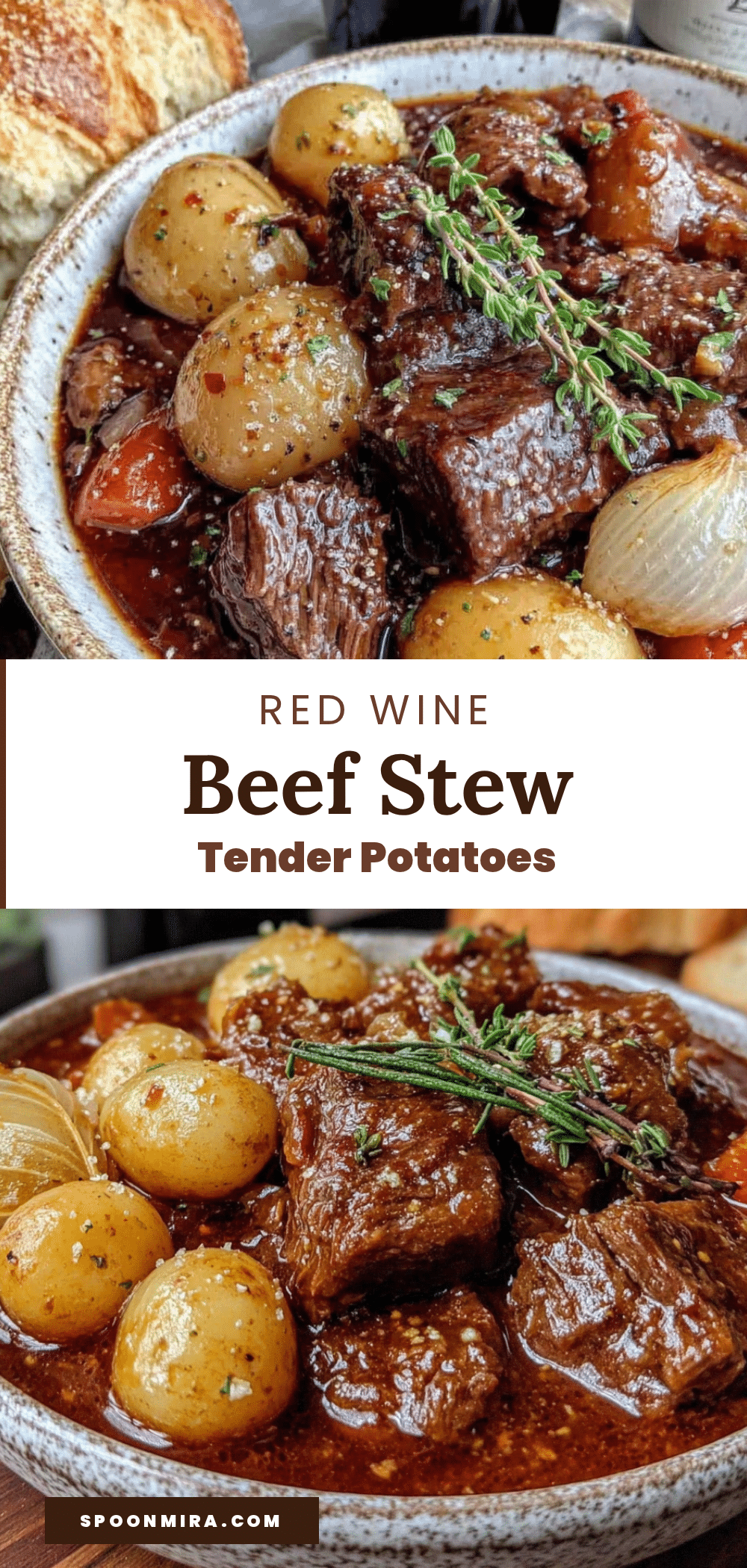
Cozy Red Wine Beef Stew with Tender Potatoes
This cozy red wine beef stew with tender potatoes is a one-pot wonder that delivers deep, rich flavor with minimal effort. The beef becomes fall-apart tender, and the potatoes soak up the wine-infused broth for a comforting meal that’s perfect for cold nights.
- Prep Time: 20 minutes
- Cook Time: 2 hours 15 minutes
- Total Time: 2 hours 35 minutes
- Yield: 6 servings 1x
- Category: Main Course
- Cuisine: American
Ingredients
- 2 pounds beef chuck roast, cut into 1.5-inch cubes
- 2 tablespoons olive oil, divided
- 1 large yellow onion, diced (about 1.5 cups)
- 3 cloves garlic, minced
- 3 tablespoons all-purpose flour
- 2 tablespoons tomato paste
- 1.5 cups dry red wine (Cabernet Sauvignon or Merlot)
- 3 cups low sodium beef broth
- 2 bay leaves
- 1 teaspoon dried thyme
- 1 teaspoon salt, plus more to taste
- ½ teaspoon black pepper
- 1.5 pounds Yukon Gold potatoes, cut into 1-inch chunks
- 3 large carrots, peeled and cut into 1-inch rounds
- 2 celery stalks, sliced into ½-inch pieces
- 1 cup frozen peas
Instructions
- Prep your ingredients first: Cut beef into 1.5-inch cubes, dice onion, mince garlic, chop carrots and celery, and cut potatoes. Set aside in separate bowls.
- Season and sear the beef: Pat beef cubes dry with paper towels. Season generously with salt and pepper. Heat 1 tablespoon olive oil in a Dutch oven over medium-high heat until shimmering. Add beef in a single layer (in 2-3 batches) and brown undisturbed for 3-4 minutes per side until a deep, dark crust forms. Transfer browned beef to a large bowl and set aside.
- Sauté the aromatics: Reduce heat to medium and add remaining 1 tablespoon olive oil. Add diced onion and cook for 4-5 minutes, stirring occasionally, until soft and translucent. Scrape up any browned bits from the bottom. Add minced garlic and cook for 30 seconds until fragrant.
- Build the flavor base: Sprinkle flour over onions and garlic, stirring constantly for 1-2 minutes. Add tomato paste and stir for another minute until it darkens slightly.
- Add the wine and beef: Pour in red wine and scrape the bottom of the pot with a wooden spoon to release stuck-on bits. Let simmer for 2-3 minutes. Return browned beef to the pot along with any accumulated juices. Add beef broth, bay leaves, and dried thyme. Stir everything together.
- Start the slow simmer: Bring stew to a gentle boil, then reduce heat to low. Cover and let simmer for 1 hour.
- Add the vegetables: After 1 hour, add potatoes, carrots, and celery to the pot. Stir gently to submerge. Cover and continue simmering for 45 minutes to 1 hour, until potatoes are fork-tender and beef is falling apart.
- Finish with peas and adjust seasoning: Stir in frozen peas and let warm through for about 5 minutes. Remove bay leaves. Taste broth and add more salt and pepper if needed (usually another ½ teaspoon salt).
- Rest and serve: Let stew sit off heat for 10-15 minutes before serving. Ladle into bowls and serve with crusty bread for dipping.
Notes
For best results, use well-marbled chuck roast. Pat beef dry before searing for a good crust. Low and slow simmering is key for tender beef. The stew tastes even better the next day. For gluten-free, use a gluten-free flour blend or a cornstarch slurry. For lower-carb, replace potatoes with cauliflower florets.
Nutrition
- Serving Size: 1.5 cups
- Calories: 420
- Sugar: 8
- Sodium: 800
- Fat: 18
- Saturated Fat: 6
- Carbohydrates: 30
- Fiber: 5
- Protein: 35
Keywords: beef stew, red wine stew, cozy stew, one-pot meal, comfort food, winter recipe, beef and potatoes