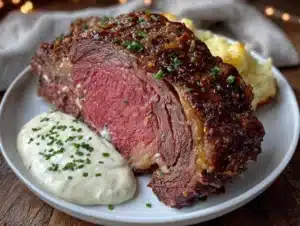
I’ll never forget the first time I attempted corned beef. It was a rainy Tuesday in March, and I had this stubborn idea that I could make it taste like the version from the old Irish pub downtown. Three hours into boiling, my kitchen smelled… fine. Nothing special. The meat was tough, the cabbage was sad, and I sat there thinking, “There has to be a better way.”
Then my neighbor Margaret, who grew up in County Cork, watched me lugging groceries inside one afternoon. She didn’t say anything at first. Just nodded at my bag of corned beef and gave me this knowing little smile. A week later, a handwritten card showed up in my mailbox with her method scrawled across it in blue ink. No fancy techniques. No fuss. Just a slow cooker, a bottle of Guinness, and a mustard glaze she called “the secret weapon.”
Honestly, that card changed everything. The first time I made it her way, I actually teared up a little. The meat shredded like butter. The cabbage soaked up all that rich, malty broth. And that glaze — sticky, tangy, with just enough bite — it was the kind of thing you want to lick off the spoon when nobody’s watching. Maybe you’ve been there, standing over a slow cooker, wondering if dinner will actually deliver comfort or just another weeknight letdown.
This cozy slow cooker corned beef and cabbage with Guinness mustard glaze is the recipe that finally delivered. It’s the one I make when I need a hug in food form, when the weather turns cold, or when I just want my kitchen to smell like someone who actually knows what they’re doing. Margaret said it best: “You don’t cook corned beef. You coax it.” And this method? It coaxes every bit of flavor out of that brisket until it practically melts.
Why You’ll Love This Recipe
This isn’t just another corned beef recipe you’ll forget about by Tuesday. This is the one that makes people close their eyes after the first bite and go quiet for a second. I’ve tested it six times to get the balance right — the tenderness of the meat, the way the cabbage stays tender without turning to mush, and that Guinness mustard glaze that ties everything together like a warm blanket on a cold night.
- Set It and Forget It: The slow cooker does all the heavy lifting. You literally toss everything in, walk away, and come back to a kitchen that smells like a cozy Irish pub. No babysitting required.
- Simple Ingredients, Big Flavor: You probably already have mustard, brown sugar, and butter in your pantry. The only special trip is for the corned beef and a bottle of Guinness — and honestly, that’s a fun errand.
- Perfect for St. Patrick’s Day or Any Cold Day: Sure, it’s the classic March celebration dish. But honestly, this recipe shines on any rainy Tuesday when you need comfort food that delivers.
- Crowd-Pleaser Status: I’ve served this to picky eaters, meat-and-potatoes folks, and friends who swore they didn’t like corned beef. Every single plate came back clean.
- That Glaze, Though: The Guinness mustard glaze is what takes this from “good” to “can I have the recipe?” territory. It’s sticky, tangy, slightly sweet, and absolutely unforgettable.
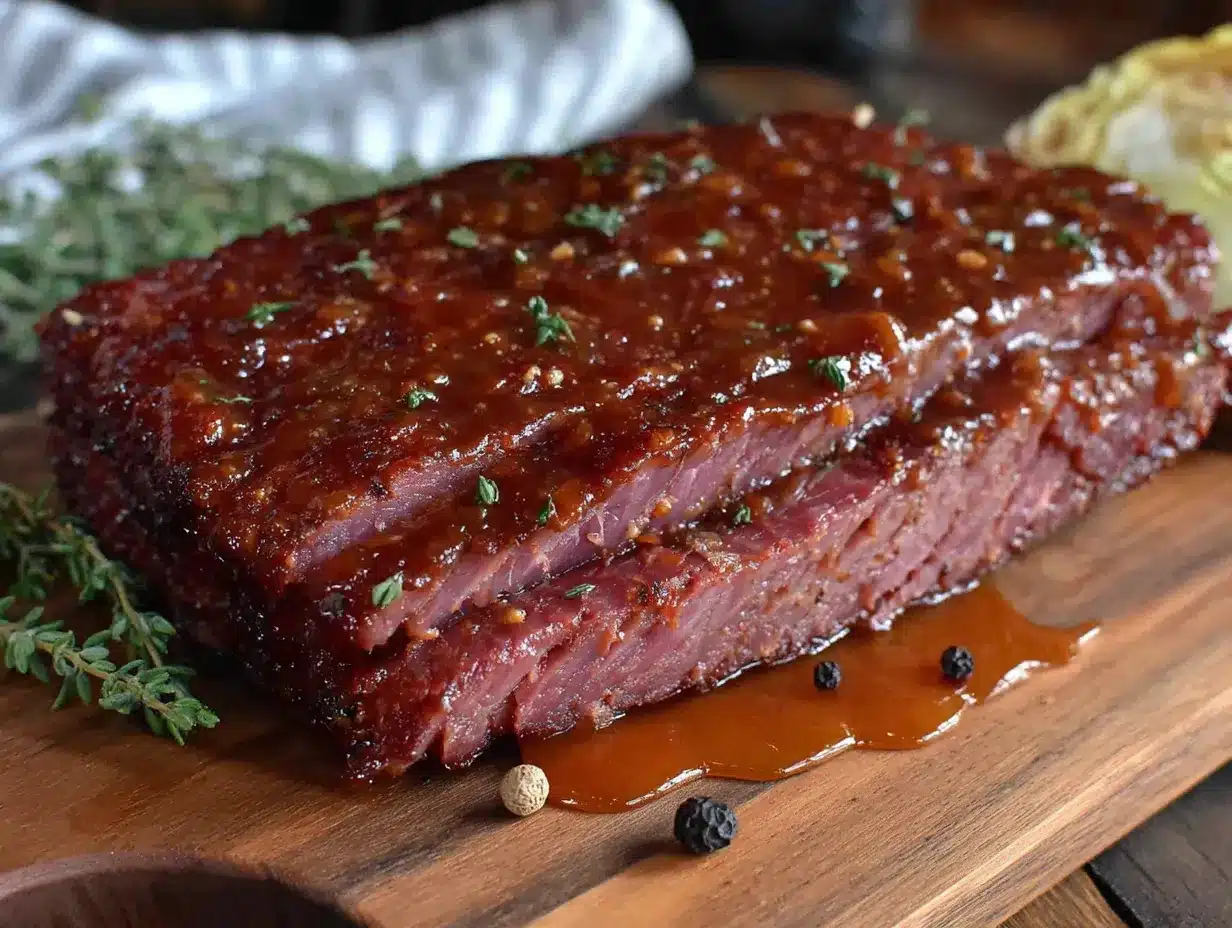
What makes this version different? Most recipes either boil the heck out of the meat or skip the glaze entirely. This one slow-cooks the brisket until it’s fall-apart tender, then finishes it under the broiler with that glossy Guinness mustard coating. It’s comfort food reimagined — richer, more flavorful, but with the same soul-soothing satisfaction you’re craving. Perfect for impressing guests without the stress, or turning a simple Wednesday into something worth remembering.
What Ingredients You Will Need
This recipe uses simple, hearty ingredients that work together to create something truly special. Most of these are pantry staples or easy to find at any grocery store. Here’s what you’ll need and why each ingredient matters.
For the Corned Beef
- 3 to 4 pounds corned beef brisket (flat cut preferred, with seasoning packet) — The flat cut is leaner and slices beautifully, while the point cut is more marbled and shreds easier. I personally grab the flat cut from Boar’s Head or Kirkland when I can find it. Look for one with nice marbling and a pink, fresh appearance.
- 1 bottle Guinness Draught (11.2 oz) — This adds deep, malty richness that water alone just can’t deliver. Don’t use Guinness Extra Stout here; it’s too bitter. The Draught is smooth and perfect for braising.
- 4 cups beef broth (low sodium) — Adds savory depth without making the final dish too salty. I like Swanson or Kitchen Basics for consistent flavor.
- 2 tablespoons brown sugar (packed) — Helps balance the saltiness of the brine and adds a subtle sweetness that pairs beautifully with the Guinness.
- 1 tablespoon apple cider vinegar — Brightens the cooking liquid and helps tenderize the meat. Don’t skip it; it makes a difference.
- 3 cloves garlic (smashed) — Infuses the broth with aromatic warmth. Use fresh, not pre-minced, for the best flavor.
- 2 bay leaves — Adds a subtle herbal note that rounds out the braising liquid.
- 1 teaspoon black peppercorns — Whole peppercorns add gentle heat without overwhelming the dish.
For the Vegetables
- 1 large head green cabbage (about 2 pounds), cut into 8 wedges — Keeps its shape during slow cooking and soaks up all that delicious broth. Look for a dense, heavy head with tight leaves.
- 1.5 pounds baby potatoes (Yukon Gold or red) — Yukon Golds hold their shape well and have a buttery texture. Red potatoes work great too. Cut larger ones in half so they cook evenly.
- 4 large carrots, peeled and cut into 2-inch chunks — Adds natural sweetness that balances the salty, savory broth. I cut them on a diagonal for a prettier presentation.
- 1 large yellow onion, cut into large chunks — Melts into the broth and adds savory depth. Sweet onions also work well here.
For the Guinness Mustard Glaze
- 1/4 cup Guinness Draught (reserved from the bottle) — Gives the glaze that signature malty flavor.
- 3 tablespoons whole grain mustard — I love Grey Poupon or Maille for their texture and balanced heat. The whole grains add a beautiful visual element.
- 2 tablespoons Dijon mustard — Adds creaminess and a smoother heat. Don’t use yellow mustard here; it’s too sharp.
- 3 tablespoons brown sugar (packed) — Caramelizes under the broiler to create that sticky, glossy finish.
- 2 tablespoons unsalted butter (melted) — Adds richness and helps the glaze spread evenly.
- 1 tablespoon honey — Balances the mustard’s bite with a touch of floral sweetness. Maple syrup works in a pinch.
Equipment Needed
You don’t need a lot of fancy gear for this one. Here’s what I use every time:
- 6-quart slow cooker — This size is perfect for a 3-4 pound brisket plus vegetables. Anything smaller and you’ll be cramming things in. I’ve had my Crock-Pot brand one for years and it’s never let me down. Budget-friendly option: any brand with a tight-fitting lid works fine.
- Small saucepan — For making the glaze. A 1-quart size is perfect. Nonstick makes cleanup easier.
- Baking sheet — For broiling the glazed brisket. Line it with foil for easy cleanup. Trust me on this one.
- Tongs — For handling the hot brisket without tearing it apart. Silicone-tipped ones are gentle on the meat.
- Sharp chef’s knife — For slicing the brisket against the grain. A dull knife will shred the meat instead of giving you clean slices.
- Cutting board — Preferably one with a juice groove to catch all those lovely drippings.
- Measuring cups and spoons — For the glaze ingredients. Nothing fancy needed.
- Pastry brush — For applying the glaze. A silicone brush works best and doesn’t shed bristles.
Pro tip: If you don’t have a pastry brush, just use the back of a spoon to spread the glaze. It’s not as pretty, but it works perfectly fine. I’ve done it more times than I’d like to admit.
Preparation Method
This is where the magic happens. Follow these steps, and you’ll have a dinner that feels like a celebration.
- Rinse and prep the brisket (5 minutes): Take the corned beef out of its package and rinse it under cold water. This removes some of the surface brine so the final dish isn’t too salty. Pat it dry with paper towels. Save the seasoning packet that comes with it — you’ll use it later.
- Build the braising liquid (5 minutes): Pour the Guinness and beef broth into your slow cooker. Stir in the brown sugar, apple cider vinegar, smashed garlic cloves, bay leaves, black peppercorns, and the contents of the seasoning packet. Give it a quick stir. The liquid should smell rich and slightly sweet at this point.
- Add the brisket (2 minutes): Place the corned beef fat-side up in the slow cooker. The fat cap will render as it cooks, keeping the meat moist and flavorful. If the brisket doesn’t fit, cut it in half — it’ll still cook beautifully.
- Cook low and slow (8-10 hours on low OR 4-5 hours on high): Cover and cook on low for the most tender results. I always go with low if I have the time. The meat is ready when it’s fork-tender and pulls apart easily. About 30 minutes before the meat is done, you’ll add the vegetables.
- Add the vegetables (30 minutes before serving): Carefully remove the brisket from the slow cooker and set it on a plate. Tent it loosely with foil to keep it warm. Add the cabbage wedges, baby potatoes, carrots, and onion chunks to the broth. Nestle them down so they’re mostly submerged. Cover and cook on high for 30 minutes, or until the potatoes are tender when pierced with a fork.
- Make the Guinness mustard glaze (10 minutes): While the vegetables cook, make the glaze. In a small saucepan over medium heat, combine the reserved 1/4 cup Guinness, whole grain mustard, Dijon mustard, brown sugar, melted butter, and honey. Whisk until smooth. Bring to a gentle simmer and cook for 5-7 minutes, stirring occasionally, until the glaze thickens slightly and coats the back of a spoon. It should look glossy and smell amazing.
- Broil the brisket (5 minutes): Preheat your broiler to high. Place the cooked brisket on a foil-lined baking sheet, fat-side up. Brush the Guinness mustard glaze generously all over the top and sides. Broil for 3-5 minutes, watching closely, until the glaze is bubbly, caramelized, and slightly darkened in spots. Don’t walk away — it can go from perfect to burnt in seconds.
- Rest and slice (10 minutes): Let the glazed brisket rest for 5-10 minutes. This is crucial — it lets the juices redistribute so your slices stay moist. Slice the brisket against the grain into 1/4-inch thick slices. Against the grain is key; slicing with the grain gives you tough, stringy meat.
- Serve it up (5 minutes): Arrange the sliced brisket on a platter with the potatoes, carrots, and cabbage wedges. Spoon a little of the cooking broth over the vegetables for extra flavor. Drizzle any remaining glaze over the meat. Serve warm and watch everyone go quiet.
Cooking Tips & Techniques
I’ve made this recipe enough times to know where things can go wrong. Here’s what I’ve learned the hard way so you don’t have to.
Don’t skip the rinse. I know it feels like you’re washing away flavor, but that brine is intense. Rinsing the brisket keeps the final dish from being mouth-puckeringly salty. Trust me on this one — I skipped it once and regretted every bite.
Low and slow is non-negotiable. I get it, you’re hungry. But cooking on high for the full time will give you tough, dry meat. Low heat gently breaks down the connective tissue, turning that brisket into something you can pull apart with a fork. Plan ahead and start it in the morning.
Watch the glaze like a hawk. The broiler step is quick. I mean, really quick. I once got distracted by a text message and ended up with a brisket that looked like it had been through a fire. Set a timer for 3 minutes and check it. Add more time in 1-minute increments if needed.
Slice against the grain every time. Look at the brisket before you cut it. You’ll see lines running through the meat — that’s the grain. Slice perpendicular to those lines. If you slice with the grain, you’ll be chewing for days. I learned this one from a very tough, very sad St. Patrick’s Day dinner.
Let it rest. I know the smell is driving you crazy, but cutting into that brisket right away will release all the juices onto your cutting board. Give it 5-10 minutes under foil. Your patience will be rewarded with moist, tender slices.
Don’t overcrowd the slow cooker. If your brisket is on the larger side, cut it in half. The meat needs room for the broth to circulate. Cramming everything in leads to uneven cooking and a sad dinner.
Variations & Adaptations
This recipe is wonderfully flexible. Here are some ways to make it your own.
Gluten-Free Option: Use a gluten-free beer like Omission or Glutenberg instead of Guinness. The flavor will be slightly different, but still delicious. Check your corned beef label — most are gluten-free, but some brands add flavorings that contain gluten.
Low-Carb / Keto Adaptation: Skip the potatoes and add extra cabbage and carrots. You can also add turnips or rutabaga for a lower-carb alternative that still feels hearty. The glaze has sugar, so use it sparingly or swap the brown sugar for a keto-friendly sweetener like Swerve.
Spicy Twist: Add 1 teaspoon of smoked paprika and 1/2 teaspoon of cayenne pepper to the glaze for a smoky, spicy kick. I tried this on a whim one night and it was surprisingly amazing. The heat cuts through the richness beautifully.
Beer Swap: No Guinness on hand? Use a dark lager, stout, or even a brown ale. Avoid IPAs — the bitterness throws off the balance. I’ve used Samuel Smith’s Nut Brown Ale with great results.
Instant Pot Method: Pressure cook the brisket on high for 90 minutes with a natural release. Add the vegetables and cook for another 5 minutes. Make the glaze on the stovetop while the meat rests, then broil as directed. It’s faster, but the slow cooker version is more forgiving.
Vegetarian Version: Swap the brisket for 2 large portobello mushroom caps or a head of cauliflower cut into steaks. Braise in the same broth for 2-3 hours on low, then glaze and broil. It’s not the same, but it’s surprisingly satisfying.
Serving & Storage Suggestions
This meal is best served warm, straight from the slow cooker. Here’s how to make the most of it.
Serving temperature: Serve the brisket warm, not hot. Let it rest after broiling so the glaze sets slightly. The vegetables should be piping hot from the broth. I like to arrange everything on a big platter family-style, so everyone can grab what they want.
What to serve with it: This is a complete meal in itself, but a side of crusty Irish soda bread or brown bread is perfect for soaking up the broth. A simple green salad with a tangy vinaigrette cuts through the richness nicely. For drinks, a pint of Guinness is the obvious choice, but a crisp cider or even a bold red wine works too.
Storage instructions: Store leftover brisket and vegetables separately in airtight containers. The brisket stays moist for up to 4 days in the fridge. The vegetables are best within 2 days — they get softer over time. Keep the cooking broth in a separate container; it’s liquid gold for soups or stews.
Freezer tips: The brisket freezes beautifully for up to 3 months. Slice it first, then wrap tightly in plastic wrap and foil. The vegetables don’t freeze well — they turn mushy. I freeze the brisket in portions so I can pull out just what I need for sandwiches or hash.
Reheating methods: For the brisket, reheat slices in a skillet with a splash of broth over medium-low heat. Cover with a lid to keep it moist. The microwave works in a pinch, but it tends to dry out the meat. For the vegetables, reheat in the microwave or in a pan with a little butter. The flavors actually deepen overnight, so leftovers are often even better the next day.
Leftover ideas: This brisket makes incredible sandwiches on rye bread with Swiss cheese and extra mustard. Or chop it up and fry it with potatoes for a killer corned beef hash. I’ve even used leftovers in a breakfast scramble with eggs — highly recommended.
Nutritional Information & Benefits
This is comfort food, so it’s not exactly diet fare. But it does have some redeeming qualities.
Estimated per serving (based on 8 servings): Calories: 485, Protein: 32g, Fat: 22g, Carbohydrates: 38g, Fiber: 6g, Sugar: 14g, Sodium: 980mg. These are rough estimates — actual values depend on your specific ingredients and portion sizes.
Health highlights: Corned beef is a good source of protein, iron, and B vitamins, especially B12. Cabbage is packed with vitamin C, vitamin K, and fiber. Potatoes provide potassium and vitamin C. Carrots are loaded with beta-carotene. So yes, it’s hearty, but it’s not empty calories.
Dietary considerations: This recipe is naturally dairy-free (except for the butter in the glaze, which you can swap for a plant-based option). It’s not gluten-free unless you use a gluten-free beer. It’s also relatively low in carbs if you skip the potatoes. The main concern is sodium — the brine and broth add up. If you’re watching your salt intake, use low-sodium broth and skip the seasoning packet.
My perspective: I don’t believe in labeling food as “good” or “bad.” This is a celebration meal, a comfort dish, something you make when you need to feel taken care of. One serving fits perfectly into a balanced diet. Plus, the leftovers make for an amazing breakfast hash the next morning. It’s all about balance, right?
Conclusion
This cozy slow cooker corned beef and cabbage with Guinness mustard glaze is more than just a recipe. It’s the kind of meal that makes you slow down, take a deep breath, and actually enjoy the moment. The meat is tender, the vegetables are perfectly cooked, and that glaze — honestly, I could eat it with a spoon.
What I love most about this recipe is how forgiving it is. You don’t need to be a professional chef to pull it off. Just a slow cooker, a little patience, and the willingness to try something that feels a bit special. Margaret’s handwritten card is still taped inside my kitchen cabinet, stained with broth and splattered with glaze. Every time I make it, I think about her standing in her own kitchen, probably making the same dish for her family. That’s the thing about recipes like this — they connect us.
I’d love to hear how yours turns out. Did you add your own twist? Serve it with something unexpected? Leave a comment below and tell me about it. And if you’re looking for more cozy comfort food, you might enjoy my slow cooker beef stew with red wine or these Irish soda bread rolls. Happy cooking, friends. And remember — low and slow wins the race.
Frequently Asked Questions
Can I use a different cut of beef for this recipe?
Corned beef is typically made from brisket, which is ideal for slow cooking. You could use a bottom round or chuck roast, but the texture and flavor will be different. Brisket has the perfect balance of fat and connective tissue for this method.
Do I need to soak the corned beef before cooking?
No, a quick rinse under cold water is sufficient. Soaking can actually remove too much flavor. Just rinse, pat dry, and you’re good to go. The slow cooking process will mellow out the saltiness naturally.
Can I add the vegetables at the beginning?
I don’t recommend it. If you add cabbage and potatoes at the start, they’ll turn into mush after 8 hours. Adding them in the last 30 minutes keeps them tender but not falling apart. Trust me on this one — I learned the hard way.
What if I don’t have Guinness?
Any dark beer or stout will work. Try a brown ale, porter, or even a non-alcoholic stout. Avoid light beers and IPAs — they don’t have enough body to stand up to the brisket. You can also use extra beef broth in a pinch, though you’ll lose some depth.
How do I prevent the glaze from burning under the broiler?
Watch it like a hawk. The sugar in the glaze caramelizes quickly. Keep the brisket on the middle rack, not too close to the heating element. Set a timer for 3 minutes and check it. If it needs more time, add 1-minute increments. Burnt glaze is bitter and sad — don’t let it happen to you.
Pin This Recipe!
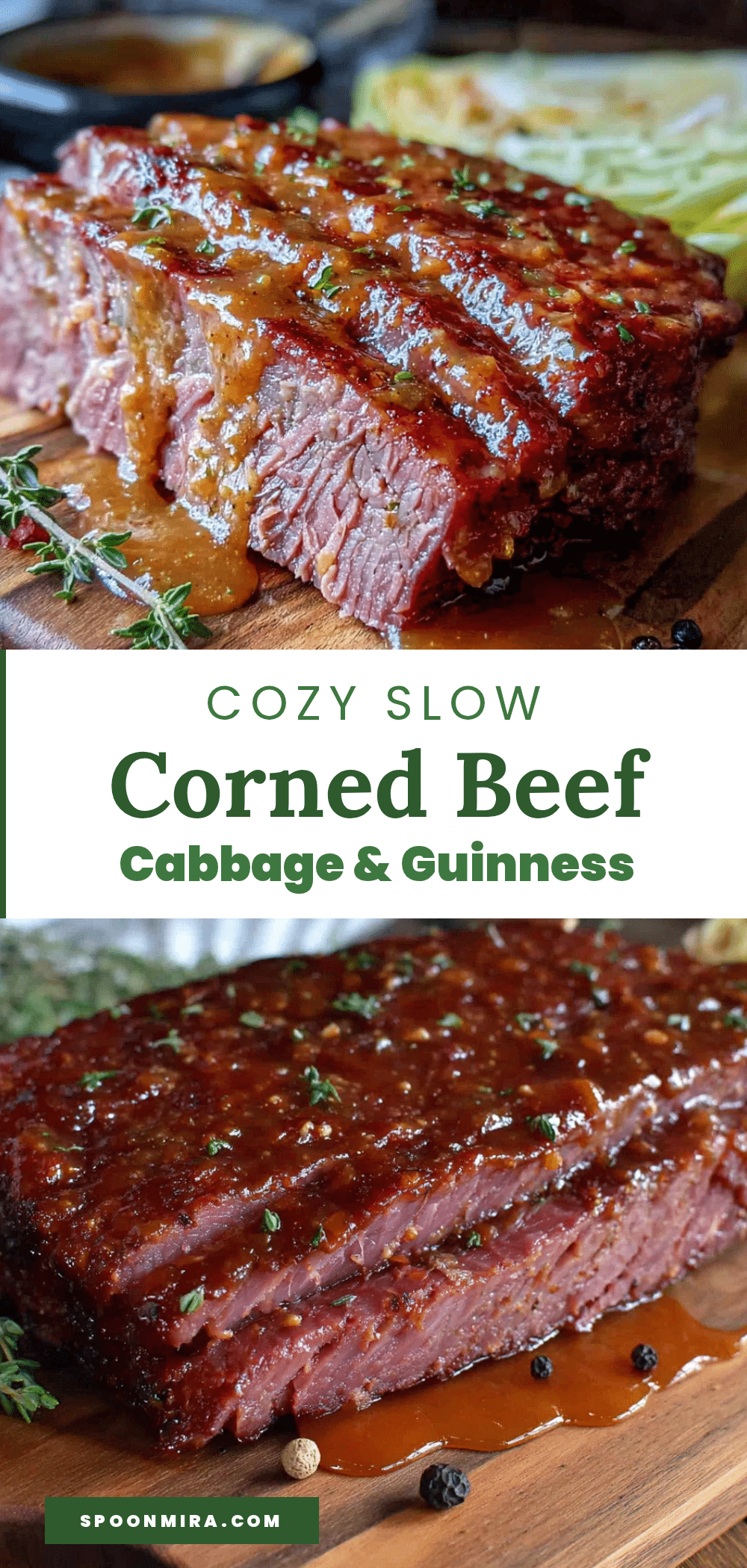
Cozy Slow Cooker Corned Beef and Cabbage with Guinness Glaze
This slow cooker corned beef and cabbage is fall-apart tender, simmered in Guinness and beef broth, then finished with a sticky, tangy Guinness mustard glaze. It’s the ultimate comfort food for St. Patrick’s Day or any cold day.
- Prep Time: 15 minutes
- Cook Time: 8 hours 30 minutes
- Total Time: 8 hours 45 minutes
- Yield: 8 servings 1x
- Category: Main Course
- Cuisine: Irish
Ingredients
- 3 to 4 pounds corned beef brisket (flat cut preferred, with seasoning packet)
- 1 bottle Guinness Draught (11.2 oz)
- 4 cups low sodium beef broth
- 2 tablespoons packed brown sugar
- 1 tablespoon apple cider vinegar
- 3 cloves garlic, smashed
- 2 bay leaves
- 1 teaspoon black peppercorns
- 1 large head green cabbage (about 2 pounds), cut into 8 wedges
- 1.5 pounds baby potatoes (Yukon Gold or red)
- 4 large carrots, peeled and cut into 2-inch chunks
- 1 large yellow onion, cut into large chunks
- 1/4 cup Guinness Draught (reserved from the bottle)
- 3 tablespoons whole grain mustard
- 2 tablespoons Dijon mustard
- 3 tablespoons packed brown sugar
- 2 tablespoons unsalted butter, melted
- 1 tablespoon honey
Instructions
- Rinse the corned beef under cold water and pat dry. Save the seasoning packet.
- In a 6-quart slow cooker, combine Guinness, beef broth, brown sugar, apple cider vinegar, smashed garlic, bay leaves, black peppercorns, and the seasoning packet. Stir.
- Place the brisket fat-side up in the slow cooker. If it doesn’t fit, cut it in half.
- Cover and cook on low for 8-10 hours or on high for 4-5 hours, until fork-tender.
- About 30 minutes before serving, remove the brisket to a plate and tent with foil. Add cabbage wedges, potatoes, carrots, and onion to the broth. Cover and cook on high for 30 minutes, until potatoes are tender.
- While vegetables cook, make the glaze: In a small saucepan over medium heat, combine reserved 1/4 cup Guinness, whole grain mustard, Dijon mustard, brown sugar, melted butter, and honey. Whisk and simmer for 5-7 minutes until thickened.
- Preheat broiler to high. Place brisket on a foil-lined baking sheet, fat-side up. Brush generously with glaze. Broil for 3-5 minutes, watching closely, until bubbly and caramelized.
- Let brisket rest for 5-10 minutes, then slice against the grain into 1/4-inch slices.
- Arrange sliced brisket on a platter with vegetables. Spoon some cooking broth over vegetables and drizzle remaining glaze over meat. Serve warm.
Notes
Don’t skip rinsing the brisket to control saltiness. Low and slow is key for tenderness. Watch the glaze under the broiler closely to prevent burning. Slice against the grain for best texture. Let the meat rest before slicing.
Nutrition
- Serving Size: 1 serving (about 1/8
- Calories: 485
- Sugar: 14
- Sodium: 980
- Fat: 22
- Saturated Fat: 8
- Carbohydrates: 38
- Fiber: 6
- Protein: 32
Keywords: corned beef, cabbage, slow cooker, Guinness, St. Patrick's Day, comfort food, brisket