The power went out halfway through prepping dinner last Tuesday. Not a dramatic storm or anything — just my clumsy self bumping into the counter and knocking the plug loose from the wall. I was already in a mood, honestly. A rough day at work, the kind where you just want to crawl into a bowl of something warm and forget the world existed. And there I was, staring at a defrosting flank steak and a bottle of gochujang I’d bought on a whim three weeks ago, with no power and no clear plan.
This was supposed to be a simple grilled steak with a side of rice. You know, boring Tuesday night food. But the grill was gas, and without power to the igniter, I was stuck. I grabbed the wrong pan — a cast iron skillet instead of the non-stick I usually reach for — and figured I’d just sear the meat inside. The gochujang got mixed with soy sauce and honey in a moment of pure desperation. I mean, I was hungry, the fridge light was off, and I just started throwing things together. What came out was nothing like the plan. And it was better.
The skewers were an afterthought. I found a pack of bamboo sticks in the back of a drawer, probably from a barbecue two summers ago. I cut the steak into chunks, threaded them on, and let them sit in that makeshift sauce for maybe ten minutes. The sizzle when they hit the hot cast iron was so loud it made me jump. The kitchen filled with this smell — sweet, spicy, smoky, like something from a street market I’d never actually been to but dreamed about. I didn’t even make rice. I just stood there, eating one skewer after another, standing over the stove in the dark, and it was the best meal I’d had in weeks.
Maybe you’ve been there — that moment when a kitchen disaster turns into something you keep making on purpose. These cozy sweet and spicy Korean BBQ beef skewers are that recipe for me. They started as a mistake, but now I make them on purpose, every time I need a little comfort in a hurry.
Why You’ll Love This Recipe
Let me tell you why these skewers have become my go-to for those nights when only something warm, sticky, and satisfying will do. I’ve tested this recipe about seven times now — tweaking the marinade, adjusting the cook time, even trying it on a proper grill once the power came back. It works every single time, and it never fails to make me happy.
- Quick & Easy: From fridge to plate in under 30 minutes. No marinating overnight, no complicated steps. Just chop, mix, thread, and cook.
- Simple Ingredients: You probably have most of this already. Soy sauce, honey, garlic, ginger. The only special item is gochujang (Korean chili paste), and trust me, it’s worth finding. Most grocery stores carry it now, or you can order it online.
- Perfect for Cozy Nights: These skewers are made for cold weather, rainy evenings, or any day that needs a little warming up. The sweet and spicy combo is pure comfort food energy.
- Crowd-Pleaser: I’ve served these to friends who claim they don’t like spicy food, and they went back for thirds. The sweetness balances the heat so perfectly that even kids tend to love them.
- Unbelievably Delicious: The texture is what gets me every time. That caramelized, slightly charred exterior with the tender, juicy meat inside. It’s next-level comfort food, I swear.
What makes this recipe different from all the other Korean BBQ recipes out there? It’s the balance. I spent a lot of time playing with the ratio of gochujang to honey, and I finally landed on something that feels right — spicy enough to wake you up, sweet enough to feel like a hug. It’s not just another version. It’s the one I keep coming back to.
This recipe is the kind that makes you close your eyes after the first bite. It’s comfort food reimagined — faster, simpler, but with all the soul-soothing satisfaction you need after a long day.
What Ingredients You Will Need
This recipe uses simple, mostly pantry-friendly ingredients to deliver that bold, sticky, sweet-and-spicy flavor without any fuss. Here’s everything you need, plus a few notes from my kitchen trials.
For the Marinade & Sauce
- Gochujang (Korean chili paste) — 3 tablespoons. This is the heart of the flavor. It’s thick, slightly sweet, and deeply savory. I prefer the brand Chung Jung One for its balanced heat. Look for it in the international aisle of most grocery stores.
- Honey — 2 tablespoons. Adds sweetness and helps create that gorgeous caramelized glaze. You can use maple syrup if you’re out of honey, but the flavor will be slightly different — still good, just less floral.
- Soy sauce — 3 tablespoons. Use low-sodium if you have it, so you can control the saltiness better. I’ve made this with tamari for a gluten-free option, and it works perfectly.
- Sesame oil — 1 tablespoon. That nutty, toasty flavor is essential. Don’t skip it — it adds a layer of warmth that ties everything together.
- Rice vinegar — 1 tablespoon. Just a little acidity to brighten up the sauce. Apple cider vinegar works in a pinch.
- Fresh garlic — 4 cloves, minced. Please don’t use the jarred stuff here. Fresh garlic makes a real difference in the depth of flavor.
- Fresh ginger — 1 tablespoon, grated. Again, fresh is best. The warmth and slight peppery kick are irreplaceable.
For the Beef
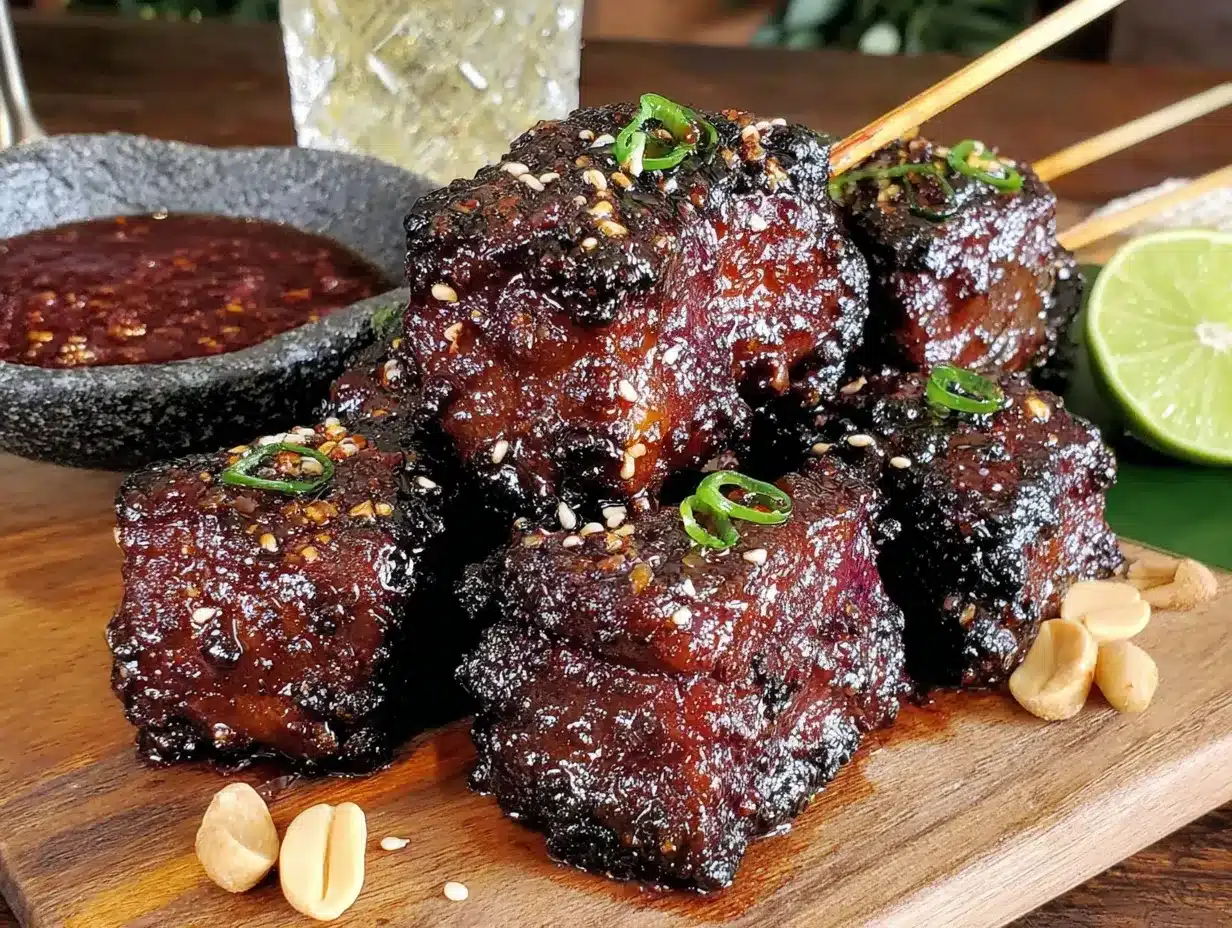
- Flank steak or sirloin — 1.5 pounds (about 680 grams). Flank steak is my favorite for skewers — it’s lean, takes on marinade beautifully, and stays tender if you don’t overcook it. Sirloin works too, just cut it against the grain.
- Green onions — 4 stalks, sliced for garnish. Also great threaded onto the skewers if you want a little charred onion flavor.
- Sesame seeds — 1 tablespoon, toasted. For that final sprinkle that makes everything look professional.
Optional Add-Ins
- Pear — Half a grated Asian pear or regular Bosc pear. This is a traditional Korean marinade ingredient that naturally tenderizes the beef and adds a subtle sweetness. I add it when I have one on hand, but it’s not essential.
- Gochugaru (Korean chili flakes) — A teaspoon if you want extra heat and a slightly smoky flavor. I sometimes add this when I’m feeling adventurous.
Equipment Needed
You don’t need a fancy kitchen for these skewers. Here’s what I use, along with a few alternatives I’ve tried.
- Bamboo or metal skewers — If using bamboo, soak them in water for at least 20 minutes before cooking. I learned this the hard way after a smoky kitchen incident. Metal skewers are reusable and don’t need soaking.
- Cast iron skillet or grill pan — My go-to for that beautiful sear. A non-stick pan works, but you won’t get the same caramelization. If you have an outdoor grill, even better.
- Mixing bowl — For the marinade. Any medium bowl works.
- Cutting board and sharp knife — For slicing the beef. A dull knife will make your life harder than it needs to be.
- Tongs — For flipping the skewers. I’ve used a fork in a pinch, but tongs are much easier.
- Pastry brush — Optional, but helpful for basting extra sauce onto the skewers while they cook.
If you don’t have a cast iron skillet, don’t worry. I’ve made these in a regular stainless steel pan with good results — just make sure it’s hot before you add the skewers.
Preparation Method
Let’s get cooking. I’ve broken this down into clear steps, with all the little notes I wish someone had told me the first time.
- Soak your skewers — If using bamboo skewers, place them in a shallow dish of water and let them soak for at least 20 minutes. This prevents them from burning on the hot pan. I usually do this first, then prep everything else while they soak.
- Slice the beef — Cut your flank steak against the grain into thin strips, about 1/2-inch thick. Against the grain is key here — it makes the meat more tender when you bite into it. I learned this after a few chewy batches. Aim for pieces that are roughly the same size so they cook evenly.
- Make the marinade — In a medium bowl, whisk together 3 tablespoons gochujang, 2 tablespoons honey, 3 tablespoons soy sauce, 1 tablespoon sesame oil, 1 tablespoon rice vinegar, 4 minced garlic cloves, and 1 tablespoon grated ginger. If you’re using the grated pear, add it now. The mixture should be thick but pourable — like a slightly runny barbecue sauce.
- Marinate the beef — Place the sliced beef in the bowl with the marinade. Use your hands (clean ones!) to toss everything together, making sure every piece is coated. Let it sit for at least 10 minutes, or up to 30 minutes if you have time. Don’t go longer than 30 minutes — the acid in the marinade can start to break down the meat too much, making it mushy. Yes, I learned that one the hard way too.
- Thread the skewers — Take each piece of beef and thread it onto a skewer, folding it slightly so it lies flat. Leave a little space between pieces for even cooking. I usually get about 4-5 pieces per skewer. Don’t pack them too tightly — they need room to char.
- Heat your pan — Place your cast iron skillet over medium-high heat and let it get hot. You want it sizzling when the meat hits the surface. Add a drizzle of neutral oil (like avocado or vegetable oil) and swirl to coat.
- Cook the skewers — Place the skewers in the hot pan in a single layer. Don’t overcrowd the pan — cook in batches if needed. Let them cook undisturbed for 3-4 minutes. You’ll see the edges start to caramelize and darken. Flip each skewer carefully with tongs and cook for another 2-3 minutes. The beef should be slightly charred on the outside and tender inside. If you like a deeper char, let them go an extra minute on each side.
- Baste with extra sauce — If you reserved a little marinade (or made a double batch), brush it onto the skewers during the last minute of cooking. This adds an extra layer of sticky, glossy goodness.
- Rest and garnish — Remove the skewers from the pan and let them rest for 2 minutes. Sprinkle with sliced green onions and toasted sesame seeds. The smell at this point is honestly intoxicating.
One more thing — the pan will have some beautiful browned bits stuck to the bottom. Don’t scrub them away! Deglaze the pan with a splash of water or broth, stir it up, and pour that over the skewers. It’s liquid gold, I promise.
Cooking Tips & Techniques
After making these skewers more times than I can count, I’ve picked up a few tricks that make a real difference. Let me share what I’ve learned.
Don’t skip the soak. I know I said it already, but burning bamboo skewers is a rookie mistake that I’ve made at least three times. The smell is awful, and it ruins the flavor of the meat. Soak them. Or just use metal skewers and save yourself the trouble.
Get the pan screaming hot. The key to that restaurant-quality char is high heat. If your pan isn’t hot enough, the beef will steam instead of sear, and you’ll lose all that caramelized goodness. Test it by flicking a drop of water onto the pan — it should sizzle and evaporate instantly.
Watch the sugar. The honey and gochujang both contain sugar, which means the marinade can burn if you’re not careful. Medium-high heat is your sweet spot. If you notice the pan getting too dark, reduce the heat slightly or flip the skewers a minute earlier.
Let the meat come to room temperature. Take the beef out of the fridge about 15 minutes before you cook it. Cold meat hits a hot pan and seizes up, making it tougher. Room-temperature meat cooks more evenly and stays tender.
My biggest failure — I once tried to cook these on a non-stick pan without any oil. The marinade stuck, burned, and I ended up with a smoky kitchen and sad, dry meat. Don’t be like me. Use a well-oiled cast iron or stainless steel pan.
Multitasking tip: While the skewers are cooking, I like to quickly steam some rice or toss together a simple cucumber salad. By the time the skewers are done, the whole meal comes together in minutes.
Variations & Adaptations
One of the best things about this recipe is how easy it is to tweak. Here are a few ways I’ve changed it up depending on my mood or what’s in the fridge.
Chicken version — Swap the beef for boneless, skinless chicken thighs. They stay juicy and take on the marinade beautifully. Cook them for about 5-6 minutes per side, until the internal temperature reaches 165°F. I’ve done this on busy weeknights and it’s just as satisfying.
Vegetarian option — Use firm tofu or thick slices of portobello mushrooms. Press the tofu first to remove excess moisture, then marinate for at least 20 minutes. Mushrooms are ready in about 4 minutes per side. My vegetarian friend raved about the mushroom version, and I honestly loved it too.
Extra spicy — Add a teaspoon of gochugaru (Korean chili flakes) to the marinade, or a chopped fresh red chili if you’re feeling brave. I did this once when I needed a serious flavor kick, and it delivered.
Oven-baked method — If you don’t want to stand over a hot pan, arrange the skewers on a baking sheet lined with parchment paper and broil for 6-8 minutes, flipping halfway through. The caramelization isn’t quite as intense, but it’s still delicious and requires less attention.
Gluten-free adaptation — Use tamari or coconut aminos instead of soy sauce. Everything else in the recipe is naturally gluten-free. I’ve tested this for a friend with celiac disease, and she gave it two thumbs up.
Serving & Storage Suggestions
These skewers are best served hot, straight off the pan, with that sticky glaze still glistening. But they’re versatile enough to work in different settings.
Serving temperature — Hot is ideal, but I’ve also enjoyed them at room temperature as part of a picnic spread. The flavors actually deepen a little as they cool.
What to serve with them — Steamed jasmine rice is my go-to. The rice soaks up all that extra sauce, and it’s pure comfort. A simple cucumber salad with rice vinegar and sesame oil adds a refreshing crunch. Kimchi on the side is never a bad idea either. For drinks, I love these with a cold beer or a glass of crisp white wine.
Storing leftovers — Remove the beef from the skewers and store in an airtight container in the fridge for up to 3 days. The texture softens a bit, but the flavor is still fantastic. I’ve been known to eat them cold straight from the fridge as a snack.
Reheating — The best way to reheat is in a hot skillet for about 2 minutes per side. The microwave works in a pinch, but you’ll lose that lovely caramelized exterior. If using the microwave, just do 30-second bursts so you don’t dry out the meat.
Freezing — You can freeze the marinated raw beef (without skewers) in a freezer bag for up to 3 months. Thaw overnight in the fridge, then thread and cook as directed. The texture after freezing is still excellent — I do this regularly for meal prep.
One thing I love is how the flavors develop overnight. If you have leftover sauce, it gets even more complex and delicious the next day. I sometimes make extra marinade just to have on hand for a quick dinner later in the week.
Nutritional Information & Benefits
While these skewers are definitely a treat, they also have some surprising nutritional perks. Here’s a rough estimate per serving (about 3 skewers, without rice or sides):
- Calories: Approximately 380
- Protein: 35 grams
- Fat: 18 grams
- Carbohydrates: 22 grams
- Sugar: 16 grams (from honey and gochujang)
The beef is an excellent source of protein, iron, and B vitamins, which support energy levels and overall health. Gochujang is made from fermented soybeans and chili, so it contains probiotics that are good for gut health — a nice bonus in a comfort food dish. Garlic and ginger both have anti-inflammatory properties, and sesame oil provides healthy fats.
This recipe is naturally gluten-free if you use tamari instead of soy sauce. It’s also dairy-free and nut-free, making it a great option for many dietary needs. If you’re watching your sugar intake, you can reduce the honey to 1 tablespoon, though the glaze won’t be quite as sticky.
I try not to overthink nutrition when I’m making comfort food, but it’s nice to know that these skewers aren’t just delicious — they’re also packed with things that are good for you.
Conclusion
These cozy sweet and spicy Korean BBQ beef skewers started as an accident in a dark kitchen, and now they’re one of my most-requested recipes. There’s something about that balance of heat and sweetness, the way the meat gets all caramelized and sticky, that just hits the spot every single time.
I hope you give them a try, especially on a night when you need a little warmth and comfort. Don’t be afraid to tweak the spice level or swap in different proteins — that’s the beauty of a recipe like this. It’s forgiving, it’s flexible, and it always delivers.
If you make these skewers, I’d love to hear how they turned out. Drop a comment below and let me know if you added your own twist, or just tell me about the cozy night you enjoyed them on. And if you’re looking for more easy weeknight dinners, you might also enjoy my sticky garlic soy chicken thighs — they have a similar vibe and are just as comforting.
Until next time, happy cooking — and don’t be afraid of happy accidents in the kitchen. Some of the best recipes come from them.
Frequently Asked Questions
Can I make these skewers ahead of time?
Yes! You can marinate the beef up to 24 hours in advance and keep it in the fridge. Thread the skewers just before cooking for the best texture. You can also cook them fully and reheat in a skillet when ready to serve.
What can I use instead of gochujang?
If you can’t find gochujang, mix 2 tablespoons of miso paste with 1 tablespoon of sriracha or chili garlic sauce. It won’t be exactly the same, but it will give you a similar sweet, savory, and spicy profile.
How do I prevent the beef from being tough?
Slice the beef against the grain and don’t overcook it. Flank steak only needs about 5-7 minutes total over high heat. Letting the meat rest for a couple of minutes after cooking also helps keep it tender.
Can I grill these outdoors?
Absolutely! Grill over medium-high heat for about 3-4 minutes per side. The smoky flavor from the grill adds another layer of deliciousness. Just make sure to oil the grates well so the meat doesn’t stick.
Is this recipe very spicy?
It has a mild to medium heat level. The honey balances the gochujang nicely, so it’s more warming than fiery. If you’re sensitive to spice, start with 2 tablespoons of gochujang and taste the marinade before adding the beef.
Pin This Recipe!
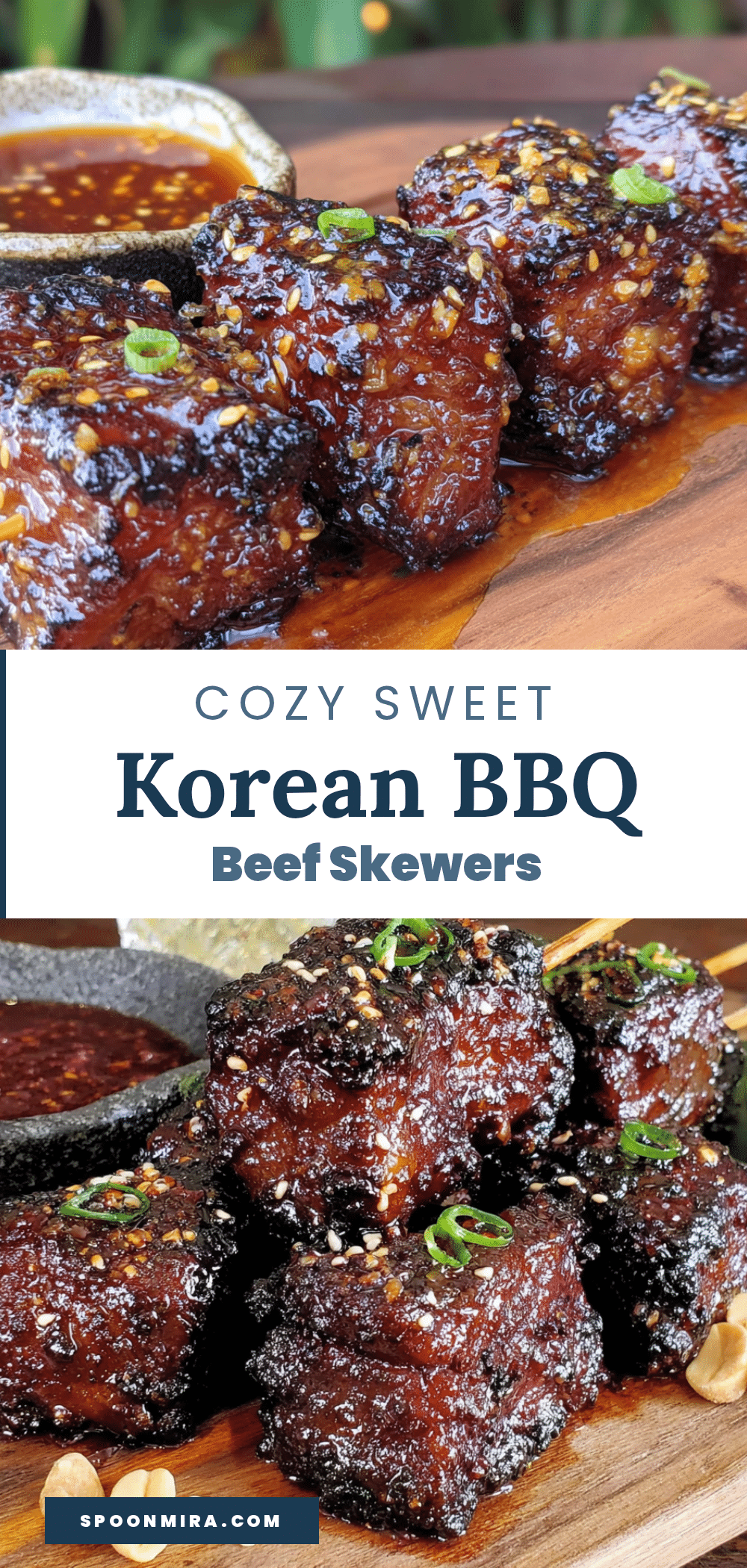
Cozy Sweet and Spicy Korean BBQ Beef Skewers
These quick and easy Korean BBQ beef skewers are sweet, spicy, and caramelized, made with gochujang and honey. Perfect for a cozy weeknight dinner, they come together in under 30 minutes with simple ingredients.
- Prep Time: 15 minutes
- Cook Time: 10 minutes
- Total Time: 25 minutes
- Yield: 4 servings 1x
- Category: Main Course
- Cuisine: Korean
Ingredients
- 3 tablespoons gochujang (Korean chili paste)
- 2 tablespoons honey
- 3 tablespoons low-sodium soy sauce
- 1 tablespoon sesame oil
- 1 tablespoon rice vinegar
- 4 cloves garlic, minced
- 1 tablespoon fresh ginger, grated
- 1.5 pounds flank steak or sirloin, sliced against the grain into 1/2-inch strips
- 4 green onions, sliced for garnish
- 1 tablespoon toasted sesame seeds
- Optional: 1/2 grated Asian pear
- Optional: 1 teaspoon gochugaru (Korean chili flakes)
Instructions
- If using bamboo skewers, soak them in water for at least 20 minutes.
- Slice the flank steak against the grain into thin strips, about 1/2-inch thick.
- In a medium bowl, whisk together gochujang, honey, soy sauce, sesame oil, rice vinegar, minced garlic, and grated ginger. Add grated pear if using.
- Place the sliced beef in the bowl with the marinade and toss to coat. Let marinate for 10-30 minutes.
- Thread the beef onto skewers, leaving a little space between pieces.
- Heat a cast iron skillet over medium-high heat and add a drizzle of neutral oil.
- Cook the skewers in a single layer for 3-4 minutes on the first side, then flip and cook for 2-3 minutes more, until charred and caramelized.
- If desired, baste with extra reserved marinade during the last minute of cooking.
- Remove from pan and let rest for 2 minutes. Garnish with sliced green onions and toasted sesame seeds.
Notes
Slice beef against the grain for tenderness. Don’t marinate longer than 30 minutes to avoid mushy meat. For extra flavor, deglaze the pan with a splash of water or broth after cooking and pour over skewers.
Nutrition
- Serving Size: 3 skewers
- Calories: 380
- Sugar: 16
- Sodium: 800
- Fat: 18
- Saturated Fat: 5
- Carbohydrates: 22
- Fiber: 1
- Protein: 35
Keywords: Korean BBQ, beef skewers, sweet and spicy, gochujang, easy weeknight dinner, comfort food