Prep time: 15 minutes | Cook time: 55 minutes | Servings: 8
Introduction
My neighbor, a guy named Pete, wasn’t trying to impress anyone. I’d stopped by to borrow his ladder—mine had mysteriously vanished after a garage sale—and the smell hit me before I even got through the side gate. It was sweet, savory, and deeply comforting. I stood there for a second, just breathing it in, feeling a little foolish. Pete came to the door with a dish towel over his shoulder, looking like he’d just rolled out of bed, and handed me the ladder. “What are you making?” I asked, trying to sound casual. He shrugged. “Oh, just meatloaf. It’s nothing.”
But it wasn’t nothing. I mean, honestly, I’ve had meatloaf that was dry, crumbly, and boring—the kind that makes you wonder why anyone bothers. This was different. The glaze on top was sticky and dark, almost like candy. I practically sprinted home with the ladder, finished my project in record time, and then spent the next week trying to recreate that magic. It took a few tries, let me tell you. My first attempt was a little too salty, and the glaze just slid off like it was wearing a raincoat.
But eventually, I cracked it. The secret, I found, was in the balance of the brown sugar and ketchup for the topping, and not overworking the meat mixture. You know that feeling when you finally nail a recipe that’s been haunting you? That’s this one. It’s the meatloaf that makes you close your eyes after the first bite. And the best part? It’s ridiculously easy. Maybe you’ve been looking for a weeknight dinner that feels like a hug—this is it.
Why You’ll Love This Recipe
This isn’t just another meatloaf recipe. I’ve tested this version more times than I can count, tweaking the seasoning, the binder, and the cooking time to get it just right. It’s the kind of recipe I turn to after a long day when I need something reliable and satisfying. Here’s why it works so well for busy weeknights:
- Quick & Easy: With just 15 minutes of active prep, this meatloaf comes together in under an hour. It’s perfect for those evenings when you’re short on time but still want a real, home-cooked meal.
- Simple Ingredients: You probably have most of these ingredients in your pantry and fridge right now. No fancy grocery trips or hard-to-find items needed.
- Perfect for Weeknights: This is comfort food designed for a Tuesday. It’s hearty, filling, and makes the whole house smell amazing while it bakes.
- Crowd-Pleaser: My kids fight over the end pieces with the most glaze. Even picky eaters ask for seconds. It’s a guaranteed hit with adults and kids alike.
- Unbelievably Delicious: The brown sugar ketchup topping caramelizes in the oven, creating a sticky, sweet, and tangy crust that locks in moisture. The meatloaf itself is tender, not dry, with a perfect balance of savory flavors.
What makes this recipe different from the rest? It’s the technique. I use a panade—a paste made from breadcrumbs and milk—to keep the meatloaf incredibly moist. And the glaze? That two-to-one ratio of ketchup to brown sugar is the sweet spot. It’s not just another version; it’s the best version. This recipe is comfort food reimagined—faster, simpler, but with the same soul-soothing satisfaction.
What Ingredients You Will Need
This recipe uses simple, wholesome ingredients to deliver bold flavor and satisfying texture without the fuss. Most of these are pantry staples, which makes this dish perfect for a last-minute dinner plan.
For the Meatloaf:
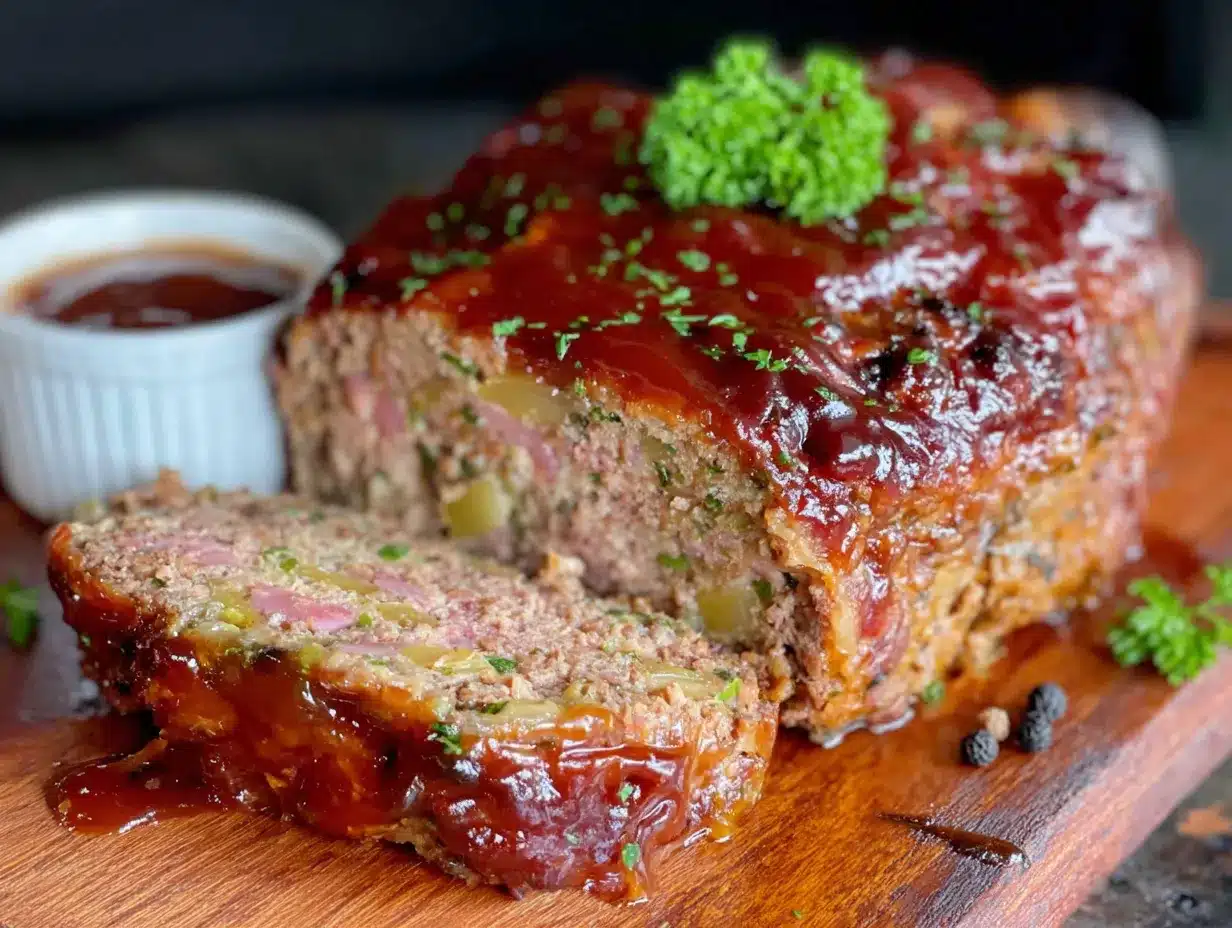
- 2 lbs ground beef (80/20 blend is ideal for flavor and moisture—don’t go too lean or it’ll be dry)
- 1 cup plain breadcrumbs (I prefer Progresso or Ian’s for consistent texture; panko works in a pinch)
- 1/2 cup whole milk (adds richness; you can use 2% or even oat milk if needed)
- 1 medium yellow onion, finely chopped (about 1 cup; grate it if you want it to disappear into the meat)
- 2 large eggs, lightly beaten (helps bind everything together)
- 3 cloves garlic, minced (fresh is best, but 1 teaspoon of garlic powder works in a pinch)
- 2 tablespoons Worcestershire sauce (adds deep umami flavor; Lea & Perrins is my go-to)
- 1 teaspoon kosher salt (adjust to taste; I use Diamond Crystal)
- 1/2 teaspoon black pepper (freshly ground is always better)
- 1/2 teaspoon smoked paprika (adds a subtle smokiness—regular paprika works too)
- 1/4 teaspoon dried thyme (optional, but adds a lovely earthy note)
For the Brown Sugar Ketchup Glaze:
- 1/2 cup ketchup (Heinz is my favorite for its balanced sweetness and tang)
- 1/4 cup packed light brown sugar (dark brown sugar works too, for a deeper molasses flavor)
- 1 tablespoon apple cider vinegar (cuts through the sweetness and adds brightness)
- 1 teaspoon Worcestershire sauce (for extra depth)
- 1/2 teaspoon garlic powder (don’t skip this—it rounds out the flavor)
Ingredient Selection Tip: Look for ground beef that’s bright red and has good marbling. If you can, ask your butcher to grind it fresh. For the breadcrumbs, I’ve found that Italian-seasoned breadcrumbs can overpower the other flavors, so stick with plain. And if you’re out of Worcestershire sauce, a splash of soy sauce mixed with a little molasses makes a decent substitute.
Equipment Needed
You don’t need a lot of fancy gear for this recipe, which is part of its charm. Here’s what you’ll need:
- 9×5-inch loaf pan (a standard metal or glass pan works perfectly; I’ve used both)
- Large mixing bowl (for combining the meatloaf mixture)
- Small bowl (for mixing the glaze)
- Chef’s knife and cutting board (for chopping the onion and garlic)
- Measuring cups and spoons (for accuracy, especially with the glaze)
- Parchment paper (optional, but makes cleanup a breeze—I line my loaf pan with it)
- Pastry brush or spoon (for applying the glaze)
- Meat thermometer (this is crucial for perfectly cooked meatloaf; an instant-read one is my best friend)
If you don’t have a loaf pan, you can shape the meatloaf free-form on a lined baking sheet. Just make sure to build up the sides a bit so the glaze doesn’t run off. I’ve done it this way when my loaf pan was in the dishwasher, and it works great—just keep an eye on the cooking time, as it might cook a little faster.
Preparation Method
Let’s get cooking. This method is straightforward, but I’ve included some tips I’ve learned the hard way so you can avoid my mistakes.
- Preheat your oven to 350°F (175°C). Position a rack in the middle of the oven. While it’s heating, line your loaf pan with parchment paper, leaving some overhang on the long sides—this will help you lift the meatloaf out later.
- Make the panade. In your large mixing bowl, combine the breadcrumbs and milk. Stir them together and let them sit for about 5 minutes. This creates a paste that will keep your meatloaf tender and moist. Don’t skip this step—it’s the secret to a non-dry meatloaf.
- Prep the aromatics. While the panade is resting, heat a small skillet over medium heat. Add a drizzle of oil and sauté the chopped onion for 4-5 minutes, until it’s soft and translucent. Add the minced garlic and cook for another 30 seconds, just until fragrant. Set aside to cool slightly. I used to skip sautéing the onion, thinking it would cook in the oven. Big mistake. Raw onion releases water and can make the meatloaf soggy. Sautéing it first concentrates the flavor and removes excess moisture.
- Mix the meatloaf. To the bowl with the panade, add the cooled onion and garlic, beaten eggs, Worcestershire sauce, salt, pepper, smoked paprika, and dried thyme. Mix gently with a fork or your hands until just combined. Add the ground beef and mix again, being careful not to overwork it. Overmixing is the enemy of a tender meatloaf. Stop as soon as everything is evenly distributed.
- Shape and bake. Transfer the mixture to your prepared loaf pan. Gently press it into an even shape, making sure there are no air pockets. Bake uncovered for 40 minutes.
- Make the glaze. While the meatloaf is baking, combine all the glaze ingredients in a small bowl: ketchup, brown sugar, apple cider vinegar, Worcestershire sauce, and garlic powder. Whisk until smooth. The glaze will look a bit thin now, but it will thicken and caramelize beautifully in the oven.
- Glaze and finish. After 40 minutes, carefully remove the meatloaf from the oven. Spoon or brush about half of the glaze evenly over the top. Return to the oven and bake for another 10 minutes. Repeat with the remaining glaze and bake for a final 5-10 minutes, until the internal temperature reaches 160°F (71°C) when measured with a meat thermometer inserted into the center. The glaze should be sticky, dark, and bubbling.
- Rest and serve. Remove the meatloaf from the oven and let it rest in the pan for 10 minutes. This is critical—it allows the juices to redistribute so the meatloaf stays moist when you slice it. Use the parchment paper overhang to lift it out of the pan. Slice and serve warm.
Cooking Tips & Techniques
I’ve made this recipe at least a dozen times, and I’ve learned a few things along the way. Here are my best tips for meatloaf success:
- Don’t skip the panade. I know it seems like an extra step, but it’s the single most important thing you can do to prevent dry meatloaf. The breadcrumbs absorb the milk and release moisture as the meatloaf cooks. It’s a game-changer.
- Use a meat thermometer. Trust me on this. I’ve cut into meatloaf that looked perfect on the outside but was still raw in the middle. And I’ve overcooked it to the point of sawdust. An instant-read thermometer takes the guesswork out. 160°F is the magic number for ground beef.
- Let it rest. I know it’s hard to wait when the whole house smells amazing, but resting is non-negotiable. If you slice into it right away, the juices will run out, and you’ll end up with dry, crumbly slices. Ten minutes is all it takes.
- Line your pan. Parchment paper makes cleanup so much easier. The glaze can get sticky and caramelized on the pan, and scrubbing that off is no fun. Plus, the paper helps you lift the meatloaf out cleanly.
- Watch the glaze. If the glaze starts to look too dark or is burning around the edges, tent the meatloaf loosely with foil for the last 10 minutes of baking. Every oven runs a little differently.
- Don’t overmix. This is a common mistake. Overworking the meat mixture develops the proteins too much, resulting in a tough, dense meatloaf. Mix gently and just until combined.
Variations & Adaptations
This recipe is a great base, and I’ve tried several variations over the years. Here are a few of my favorites:
- Turkey Meatloaf: Swap the ground beef for ground turkey or chicken. Since these are leaner, add 2 tablespoons of olive oil or an extra egg to keep it moist. The cooking time might be slightly shorter, so start checking the temperature at the 45-minute mark.
- Cheesy Stuffed Meatloaf: After shaping half of the meat mixture in the pan, make a shallow well and add a layer of shredded cheddar or mozzarella cheese. Top with the remaining meat mixture and bake as directed. The melted cheese in the center is a wonderful surprise.
- Spicy Kick: Add 1-2 tablespoons of sriracha or your favorite hot sauce to the glaze mixture. You can also mix 1/2 teaspoon of cayenne pepper into the meatloaf mixture for a deeper heat.
- Gluten-Free Option: Use gluten-free breadcrumbs or crushed gluten-free crackers (like Schar or Simple Mills) in place of regular breadcrumbs. The texture is slightly different but still delicious.
- BBQ Glaze: Replace the ketchup in the glaze with your favorite barbecue sauce. I’ve used a smoky chipotle BBQ sauce before, and it was fantastic. Just adjust the brown sugar down a bit if your BBQ sauce is already sweet.
- Vegetable-Packed: Finely grate a carrot or a small zucchini into the meat mixture. It adds moisture and nutrients without changing the flavor much. Just squeeze out any excess liquid from the zucchini before adding it.
My personal favorite variation is the turkey version. I was skeptical at first—turkey meatloaf can be so dry—but the panade and the extra olive oil really make it work. It’s become my go-to when I’m trying to eat a little lighter.
Serving & Storage Suggestions
This meatloaf is incredibly versatile when it comes to serving. Here’s how I like to enjoy it:
- Serving Temperature: Serve it warm, right after it’s rested. The glaze is at its stickiest and most flavorful at this point.
- Presentation: Slice the meatloaf into 1-inch thick slices and arrange them on a platter. Spoon any extra glaze from the pan over the top. A sprinkle of fresh parsley adds a nice touch of color.
- What to Serve With It: This meatloaf is a classic for a reason. I love it with creamy mashed potatoes and a simple green vegetable like steamed green beans or roasted broccoli. A side of buttery egg noodles is also fantastic. For a low-carb option, serve it with a side salad or roasted cauliflower.
- Storage: Leftover meatloaf keeps beautifully. Store it in an airtight container in the refrigerator for up to 4 days. The flavors actually meld and deepen overnight, making the leftovers almost better than the first meal.
- Freezing: You can freeze the whole cooked meatloaf or individual slices. Wrap it tightly in plastic wrap, then in a layer of foil, and place it in a freezer-safe bag. It will keep for up to 3 months. Thaw overnight in the refrigerator before reheating.
- Reheating: The best way to reheat meatloaf is in a 300°F (150°C) oven. Place the slices on a baking sheet, cover loosely with foil, and heat for 10-15 minutes, until warmed through. You can also microwave individual slices in 30-second bursts, but the glaze might get a bit soft. For a quick fix, I’ve even pan-fried slices in a little butter until they’re crispy on the outside—it’s a whole different experience, and it’s delicious.
One thing I love about this recipe is that the leftovers are so versatile. Cold meatloaf sandwiches on white bread with a little extra ketchup are a thing of beauty. I’ve also crumbled leftover meatloaf into a quick pasta sauce or used it as a filling for stuffed peppers.
Nutritional Information & Benefits
While this is definitely a comfort food indulgence, it does offer some nutritional benefits. Here’s a rough estimate per serving (based on 8 servings):
- Calories: Approximately 450-500
- Protein: 30-35g
- Fat: 25-30g
- Carbohydrates: 25-30g
- Fiber: 1-2g
- Sugar: 15-18g (mostly from the glaze)
Health Benefits: Ground beef is an excellent source of high-quality protein, iron, and B vitamins, including B12, which is essential for energy production. The onions and garlic provide antioxidants and compounds that support immune health. While this isn’t a “health food,” it’s a balanced meal when paired with vegetables and a whole grain.
Dietary Considerations: This recipe is naturally gluten-free if you use gluten-free breadcrumbs. It’s also nut-free and soy-free (check your Worcestershire sauce if you have a soy allergy). To make it lower in fat, you can use leaner ground beef (93/7) and add a little extra moisture with an additional egg or some grated vegetables.
I personally love that this meal feels nourishing and satisfying. It’s the kind of food that fills you up without weighing you down, especially when you pair it with a big side of roasted veggies.
Conclusion
This Easy Classic Glazed Meatloaf with Brown Sugar Ketchup Topping is more than just a recipe—it’s a weeknight lifesaver. It’s the dish I turn to when I need something reliable, comforting, and genuinely delicious without spending hours in the kitchen. The sweet, tangy glaze caramelizes into a sticky crust that everyone fights over, and the meatloaf itself is so tender it practically falls apart on your fork.
I love this recipe because it reminds me of that moment at Pete’s house—the unexpected discovery of something simple and perfect. It’s proof that you don’t need fancy techniques or exotic ingredients to create a meal that stops you in your tracks. You just need a few good ingredients, a little patience, and a recipe that works.
I’d love to hear how this turns out for you! Did you try a variation? Did your family love it as much as mine does? Drop a comment below and let me know. And if you tweaked the glaze or added your own twist, please share—I’m always looking for new ideas. Happy cooking, friends!
Frequently Asked Questions
Can I make this meatloaf ahead of time?
Absolutely. You can assemble the meatloaf completely, cover it, and refrigerate it for up to 24 hours before baking. Just add about 10-15 minutes to the baking time since you’re starting from cold. The glaze should be added right before baking.
Why is my meatloaf falling apart?
This usually happens for one of two reasons: not enough binder (eggs and breadcrumbs) or not letting it rest after baking. Make sure you’re using the full amount of eggs and breadcrumbs, and don’t skip the 10-minute rest. Also, be gentle when slicing—use a serrated knife for clean cuts.
Can I use ground pork or veal instead of beef?
Yes! A mix of meats is actually classic in many meatloaf recipes. Try using 1 pound of ground beef and 1 pound of ground pork for extra flavor and moisture. Ground veal also works well. Just make sure the internal temperature reaches 160°F (71°C) regardless of the meat blend.
How do I know when the meatloaf is done without a thermometer?
While a meat thermometer is the most reliable method, you can check by inserting a knife into the center. If the juices run clear (not pink), it’s likely done. The meatloaf should also pull away slightly from the sides of the pan, and the glaze should be dark and bubbly. However, I really recommend investing in a thermometer—it takes the guesswork out completely.
Can I double this recipe?
Definitely. For a larger crowd, simply double all the ingredients. You can bake it in a larger pan (a 9×13-inch dish works well) or divide it between two loaf pans. The cooking time will increase by about 10-15 minutes for a larger loaf, so keep an eye on that internal temperature.
Pin This Recipe!
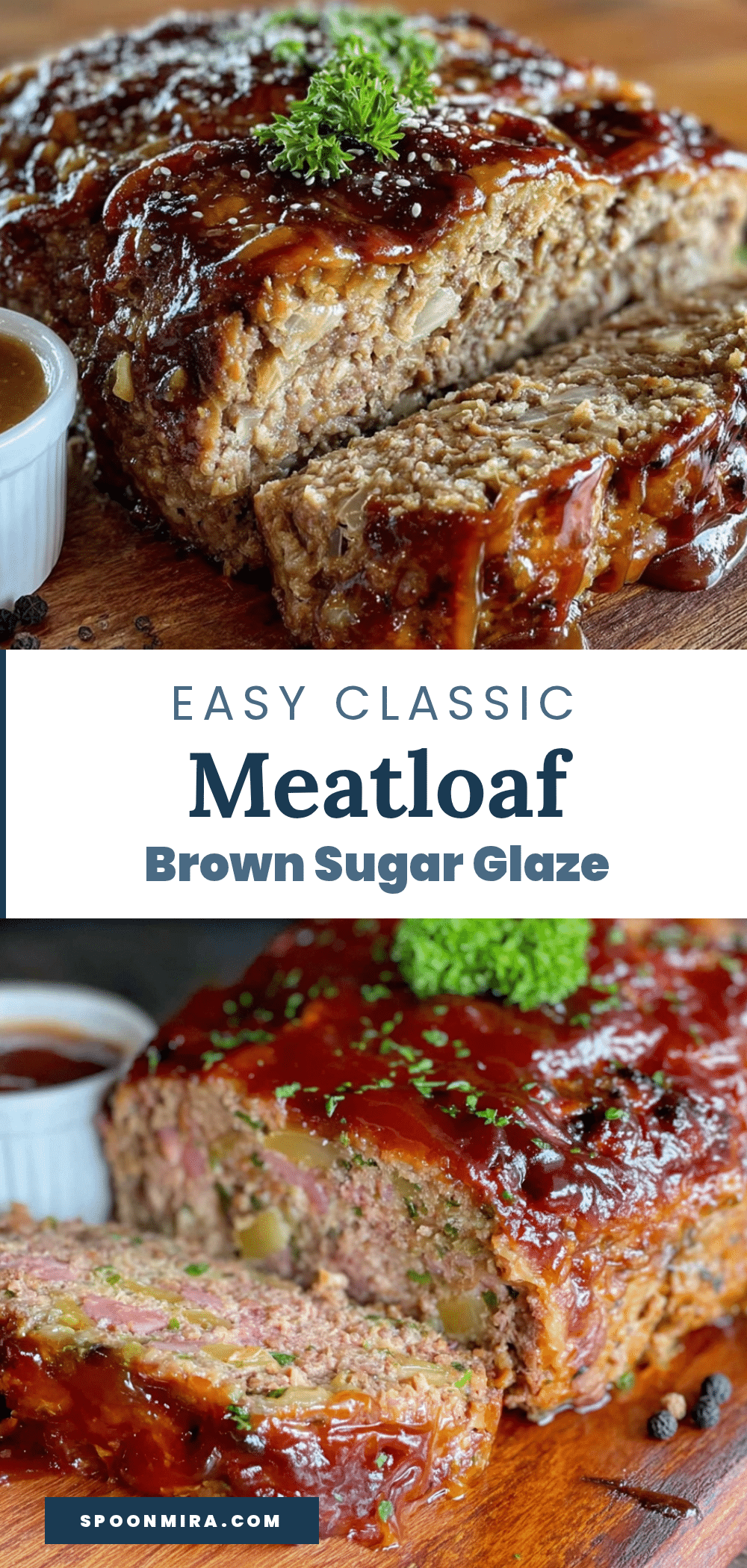
Easy Classic Glazed Meatloaf Recipe (Brown Sugar Ketchup Topping)
This easy classic glazed meatloaf features a sweet and tangy brown sugar ketchup topping that caramelizes into a sticky crust. With just 15 minutes of prep, it’s a tender, flavorful, and reliable weeknight dinner that the whole family will love.
- Prep Time: 15 minutes
- Cook Time: 55 minutes
- Total Time: 1 hour 10 minutes
- Yield: 8 servings 1x
- Category: Main Course
- Cuisine: American
Ingredients
- 2 lbs ground beef (80/20 blend)
- 1 cup plain breadcrumbs
- 1/2 cup whole milk
- 1 medium yellow onion, finely chopped (about 1 cup)
- 2 large eggs, lightly beaten
- 3 cloves garlic, minced
- 2 tablespoons Worcestershire sauce
- 1 teaspoon kosher salt
- 1/2 teaspoon black pepper
- 1/2 teaspoon smoked paprika
- 1/4 teaspoon dried thyme (optional)
- 1/2 cup ketchup
- 1/4 cup packed light brown sugar
- 1 tablespoon apple cider vinegar
- 1 teaspoon Worcestershire sauce
- 1/2 teaspoon garlic powder
Instructions
- Preheat your oven to 350°F (175°C). Position a rack in the middle of the oven. Line your loaf pan with parchment paper, leaving some overhang on the long sides.
- Make the panade: In your large mixing bowl, combine the breadcrumbs and milk. Stir them together and let them sit for about 5 minutes to create a paste.
- Prep the aromatics: While the panade is resting, heat a small skillet over medium heat. Add a drizzle of oil and sauté the chopped onion for 4-5 minutes, until soft and translucent. Add the minced garlic and cook for another 30 seconds, just until fragrant. Set aside to cool slightly.
- Mix the meatloaf: To the bowl with the panade, add the cooled onion and garlic, beaten eggs, Worcestershire sauce, salt, pepper, smoked paprika, and dried thyme. Mix gently until just combined. Add the ground beef and mix again, being careful not to overwork it.
- Shape and bake: Transfer the mixture to your prepared loaf pan. Gently press it into an even shape. Bake uncovered for 40 minutes.
- Make the glaze: While the meatloaf is baking, combine all the glaze ingredients (ketchup, brown sugar, apple cider vinegar, Worcestershire sauce, and garlic powder) in a small bowl. Whisk until smooth.
- Glaze and finish: After 40 minutes, carefully remove the meatloaf from the oven. Spoon or brush about half of the glaze evenly over the top. Return to the oven and bake for another 10 minutes. Repeat with the remaining glaze and bake for a final 5-10 minutes, until the internal temperature reaches 160°F (71°C).
- Rest and serve: Remove the meatloaf from the oven and let it rest in the pan for 10 minutes. Use the parchment paper overhang to lift it out of the pan. Slice and serve warm.
Notes
Don’t skip the panade (breadcrumb and milk paste) as it keeps the meatloaf moist. Use a meat thermometer to ensure the internal temperature reaches 160°F. Let the meatloaf rest for 10 minutes before slicing to allow juices to redistribute. Line the loaf pan with parchment paper for easy cleanup. If the glaze starts to burn, tent the meatloaf loosely with foil for the last 10 minutes of baking.
Nutrition
- Serving Size: 1 slice (1/8 of meat
- Calories: 475
- Sugar: 17
- Sodium: 680
- Fat: 28
- Saturated Fat: 10
- Carbohydrates: 28
- Fiber: 1
- Protein: 33
Keywords: meatloaf, glazed meatloaf, brown sugar ketchup topping, easy meatloaf, classic meatloaf, weeknight dinner, comfort food