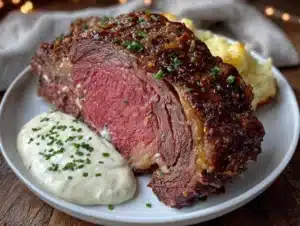
I’m not supposed to play favorites with recipes, but let’s be honest—we all do it. I have this little black book of sides that I pull out when the pressure is on, the guests are due in an hour, and I need something that looks like I spent all day fussing. This honey dijon roasted carrots and parsnips recipe? It’s been inked in that book for three years now, ever since the autumn I was hosting my first real Friendsgiving and realized I had no idea how to feed twelve people without breaking a sweat.
My neighbor, Mrs. Gable, watched me hauling grocery bags up the stairs that Tuesday and didn’t say anything at first. She just tilted her head, the way she does when she’s sizing up a situation. Then she appeared at my door twenty minutes later with a roasting pan and a jar of honey that had a handwritten label on it. “You’re overthinking it,” she said, handing me the pan. “Root vegetables. Good mustard. Something sweet. Let the oven do the work.” She didn’t give me a recipe—she gave me a principle. And honestly, that conversation on my drafty landing meant more than any printed card ever could. I’ve tweaked her approach over the years, added my own touches, but the soul of it is still hers.
The first time I made these for a crowd, I forgot to set a timer and the parsnips got a little too dark on one side. I plated them anyway, hiding the charred bits under a sprig of rosemary, and you know what? Everyone raved. Someone asked for the recipe before they even sat down. That’s the thing about this dish—it’s forgiving. It wants you to succeed. Maybe you’ve been there, standing over a tray of roasted vegetables thinking, “Please just be good enough.” I promise you, these are better than good enough. They’re the kind of side dish that steals the whole show.
Why You’ll Love This Recipe
I’ve tested this honey dijon roasted carrots and parsnips recipe more times than I can count—for Thanksgiving, for Easter brunch, for random Tuesday dinners when I needed a vegetable side that felt special. Every single time, it delivers. Here’s why this one stands out from every other roasted root vegetable recipe you’ve tried:
- Quick & Easy: From cutting board to table in about 40 minutes. Ten minutes of hands-on prep, then the oven does the heavy lifting. Perfect for when you’re juggling multiple dishes for a crowd.
- Simple Ingredients: You probably have honey and Dijon mustard in your fridge right now. Carrots and parsnips are available year-round at any grocery store. No fancy shopping trips required.
- Perfect for Hosting: This dish scales beautifully. Need to feed eight? Double it. Feeding twenty? Triple it. The glaze ratio stays the same, and the roasting time barely changes. It’s my go-to for potlucks, dinner parties, and holiday spreads.
- Crowd-Pleaser: I’ve served these to picky kids, vegetable-skeptical adults, and full-on food snobs. Empty pan every time. The honey brings sweetness that wins over even the most reluctant eaters.
- Unbelievably Delicious: The magic is in the caramelization. That honey-Dijon glaze gets sticky and golden in the oven, creating edges that are slightly crispy and centers that are tender and sweet. It’s comfort food that happens to be vegetables.
This isn’t just another roasted vegetable recipe. The combination of honey and whole-grain Dijon creates a glaze that’s both sweet and tangy, with little pops of mustard seed that burst on your tongue. The parsnips add an earthy, almost nutty flavor that carrots alone can’t match. Together, they’re a duo that makes every other side dish on the table jealous. And honestly? It’s the kind of recipe that makes you close your eyes after the first bite. That’s the reaction I get every time I serve it.
What Ingredients You Will Need
This recipe uses simple, wholesome ingredients that come together to create something genuinely special. Most of these are pantry staples, which makes this dish perfect for last-minute hosting emergencies. Let me walk you through what you’ll need and why each ingredient matters.
- Carrots (1 pound / 450g), peeled and cut into 3-inch sticks: Go for medium-sized carrots, not the giant ones. They’re sweeter and cook more evenly. I prefer organic carrots when I can find them—the flavor is noticeably better. If you get carrots with the greens still attached, save those for garnish!
- Parsnips (1 pound / 450g), peeled and cut into 3-inch sticks: Look for parsnips that are firm and not too thick. The thin ones are sweeter and less woody. If you find parsnips with a thick core, you can cut that out—it tends to be tough and fibrous.
- Honey (3 tablespoons / 60ml): Use a good-quality honey here. I like a mild wildflower honey or orange blossom honey—they’re floral without being overpowering. Avoid honey that’s crystallized, as it won’t blend smoothly into the glaze.
- Whole-grain Dijon mustard (2 tablespoons / 30ml): This is non-negotiable for me. The whole grains add texture and little bursts of tangy flavor. I recommend Maille or Grey Poupon for consistent results. Smooth Dijon works in a pinch, but you’ll miss those lovely mustard seed pops.
- Olive oil (2 tablespoons / 30ml): Extra virgin olive oil adds richness and helps the vegetables caramelize. You can substitute avocado oil if you prefer a neutral flavor, but I love the fruity notes EVOO brings.
- Garlic (3 cloves, minced): Fresh garlic only. Please don’t use the jarred stuff here—it burns and turns bitter. The garlic adds a savory depth that balances the sweetness of the honey.
- Fresh thyme (1 tablespoon, chopped, plus sprigs for garnish): Thyme and root vegetables are a classic pairing. The earthiness of thyme complements the sweetness of the honey and the peppery kick of the mustard. Dried thyme works if that’s all you have—use 1 teaspoon instead.
- Salt (1 teaspoon / 5g): I use kosher salt for roasting. Diamond Crystal is my go-to because it’s less salty by volume, giving you more control. If you use table salt, reduce to ¾ teaspoon.
- Black pepper (½ teaspoon / 2g), freshly ground: Freshly ground pepper makes a real difference here. The pre-ground stuff just doesn’t have the same aromatic punch.
- Optional garnish: Fresh parsley (2 tablespoons, chopped) and flaky sea salt: A sprinkle of flaky salt right before serving adds a lovely crunch and bursts of salinity that make the sweetness pop even more.
Equipment Needed
You don’t need a professional kitchen to nail this recipe. Here’s what I use every time I make these honey dijon roasted carrots and parsnips:
- Large rimmed baking sheet (half-sheet pan, 18×13 inches): This is crucial. You need space between the vegetables so they roast instead of steam. If your pan is too small, use two pans and rotate them halfway through. I’ve learned this the hard way—crowded pans lead to soggy vegetables.
- Parchment paper or silicone baking mat: Not strictly necessary, but it makes cleanup infinitely easier. The honey glaze can get sticky and caramelize onto the pan, and nobody wants to scrub that off.
- Chef’s knife and cutting board: A sharp knife makes cutting the carrots and parsnips into uniform sticks much safer and easier. Dull knives are more dangerous than sharp ones, I swear.
- Vegetable peeler: A good Y-peeler is my favorite tool for this job. It’s faster and more comfortable than a standard peeler, especially when you’re prepping multiple pounds of vegetables.
- Small mixing bowl and whisk: For combining the glaze ingredients. You can also use a jar with a tight-fitting lid and shake it—that’s my lazy-day method.
- Measuring spoons and liquid measuring cup: Accuracy matters with the honey and mustard. Too much honey and the glaze becomes cloying. Too much mustard and it overpowers the vegetables.
Budget-friendly tip: If you don’t have a rimmed baking sheet, a 9×13-inch baking dish works in a pinch. Just know the vegetables will be a bit more crowded, so increase the roasting time by 5-10 minutes and stir halfway through.
Preparation Method
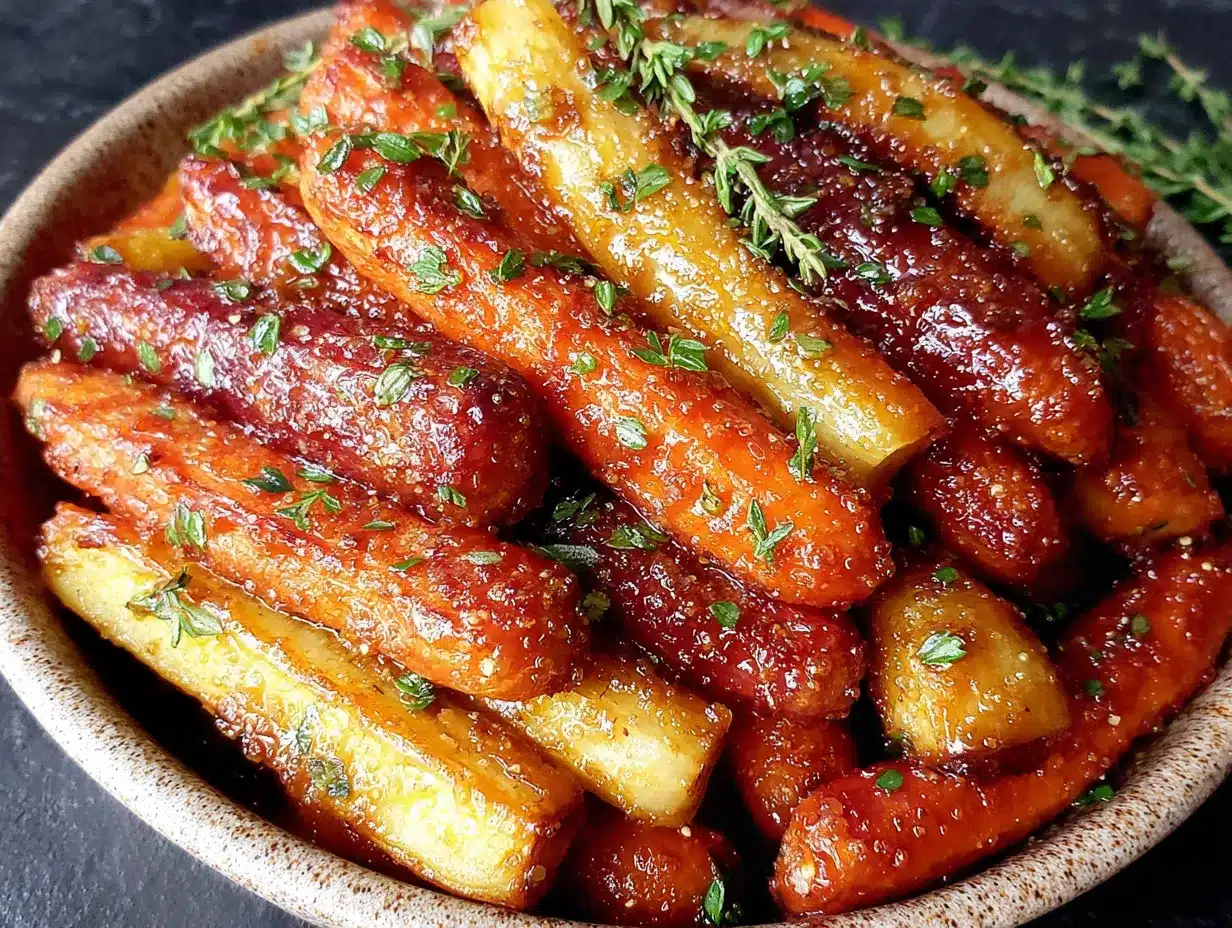
Let me walk you through this step by step. I’ve made this honey dijon roasted carrots and parsnips recipe so many times that I could do it in my sleep, but I still follow these steps every time. Trust the process, and you’ll get perfect results.
- Preheat your oven to 400°F (200°C). Give it a full 15-20 minutes to come to temperature. A properly preheated oven is the difference between caramelized vegetables and steamed ones. While the oven heats, line your baking sheet with parchment paper or a silicone mat.
- Prepare the vegetables. Peel the carrots and parsnips, then cut off the tops and tails. Cut them into sticks about 3 inches long and ½ inch thick. Try to make them uniform in size—this ensures even cooking. If some pieces are much thicker than others, they’ll either be undercooked or burnt. I’ve been there, and it’s frustrating. Take the extra minute to be consistent.
- Make the glaze. In your small bowl, whisk together the honey, whole-grain Dijon mustard, olive oil, minced garlic, chopped thyme, salt, and black pepper. Taste it. The glaze should be sweet with a tangy kick. If it tastes too sharp, add a little more honey. If it’s too sweet, add a pinch more salt. This is your moment to adjust before the vegetables go in.
- Toss the vegetables. Place the carrot and parsnip sticks in a large bowl. Pour the glaze over them and toss with your hands or a spatula until every piece is evenly coated. Don’t be shy—get in there and make sure the glaze reaches every nook and cranny. The garlic and thyme should be distributed throughout, not clumped in one spot.
- Arrange on the baking sheet. Spread the glazed vegetables in a single layer on your prepared baking sheet. This is non-negotiable. If they’re piled on top of each other, they’ll steam instead of roast, and you’ll miss that beautiful caramelization. If you need to use two sheets, do it. Your future self will thank you.
- Roast for 25-30 minutes. Place the sheet in the preheated oven and set a timer for 15 minutes. At the 15-minute mark, pull the sheet out and give the vegetables a good stir with a spatula. This ensures even browning. Return to the oven for another 10-15 minutes. The vegetables are done when they’re tender enough to pierce easily with a fork and the edges are golden brown with some darker caramelized spots. The honey will have created a sticky, glossy coating.
- Optional broiler finish. If you want extra caramelization—and I always do—switch your oven to broil for the last 2-3 minutes. Watch them closely. Honey burns fast under the broiler. I’ve learned this the hard way more than once. You want deep golden, not black.
- Rest and garnish. Remove the sheet from the oven and let the vegetables rest for 2-3 minutes. This allows the glaze to set slightly. Transfer to a serving platter, sprinkle with fresh parsley and flaky sea salt if using, and add a few fresh thyme sprigs for visual appeal.
Cooking Tips & Techniques
After making this honey dijon roasted carrots and parsnips recipe dozens of times, I’ve collected a few hard-won lessons. Let me share them so you don’t have to learn the hard way like I did.
Don’t overcrowd the pan. I cannot stress this enough. The first time I made these for a big crowd, I crammed everything onto one sheet pan because I was too lazy to wash a second one. The vegetables released moisture, steamed instead of roasted, and came out pale and sad. Give them space. If you’re doubling the recipe, use two pans. Your oven can handle it—just swap the pans’ positions halfway through roasting.
Cut uniform pieces. This is the single most important tip for even cooking. I used to be sloppy with my knife work, telling myself it didn’t matter. It does. Thicker pieces end up undercooked while thinner ones burn. Take the extra two minutes to cut everything to roughly the same size. Your patience will be rewarded with perfectly tender, evenly caramelized vegetables.
Watch the garlic. Garlic burns at a lower temperature than vegetables, especially when coated in sugary honey. If you’re worried about burnt garlic bits, you can add the garlic halfway through roasting instead of at the beginning. Just sprinkle it over the vegetables when you stir them at the 15-minute mark. I’ve done it both ways, and honestly, I prefer adding it early for maximum flavor—but I keep a close eye on things.
Use a timer. Set a timer for every step. I once got distracted by a phone call and let my carrots go an extra ten minutes. The honey had turned into a sticky, burnt mess that took forever to scrub off the pan. A simple timer saves you from disaster.
Multitasking strategy: While the vegetables roast, you can prepare the rest of your meal. This dish pairs beautifully with roasted chicken, grilled steak, or even a hearty grain salad. The 30-minute roasting window is perfect for finishing up side dishes or setting the table.
Variations & Adaptations
One of the things I love most about this honey dijon roasted carrots and parsnips recipe is how adaptable it is. Here are some variations I’ve tried and loved:
Maple-Dijon Version: Swap the honey for pure maple syrup. The flavor is slightly less floral and more woodsy, which pairs beautifully with fall and winter meals. I made this version for a Christmas dinner once, and it was the first dish to disappear from the table.
Spicy Honey Version: Add ½ teaspoon of red pepper flakes or a drizzle of sriracha to the glaze. The heat cuts through the sweetness and adds a lovely warmth. This version is my personal favorite for taco nights or alongside spicy grilled meats.
Herb Swap: Replace the thyme with rosemary or sage. Rosemary adds a piney, aromatic quality, while sage brings an earthy, almost buttery note. Both work beautifully with the honey and mustard. I’ve even used a combination of all three herbs when I had them on hand.
Add Other Root Vegetables: This glaze works wonders on sweet potatoes, turnips, rutabaga, or even celery root. Just cut them to similar sizes and adjust roasting time as needed. Sweet potatoes may need 5 fewer minutes, while denser rutabaga might need 5-10 more.
Vegan Adaptation: This recipe is naturally vegan if you use maple syrup or agave instead of honey. The rest of the ingredients are plant-based. I’ve served the maple version to vegan friends, and they couldn’t stop raving about it.
Low-Carb Option: While carrots and parsnips aren’t low-carb, you can substitute with radishes and cauliflower florets. Roast them with the same glaze for about 20-25 minutes. The radishes lose their peppery bite and become surprisingly sweet when roasted.
Serving & Storage Suggestions
These honey dijon roasted carrots and parsnips are incredibly versatile when it comes to serving. Here’s how I like to present and store them:
Serving Temperature: Serve these warm, straight from the oven. The glaze is at its stickiest and most flavorful when hot. If you’re serving them as part of a buffet, you can keep them warm in a low oven (200°F) for up to 30 minutes. Just cover loosely with foil to prevent drying out.
Presentation Tips for Hosting: Transfer the roasted vegetables to a rustic wooden board or a white platter for maximum visual impact. Arrange them in a single layer so the caramelized sides are visible. Garnish with fresh thyme sprigs, a sprinkle of flaky sea salt, and maybe a few edible flowers if you’re feeling fancy. The contrast of the golden vegetables against a dark board is stunning.
What to Serve Alongside: These vegetables are the perfect side for roasted chicken, grilled salmon, or a juicy steak. They also shine alongside a holiday turkey or ham. For a vegetarian spread, pair them with a hearty lentil loaf or a wild rice pilaf. I’ve even served them as a topping for grain bowls with quinoa and arugula.
Storage Instructions: Leftover roasted vegetables keep well in an airtight container in the refrigerator for up to 4 days. The glaze will soften over time, but the flavor remains delicious. I often make a double batch just for leftovers—they’re fantastic cold straight from the fridge, like a sweet and tangy snack.
Reheating Methods: The best way to reheat these is in the oven or air fryer. Spread them on a baking sheet and warm at 350°F for 5-7 minutes. This restores some of the caramelization. The microwave works in a pinch, but the vegetables will be softer and lose that lovely sticky texture. If using the microwave, heat in 30-second bursts and drain any excess liquid.
How Flavors Develop: Honestly, these vegetables taste even better the next day. The honey and mustard flavors meld together overnight, creating a deeper, more complex taste. I’ve been known to make them a day ahead for big dinner parties—just reheat in the oven before serving.
Nutritional Information & Benefits
This honey dijon roasted carrots and parsnips recipe isn’t just delicious—it’s also packed with nutrients. Here’s what you’re getting with each serving:
- Estimated per serving (based on 4 servings): Calories: 185, Total Fat: 7g, Saturated Fat: 1g, Cholesterol: 0mg, Sodium: 480mg, Total Carbohydrates: 30g, Dietary Fiber: 6g, Sugars: 18g, Protein: 2g.
- Vitamin A powerhouse: Carrots are one of the richest sources of beta-carotene, which your body converts to vitamin A. One serving provides over 100% of your daily vitamin A needs, supporting eye health and immune function.
- Fiber-rich: Both carrots and parsnips are excellent sources of dietary fiber. A single serving provides about 6 grams, supporting digestive health and helping you feel full and satisfied.
- Potassium boost: Parsnips are particularly high in potassium, which helps regulate blood pressure and supports muscle function. They also contain folate and vitamin C.
- Dietary considerations: This recipe is naturally gluten-free, dairy-free, and vegan (if using maple syrup instead of honey). It’s also nut-free and soy-free, making it a safe choice for many dietary restrictions.
- Potential allergens: The only potential allergen in this recipe is mustard, which is a member of the Brassicaceae family. Mustard allergies are rare but possible. If serving to someone with a known mustard allergy, substitute with a mixture of honey, olive oil, and a splash of apple cider vinegar.
Conclusion
This honey dijon roasted carrots and parsnips recipe has become my secret weapon for hosting. It’s the dish that makes people ask for the recipe before they’ve even finished eating. It’s the side that turns a simple weeknight dinner into something that feels special. And it’s the recipe that my neighbor Mrs. Gable would probably say I’ve made my own, which is the highest compliment I can imagine.
I encourage you to make this recipe your own, too. Adjust the honey-to-mustard ratio to your taste. Try different herbs. Add a pinch of cayenne if you like heat. The beauty of this dish is that it’s forgiving and adaptable, just like the best recipes always are. Whether you’re hosting a holiday feast or just trying to make a Tuesday night feel a little more memorable, these roasted vegetables deliver every single time.
I’d love to hear how yours turn out! Drop a comment below and let me know what variations you tried, or tag me in your photos on social media. Did you add extra garlic? Swap in maple syrup? Serve them alongside something unexpected? Share your wins—I read every single comment and I’m always looking for new ideas to try. Now go preheat that oven. Your new favorite side dish is waiting.
Frequently Asked Questions
Can I prepare these honey dijon roasted carrots and parsnips ahead of time?
Absolutely! You can peel and cut the vegetables up to 24 hours in advance and store them in a sealed bag in the refrigerator. You can also make the glaze ahead and keep it in the fridge. When you’re ready to cook, just toss everything together and roast. For fully cooked leftovers, reheat in the oven at 350°F for 5-7 minutes to restore some of the caramelization.
Why are my roasted vegetables coming out soggy instead of caramelized?
The most common culprit is overcrowding the pan. When vegetables are piled on top of each other, they release steam and cook in their own moisture instead of roasting. Make sure your vegetables are in a single layer with space between each piece. If necessary, use two baking sheets. Another factor is oven temperature—make sure your oven is fully preheated to 400°F before the vegetables go in.
Can I use baby carrots or pre-cut vegetables for this recipe?
You can, but the results won’t be quite as good. Baby carrots are already small and tend to cook faster, so check them at the 20-minute mark. Pre-cut carrot sticks from the grocery store are often thicker and drier, which can lead to uneven cooking. If you’re short on time, go ahead and use them—just cut any very thick pieces in half for more consistent results.
How do I prevent the honey glaze from burning?
Honey has a lower burning point than many other sweeteners because of its high sugar content. To prevent burning, keep the oven temperature at 400°F and don’t push it higher. If you’re using the broiler for that final caramelization, watch it like a hawk—it can go from perfect to burnt in under 30 seconds. I’ve lost more than one batch to a distracted minute under the broiler.
What can I substitute for whole-grain Dijon mustard?
Smooth Dijon mustard works well, though you’ll lose the texture of the mustard seeds. You can also use a grainy mustard like the one from Maille or a spicy brown mustard for a different flavor profile. In a pinch, mix 1½ tablespoons of yellow mustard with ½ teaspoon of vinegar for a tangy substitute, though the flavor won’t be quite the same. Avoid using plain yellow mustard alone—it’s too mild and lacks the complexity that makes this dish shine.
Pin This Recipe!
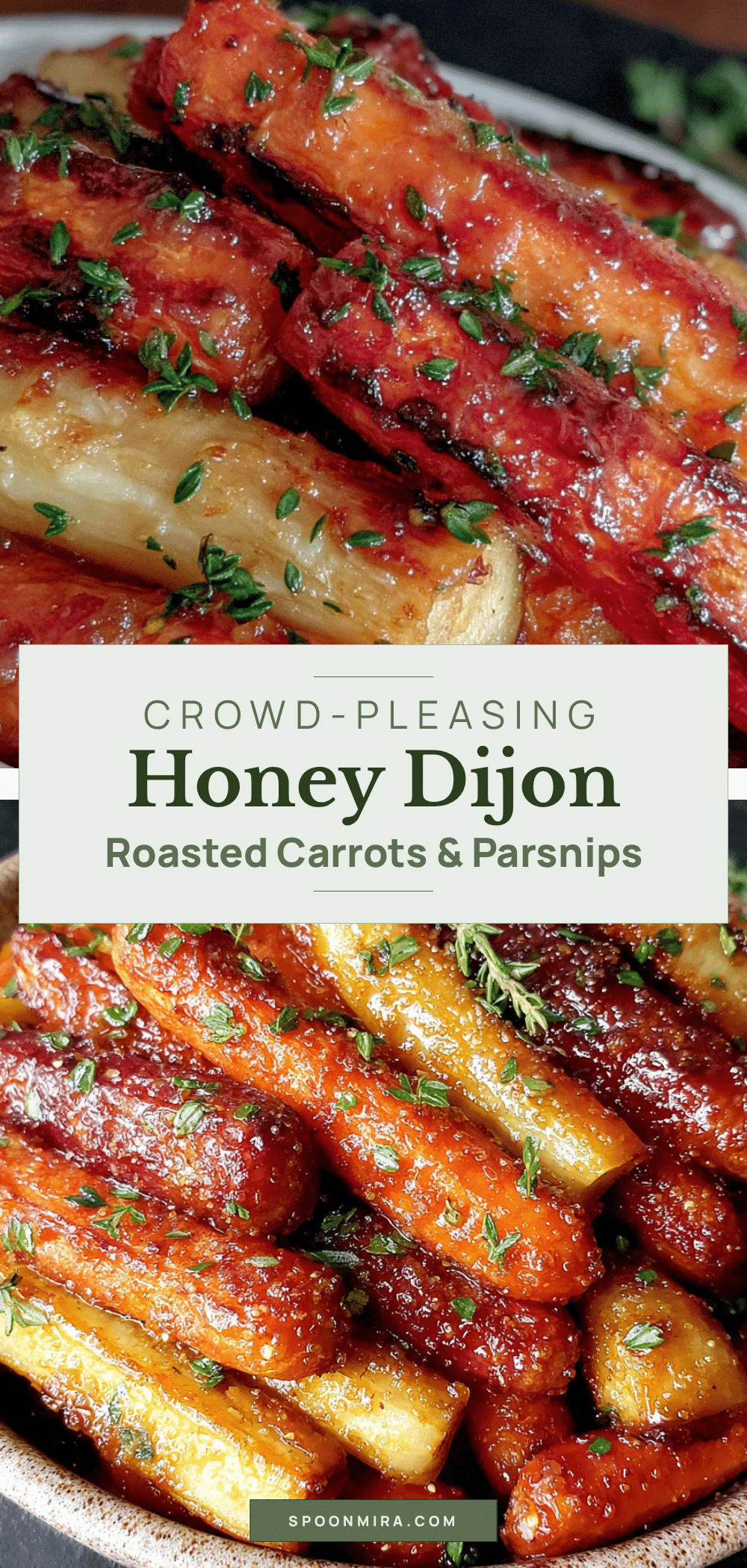
Easy Honey Dijon Roasted Carrots and Parsnips

These honey dijon roasted carrots and parsnips are a quick and easy side dish that’s perfect for hosting. With a sweet and tangy glaze, they caramelize beautifully in the oven and are always a crowd-pleaser.
- Prep Time: 10 minutes
- Cook Time: 30 minutes
- Total Time: 40 minutes
- Yield: 4 servings 1x
- Category: Side Dish
- Cuisine: American
Ingredients
- 1 pound (450g) carrots, peeled and cut into 3-inch sticks
- 1 pound (450g) parsnips, peeled and cut into 3-inch sticks
- 3 tablespoons (60ml) honey
- 2 tablespoons (30ml) whole-grain Dijon mustard
- 2 tablespoons (30ml) olive oil
- 3 cloves garlic, minced
- 1 tablespoon fresh thyme, chopped (plus sprigs for garnish)
- 1 teaspoon (5g) kosher salt
- ½ teaspoon (2g) freshly ground black pepper
- Optional: 2 tablespoons fresh parsley, chopped, and flaky sea salt for garnish
Instructions
- Preheat your oven to 400°F (200°C). Line a large rimmed baking sheet with parchment paper or a silicone mat.
- Peel the carrots and parsnips, cut off the tops and tails, and cut into sticks about 3 inches long and ½ inch thick. Try to make them uniform in size.
- In a small bowl, whisk together the honey, whole-grain Dijon mustard, olive oil, minced garlic, chopped thyme, salt, and black pepper. Taste and adjust if needed.
- Place the carrot and parsnip sticks in a large bowl. Pour the glaze over them and toss until every piece is evenly coated.
- Spread the glazed vegetables in a single layer on the prepared baking sheet. Do not overcrowd; use two sheets if necessary.
- Roast for 25-30 minutes, stirring at the 15-minute mark. Vegetables are done when tender and edges are golden brown with caramelized spots.
- Optional: For extra caramelization, switch the oven to broil for the last 2-3 minutes, watching closely to prevent burning.
- Remove from the oven and let rest for 2-3 minutes. Transfer to a serving platter, garnish with fresh parsley, flaky sea salt, and thyme sprigs if desired.
Notes
Don’t overcrowd the pan to ensure caramelization. Cut vegetables uniformly for even cooking. Watch the garlic to prevent burning; add halfway through if concerned. Use a timer to avoid over-roasting. Leftovers keep in the fridge for up to 4 days and reheat well in the oven or air fryer.
Nutrition
- Serving Size: 1 serving (about 1 c
- Calories: 185
- Sugar: 18
- Sodium: 480
- Fat: 7
- Saturated Fat: 1
- Carbohydrates: 30
- Fiber: 6
- Protein: 2
Keywords: honey dijon roasted carrots and parsnips, roasted root vegetables, honey mustard carrots, easy side dish, holiday side dish, vegetarian, gluten-free