The PTA potluck was in six hours and I’d completely blanked on it. I was standing in my kitchen, staring into the fridge like it held the answers to the universe, while my phone buzzed with texts from other moms about their “simple” contributions. Karen was bringing her famous three-day-braised short ribs. Sarah had a sourdough starter older than my youngest child. I had a single butternut squash, some sad-looking cheddar cheese, and a box of elbow macaroni that was probably past its prime.
Let me tell you, the panic was real. I’d always been the one who showed up with store-bought cookies or a bag of chips, and I was tired of it. But I had no time, no energy, and honestly, no backup plan. I grabbed the squash, tossed it in the microwave to soften it up (cheating? absolutely), and started throwing things into a pot. I mean, mac and cheese is a crowd-pleaser, right? How bad could it be if I just added some squash and called it a day?
The thing is, I didn’t expect it to actually work. I was just trying to survive the potluck without embarrassment. But when I walked in with that pot, people actually stopped talking. The short ribs got pushed aside. The sourdough went untouched. And Karen, queen of the elaborate dishes, asked me for the recipe. I had to admit it took me, like, thirty minutes and one pot. She didn’t believe me. Maybe you’ve been there—that moment when a simple, slightly desperate kitchen experiment turns into the thing everyone wants. This recipe is that moment, every single time.
Why You’ll Love This Recipe
Look, I’ve tested a lot of mac and cheese recipes. Some are too complicated, some are too dry, and some just don’t deliver on the creamy, comforting promise. This one is different. It’s the recipe that made my neighbor, a former chef, text me asking for the “secret.” The secret is that there isn’t one—it’s just smart shortcuts and good ingredients.
- Quick & Easy : This comes together in about 30 minutes, start to finish. No roux-making, no multiple pots, no stress. Perfect for those weeknights when you’re running on fumes.
- Simple Ingredients : You probably have most of this in your pantry right now. The butternut squash is the star, but it’s not fancy—it’s just a vegetable that makes everything creamy and slightly sweet.
- Perfect for Fall Weeknights : It’s cozy, it’s warm, and it feels like a hug in a bowl. Great for those chilly evenings when you want comfort food without the guilt.
- Crowd-Pleaser : My kids devour this. My picky-eater husband asks for seconds. Even my friend who “doesn’t like squash” ate three servings before I told her what was in it.
- Unbelievably Delicious : The squash blends into the cheese sauce so smoothly, you won’t even know it’s there. It adds a velvety texture and a subtle sweetness that balances the sharp cheddar perfectly.
This isn’t just another mac and cheese recipe. It’s the one that makes you wonder why you ever bothered with the boxed stuff. It’s comfort food reimagined—healthier, faster, but with the same soul-soothing satisfaction. Perfect for impressing your family on a Tuesday night, or turning a simple dinner into something that feels special without the stress.
What Ingredients You Will Need
This recipe relies on a handful of pantry staples and one seasonal hero: the butternut squash. The squash does double duty—it creates a luscious, creamy sauce without needing a ton of heavy cream or butter, and it sneaks in some veggies for good measure. Here’s what you’ll need:
- 1 medium butternut squash (about 2-3 pounds), peeled, seeded, and cubed. (Look for one that feels heavy for its size—that means it’s fresh and juicy.)
- 1 tablespoon olive oil , for roasting the squash. (I use extra-virgin for a richer flavor.)
- 1 pound elbow macaroni or any short pasta. (Cavatappi, shells, or rotini work great too.)
- 2 cups low-sodium vegetable broth . (Chicken broth works if that’s what you have—just adjust the salt.)
- 1 cup whole milk . (2% is fine, but whole milk makes it extra creamy. For a dairy-free version, use unsweetened oat milk.)
- 2 cups sharp cheddar cheese , freshly grated. (Pre-shredded cheese has anti-caking agents that prevent smooth melting—grate your own for the best texture.)
- 1/2 cup grated Parmesan cheese . (Adds a nutty, salty kick.)
- 1/2 cup plain Greek yogurt . (This is my secret ingredient—it adds tang and creaminess without extra fat. Use full-fat for best results.)
- 1/2 teaspoon garlic powder . (Fresh garlic works too, but powder blends more smoothly into the sauce.)
- 1/2 teaspoon onion powder . (For depth without the crunch.)
- 1/4 teaspoon ground nutmeg . (Sounds weird, I know, but nutmeg is a classic pairing with both cheese and squash. Trust me on this one.)
- Salt and black pepper to taste.
- Optional: 1/4 cup panko breadcrumbs for a crunchy topping. (Mix with a tablespoon of melted butter and sprinkle on before serving.)
You can swap the cheddar for Gruyère or Gouda for a more sophisticated flavor. If you’re dairy-free, use vegan cheddar and nutritional yeast instead of Parmesan. The key is to keep the ratios roughly the same—the squash is the backbone, so don’t skimp on it.
Equipment Needed
You don’t need a fancy kitchen for this recipe. Here’s what I use:
- A large, heavy-bottomed pot or Dutch oven . (I use my trusty 5-quart Le Creuset, but any pot with a tight-fitting lid works. The heavy bottom prevents scorching.)
- A sharp knife and cutting board . (A dull knife is more dangerous than a sharp one—trust me on this.)
- A vegetable peeler . (For the squash. If you’re in a hurry, buy pre-cubed squash from the store.)
- A box grater or food processor . (For grating the cheese. A food processor with a grating disc saves serious time.)
- A wooden spoon or silicone spatula . (Wooden spoons are my favorite—they don’t scratch the pot and they feel right in the hand.)
- An immersion blender or regular blender . (An immersion blender is easier—you blend the sauce right in the pot. If using a regular blender, work in batches and be careful with hot liquids.)
If you don’t have a blender, you can mash the squash by hand with a potato masher. The sauce won’t be as silky, but it’ll still taste great. And if you’re on a budget, a $10 immersion blender from a discount store works just fine—I used one for years.
Preparation Method
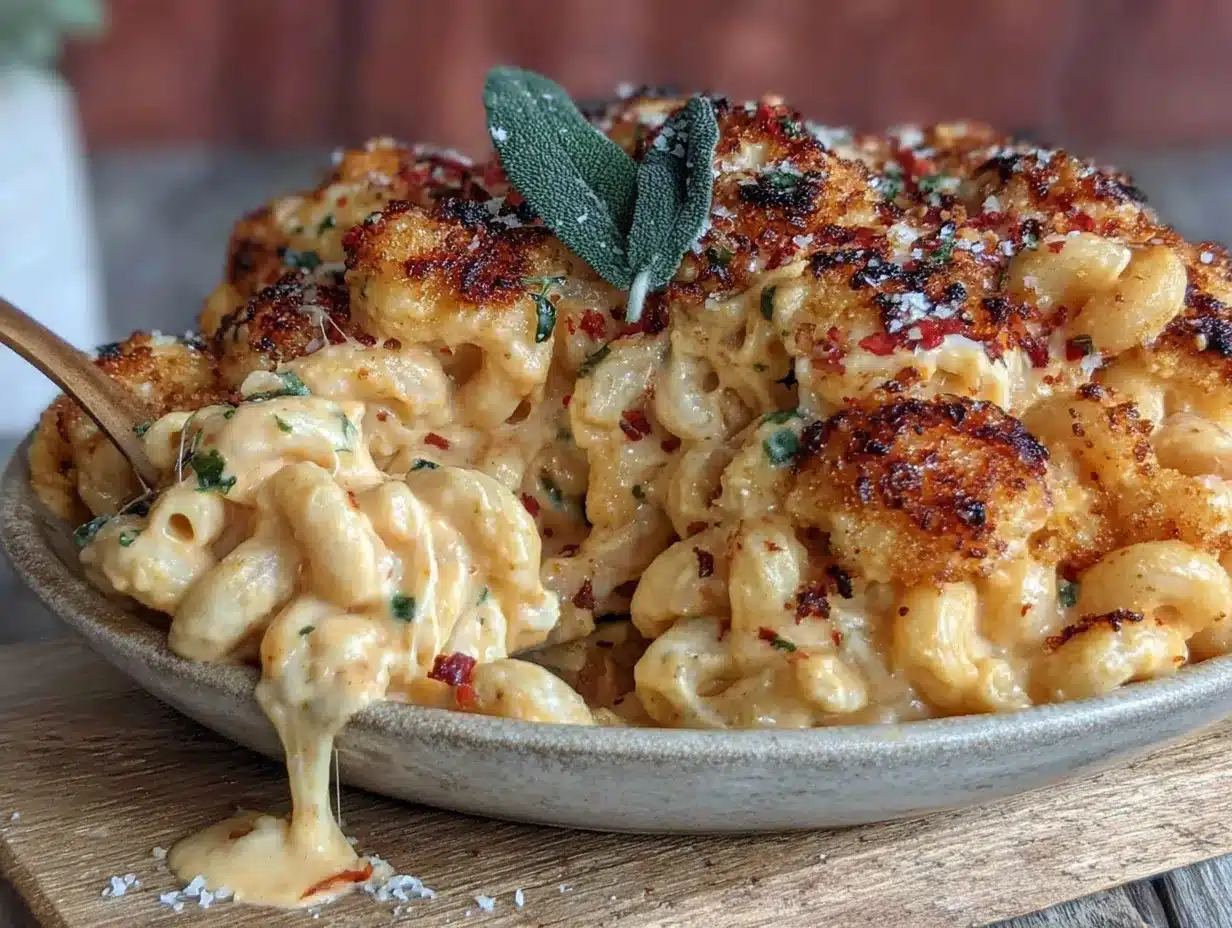
Let’s get cooking. This is a one-pot recipe, which means minimal cleanup and maximum flavor. Here’s how I do it:
- Prep the squash : Start by peeling the butternut squash with a vegetable peeler. Cut off the top and bottom, then slice it in half lengthwise. Scoop out the seeds with a spoon. Cut the flesh into 1-inch cubes. (Pro tip: If you struggle with peeling raw squash, microwave the whole squash for 2-3 minutes first—it softens the skin and makes peeling a breeze.)
- Roast the squash : In your large pot, heat the olive oil over medium heat. Add the cubed squash and a pinch of salt. Cook for 5-7 minutes, stirring occasionally, until the squash starts to soften and get a few golden brown spots. This step builds flavor—don’t skip it. (You can also roast the squash in the oven at 400°F for 20 minutes, but I like keeping it in the pot to save dishes.)
- Add the liquid : Pour in the vegetable broth and bring it to a boil. Reduce the heat to a simmer, cover the pot, and let the squash cook for 10-15 minutes, until it’s fork-tender. The liquid should be mostly absorbed by the end. (If it looks too dry, add a splash more broth or water.)
- Blend the sauce : Use your immersion blender to puree the squash and broth until smooth. If you’re using a regular blender, carefully transfer the mixture to the blender, blend until smooth, and return it to the pot. (Be careful—hot liquids expand in a blender. Remove the center cap of the lid and cover it with a towel to let steam escape.)
- Cook the pasta : Add the milk, garlic powder, onion powder, nutmeg, and a pinch of salt to the squash puree. Stir to combine. Add the dry pasta directly to the pot. Bring to a gentle boil, then reduce the heat to a simmer. Cover and cook for 8-10 minutes, stirring occasionally, until the pasta is al dente. (The pasta will absorb the liquid as it cooks, so don’t worry if it looks soupy at first.)
- Add the cheese : Remove the pot from the heat. Stir in the Greek yogurt until fully incorporated. Then, gradually add the grated cheddar and Parmesan, stirring constantly until the cheese is melted and the sauce is smooth. (If the sauce seems too thick, add a splash of warm milk to loosen it up.)
- Season and serve : Taste and adjust the salt and pepper. If you’re using the breadcrumb topping, sprinkle it over the top and serve immediately. The cheese will firm up as it cools, so eat it while it’s hot and gooey.
The whole process takes about 30 minutes, and you only dirty one pot. It’s a weeknight miracle, honestly.
Cooking Tips & Techniques
I’ve made this recipe about a dozen times now, and I’ve learned a few things the hard way. Here are my best tips:
- Don’t skip the yogurt : The Greek yogurt is what makes this sauce extra creamy without being heavy. It also adds a slight tang that cuts through the richness of the cheese. I once tried it with sour cream, and it was good but not as smooth. Stick with the yogurt.
- Grate your own cheese : I know, I know—it’s an extra step. But pre-shredded cheese is coated in starch and cellulose, which prevents it from melting smoothly. You’ll end up with a grainy sauce. Freshly grated cheese melts like a dream. It takes 2 minutes with a box grater, I promise it’s worth it.
- Watch the heat : When you add the cheese, make sure the pot is off the heat. If the sauce is too hot, the cheese can separate and turn greasy. Let the residual heat do the work—it’s gentler and gives you a silky sauce.
- Use the right pasta : Elbow macaroni is classic, but I love using cavatappi or shells because the ridges catch more sauce. Whatever you use, cook it to al dente—it will continue to soften in the hot sauce.
- Make it ahead : This recipe is great for meal prep. Cook the pasta and sauce separately, then combine and reheat when you’re ready to eat. Add a splash of milk when reheating to bring back the creaminess.
One time, I forgot to add the nutmeg. The sauce was fine, but it lacked that subtle warmth that makes the dish feel cozy. Don’t be like me—add the nutmeg. It’s a small detail that makes a big difference.
Variations & Adaptations
This recipe is a blank canvas. Here are some ways to make it your own:
- Add protein : Stir in cooked, crumbled bacon, shredded rotisserie chicken, or crispy pancetta. The salty, smoky flavors play beautifully with the sweet squash and sharp cheddar. I once added leftover Thanksgiving turkey, and it was incredible.
- Make it vegetarian or vegan : Use vegetable broth and swap the dairy for plant-based alternatives. Nutritional yeast is a great substitute for Parmesan—it adds a cheesy, umami flavor. For the cheese sauce, use a vegan cheddar that melts well. I’ve tried it with Miyoko’s brand, and it works surprisingly well.
- Spice it up : Add a pinch of cayenne pepper, red pepper flakes, or a dash of smoked paprika for heat. The sweetness of the squash balances the spice perfectly. My husband loves it with a teaspoon of sriracha stirred in at the end.
- Swap the squash : Butternut squash is my favorite, but you can use pumpkin, sweet potato, or even carrots. Each will give a slightly different flavor and color. Sweet potato makes it a little sweeter, while carrots keep it milder.
- Go gluten-free : Use your favorite gluten-free pasta. Brown rice pasta or chickpea pasta work well—just adjust the cooking time according to the package instructions. The sauce is naturally gluten-free.
I once made a version with roasted garlic and thyme, and it was heavenly. Just roast a head of garlic alongside the squash, squeeze out the cloves, and blend them into the sauce. It’s a little extra work, but the flavor is worth it.
Serving & Storage Suggestions
This mac and cheese is best served hot, straight from the pot. But here’s how to make it work for leftovers:
- Serving temperature : Serve it piping hot. If it cools down, the sauce will thicken and the cheese will firm up. Add a splash of milk and reheat gently on the stove or in the microwave to bring back the creamy texture.
- Presentation : Spoon it into bowls and top with a sprinkle of fresh parsley, chives, or extra black pepper. If you made the breadcrumb topping, that’s already a beautiful finish. It looks rustic and comforting—no fancy plating needed.
- Complementary dishes : Serve it alongside a simple green salad with a lemony vinaigrette to cut through the richness. Roasted broccoli or Brussels sprouts are also great. For a heartier meal, add a side of grilled chicken or a piece of crusty bread.
- Storage : Store leftovers in an airtight container in the refrigerator for up to 4 days. The flavors actually meld together overnight, so it tastes even better the next day. To freeze, portion it into freezer-safe containers and freeze for up to 3 months. Thaw overnight in the fridge before reheating.
- Reheating : The best way to reheat is on the stovetop over low heat, stirring in a splash of milk or broth to loosen the sauce. In the microwave, reheat in 30-second intervals, stirring between each, until hot.
I’ve found that this mac and cheese is one of those rare dishes that tastes just as good reheated as it does fresh. The squash keeps the sauce creamy, and the cheese stays melty. It’s a gift that keeps on giving.
Nutritional Information & Benefits
This isn’t your average mac and cheese. The butternut squash brings serious nutritional value to the table. Here’s a rough estimate per serving (based on 6 servings):
- Calories : ~450 per serving
- Protein : 18g
- Fat : 18g
- Carbohydrates : 55g
- Fiber : 6g
- Sugar : 8g
The butternut squash is packed with vitamin A (great for eye health), vitamin C (immune support), and fiber (keeps you full). The Greek yogurt adds protein and probiotics, while the cheese provides calcium. Compared to traditional mac and cheese, this version has less saturated fat and more nutrients. It’s comfort food you can feel good about eating.
If you’re watching your carbs, you can use a low-carb pasta like chickpea or lentil pasta. The squash naturally adds sweetness, so you don’t need to add any extra sugar. It’s a balanced meal that satisfies cravings without the crash.
Conclusion
This easy one-pot butternut squash mac and cheese is proof that you don’t need hours in the kitchen or a long list of ingredients to make something truly special. It’s the recipe that saved me from potluck embarrassment, and now it’s the one I turn to on busy weeknights when I need a win. The squash makes it creamy without being heavy, the cheese makes it indulgent, and the one-pot cleanup makes it a no-brainer.
I love this recipe because it’s forgiving. You can swap ingredients, adjust the seasonings, or add whatever you have on hand, and it still works. It’s the kind of dish that feels like a hug in a bowl—warm, comforting, and exactly what you need after a long day. I hope you give it a try and make it your own.
If you do, I’d love to hear about it. Drop a comment below and tell me how it turned out, or share your own twist on the recipe. Don’t forget to pin this for later and share it with a friend who needs a quick, cozy dinner idea. Happy cooking!
Frequently Asked Questions
Can I use frozen butternut squash?
Absolutely! Frozen cubed butternut squash works perfectly. Just skip the initial roasting step and add it directly to the pot with the broth. Cook it until tender, then blend as usual. It saves even more time.
Why did my cheese sauce turn out grainy?
Grainy cheese sauce usually means the cheese was added to liquid that was too hot, or you used pre-shredded cheese. Make sure to remove the pot from the heat before adding the cheese, and always grate your own block cheese for the smoothest results.
Can I make this dairy-free?
Yes! Use unsweetened oat milk or almond milk instead of whole milk, and swap the Greek yogurt for a dairy-free plain yogurt. Use a vegan cheddar that melts well and nutritional yeast instead of Parmesan. The squash will still make it creamy.
How do I prevent the pasta from getting mushy?
Cook the pasta to al dente—it should still have a slight bite to it. The pasta will continue to cook in the hot sauce, so undercooking it slightly ensures it stays firm. Also, don’t overcook it in the sauce; stir gently and check frequently.
Can I add vegetables to this recipe?
Definitely! Stir in steamed broccoli, roasted cauliflower, or sautéed spinach at the end for extra nutrients. You can also add diced bell peppers or mushrooms when you cook the squash. The options are endless.
Pin This Recipe!
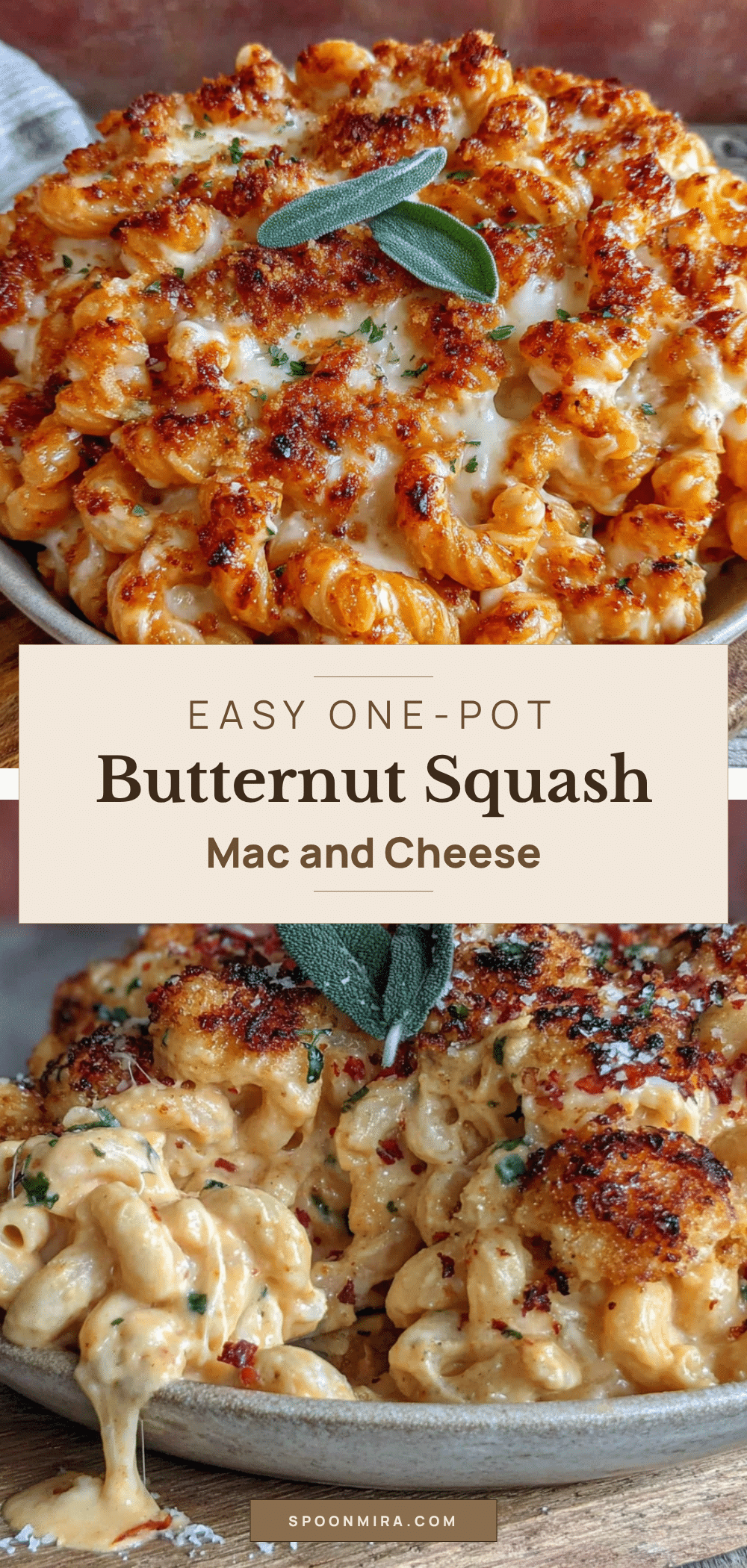
Easy One-Pot Butternut Squash Mac and Cheese: Best Fall Dinner

A quick and easy one-pot mac and cheese recipe that uses butternut squash to create a creamy, velvety sauce. Perfect for busy weeknights, this comforting dish comes together in about 30 minutes with minimal cleanup and is a crowd-pleaser that even picky eaters will love.
- Prep Time: 10 minutes
- Cook Time: 20 minutes
- Total Time: 30 minutes
- Yield: 6 servings 1x
- Category: Main Course
- Cuisine: American
Ingredients
- 1 medium butternut squash (about 2–3 pounds), peeled, seeded, and cubed
- 1 tablespoon olive oil
- 1 pound elbow macaroni or any short pasta
- 2 cups low-sodium vegetable broth
- 1 cup whole milk
- 2 cups sharp cheddar cheese, freshly grated
- 1/2 cup grated Parmesan cheese
- 1/2 cup plain Greek yogurt
- 1/2 teaspoon garlic powder
- 1/2 teaspoon onion powder
- 1/4 teaspoon ground nutmeg
- Salt and black pepper to taste
- Optional: 1/4 cup panko breadcrumbs mixed with 1 tablespoon melted butter
Instructions
- Prep the squash: Peel the butternut squash with a vegetable peeler. Cut off the top and bottom, slice in half lengthwise, scoop out the seeds, and cut the flesh into 1-inch cubes.
- Roast the squash: In a large pot, heat olive oil over medium heat. Add cubed squash and a pinch of salt. Cook for 5-7 minutes, stirring occasionally, until the squash starts to soften and get golden brown spots.
- Add the liquid: Pour in the vegetable broth and bring to a boil. Reduce heat to a simmer, cover, and cook for 10-15 minutes until the squash is fork-tender. The liquid should be mostly absorbed.
- Blend the sauce: Use an immersion blender to puree the squash and broth until smooth. If using a regular blender, carefully transfer the mixture, blend until smooth, and return to the pot.
- Cook the pasta: Add milk, garlic powder, onion powder, nutmeg, and a pinch of salt to the squash puree. Stir to combine. Add dry pasta directly to the pot. Bring to a gentle boil, then reduce heat to a simmer. Cover and cook for 8-10 minutes, stirring occasionally, until pasta is al dente.
- Add the cheese: Remove the pot from heat. Stir in Greek yogurt until fully incorporated. Gradually add grated cheddar and Parmesan, stirring constantly until melted and smooth. If too thick, add a splash of warm milk.
- Season and serve: Taste and adjust salt and pepper. If using breadcrumb topping, sprinkle over the top and serve immediately.
Notes
Don’t skip the Greek yogurt—it adds creaminess without extra fat. Always grate your own cheese for a smooth sauce. Add nutmeg for warmth. For a crunchy topping, mix panko breadcrumbs with melted butter and sprinkle before serving. Leftovers can be stored in the refrigerator for up to 4 days or frozen for up to 3 months.
Nutrition
- Serving Size: 1 serving
- Calories: 450
- Sugar: 8
- Sodium: 480
- Fat: 18
- Saturated Fat: 9
- Carbohydrates: 55
- Fiber: 6
- Protein: 18
Keywords: butternut squash mac and cheese, one-pot mac and cheese, easy fall dinner, creamy mac and cheese, healthy mac and cheese, quick weeknight dinner