I wasn’t expecting cooking advice from my accountant, but there I was, elbow-deep in January receipts, listening to Mr. Henderson describe exactly how he got his three kids to eat fruit in the dead of winter. “The trick,” he said, not looking up from his calculator, “is to make it look like candy.” He was a quiet man, the kind who wore the same gray sweater to every appointment and never talked about anything but deductions. But that day, he pulled a crumpled piece of paper from his shirt pocket—a recipe his wife had scribbled years ago—and slid it across the desk. “Try it,” he said. “My kids fight over the oranges.”
Honestly, I was skeptical. I mean, fruit salad is fruit salad, right? But something about the way he said it made me tuck that paper into my own pocket. That night, I found myself standing in my kitchen, staring at a bowl of chopped citrus, pomegranate seeds, and a honey-lime dressing that smelled like sunshine in January. The kids actually asked for seconds. Let me tell you, that never happens. Maybe you’ve been there—standing over a bowl of fruit that your kids have pushed around their plates, wondering why something so good just doesn’t land with them. This recipe changed that for me.
The first time I made it, I forgot to toast the coconut flakes. The kitchen was a mess, and I had lime juice on my favorite sweater. But when my youngest looked up with that sticky grin and said, “This is better than candy, Mom,” I knew Mr. Henderson had given me something special. It’s not fancy. It’s not complicated. It’s just a smart way to make winter fruit feel like a treat. And honestly, that’s why I keep making it—because sometimes the best recipes come from the most unexpected places, and they stick with you long after the receipts are filed away.
Why You’ll Love This Recipe
This isn’t just another fruit salad—it’s the one that will actually get eaten. I’ve tested this on my own picky eaters, my neighbor’s kids, and even a group of teenagers who claimed they “don’t do fruit.” Every single time, the bowl comes back empty. Here’s why this recipe works so well for families on a budget:
- Quick & Easy: You can throw this together in under 15 minutes. Seriously, it’s faster than arguing about what to have for a snack.
- Simple Ingredients: No fancy grocery trips needed. Winter fruits like oranges, apples, and pomegranates are usually on sale this time of year, and you probably already have honey and lime in your fridge.
- Perfect for Busy Weeknights: Need a side dish that won’t cause a meltdown? This salad pairs with everything from roasted chicken to leftover pizza night.
- Crowd-Pleaser: Kids love the sweet-tangy dressing, and adults appreciate that it’s not loaded with sugar. It’s a win-win for everyone at the table.
- Unbelievably Delicious: The honey-lime dressing does something magical to the fruit—it brings out the natural sweetness and makes every bite feel like a treat.
What makes this different from every other fruit salad recipe out there? It’s the balance. The honey isn’t overpowering, the lime adds just enough zing, and the combination of textures—crunchy pomegranate seeds, soft citrus segments, crisp apple slices—keeps things interesting. Plus, it’s designed to hold up well in the fridge, which means leftovers actually taste good the next day. No sad, soggy fruit here.
This recipe is the kind that makes you close your eyes after the first bite. It’s comfort food reimagined—healthier, faster, but with the same soul-soothing satisfaction. Perfect for impressing guests without stress, or turning a simple Tuesday dinner into something memorable. And let’s be honest, anything that gets kids to eat fruit without a fight is worth its weight in gold.
What Ingredients You Will Need
This recipe uses simple, wholesome ingredients to deliver bold flavor and satisfying texture without the fuss. Most of these are pantry staples or winter produce you can find at any grocery store. I’ve included a few notes to help you pick the best options for your family.
- Oranges (3 large): I prefer navel oranges for their sweetness and lack of seeds. You’ll want to supreme them—that just means cutting away the peel and pith, then slicing out the segments. It takes a minute, but it makes a huge difference in texture. (For a sweeter option, try cara cara oranges when they’re in season.)
- Apples (2 medium): Honeycrisp or Fuji apples hold their shape well and add a nice crunch. I leave the skin on for extra fiber and color, but you can peel them if your kids prefer it that way. Toss them in a little lime juice right after cutting to prevent browning.
- Pomegranate seeds (1 cup): These little gems are like nature’s candy. They add a pop of color and a burst of tartness that kids actually love. Buy them pre-seeded to save time, or if you’re feeling ambitious, seed a fresh pomegranate yourself. (Pro tip: do it in a bowl of water to avoid stains.)
- Bananas (2 medium, sliced): Bananas add natural sweetness and a creamy texture. Slice them right before serving so they don’t get mushy. If you’re prepping ahead, leave them out and add them just before serving.
- Honey (3 tablespoons): Use a mild honey like clover or orange blossom so it doesn’t overpower the fruit. Local honey is great if you can find it—it adds a unique flavor and supports local bees.
- Fresh lime juice (2 tablespoons): Always use fresh lime juice, not the bottled stuff. The bright, zesty flavor is what makes this dressing sing. Roll the lime on the counter before cutting to get more juice out.
- Lime zest (1 teaspoon): Don’t skip this! The zest adds an extra layer of citrus aroma that makes the dressing feel special. Grate it before juicing the lime.
- Mint leaves (¼ cup, chopped, optional): Fresh mint adds a refreshing finish. My kids are split on this—some love it, some pick it out. I serve it on the side so everyone can add their own.
- Toasted coconut flakes (¼ cup, optional): These add a lovely crunch and a hint of sweetness. Toast them in a dry pan for 2-3 minutes until golden. Watch them closely—they burn fast.
For the best results, I recommend using organic citrus when possible. The zest and juice are more flavorful, and you’re using the peel in the zest. Also, if you can find them, blood oranges add a stunning deep red color that kids find fascinating. My youngest calls them “dinosaur eggs.”
Equipment Needed
You don’t need anything fancy for this recipe, which is part of the beauty. Here’s what you’ll need:
- Cutting board and sharp knife: A sharp knife makes supreming oranges much easier and safer. I use a 6-inch chef’s knife for most of the prep.
- Large mixing bowl: Go with a bowl that’s big enough to toss everything without spilling. I use a glass bowl so the colors show through—it makes the salad look prettier on the table.
- Small bowl or jar for dressing: A small mason jar works perfectly for shaking up the honey-lime dressing. If you don’t have one, a small bowl and whisk will do the job.
- Citrus juicer or reamer: A simple handheld citrus juicer is cheap and makes getting every drop of juice much easier. I’ve also used a fork to ream limes in a pinch.
- Microplane or zester: For getting that fine lime zest without the bitter white pith. If you don’t have one, a vegetable peeler can work—just chop the zest finely afterward.
- Measuring spoons: For the honey and lime juice. Honey can be sticky, so lightly spray your measuring spoon with cooking spray first—it’ll slide right off.
If you’re on a tight budget, don’t worry about buying anything special. I’ve made this salad with just a butter knife, a dinner plate, and a cereal bowl. It’s not pretty, but it works. The only thing I wouldn’t skip is a sharp knife for the oranges—trying to supreme with a dull blade is just asking for trouble.
Preparation Method
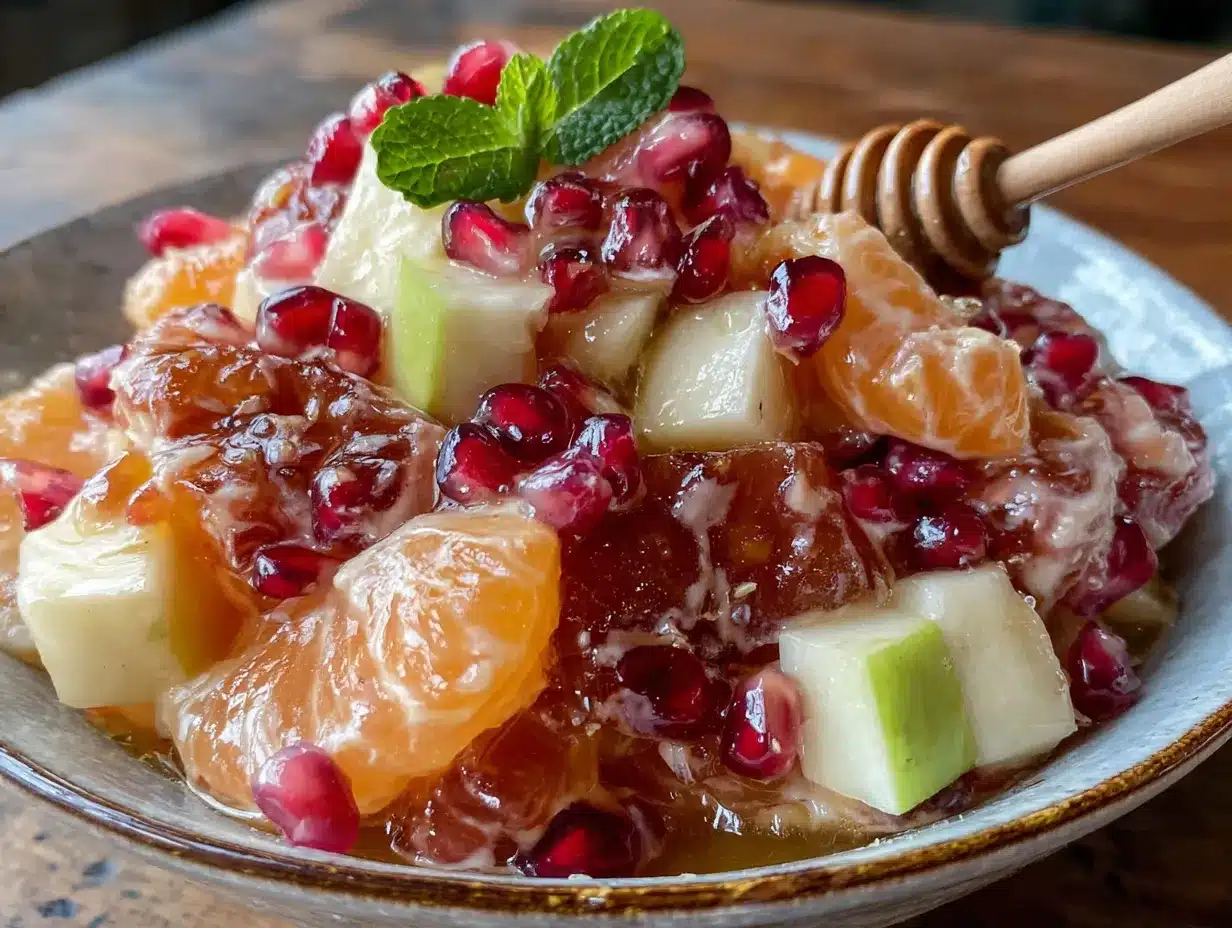
Let’s get to the fun part. This recipe comes together quickly, but there are a few tricks I’ve learned along the way to make it even easier. Follow these steps, and you’ll have a beautiful, kid-approved fruit salad in no time.
- Make the dressing first (2 minutes): In a small bowl or mason jar, combine 3 tablespoons of honey, 2 tablespoons of fresh lime juice, and 1 teaspoon of lime zest. Whisk or shake until the honey is fully dissolved. Taste it—it should be sweet with a bright, tangy finish. If it’s too tart for your kids, add another teaspoon of honey. Set it aside while you prep the fruit. (The flavors meld together as it sits, which is a good thing.)
- Supreme the oranges (5-7 minutes): This sounds fancy, but it’s easy. Cut off the top and bottom of each orange so it sits flat on your cutting board. Then, slice downward to remove the peel and white pith, following the curve of the fruit. Once all the peel is off, hold the orange in your hand over the bowl and cut between the membranes to release each segment. Drop the segments into your large bowl. Squeeze the leftover membranes over the bowl to catch any extra juice. (Don’t worry if some segments break—they’ll still taste great.)
- Prep the apples (3 minutes): Core the apples and cut them into bite-sized chunks—about ½-inch pieces work well for little hands. Toss them in a small bowl with a squeeze of lime juice to prevent browning. I’ve forgotten this step before, and the apples turned brown within 20 minutes. Trust me, the extra step is worth it.
- Seed the pomegranate (if using fresh): If you bought pre-seeded pomegranate, skip this step. If you’re seeding a fresh one, cut it in half crosswise, hold it cut-side down over a bowl, and whack the back with a wooden spoon. The seeds will fall right out. It’s oddly satisfying—my kids fight over who gets to do this part.
- Combine the fruit (2 minutes): Add the apple chunks, pomegranate seeds, and sliced bananas to the bowl with the orange segments. Pour the honey-lime dressing over the top and gently toss everything together with a large spoon. Be gentle—you don’t want to break up the orange segments too much. The goal is to coat everything evenly without making a mess.
- Add optional toppings (1 minute): If you’re using mint and toasted coconut, sprinkle them over the top right before serving. I like to serve the mint on the side because my kids have strong opinions about “green stuff” in their food. The coconut flakes add a lovely crunch, but they can get soggy if they sit too long, so add them at the last minute.
- Chill before serving (optional, 15-30 minutes): This salad is delicious right away, but letting it sit in the fridge for 15-30 minutes allows the flavors to meld together. The honey-lime dressing soaks into the fruit just enough to make everything taste more cohesive. Don’t let it sit longer than an hour, or the bananas will start to get mushy.
A few notes from my own kitchen disasters: If you’re making this for a party, keep the bananas and dressing separate until just before serving. I learned this the hard way when I prepped a big batch for a potluck and ended up with a bowl of brown banana mush. Also, if your oranges are particularly tart, add an extra tablespoon of honey to balance it out. Taste as you go—your fruit might be sweeter or tarter than mine, and that’s okay.
Cooking Tips & Techniques
Over the years, I’ve made this salad more times than I can count, and I’ve picked up a few tricks that make a real difference. Here are my best tips for getting it right every time:
Supreme like a pro. The key to beautiful orange segments is a sharp knife and patience. Don’t rush this step. If you’re struggling, try cutting the orange into rounds instead of segments—it’s faster and still looks pretty. My kids actually prefer the rounds because they’re easier to pick up with their fingers.
Prevent apple browning. This is non-negotiable if you’re making the salad ahead of time. Toss your apple chunks in a little lime juice or lemon juice as soon as you cut them. I’ve also used a splash of pineapple juice in a pinch, and it works great. The acid slows down the oxidation process and keeps your apples looking fresh.
Toast coconut flakes carefully. Coconut toasts fast—like, blink-and-you’ll-miss-it fast. Spread them in a single layer in a dry pan over medium heat and shake the pan every 30 seconds. They’re done when they’re golden and smell nutty. I’ve burned more batches than I’d like to admit, so set a timer and don’t walk away.
Make it ahead without the mush. If you’re prepping for a busy week, chop all the fruit except the bananas and store them in separate containers in the fridge. Make the dressing and keep it in a jar. When you’re ready to serve, toss everything together with the bananas and dressing. This way, you get the convenience of prep-ahead without sad, soggy fruit.
Balance the sweetness. Winter fruit can be hit or miss in terms of sweetness. Some oranges are tart, some are candy-sweet. Taste your fruit before you make the dressing and adjust the honey accordingly. I’ve had batches where I needed 4 tablespoons of honey and others where 2 was plenty. Trust your taste buds.
One mistake I made early on was using bottled lime juice. It has a flat, slightly bitter taste that doesn’t do this salad any favors. Fresh lime juice is brighter and more aromatic—it makes the dressing feel alive. Yes, it’s a little more work, but the difference is noticeable. Your kids might not be able to put their finger on it, but they’ll eat more.
Variations & Adaptations
This recipe is incredibly forgiving, which is one of the reasons I love it. Here are some ways to switch it up based on what you have on hand or what your family prefers:
Dairy-free yogurt dressing: For a creamier version, mix ¼ cup of plain Greek yogurt (or dairy-free coconut yogurt) with the honey and lime juice. It adds a tangy richness that pairs beautifully with the fruit. My oldest prefers this version and calls it “fruit dip salad.”
Seasonal fruit swaps: This recipe works year-round with whatever fruit is in season. In spring, try strawberries and kiwi. In summer, add peaches and blueberries. In fall, swap in diced pears and dried cranberries. The honey-lime dressing goes with almost everything, so don’t be afraid to experiment.
Add some crunch: If your kids like texture, throw in some chopped nuts like almonds or pecans. I’ve also used granola clusters on top for a breakfast-style fruit salad that doubles as dessert. Just add them right before serving so they stay crunchy.
Lower sugar option: If you’re watching sugar intake, reduce the honey to 1 tablespoon and add an extra squeeze of lime. The fruit provides plenty of natural sweetness, especially if you use ripe bananas and sweet oranges. I’ve made this for a diabetic family member, and they loved it.
Warm fruit salad: This might sound weird, but hear me out. In the dead of winter, I sometimes warm the orange segments in a pan with a little honey and lime before adding them to the bowl. It takes the chill off and makes the salad feel cozy. My kids call it “warm sunshine salad.” Don’t heat the bananas or apples, though—they’ll turn to mush.
I once tried adding a pinch of chili powder to the dressing for a sweet-spicy kick. It was interesting, but my kids revolted. So, maybe save that one for adult-only gatherings. The beauty of this recipe is that it’s a blank canvas—you can tweak it endlessly and still end up with something delicious.
Serving & Storage Suggestions
This salad is versatile enough to serve at breakfast, lunch, or dinner. Here’s how to make the most of it:
Serving temperature: I prefer this salad chilled, but it’s also delicious at room temperature. If you’re serving it at a party, set the bowl over a larger bowl filled with ice to keep it cold. My kids actually like it straight from the fridge—they say it’s like “fruity ice cream.”
Presentation tips: For a pretty presentation, layer the fruit in a glass bowl instead of tossing it all together. Start with the orange segments, then add the apples, then the pomegranate seeds, and top with bananas and mint. Drizzle the dressing over the top right before serving. It looks like a work of art, and kids love seeing all the colors.
What to serve with it: This salad pairs beautifully with simple meals like roasted chicken, grilled cheese sandwiches, or even pancakes for a brunch spread. I’ve also served it alongside yogurt and granola for a quick breakfast that feels special. For a holiday table, it’s a bright, refreshing counterpoint to heavy dishes like mac and cheese or mashed potatoes.
Storage instructions: Store leftovers in an airtight container in the refrigerator for up to 2 days. The bananas will brown and get soft, so if you’re planning on leftovers, consider leaving the bananas out and adding them fresh each time. The dressing will continue to soak into the fruit, making it softer but still tasty.
Reheating: This salad is best served cold or at room temperature, so reheating isn’t recommended. If you want to use leftovers in a different way, try blending them into a smoothie or spooning them over oatmeal. The flavors work surprisingly well in both.
One thing I’ve noticed is that the flavors actually get better after a few hours in the fridge. The honey-lime dressing melds with the fruit juices, creating a syrup-like coating that’s incredibly delicious. Just don’t let it sit longer than a day, or the texture starts to suffer. My family rarely has leftovers, but when we do, they’re gone by breakfast the next morning.
Nutritional Information & Benefits
This fruit salad is packed with nutrients that are good for growing bodies and busy parents alike. Here’s a rough breakdown per serving (about 1 cup):
| Nutrient | Amount |
|---|---|
| Calories | 180-200 |
| Total Fat | 1-2g |
| Carbohydrates | 45-50g |
| Fiber | 6-8g |
| Sugar | 30-35g (all natural from fruit and honey) |
| Vitamin C | 80-100% of daily value |
| Potassium | 400-500mg |
Pin This Recipe!
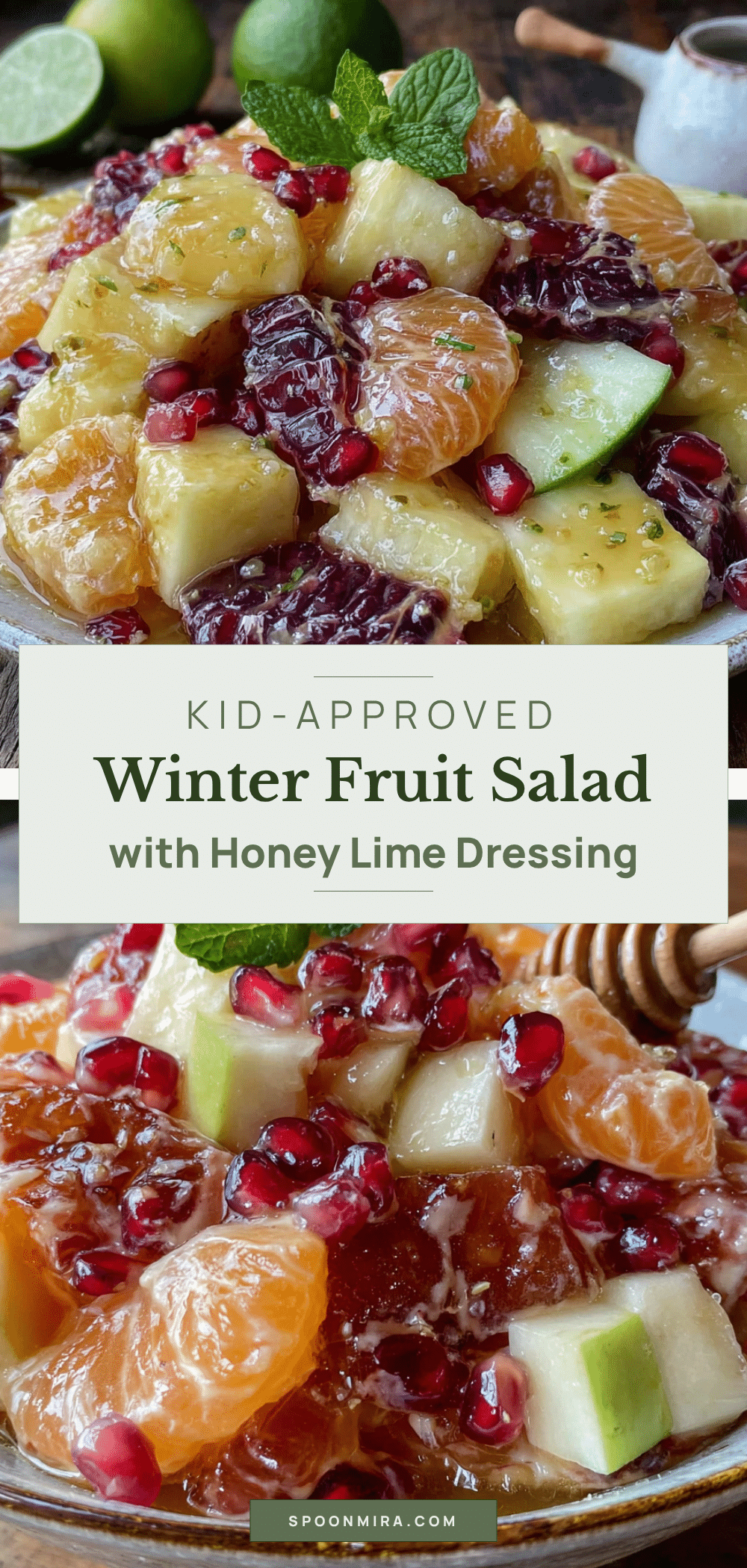
Kid-Approved Winter Fruit Salad with Honey Lime Dressing
A bright and refreshing winter fruit salad with a sweet-tangy honey lime dressing that even picky eaters will love. Quick to make with simple, budget-friendly ingredients, this salad is perfect for busy weeknights and holiday tables alike.
- Prep Time: 15 minutes
- Cook Time: 0 minutes
- Total Time: 15 minutes
- Yield: 6 servings 1x
- Category: Side Dish
- Cuisine: American
Ingredients
- 3 large navel oranges (or cara cara oranges)
- 2 medium Honeycrisp or Fuji apples
- 1 cup pomegranate seeds
- 2 medium bananas, sliced
- 3 tablespoons honey (mild, like clover or orange blossom)
- 2 tablespoons fresh lime juice
- 1 teaspoon lime zest
- ¼ cup chopped fresh mint leaves (optional)
- ¼ cup toasted coconut flakes (optional)
Instructions
- Make the dressing: In a small bowl or mason jar, combine 3 tablespoons honey, 2 tablespoons fresh lime juice, and 1 teaspoon lime zest. Whisk or shake until honey is dissolved. Set aside.
- Supreme the oranges: Cut off the top and bottom of each orange so it sits flat. Slice downward to remove peel and white pith. Hold orange over a large bowl and cut between membranes to release segments. Drop segments into bowl. Squeeze leftover membranes for extra juice.
- Prep the apples: Core apples and cut into ½-inch chunks. Toss with a squeeze of lime juice to prevent browning.
- Seed the pomegranate (if using fresh): Cut pomegranate in half crosswise, hold cut-side down over a bowl, and whack the back with a wooden spoon to release seeds.
- Combine the fruit: Add apple chunks, pomegranate seeds, and sliced bananas to the bowl with orange segments. Pour dressing over top and gently toss to coat.
- Add optional toppings: Sprinkle mint and toasted coconut over top just before serving, or serve on the side.
- Chill before serving (optional): Refrigerate for 15-30 minutes to let flavors meld. Do not exceed 1 hour to avoid mushy bananas.
Notes
For best results, use fresh lime juice and zest. If oranges are tart, add an extra tablespoon of honey. To prevent apple browning, toss with lime juice immediately after cutting. For make-ahead, keep bananas and dressing separate until serving. Toast coconut flakes in a dry pan over medium heat for 2-3 minutes, watching closely to avoid burning.
Nutrition
- Serving Size: 1 cup
- Calories: 190
- Sugar: 32
- Sodium: 5
- Fat: 1.5
- Saturated Fat: 0.5
- Carbohydrates: 47
- Fiber: 7
- Protein: 2
Keywords: winter fruit salad, honey lime dressing, kid-friendly fruit salad, easy fruit salad, healthy fruit salad, winter fruit recipe