Barely three tomatoes into halving them when I realized my hands were shaking. Not from cold or caffeine, but from the sheer volume of what we’d grown. The garden had exploded. One day they were green orbs hanging stubbornly on the vine, and the next—a cascade of red, orange, and yellow tomatoes threatening to take over the kitchen counter. I had maybe four pounds sitting in a colander, another two pounds on the windowsill, and a creeping feeling that if I didn’t act fast, I’d be making a very sad compost pile instead of dinner.
I grabbed the biggest pot I own. Not my fancy Dutch oven (too pretty to risk a tomato stain), but that beat-up stainless steel one I bought at a restaurant supply store years ago. The one with the slightly wobbly handle. I figured if I was going to rescue these tomatoes, I needed to go big. And honestly, I was just tired. Tired of chopping them for salads we’d never finish. Tired of watching them soften on the counter. I needed a plan that would use a lot of tomatoes, taste amazing, and not make me cry.
That’s how this creamy homemade tomato soup was born. Not from a cherished family recipe or a moment of culinary inspiration, but from pure, unadulterated garden overwhelm. I wanted something that felt like a hug in a bowl, something that would use up a mountain of tomatoes and still make everyone ask for seconds. It worked. So well, in fact, that I’ve made it every week since, even when the garden is just a memory and I’m buying tomatoes at the store. Because once you’ve made this soup, you’ll never go back to the canned stuff.
Why You’ll Love This Recipe
Let me tell you why this is the only creamy tomato soup recipe you’ll ever need. I’ve tested it more times than I care to admit, tweaking the balance of creaminess to acidity, the roasting time to get that perfect caramelized sweetness, and the seasoning so it’s never boring. This is the version that finally made my husband say, “Wait, this is just tomatoes?”
- Incredibly Easy : This comes together with minimal hands-on time. The oven does most of the work while you do something else.
- Uses Simple Ingredients : You likely have olive oil, garlic, and onions in your kitchen right now. The star is fresh tomatoes, but even store-bought ones work beautifully here.
- Perfect for Meal Prep : This soup freezes like a dream. Make a double batch and thank yourself later on a busy weeknight.
- Naturally Creamy Without Heavy Cream : I use a trick that keeps it rich and velvety without being heavy. You won’t miss the extra dairy.
- Seriously Satisfying : It’s the kind of soup that makes you close your eyes after the first spoonful. Comfort food at its finest, with zero effort.
What makes this version different? It’s the roasting. I don’t just simmer the tomatoes on the stove. I roast them until their skins blister and their sugars concentrate, which gives the soup a depth of flavor you simply can’t get any other way. It’s not just another tomato soup—it’s the best version of itself, and I say that with zero exaggeration.
What Ingredients You Will Need
This recipe relies on a handful of simple, honest ingredients that work together to create something really special. Most of these are pantry and fridge staples, which makes it an easy weeknight win.
- Fresh Tomatoes (3 pounds, about 6-8 medium-large) : This is the star. Use the ripest, most fragrant tomatoes you can find. If you have garden tomatoes, even better. Roma or San Marzano varieties are excellent for soup because they’re meaty and less watery, but any ripe tomato will work. I’ve used a mix of heirlooms and regular red ones, and it’s always delicious. If your tomatoes are a bit underripe, they’ll still work but won’t be as sweet—you might want to add a pinch of sugar later.
- Yellow Onion (1 large) : Onions add a savory sweetness that balances the acidity of the tomatoes. I prefer yellow onions here, but white or sweet onions will also work.
- Garlic (4-6 cloves) : Roasted garlic becomes sweet and mellow, almost buttery. Don’t skip it. I always add a couple extra cloves because I love the flavor.
- Olive Oil (3 tablespoons) : Use a good quality extra virgin olive oil for roasting. It helps caramelize the vegetables and adds richness to the final soup.
- Vegetable or Chicken Broth (1 cup) : This helps thin the soup to your desired consistency. I use low-sodium broth so I can control the salt level. Homemade broth is wonderful here, but store-bought works perfectly fine.
- Unsalted Butter (2 tablespoons) : A little butter at the end adds a silky finish and rounds out the flavors. You can substitute with olive oil or a dairy-free alternative.
- Heavy Cream or Full-Fat Coconut Milk (¼ cup) : For that signature creaminess. I often use coconut milk for a dairy-free version, and it’s just as luscious. The cream is optional but highly recommended.
- Salt and Black Pepper : To taste. I start with a teaspoon of salt and adjust at the end.
- Fresh Basil (a handful) : Adds a fresh, aromatic note that complements tomatoes beautifully. You can also use dried basil in a pinch, but fresh is best.
- Optional: Red Pepper Flakes (¼ teaspoon) : For a tiny kick of heat. This is entirely optional, but I love the subtle warmth it adds.
- Optional: Balsamic Vinegar (1 teaspoon) : A splash of balsamic at the end brightens the soup and deepens the tomato flavor. It’s my secret weapon.
Equipment Needed
You don’t need a ton of fancy equipment for this recipe, which is part of what makes it so approachable.
- Large Baking Sheet or Sheet Pan : For roasting the tomatoes and onions. A rimmed baking sheet is best to catch any juices.
- Large Pot or Dutch Oven : For simmering the soup. A 5-6 quart pot is ideal.
- Immersion Blender or Regular Blender : This is key for achieving that velvety smooth texture. An immersion blender is less messy and easier to clean. If using a regular blender, be very careful blending hot liquids—work in batches and leave the lid slightly ajar to release steam.
- Chef’s Knife and Cutting Board : For prepping your vegetables.
- Measuring Spoons and Cups : For accuracy, though this recipe is forgiving.
I prefer using my immersion blender because it means one less thing to wash. But if you have a high-speed blender, that will give you an incredibly silky result. Just be patient with the hot liquid.
Preparation Method
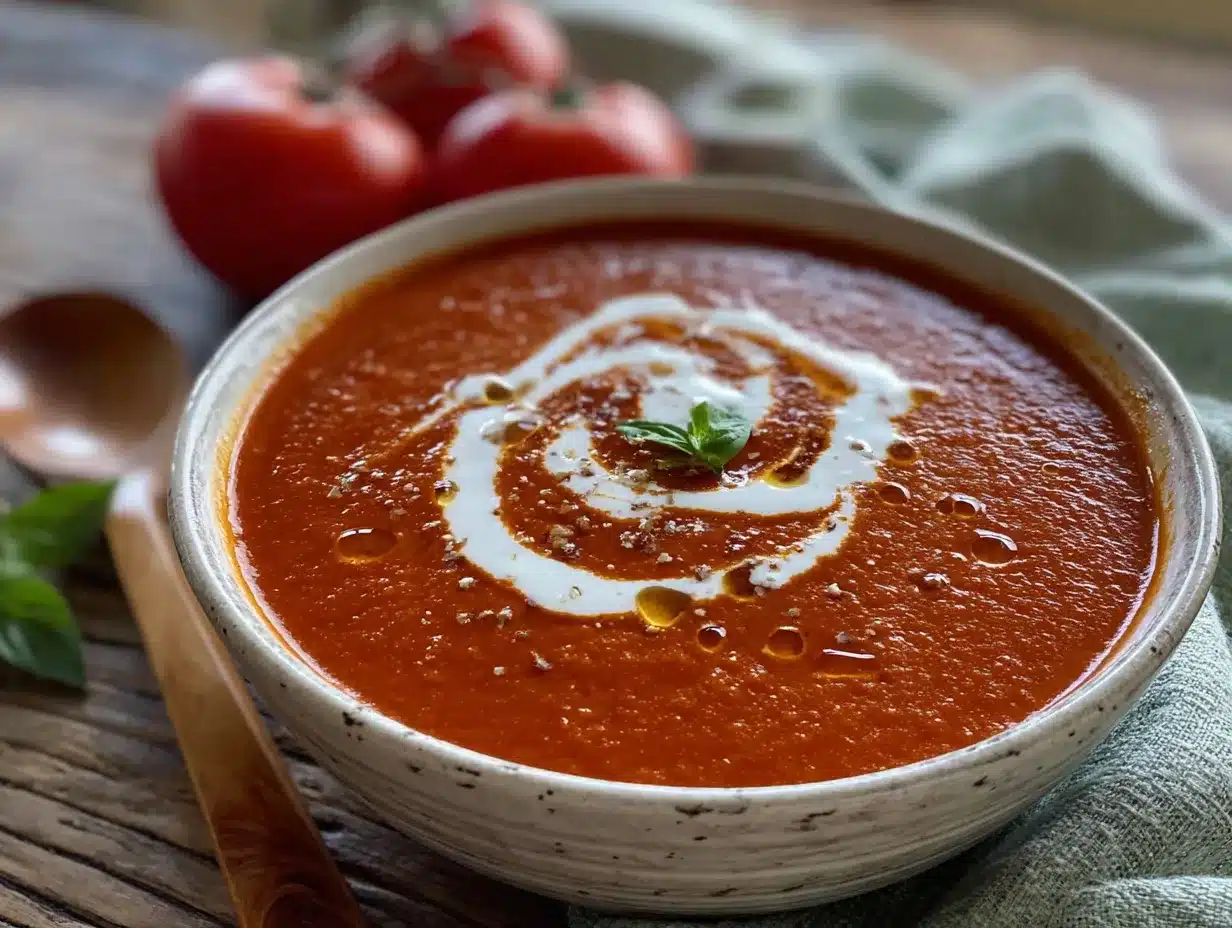
Let’s get cooking. This method is straightforward, but I’ve included all the little details that make the difference between a good soup and a great one.
- Preheat your oven to 400°F (200°C). While it’s heating, wash and halve your tomatoes. If you’re using large tomatoes, quarter them so they’re roughly the same size. Place them cut-side up on your baking sheet.
- Prep the aromatics. Peel and quarter your onion. Separate the layers slightly so they roast evenly. Add the onion pieces to the baking sheet with the tomatoes. Tuck the garlic cloves (still in their skins) in among the tomatoes and onions.
- Drizzle everything with olive oil. Use about 2 tablespoons of the olive oil. Season generously with salt and pepper. Toss everything gently with your hands to coat, then spread it back into a single layer. Roast for 35-45 minutes, or until the tomatoes are soft, blistered, and starting to caramelize around the edges. The onions should be tender and golden. The garlic will be soft and fragrant.
- Let it cool slightly. When the vegetables are done, remove the baking sheet from the oven. Let it cool for about 5 minutes. This makes handling the garlic much easier. Squeeze the softened garlic cloves out of their skins directly into the pot. Discard the skins.
- Start the soup base. In your large pot, melt the butter over medium heat. Add the remaining 1 tablespoon of olive oil. Once the butter is foamy, add the roasted tomatoes, onions, and garlic to the pot. Stir everything together, scraping up any browned bits from the bottom of the pot. This is where all the flavor lives.
- Add the broth and basil. Pour in the vegetable or chicken broth. Add the fresh basil leaves. Bring the mixture to a gentle simmer over medium heat. Let it cook for 5-7 minutes, stirring occasionally. This allows the flavors to meld together.
- Blend until smooth. Remove the pot from the heat. Using an immersion blender, carefully blend the soup until it’s completely smooth and velvety. If you’re using a regular blender, work in batches. Fill the blender no more than halfway, remove the center cap from the lid, and cover it with a kitchen towel to allow steam to escape. Blend until smooth, then pour into a clean pot.
- Finish with cream and seasoning. Return the blended soup to low heat. Stir in the heavy cream or coconut milk. Add the balsamic vinegar if using. Taste and adjust seasoning with salt and pepper. If the soup is too thick, add a little more broth or water until it reaches your desired consistency. If it’s too thin, let it simmer for a few more minutes to reduce.
- Serve hot. Ladle the soup into bowls. Garnish with a drizzle of cream, a few fresh basil leaves, and a crack of black pepper. A side of crusty bread or a ham and cheese slider makes it a complete meal.
Pro Tip: The soup will look a bit rustic before blending, but trust the process. The roasting is what gives it that deep, almost smoky sweetness. Don’t rush it.
Cooking Tips & Techniques
I’ve made this soup more times than I can count, and I’ve definitely learned a few things the hard way. Here are my best tips to make sure yours turns out perfectly.
Don’t skip the roasting. This is the single most important step. Roasting concentrates the natural sugars in the tomatoes and onions, giving the soup a complexity that’s impossible to achieve with just simmering. It’s the difference between a good soup and a great one.
Use a variety of tomatoes if you have them. A mix of red, yellow, and orange tomatoes not only looks beautiful but also adds layers of flavor. Yellow tomatoes are naturally sweeter, while red ones have that classic tang.
Be careful with the garlic. Roasted garlic is sweet and mild, but if you burn it, it becomes bitter. Keep an eye on the baking sheet in the last 10 minutes of roasting. The garlic should be soft and golden, not dark brown.
Blend in stages. If using a regular blender, never fill it more than halfway with hot liquid. The steam expands and can blow the lid off, causing a serious mess (and potential burns). Always vent the lid and cover with a towel.
Adjust the consistency. Some people like their tomato soup thick and hearty, others prefer it thinner and more sippable. The amount of broth is a guideline, not a rule. Add more or less to suit your preference.
Taste and adjust. Tomatoes vary wildly in acidity and sweetness. If your soup tastes a bit flat, a splash of balsamic vinegar or a pinch of sugar can brighten it right up. If it’s too acidic, a little more cream or a pat of butter will mellow it out.
Let it rest. Like many soups, this one tastes even better the next day. The flavors have time to meld and deepen. If you can, make it a day ahead and reheat gently.
Variations & Adaptations
This creamy tomato soup is incredibly versatile. Here are a few ways to make it your own.
Roasted Red Pepper Tomato Soup. Add 2 roasted red bell peppers (from a jar or roasted yourself) to the baking sheet with the tomatoes. This adds a subtle sweetness and a beautiful orange-red color. It’s one of my favorite variations.
Spicy Tomato Soup. Add ½ teaspoon of red pepper flakes along with the garlic before roasting. You can also stir in a tablespoon of sriracha or your favorite hot sauce at the end for a different kind of heat.
Dairy-Free / Vegan. This is incredibly easy. Use olive oil instead of butter, and substitute the heavy cream with full-fat coconut milk or a splash of unsweetened oat milk. The coconut milk adds a lovely richness without tasting like coconut. For a protein boost, you can even stir in a scoop of unflavored collagen or protein powder after blending.
Herb-Infused. Swap the basil for other herbs. Thyme and oregano work beautifully with tomatoes. Add a few sprigs of fresh thyme to the pot before simmering, then remove them before blending.
Cheesy Tomato Soup. Stir in ½ cup of shredded sharp cheddar cheese or Parmesan after blending. Allow it to melt over low heat. This turns the soup into something truly decadent. It pairs wonderfully with a turkey and cheese pinwheel for dipping.
Smoky Tomato Soup. For a deeper, smokier flavor, use smoked paprika instead of regular. Start with 1 teaspoon and adjust to taste. You can also roast the tomatoes on a grill instead of in the oven for an even smokier result.
Serving & Storage Suggestions
This soup is wonderful on its own, but it truly shines when paired with the right accompaniments.
Serving. Serve the soup hot, straight from the pot. I love to garnish it with a swirl of cream, a few fresh basil leaves, and a drizzle of good olive oil. A sprinkle of flaky sea salt right before serving adds a lovely crunch and pop of flavor.
What to Serve With It. The classic pairing is a gooey grilled cheese sandwich. But it’s also fantastic with crusty bread for dipping, a simple green salad, or even no-bake peanut butter granola bars for a sweet-savory contrast. For a heartier meal, serve it alongside a one-pan garlic butter chicken and rice.
Storage. Let the soup cool completely to room temperature before storing. Transfer it to an airtight container. It will keep in the refrigerator for up to 5 days. The flavors actually deepen and improve over time.
Freezing. This soup freezes beautifully. Pour cooled soup into freezer-safe containers or zip-top bags. Leave about an inch of headspace for expansion. It will keep for up to 3 months. Thaw overnight in the refrigerator before reheating.
Reheating. Reheat the soup gently on the stovetop over medium-low heat, stirring occasionally. You can also microwave it in a microwave-safe bowl in 30-second intervals, stirring between each. If the soup seems too thick after thawing, add a splash of broth or water to thin it out.
Nutritional Information & Benefits
This soup is as good for you as it is delicious. Here’s a rough estimate per serving (based on 6 servings, using heavy cream):
- Calories: 180-220
- Fat: 12-15g
- Carbohydrates: 18-22g
- Fiber: 4-5g
- Sugar: 10-12g (natural from tomatoes)
- Protein: 3-4g
- Sodium: 400-600mg (varies with broth and added salt)
- Vitamin C: 40% of Daily Value
- Vitamin A: 25% of Daily Value
- Potassium: 15% of Daily Value
Health Benefits. Tomatoes are packed with lycopene, a powerful antioxidant linked to heart health and reduced inflammation. Cooking tomatoes (as we do here) actually increases the bioavailability of lycopene, making it easier for your body to absorb. The onions and garlic provide prebiotic fiber and immune-supporting compounds. This soup is naturally gluten-free and can be made dairy-free with simple substitutions.
Dietary Considerations. This recipe is naturally gluten-free. For a low-carb version, skip the cream and use a little extra butter or olive oil for richness. For a lower-sodium option, use unsalted broth and adjust the salt at the end.
Conclusion
This creamy homemade tomato soup is more than just a recipe—it’s a solution to an overflowing garden, a comfort on a chilly evening, and a reminder that the simplest ingredients can create something truly special. It’s the soup I turn to when I need a win in the kitchen, and it never disappoints.
I hope you give it a try. Whether you’re using a mountain of garden tomatoes or a bag from the grocery store, the result is the same: a velvety, flavorful, soul-warming bowl of goodness that will make you wonder why you ever bought the canned stuff. And if you make it, I’d love to hear how it turns out. Leave a comment below and let me know what you paired it with, or if you tried any of the variations. Your feedback helps other readers too!
Happy cooking, and here’s to the simple joy of a perfect bowl of soup.
Frequently Asked Questions
Can I use canned tomatoes instead of fresh?
Absolutely. If fresh tomatoes aren’t in season, use two 28-ounce cans of whole peeled tomatoes (San Marzano are best). Drain them slightly, then proceed with the roasting step. The flavor will still be excellent, though it won’t have that same garden-fresh brightness.
How do I make this soup extra creamy without cream?
For a dairy-free creamy version, use full-fat coconut milk or blend in a soaked cashew cream (soak ½ cup raw cashews in hot water for 15 minutes, then blend with ¼ cup water until smooth). You can also blend in a peeled, cooked potato for body and creaminess.
Can I make this in a slow cooker or Instant Pot?
You can, but you’ll miss the roasted flavor. For a slow cooker version, sauté the onions and garlic first, then add all ingredients (except cream) and cook on low for 4-6 hours. Blend before adding cream. For an Instant Pot, use the sauté function first, then pressure cook on high for 10 minutes. Quick release, blend, and stir in cream.
Why is my tomato soup bitter?
Bitterness usually comes from burnt garlic or over-roasted tomatoes. Make sure to keep an eye on the baking sheet in the last 10 minutes. If your soup is already bitter, try adding a pinch of sugar or a splash of cream to balance it out. A teaspoon of honey can also help.
Can I freeze this soup with the cream already added?
Yes, but the texture may change slightly upon thawing. Cream-based soups can sometimes separate when frozen. For the best result, freeze the soup before adding the cream. When you’re ready to serve, thaw, reheat, and stir in the cream at the end. If you’ve already added the cream, just whisk it vigorously after reheating to bring it back together.
Pin This Recipe!
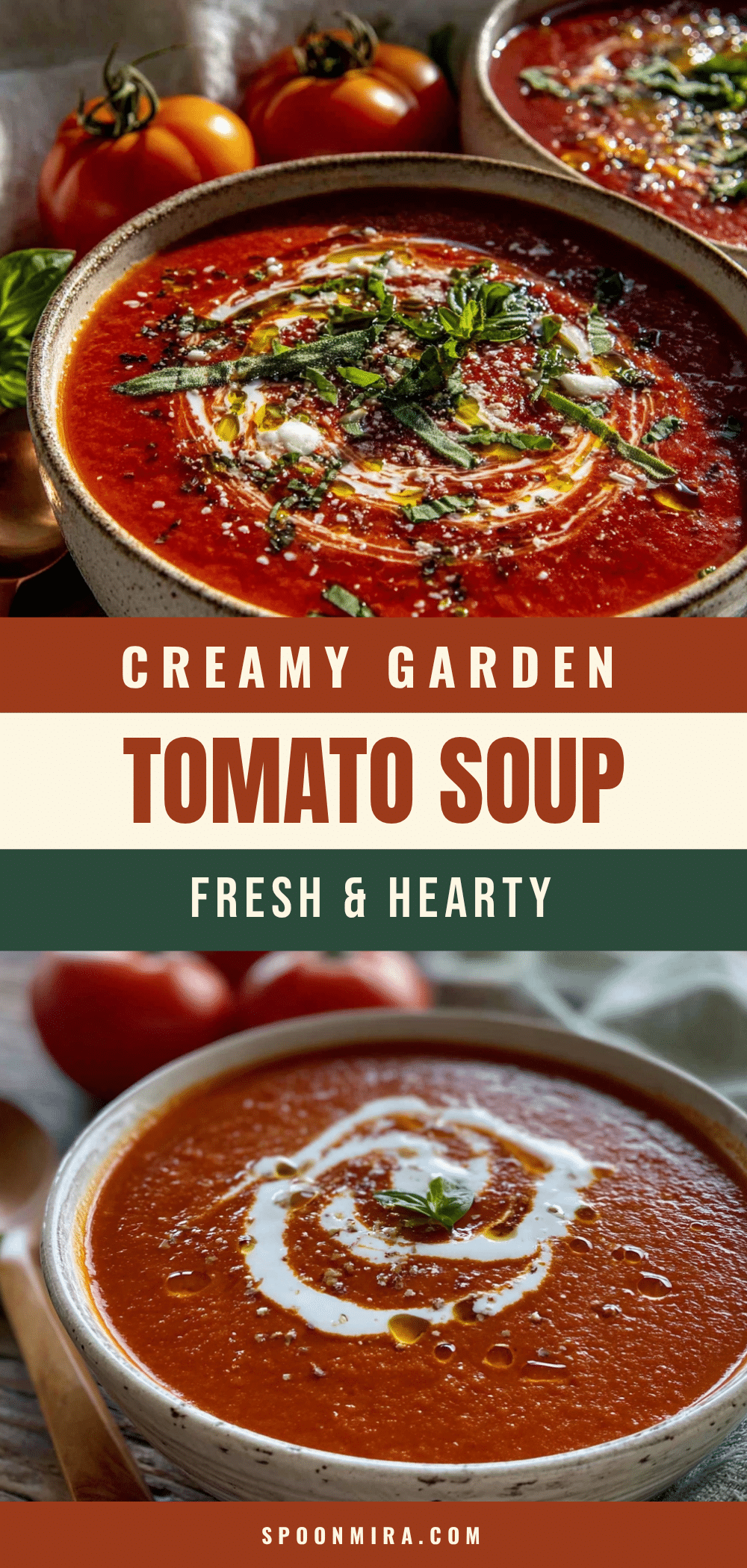
Best Homemade Creamy Tomato Soup with Fresh Garden Tomatoes
This creamy homemade tomato soup is made with fresh garden tomatoes, roasted to perfection for a deep, rich flavor. It’s an easy, comforting soup that’s perfect for using up a bounty of tomatoes and is naturally creamy without heavy cream.
- Prep Time: 15 minutes
- Cook Time: 45 minutes
- Total Time: 1 hour
- Yield: 6 servings 1x
- Category: Soup
- Cuisine: American
Ingredients
- 3 pounds fresh tomatoes (about 6–8 medium-large), halved or quartered
- 1 large yellow onion, peeled and quartered
- 4–6 cloves garlic, unpeeled
- 3 tablespoons olive oil, divided
- 1 cup vegetable or chicken broth (low-sodium preferred)
- 2 tablespoons unsalted butter
- ¼ cup heavy cream or full-fat coconut milk
- Salt and black pepper to taste
- 1 handful fresh basil leaves
- ¼ teaspoon red pepper flakes (optional)
- 1 teaspoon balsamic vinegar (optional)
Instructions
- Preheat your oven to 400°F (200°C). Wash and halve or quarter the tomatoes. Place them cut-side up on a large baking sheet.
- Add the quartered onion to the baking sheet. Tuck the garlic cloves (still in their skins) among the tomatoes and onions.
- Drizzle everything with 2 tablespoons of olive oil. Season generously with salt and pepper. Toss gently to coat, then spread into a single layer. Roast for 35-45 minutes, until tomatoes are soft, blistered, and caramelized, and onions are tender and golden.
- Remove from oven and let cool for about 5 minutes. Squeeze the softened garlic cloves out of their skins and set aside; discard skins.
- In a large pot, melt the butter with the remaining 1 tablespoon of olive oil over medium heat. Add the roasted tomatoes, onions, and garlic. Stir, scraping up any browned bits from the bottom of the pot.
- Pour in the broth and add the fresh basil leaves. Bring to a gentle simmer and cook for 5-7 minutes, stirring occasionally.
- Remove from heat. Using an immersion blender, blend the soup until completely smooth. (If using a regular blender, work in batches, filling no more than halfway, venting the lid, and covering with a towel.)
- Return the blended soup to low heat. Stir in the heavy cream or coconut milk and balsamic vinegar (if using). Taste and adjust seasoning with salt and pepper. Add more broth or water to reach desired consistency.
- Serve hot, garnished with a drizzle of cream, fresh basil leaves, and a crack of black pepper.
Notes
Don’t skip the roasting step—it concentrates the sugars and adds depth. For a dairy-free version, use olive oil instead of butter and full-fat coconut milk instead of cream. The soup tastes even better the next day. If using a regular blender, be very careful with hot liquids: work in batches and vent the lid.
Nutrition
- Serving Size: 1 serving (about 1.5
- Calories: 200
- Sugar: 11
- Sodium: 500
- Fat: 13.5
- Saturated Fat: 5
- Carbohydrates: 20
- Fiber: 4.5
- Protein: 3.5
Keywords: creamy tomato soup, homemade tomato soup, fresh tomato soup, garden tomato soup, easy tomato soup, roasted tomato soup, vegetarian tomato soup, gluten-free tomato soup