The neighborhood progressive dinner was in four hours and I’d completely forgotten. Everyone else would be bringing things they’d clearly been planning for days—sous vide something, a hand-rolled pasta situation, a tart with the most perfect lattice top I’d ever seen. I had a couple of salmon fillets in the fridge, a jar of honey that was crystallizing at the edges, and honestly, a mild sense of panic. I mean, the progressive dinner was supposed to be this big yearly thing, and I was the new person on the block. No pressure, right?
I stood there staring into the fridge like it would magically produce a solution. The salmon stared back. And then it hit me—or rather, the honey jar did, almost falling out of the door shelf. Honey garlic salmon. It’s a classic for a reason, but I needed it to be special. I needed it to have that crispy skin everyone fights over. I needed it to look like I’d actually tried.
Let me tell you, the chaos in my kitchen that afternoon was real. I dropped a garlic clove behind the stove (it’s still there, probably). I accidentally used the wrong measuring spoon for the soy sauce and had to start the glaze over. But somehow, when that salmon came out of the oven—golden, sticky, the skin crackling—I knew I had something. I walked into that dinner with a simple platter, feeling a little sheepish next to the elaborate spread. And then the plate came back empty. Completely empty. Someone asked for the recipe before I’d even sat down.
That’s the thing about this Flavorful Honey Garlic Baked Salmon with Crispy Skin. It’s not trying to be fancy. It’s just really, really good. And maybe you’ve been there—scrambling for a dish that looks like you spent hours on it when you actually spent thirty minutes. This is that recipe. It’s the one that makes you look like a hero when you’re just trying not to show up empty-handed.
Why You’ll Love This Recipe
This isn’t just another salmon recipe. After testing this dish about seven times (my neighbors were very happy that week), I can confidently say this version hits different. The honey garlic glaze caramelizes perfectly without burning, and the skin gets that shatteringly crisp texture that makes you wonder why you ever bothered with skinless fillets.
- Quick & Easy: From fridge to table in under 30 minutes. Seriously. This is a weeknight dinner hero that also works for impressing guests.
- Simple Ingredients: You probably have everything in your pantry right now. Honey, soy sauce, garlic, salmon—that’s it. No weird specialty items.
- Perfect for Entertaining: It looks stunning on a platter, but it’s practically foolproof. Great for dinner parties, weeknight meals, or, yes, last-minute progressive dinners.
- Crowd-Pleaser: Even people who “don’t like fish” have asked me for seconds. The sweet-savory glaze is universally loved.
- Unbelievably Delicious: The contrast between the sticky, flavorful glaze and the crispy, salty skin is next-level. It’s comfort food that feels a little fancy.
What makes this recipe different from the rest? It’s the technique. Most baked salmon recipes tell you to pat the skin dry, but I take it a step further. I let the fillets sit uncovered in the fridge for a bit to really dry out that skin. It makes all the difference. Plus, the glaze is balanced perfectly—not too sweet, not too salty, with just enough garlic to make it interesting. This isn’t just another version; it’s the best version I’ve ever made.
Honestly, this recipe is the kind that makes you close your eyes after the first bite. It’s that good. It’s comfort food reimagined—healthier, faster, but with the same soul-soothing satisfaction. Perfect for impressing guests without stress, or turning a simple Tuesday night into something memorable.
What Ingredients You Will Need
This recipe uses simple, wholesome ingredients to deliver bold flavor and satisfying texture without the fuss. Most of these are pantry staples, which is exactly what you want in a last-minute dinner hero.
- Salmon Fillets (4 fillets, about 6 oz / 170g each) – Skin-on is non-negotiable here. That’s where the crispy magic happens. I prefer center-cut fillets for even cooking. Look for bright, firm flesh and avoid anything that smells overly fishy.
- Honey (1/4 cup / 85g) – Use a good quality honey here. The floral notes matter. If your honey is crystallized, gently warm it up. I like local wildflower honey for its complex flavor.
- Soy Sauce (3 tablespoons / 45ml) – Low-sodium is best so you can control the saltiness. Tamari or coconut aminos work great for gluten-free needs.
- Garlic (4 cloves, minced) – Fresh garlic is a must. Please don’t use the jarred stuff. It has a different, slightly bitter flavor when baked. Take the extra minute to mince fresh cloves.
- Rice Vinegar (1 tablespoon / 15ml) – This brightens up the glaze and cuts through the richness. Apple cider vinegar works in a pinch.
- Sesame Oil (1 teaspoon / 5ml) – Optional but recommended. It adds a lovely nutty depth. Toasted sesame oil is best.
- Cornstarch (1 teaspoon / 3g) – The secret to a glossy, sticky glaze that clings to the salmon. Don’t skip it.
- Salt and Pepper – For seasoning the salmon. Use flaky sea salt for the skin if you have it.
- Olive Oil or Avocado Oil (1 tablespoon / 15ml) – For brushing the pan and the salmon. Avocado oil has a higher smoke point, which is nice.
- Optional Garnishes – Sliced green onions, toasted sesame seeds, a squeeze of fresh lemon juice. These make it look restaurant-worthy.
Ingredient Selection Tips: For the salmon, I recommend getting it from a trusted fishmonger if possible. Look for wild-caught when it’s in season—it has a better flavor and firmer texture. If you’re using frozen fillets, thaw them completely in the refrigerator overnight and pat them very dry before cooking. For the honey, avoid the generic “honey” that’s often cut with corn syrup. A good honey makes a noticeable difference in the final glaze.
Substitution Guidance: Need it gluten-free? Use tamari or coconut aminos instead of soy sauce. Want it less sweet? Cut the honey back to 3 tablespoons and add a splash more rice vinegar. No sesame oil? Just skip it—it’ll still be delicious. You can also add a pinch of red pepper flakes to the glaze if you like a little heat.
Equipment Needed
You don’t need a fancy kitchen to make this salmon. Here’s what you’ll need:
- Baking Sheet or Oven-Safe Skillet – A rimmed baking sheet works perfectly. I prefer a cast iron skillet because it gets screaming hot and helps the skin crisp up even more. A stainless steel pan works too.
- Parchment Paper or Aluminum Foil – For easy cleanup. I’ve forgotten this before and spent way too long scrubbing caramelized honey off my pan. Learn from my mistake.
- Small Saucepan – For making the glaze. Any small pot will do.
- Whisk – To combine the glaze ingredients smoothly. A fork works if you’re in a pinch.
- Fish Spatula – This thin, slotted spatula is a game-changer for flipping delicate fish. A regular spatula can work, but be gentle.
- Paper Towels – For drying the salmon skin thoroughly. This step is crucial.
- Instant-Read Thermometer (optional but recommended) – Perfectly cooked salmon is 125-130°F (52-54°C) at the thickest part. Takes the guesswork out.
Budget-Friendly Options: Don’t have a fish spatula? A thin metal spatula works. No cast iron? A regular baking sheet lined with foil is totally fine. I’ve made this in a cheap apartment oven with a warped baking sheet and it still turned out amazing. The equipment matters less than the technique.
Preparation Method
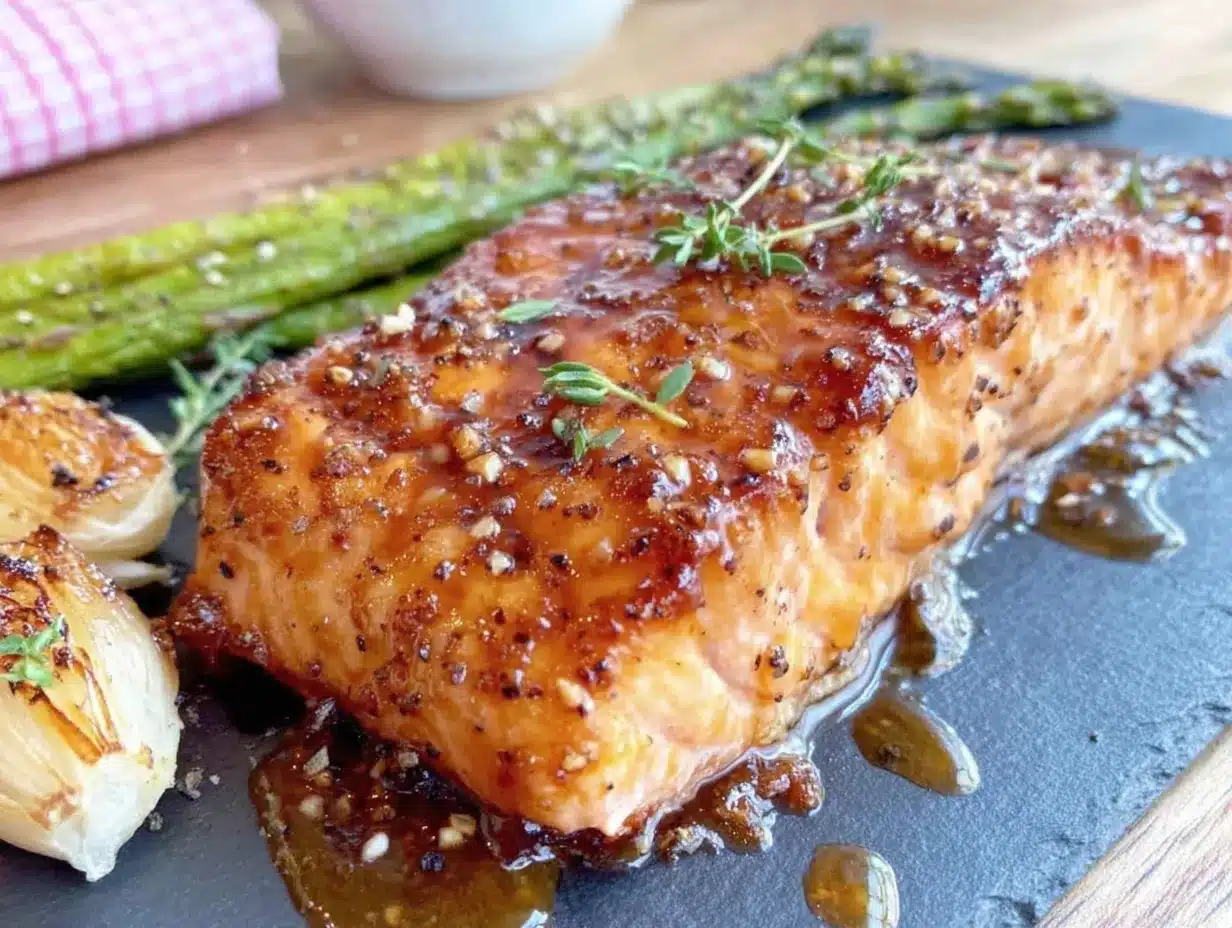
Let’s get cooking. This whole process takes about 25 minutes, and most of that is hands-off oven time.
- Prep the Salmon (5 minutes): Take your salmon fillets out of the fridge about 10 minutes before you start. Pat them extremely dry with paper towels—especially the skin side. I mean really dry. Run the paper towel along the skin until it feels almost tacky. This is the most important step for crispy skin. Season both sides generously with salt and pepper. Place the fillets skin-side up on a plate and pop them in the fridge uncovered for 10-15 minutes if you have time. This dries the skin out even more.
- Make the Glaze (5 minutes): While the salmon is resting, make the glaze. In a small saucepan, combine 1/4 cup honey, 3 tablespoons low-sodium soy sauce, 4 minced garlic cloves, 1 tablespoon rice vinegar, 1 teaspoon sesame oil, and 1 teaspoon cornstarch. Whisk everything together until the cornstarch dissolves. Place the saucepan over medium heat and bring it to a gentle simmer, whisking constantly. Let it bubble for 2-3 minutes until it thickens slightly—it should coat the back of a spoon. Remove from heat and set aside. Don’t walk away from this; honey burns fast.
- Preheat the Oven (2 minutes): Preheat your oven to 400°F (200°C). If you’re using a cast iron skillet, place it in the oven while it preheats so it gets hot. If using a baking sheet, line it with parchment paper or foil and brush lightly with olive oil.
- Prepare for Baking (3 minutes): If using a preheated cast iron skillet, carefully remove it from the oven (use oven mitts!). Place it over medium-high heat on the stovetop for a minute. Add a tablespoon of oil and swirl to coat. Place the salmon fillets skin-side down in the hot skillet. You should hear a satisfying sizzle. Let them cook undisturbed for 2-3 minutes to start crisping the skin. If using a baking sheet, place the fillets skin-side down on the prepared sheet.
- Glaze and Bake (12-15 minutes): Brush about half of the glaze over the top and sides of the salmon fillets. Reserve the remaining glaze for later. Place the skillet or baking sheet in the preheated oven. Bake for 8-10 minutes, then brush on another layer of glaze. Continue baking for another 3-5 minutes. The total cooking time depends on the thickness of your fillets. For 1-inch thick fillets, 12 minutes is usually perfect. The salmon should be opaque and flake easily with a fork. If using a thermometer, aim for 125-130°F (52-54°C) for medium.
- Broil for Extra Crispiness (1-2 minutes): Here’s the secret move. Switch your oven to broil. Brush the salmon with the remaining glaze. Broil for 1-2 minutes, watching it like a hawk. The glaze will bubble and caramelize, and the skin will get even crispier. Do not walk away. Honey burns in seconds under the broiler. I’ve learned this the hard way, and it’s a smoky kitchen cleanup you don’t want.
- Rest and Serve (2 minutes): Remove the salmon from the oven. Let it rest on the pan for 2 minutes. This allows the juices to redistribute. Use your fish spatula to carefully transfer the fillets to a serving platter. Spoon any extra glaze from the pan over the top. Garnish with sliced green onions, toasted sesame seeds, and a squeeze of fresh lemon juice if you’re feeling fancy.
Sensory Cues: When the salmon is done, the skin should be deep golden brown and crackle when you tap it with a fork. The glaze should be sticky and glossy, not runny. The flesh should be opaque all the way through but still moist in the center. If it looks dry or is pulling away from the layers too easily, it’s slightly overcooked.
Cooking Tips & Techniques
I’ve made this recipe more times than I can count, and I’ve definitely made my share of mistakes. Here’s what I’ve learned so you don’t have to.
The Skin Secret: I cannot stress this enough—dry skin is crispy skin. I once rushed through this step and ended up with soggy, rubbery skin that peeled right off. It was heartbreaking. Take the extra time to pat it dry, let it air-dry in the fridge, and don’t skip the initial sear on the stovetop. That head start in the hot pan is what gets you that crackling finish.
Don’t Overcrowd the Pan: If you’re making more than 4 fillets, use two pans or work in batches. When the pan is too crowded, the salmon steams instead of searing. You’ll lose that crispy skin every time. Give each fillet some breathing room.
The Glaze Balance: I once made the glaze too sweet by accident (I grabbed the wrong measuring cup). It was edible but cloying. The rice vinegar is crucial—it cuts the sweetness and adds brightness. If you taste the glaze and it feels one-note, add another splash of vinegar. Trust your taste buds.
Timing is Everything: Salmon goes from perfectly cooked to dry in about 60 seconds. Start checking for doneness a few minutes early. I use the thermometer method because it’s foolproof. But the fork test works too—gently twist a fork in the thickest part. If it flakes easily but still looks slightly translucent in the center, it’s done. It will continue cooking from residual heat as it rests.
My Biggest Failure: The first time I tried broiling the glaze, I walked away to answer my phone. Thirty seconds later, my kitchen was filled with smoke and I had charred, bitter salmon. The glaze had burned into a black, sticky mess. Now I set a timer for 60 seconds and stand right in front of the oven. Broiling is powerful—treat it with respect.
Variations & Adaptations
This recipe is flexible. Here are some ways I’ve adapted it over the years.
Spicy Honey Garlic Salmon: Add 1/2 teaspoon of red pepper flakes or a tablespoon of sriracha to the glaze. The heat balances beautifully with the sweetness. I made this version for a friend who loves spicy food, and she said it was the best salmon she’d ever had. High praise.
Lemon Herb Variation: Add the zest of one lemon and a tablespoon of fresh thyme leaves to the glaze. Skip the sesame oil and use olive oil instead. Finish with fresh dill. This version feels brighter and more summery. Perfect for serving with a simple green salad.
Maple Dijon Twist: Swap the honey for maple syrup and add a tablespoon of whole grain mustard. The mustard adds a tangy kick that cuts through the richness. I accidentally made this version when I ran out of honey, and honestly, it might be my new favorite.
Air Fryer Method: Preheat your air fryer to 375°F (190°C). Place the salmon fillets skin-side down in the basket. Brush with glaze. Cook for 8-10 minutes, brushing with more glaze halfway through. The air fryer gets the skin incredibly crispy. Just don’t overcrowd the basket.
Dietary Adaptations: For a low-carb version, use a sugar-free honey substitute or monk fruit sweetener. The texture will be slightly different, but the flavor is still great. For dairy-free, this recipe is naturally dairy-free. For paleo, use coconut aminos instead of soy sauce.
Serving & Storage Suggestions
This salmon is versatile enough for a weeknight dinner or a fancy dinner party. Here’s how to make the most of it.
Serving Temperature: Serve the salmon warm, right after it rests. The skin is at its crispiest within the first 15 minutes. If it sits too long, the glaze can make the skin soften slightly. That’s why I recommend serving it immediately.
What to Serve With It: I love this salmon with steamed jasmine rice or coconut rice to soak up the extra glaze. A simple cucumber salad with rice vinegar and sesame seeds is a refreshing side. Roasted asparagus or green beans work beautifully too. For a low-carb option, serve it over a bed of sautéed spinach or zucchini noodles. A light, crisp white wine like Sauvignon Blanc or a dry Riesling pairs perfectly.
Storage Instructions: Leftover salmon keeps in an airtight container in the refrigerator for up to 3 days. The skin will lose its crispiness, unfortunately. That’s just the nature of leftovers. But the flavor is still fantastic.
Reheating Methods: The best way to reheat is in a hot skillet. Place the salmon skin-side down in a dry pan over medium-high heat for 2-3 minutes. This helps re-crisp the skin slightly. You can also reheat in a 300°F (150°C) oven for 5-7 minutes. Avoid the microwave—it will make the salmon rubbery and the skin soggy.
How Flavors Develop: Interestingly, the glaze flavors meld and deepen overnight. Cold leftover salmon is amazing flaked over a salad the next day. The honey garlic flavor becomes more pronounced. I’ve even used leftovers in salmon cakes—just flake the salmon, mix with breadcrumbs and an egg, and pan-fry.
Nutritional Information & Benefits
This recipe is as nutritious as it is delicious. Here’s the breakdown per serving (one fillet with glaze).
| Nutrient | Amount Per Serving |
|---|---|
| Calories | 380-420 |
| Protein | 34-38g |
| Fat | 18-22g |
| Carbohydrates | 18-22g |
| Fiber | 0g |
| Sugar | 16-18g |
| Sodium | 600-700mg |
Health Benefits: Salmon is packed with omega-3 fatty acids, which are great for heart and brain health. It’s also an excellent source of high-quality protein and vitamin D. The honey provides natural energy, and garlic has anti-inflammatory properties. This is a meal that tastes indulgent but actually supports your wellness goals.
Dietary Considerations: This recipe is naturally dairy-free and can be made gluten-free with tamari. It’s also low-carb friendly if you use a sugar substitute. The main allergens are fish and soy. If you have a soy allergy, use coconut aminos.
My Wellness Perspective: I love that this recipe feels like a treat but is actually really good for you. It’s the kind of meal that makes eating well feel effortless. No deprivation, no bland chicken breast—just flavorful, satisfying food that happens to be packed with nutrients.
Frequently Asked Questions
Can I use skinless salmon for this recipe?
You can, but you’ll miss out on the crispy skin texture that makes this dish special. The skin also helps protect the delicate flesh from overcooking. If you must use skinless fillets, reduce the cooking time by 2-3 minutes and watch them carefully.
How do I know when the salmon is done?
The most reliable method is an instant-read thermometer. Insert it into the thickest part of the fillet. 125-130°F (52-54°C) is medium, which is perfectly cooked and moist. If you don’t have a thermometer, look for the flesh to be opaque and flake easily with a fork. The internal color should be slightly translucent in the center—if it’s completely opaque all the way through, it’s overcooked.
Can I make the glaze ahead of time?
Absolutely. The glaze can be made up to 3 days in advance and stored in an airtight container in the refrigerator. Let it come to room temperature before using, or gently warm it on the stovetop. The cornstarch may settle, so give it a good whisk before brushing it on the salmon.
Why is my salmon skin not crispy?
This is usually because the skin wasn’t dry enough before cooking. Make sure to pat it extremely dry with paper towels and let it air-dry in the fridge for 10-15 minutes. Another culprit is overcrowding the pan—the salmon steams instead of sears. Finally, make sure your pan is hot enough before adding the fish. You should hear a sizzle immediately.
Can I freeze cooked salmon?
Yes, but the texture will change slightly. Wrap the cooled salmon tightly in plastic wrap and then in foil, or place it in a freezer-safe container. It will keep for up to 2 months. Thaw in the refrigerator overnight and reheat gently in a skillet. The skin won’t be crispy after freezing, but the flavor will still be great.
Conclusion
This Flavorful Honey Garlic Baked Salmon with Crispy Skin has become my go-to recipe for so many occasions. It’s the dish I make when I want to feel like I’ve got my life together, even when I absolutely don’t. It’s the recipe that saved me from showing up empty-handed to that progressive dinner, and it’s the one I keep coming back to when I need a reliable, impressive meal that doesn’t require a culinary degree.
I really hope you give this a try. Don’t be afraid to make it your own—add more garlic if you’re a garlic lover, throw in some chili flakes for heat, or swap the honey for maple syrup and see what happens. Cooking should be fun, and this recipe is forgiving enough for experimentation.
I’d love to hear how it turns out for you. Did your family fight over the crispy skin? Did you discover a variation that blew your mind? Drop a comment below and let me know. And if you’re looking for more quick, impressive dinner ideas, check out my garlic butter shrimp skewers or this lemon herb chicken thighs—they’re both weeknight heroes in their own right. Happy cooking, friends!
Pin This Recipe!
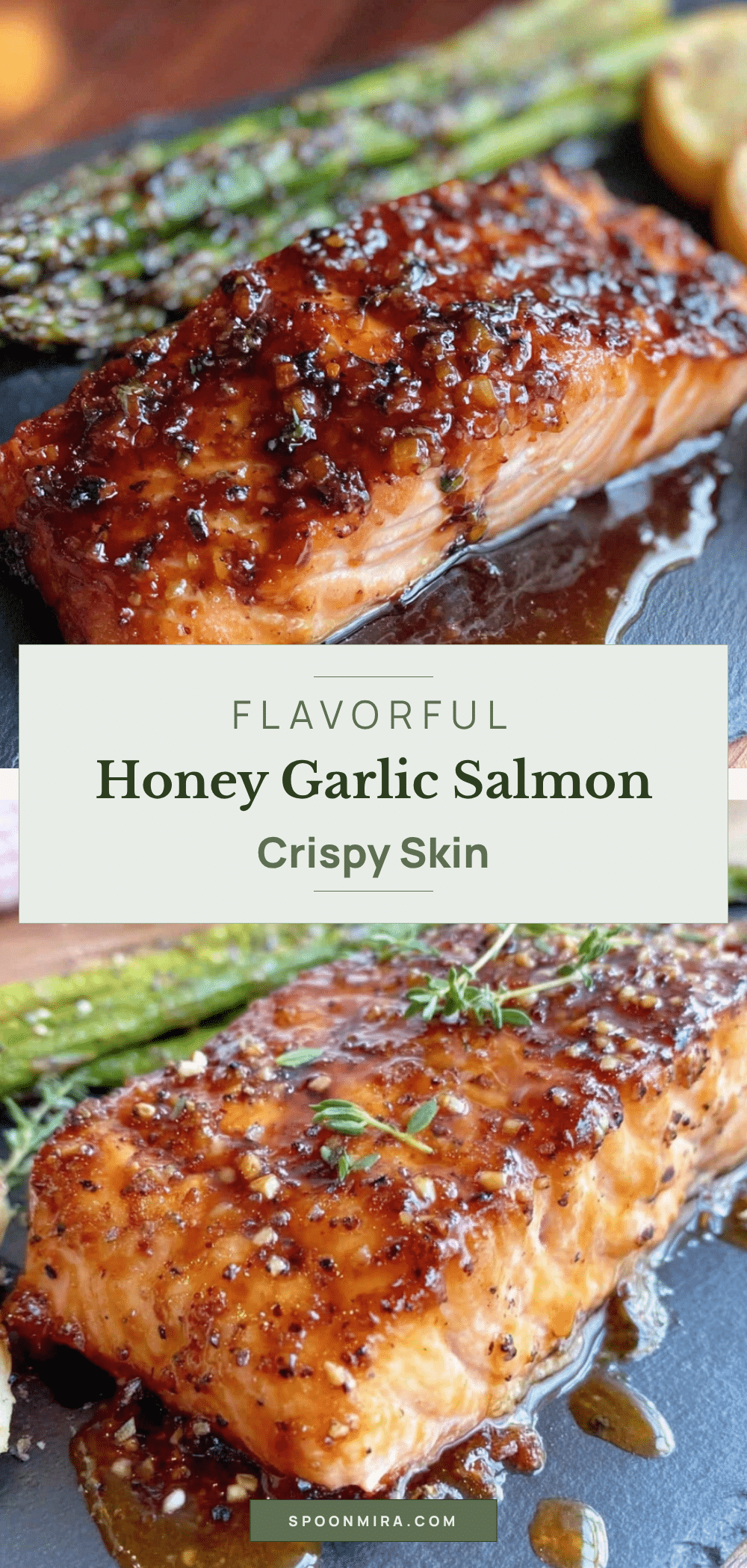
Perfect Honey Garlic Baked Salmon with Crispy Skin
This honey garlic baked salmon features a perfectly caramelized glaze and shatteringly crispy skin. It’s a quick, easy, and impressive dish that’s perfect for weeknight dinners or entertaining.
- Prep Time: 15 minutes
- Cook Time: 15 minutes
- Total Time: 30 minutes
- Yield: 4 servings 1x
- Category: Main Course
- Cuisine: American
Ingredients
- 4 salmon fillets (about 6 oz / 170g each), skin-on
- 1/4 cup (85g) honey
- 3 tablespoons (45ml) low-sodium soy sauce
- 4 cloves garlic, minced
- 1 tablespoon (15ml) rice vinegar
- 1 teaspoon (5ml) sesame oil (optional)
- 1 teaspoon (3g) cornstarch
- Salt and pepper to taste
- 1 tablespoon (15ml) olive oil or avocado oil
- Optional garnishes: sliced green onions, toasted sesame seeds, lemon juice
Instructions
- Prep the Salmon: Remove salmon from fridge 10 minutes before cooking. Pat extremely dry with paper towels, especially the skin. Season both sides with salt and pepper. Place skin-side up on a plate and refrigerate uncovered for 10-15 minutes if time allows.
- Make the Glaze: In a small saucepan, combine honey, soy sauce, minced garlic, rice vinegar, sesame oil, and cornstarch. Whisk until cornstarch dissolves. Bring to a gentle simmer over medium heat, whisking constantly, for 2-3 minutes until thickened. Remove from heat.
- Preheat the Oven: Preheat oven to 400°F (200°C). If using a cast iron skillet, place it in the oven to preheat. If using a baking sheet, line with parchment paper or foil and brush lightly with oil.
- Prepare for Baking: If using a preheated cast iron skillet, carefully remove from oven and place over medium-high heat. Add oil and swirl. Place salmon skin-side down and cook undisturbed for 2-3 minutes to crisp the skin. If using a baking sheet, place fillets skin-side down on the prepared sheet.
- Glaze and Bake: Brush about half the glaze over the top and sides of the salmon. Bake for 8-10 minutes, then brush on another layer of glaze. Continue baking for 3-5 minutes, until salmon is opaque and flakes easily (internal temperature 125-130°F / 52-54°C for medium).
- Broil for Extra Crispiness: Switch oven to broil. Brush salmon with remaining glaze. Broil for 1-2 minutes, watching carefully to prevent burning.
- Rest and Serve: Remove from oven and let rest for 2 minutes. Transfer to a platter, spoon extra glaze from the pan over the top. Garnish with green onions, sesame seeds, and lemon juice if desired.
Notes
For the crispiest skin, pat the salmon extremely dry and let it air-dry in the fridge. Don’t overcrowd the pan. Watch the broiler closely to prevent burning. The glaze can be made up to 3 days ahead.
Nutrition
- Serving Size: 1 fillet with glaze
- Calories: 400
- Sugar: 17
- Sodium: 650
- Fat: 20
- Saturated Fat: 4
- Carbohydrates: 20
- Protein: 36
Keywords: honey garlic salmon, baked salmon, crispy skin salmon, easy salmon recipe, weeknight dinner, healthy salmon